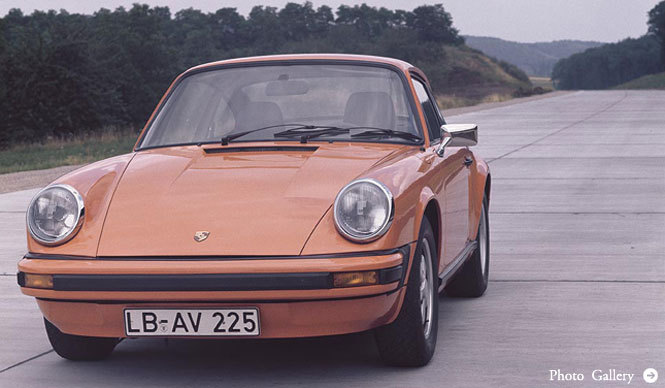
Porsche 911 Story—The Second Generation, Type 930
Porsche 911 | The Porsche 911
Porsche 911 Story──The Second Generation 930 Model
The Star That Supported Porsche's Golden Era of the 70s and 80s
PorscheThis is the second installment of "Porsche 911 Story," looking back at the history of the 911. The 930 model, featured here, expanded its model variations to appeal to a diversifying automotive market in the 1970s and 80s. It was a model that further enhanced its value as a signature marque, giving rise to the enduring tagline, "Always the most high-performance, yet most comfortable sports car in the world."
Text by OGAWA Fumio
The Arrival of the Cabriolet
The car's body grew larger, significantly changing its image in 1974. The adoption of new bumpers led to the code name 930 also being known as the "Big Bumper." The model change was driven by stricter vehicle collision safety standards and enhanced emissions regulations in North America, one of its key markets.
As it was produced for a long period with minor revisions, the second-generation 911 also offered variations in engine displacement. While it was 2.7 liters at the time of the model change in 1974, it grew to 3 liters in '76 and 3.2 liters in '84.
Beyond compliance with emissions regulations, the expansion of displacement was driven by numerous factors, including the pursuit of ease of handling to meet the comfort demands of a broadening user base, and the need to outperform rivals.
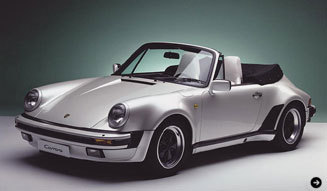
Initially, the model lineup consisted of two variants: the coupe, which served as the standard model, and the Targa, with only the roof section removable. In early 1983, the full convertible Cabriolet was added.
The First Turbo Car in Mass Production
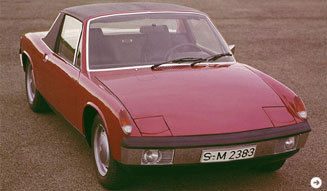
914-6
Simultaneously, the Speedster, produced in limited numbers from 1988 and still highly sought after by enthusiasts today, was unveiled, successfully attracting an even wider fan base.
Another defining feature of the 930 series is the Turbo, announced in 1975. It was the first turbocharged car for mass production. Porsche had already adopted turbochargers in racing prior to this, and while it was initially considered for the compact yet sporty 914-6, the conclusion was that its performance was more fitting for the signature 911 model.
Distinctive Styling with Boldly Flared Fenders
The Turbo's wide rear tires, designed to mitigate oversteer in high-speed corners, were covered by flared fenders, and a large rear spoiler to prevent the rear end from lifting at high speeds, delivered a powerful impression that was almost shocking worldwide.
This distinctive styling was only possible for the Porsche 911, and the Turbo significantly contributed to establishing the legitimacy of its unique design.
From its debut, the 911 came standard with a self-developed four-speed manual gearbox. Its characteristic feature was a synchronizer with a unique structure. Some users noted a drawback in the imprecise lever feel and difficulty in discerning the gate during gear changes, as the rotation of the receiving and engaging sides did not align perfectly.
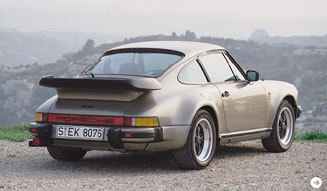
911 Turbo 3.3 Coupe
Porsche had been using this system long before 1953 and the debut of the 911, so they were reluctant to change it. However, as engine displacement increased and torque grew, the unique gearbox, known as Porsche-Synchro, could no longer adequately handle measures like gear oil cooling. Consequently, from the final 1987 model year of the 930 series, a five-speed gearbox from BorgWarner was adopted.
The 911 is, of course, sporty, but it was also comfortable, which is why it garnered so many fans. The Turbo was no exception, featuring standard air conditioning and audio systems. By keeping the boost pressure low, it achieved a natural driving feel, and despite being called the "world's fastest," it could also be driven enjoyably at 2,000 rpm, a unique characteristic of the 911 Turbo.
Throughout the 1970s and 80s, the automotive market became increasingly diverse. In this landscape, Porsche's philosophy of expanding model variations and consistently offering "the most high-performance, yet most comfortable sports car in the world" built the golden age of the 911.



