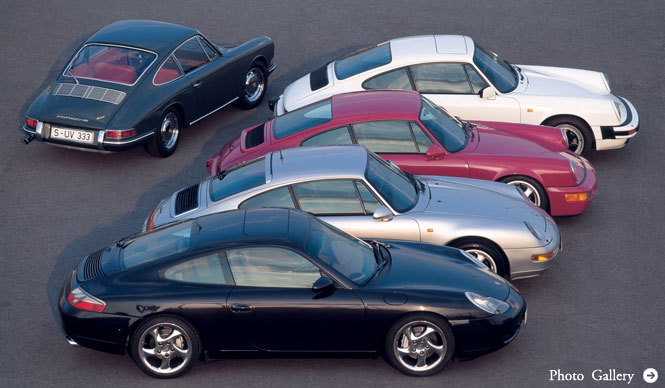
Porsche 911 Story—The First Generation, Type 901
Porsche 911
Porsche 911 Story—The Original 901
The Porsche 911 debuted in 1963. Since then, it has evolved through constant innovation, navigating challenges of power, size, environmental concerns, and market competition. With the announcement of the seventh generation, we look back at its history.
By Fumio Ogawa
Aiming for Success in Both Racing and the General Market
Porsche established its reputation with the 356, which began mass production in 1950. While it sold well in the U.S. throughout the 50s, competitors soon emerged. By the 1960s, the 356 risked falling behind rivals in both performance and comfort. Consequently, Porsche's management planned a new sports car with a larger engine. This marked the start of the 911 project (initially intended to be named 901).
At the project's inception, with the two-seater 356 as the main model, a four-seater concept initially named 695 was conceived.
However, Ferry Porsche (son of the founder), who led Porsche at the time, redirected the strategy towards a 2+2 layout (similar to the 911's current auxiliary rear seating) – a next-generation flagship model that would succeed the 356. Ferry's son, Ferdinand Alexander Porsche, designed the coupe body that endures today. All these decisions were made half a century ago, in the early 1960s.
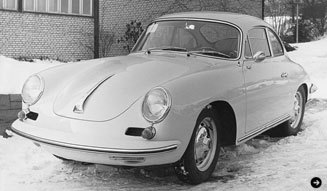
Porsche 356
With the new sports car, Porsche aimed for success in both racing and the general market. Thus, a smoother, more powerful six-cylinder engine was chosen over a four-cylinder. The rear-engine, rear-drive layout seems to have been a natural progression from the 356.
Porsche unveiled the "901," developed through this process, at the Frankfurt Motor Show in the autumn of 1963. The name was later changed to 911, and customer deliveries began in August 1964. The 901 designation remained as a codename and has become established among Porsche fans worldwide for distinguishing subsequent models like the 930, 964, and 993.
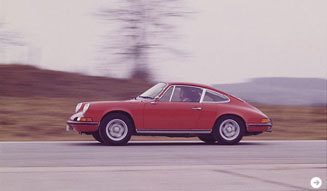
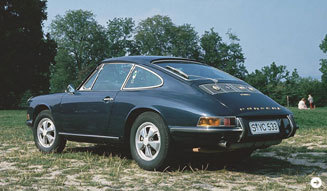
Customers quickly embraced the stylish, agile, and powerful 911. However, housing a relatively large 2-liter six-cylinder engine at the rear presented various challenges for the development drivers and chassis and handling engineers. Porsche's engineers worked diligently to make the car's behavior, especially during cornering, as neutral and controllable as possible. Some resorted to drastic measures, like adding weights to the bumpers. Eventually, in 1969, extending the wheelbase significantly improved the oversteer tendency—the car's inclination to turn inward during curves.
Thus, the Porsche 911 entered the market, navigating a complex landscape of power, environmental regulations, and competitive pressures.
Continued in the 930 model.