
History of the Shooting Brake | The Elegant Lineage from the Birth of the Ferrari FF
Ferrari FF
History of Shooting Brake
The Elegant Lineage of the Ferrari FF
Ferrariintroducedthe "FF" as its new flagship.While its status as Ferrari's first 4WD model garnered attention, what truly stirred debate was its design. It adopted a so-called shooting brake-style design, a departure from previous Ferraris. Why a shooting brake, now? And what exactly is a shooting brake? Let's explore by looking back at legendary cars of the past.
By Dai Matsuo
From the Age of Carriages
Shooting brake was a term already in use in Britain before the invention of the automobile, referring to horse-drawn carriages used for hunting. The driver and hunting guide occupied the front seats, while hunters sat on rear-facing bench seats. The shape was designed for easy storage of hunting equipment, dogs, and game.
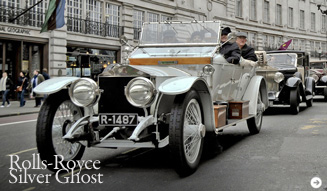
It is well-known that other terms used for carriages, such as "estate" for lords to survey their domains and "station wagon" for mail coaches, were also applied to automobiles.
In the 1910s, vehicles for hunting purposes began to be manufactured for automobiles as well, and these came to be called shooting brakes. For aristocrats and landowners, models such as the Rolls-Royce Silver Ghost, Phantom II, Bentley Mark VI, and Alvis TA14 were recorded as being produced in shooting brake configurations.Rolls-RoyceSilver Ghost and Phantom II,BentleyMark VI, or Alvis TA14 shooting brake models were produced.
After that, shooting brakes were released by many manufacturers until the 1950s. However, they were no longer cars for aristocrats to use for hunting; their meaning shifted towards multi-purpose vehicles, used for picnics or carrying sports equipment. The term "shooting brake" itself was forgotten, and "station wagon" became the common term.
The Revivalist? The DB Series
However, a representative shooting brake appeared in 1963. At the time, David Brown, the owner of Aston Martin, expressed a desire for a vehicle to transport his hunting gear and dogs.
Brown's DB5 Shooting Brake garnered significant attention on the streets, leading to a flood of inquiries from customers. It is said that the British coachbuilder Harold Radford produced over a dozen units. Subsequently, a small number of shooting brake versions were also manufactured for the DB6 and DBS.
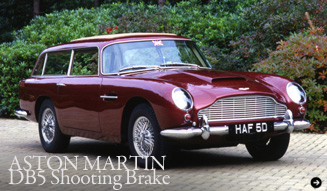
Some vehicles referred to as shooting brakes were based on stretched four-door bodies, so there isn't a strict definition. However, generally, the concept of using a stylish two-door coupe for hunting led to the interpretation that two-door coupe-based versions were more elegant. They are recognized as having an extended roof, increased luggage space, and a nearly vertical tailgate. The Aston Martin in particular, and the Lynx-tuned Jaguar XJS-based Eventer, are iconic examples of shooting brakes, symbolizing aristocratic taste and elegance.
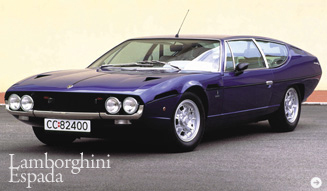
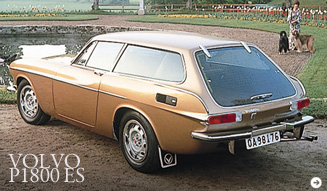
Perhaps inspired by the DB5 Shooting Brake, many shooting brakes emerged in the 1960s and 70s. The Volvo P1800ES, and models with shooting brake-style designs like the Lamborghini Espada, were born during this period. Lancia applied the term HPE (High Performance Estate), symbolizing its high-performance models, to an additional model of the Beta introduced in '75.LamborghiniEspada, adopted shooting brake-style designs. Lancia applied the term HPE (High Performance Estate), symbolizing its high-performance models, to an additional model of the Beta introduced in '75.
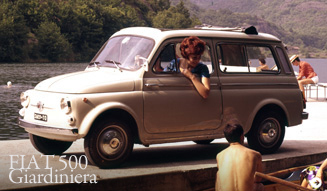
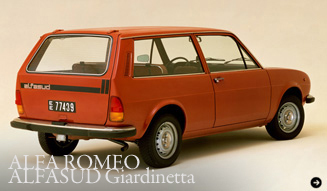
Shooting brake-style models also appeared in mass-market cars. The Morris Mini Traveller/Austin Mini Countryman, Fiat 500 Giardiniera, and Alfa Romeo Alfasud Giardinetta are prime examples.
Shooting Brakes as "Elegance," Not Utility
Afterward, shooting brake-style styling did not become mainstream, but several models continued to appear. The Accord Aerodeck, popular in Japan, the Dutch-made Volvo 480 Turbo, and more recently, the distinctive body shape of the BMW M Coupe/Z3 Coupe are memorable. Furthermore, the revived Mini Clubman and Volvo C30 can be considered part of this lineage.BMWM Coupe/Z3 Coupe's distinctive body shape are memorable. Furthermore, the revived Mini Clubman and Volvo C30 can be considered part of this lineage.
It was amidst this context that the Ferrari FF emerged. Its form, reminiscent of a shooting brake, was chosen by Pininfarina, a marque renowned for designing the world's most beautiful coupes. While its practical aspects, such as the space for four adults and luggage capacity, and its un-Ferrari-like shape draw attention, is not the underlying principle of its design contrary to practicality?
The shooting brake, a vehicle for aristocratic pursuits, has been passed down through generations since before the dawn of the automobile. Perhaps the FF embodies a design that hints at the very reason for Ferrari's existence.