February 27, 2015
BMW X3 | The Premium SUV 'X3' Reimagined
BMW X3 | The Reimagined BMW X3
The Premium SUV 'X3' is Reborn
First unveiled at the 2003 Frankfurt Motor Show, with a minor change in 2006. The X3 was a pioneer in relatively compact premium SUVs. How does the all-new, second-generation model fare?
By Giraffe
Official Debut at Paris Motor Show End of September
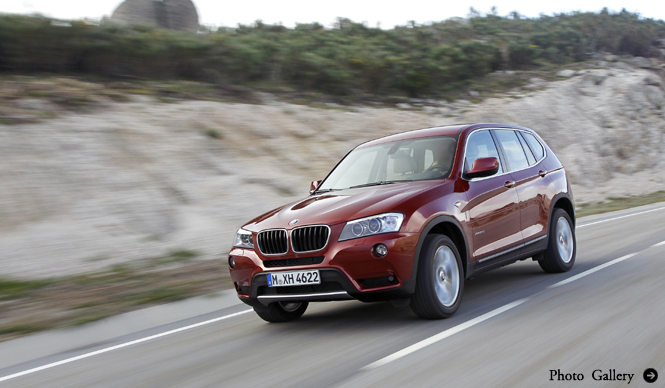
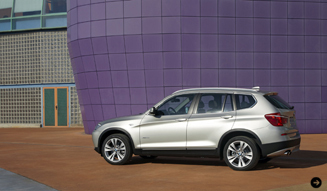
BMW has unveiled the new X3. The second-generation X3 measures 4,648mm long, 1,881mm wide, and 1,661mm high, with a wheelbase of 2,810mm, making it slightly larger than the first generation. It is 79mm longer and 28mm wider, but 20mm lower, resulting in an expanded interior space. Rear legroom has also increased.
The engine lineup for the European market includes two options: one gasoline and one diesel. The gasoline 'xDrive35i' features a 3.0-liter direct-injection turbo engine, producing a maximum output of 306ps at 5,800rpm and peak torque of 40.8kgm at 1,300rpm. Paired with an 8-speed automatic transmission, it achieves 0-100km/h in 5.7 seconds and a top speed of 245km/h.
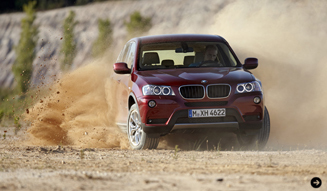
Furthermore, this engine, through the combination of Valvetronic and High Precision Injection, realizes BMW's philosophy of 'EfficientDynamics' (cleaner, more power). Synergistic effects, such as the adoption of an idle-stop function, achieve a European combined fuel economy of 11.36km/l and CO2 emissions of 204g/km.
The new X3 is scheduled for its official debut at the Paris Motor Show at the end of September. Glimpses of its capabilities can already be seen on video-sharing sites.
BRAND HISTORY
Instantly recognizable by its signature kidney grille and quad-ring headlights, BMW has always enjoyed strong popularity in the Japanese import car market. Yet, surprisingly few might know the immediate meaning behind its name.
Bayerische Motoren Werke. Literally translated, it means 'Bavarian Engine Works.' Its predecessor, Rapp Motorenwerke, was an aircraft engine manufacturer founded in Bavaria in 1913 by Karl Friedrich Rapp. Rapp partnered with fellow Bavarian aircraft maker Otto-Flugzeugwerke to achieve business success. In 1916, it was renamed Bayerische Motoren Werke GmbH. Two years later, it reorganized as a stock corporation and registered its propeller logo, inspired by the blue skies and white clouds of Bavaria.
BMW continued to enhance its presence through innovative technology, but the defeat in World War I forced the cessation of aircraft engine production. BMW then channeled its expertise into motorcycles, gaining attention with the shaft-driven 'BMW R32' in 1923. Not content with this, they acquired Dixi, a company that licensed the production of the Austin Seven. This provided a foothold in the automotive business, and in 1929, they launched the 'BMW 3/15 PS,' marking the start of their history as an automobile manufacturer.
Incidentally, Otto-Flugzeugwerke, which had a close relationship with BMW, was founded by Gustav Otto, the son of Nikolaus Otto, who established the theory of the internal combustion engine. This historical connection likely explains BMW's continued focus on internal combustion engines.