February 27, 2015
PORSCHE BOXSTER SPYDER (Part 1) | The Utterly Stoic Boxster
PORSCHE BOXSTER SPYDER | Porsche Boxster Spyder (Part 1)
A Stoic Boxster, to the Extreme
The long-rumored high-performance model of the Boxster has debuted as the "Boxster Spyder." Automotive journalist Yasuhisa Shimashita, known as one of the industry's foremost Porsche enthusiasts, takes it for an immediate test drive.
Text by Yasuhisa ShimashitaPhotos by Porsche Japan
80kg Lighter Than the Boxster S
When thinking of Porsche's Spyders, many might first recall the legendary 550 Spyder. Newer fans might picture the heroic RS Spyder, which excelled in numerous endurance races like the 24 Hours of Le Mans.
The high-performance model of the Boxster, whose existence had been rumored for so long and has now finally arrived, has been given the name "Boxster Spyder." This name signifies that this newcomer inherits the lineage of Porsche's mid-engined models, refined for driving through its lightweight design. In reality, its specifications are stoic to the extreme.
To list a few points, the power-retractable soft top of the Boxster has been replaced with a detachable, simple type that is best described as a rain or sun shield. This, along with the one-piece aluminum rear hood that evokes designs of past models like the 911 Speedster and Carrera GT, allows the rear screen to be detached separately, contributing to a weight reduction of 21kg. Furthermore, the doors are made of aluminum, saving 15kg, the ultra-lightweight bucket seats save 12kg, and the smaller fuel tank and battery together save 10kg. By accumulating such changes, the vehicle achieves a curb weight of 1275kg, 80kg lighter than the Boxster S. This includes a 13kg saving from the omission of air conditioning, but even with that added back, it represents a weight reduction equivalent to one adult.
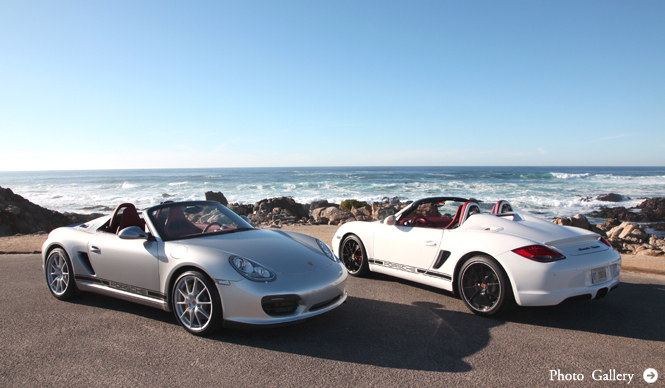
The appearance is also Spartan. At the front, the air intake areas on both sides of the bumper have been enlarged, housing simple, bar-type LED positioning lamps. Fog lamps have been omitted. The lip extends forward, and the rear spoiler has also been changed to a large, fixed type.
A Lightness Entirely Different from the Base Model
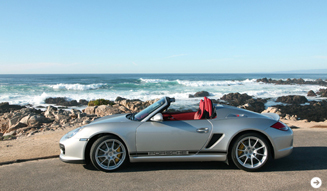
The ride height is lowered by 20mm. The dedicated lightweight wheels have wider rims, giving it a more powerful stance. The rear hood, with its two dome-shaped fairings, perfectly complements the open-top configuration, and even with the simple top attached, the cabin appears slender from top to bottom, looking exceptionally cool.
The finishing touch is the "PORSCHE" stripe running along the side sills. This motif was used on the 1970s racing model, the Bergspyder, and the 911R. It's a wonderfully sophisticated touch, typical of recent Porsches, that skillfully utilizes traditional elements in the body color and stripes to create a new appeal.
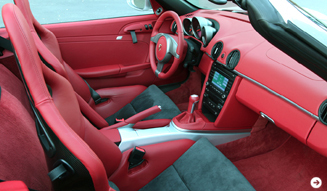
Open the distinctly lighter door and step inside. As you slide into the tight bucket seat, you notice the absence of a hood over the instrument panel. Looking closer, you'll see the cup holder is also gone, and the door handles have been replaced with simple pull straps, reminiscent of the RS models from the air-cooled era. Each of these changes might only save a few hundred grams. However, weight reduction is achieved only by meticulously accumulating such small elements. Moreover, these elements serve as effective touches that naturally elevate the mood, which is a pleasant sensation.
Still, the difference is 80kg. Before driving, I couldn't help but wonder how much the driving experience would change with the weight reduction of a large adult male. However, that thought vanished the moment I shifted the 6-speed manual transmission into first gear and lifted my left foot off the clutch pedal. The Boxster Spyder moved forward with a lightness entirely different from the base model, propelling the car forward with a buoyant feel.
Porsche Japan
http://www.porsche.com/japan/
BRAND HISTORY
PORSCHE (Porsche) is a sports car brand representing Germany, earning overwhelming support from skilled drivers worldwide. Its origins trace back to 1931. Ferdinand Porsche, a genius who distinguished himself as an automotive engineer from his twenties, gained experience as Technical Director at Daimler before establishing the "Porsche Design Office" in Stuttgart, Germany, to go independent. From then on, he was entrusted with the development of various cars by automobile manufacturers. Among the most famous is the "Volkswagen Beetle," which greatly contributed to motorization as Germany's "people's car."
As an automobile manufacturer, the first car to bear his own name was the "356," which appeared in 1948. Since then, Porsche has released sports cars such as the "911," "924," and "928," while also focusing on motorsport. For example, they achieved 16 victories in the 24 Hours of Le Mans, considered the world's most grueling race, and contributed to three series championships as an engine supplier in Formula 1, accumulating a brilliant track record. It goes without saying that their technological prowess and dedication to driving continue to live on in their products today.
Currently, their lineup, including the "911" which continues to be highly regarded as a top-tier sports car even 45 years after its debut, the open-top sports car "Boxster," the coupe version of the Boxster, the "Cayman," and the premium sports SUV "Cayenne," all boast high popularity.