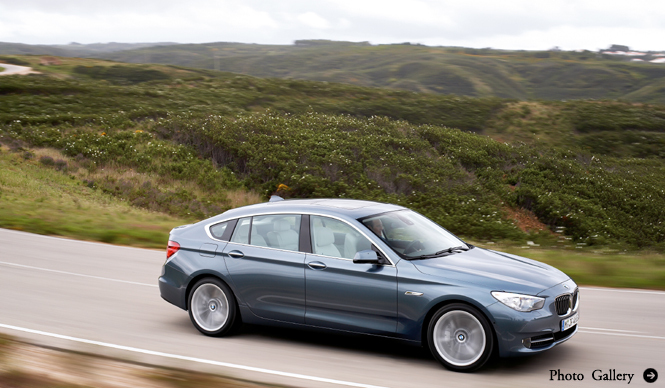
BMW 5 Series GT | A Completely New Category of GT
BMW 5 Series GT | The All-New BMW 5 Series GT
A Completely New Category of GT
BMW has begun accepting orders nationwide for its new model,BMWthe 5 Series GT (Gran Turismo), at authorized BMW dealerships.
Text by Giraffe
A Body Approaching the Size of the 7 Series
The most distinctive feature of the "5 Series GT," created as a new category, is its condensation of the characteristic functions of a sedan, SUV, and station wagon into a single model.
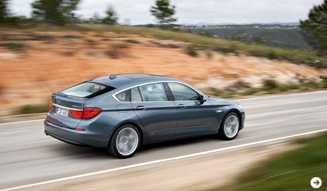
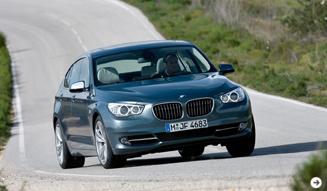
It boasts a coupe-like roofline, a tailgate slope reminiscent of the "X6," and a ride height intermediate between a sedan and an SUV. Above all, its ride comfort is said to rival that of first-class airplane seats.
The body dimensions are 4,998mm in length and a 3,070mm wheelbase, achieving a size that approaches the current 7 Series. This successfully ensures ample space front and rear, while the width of 1,901mm and height of 1,559mm provide generous headroom and lateral cabin space.
The interior, while utilizing carefully selected materials, creates a luxurious space through meticulous attention to shape, design, and color scheme.
As a station wagon element, the luggage space capacity is secured at 570 to 1650 liters. The hatch gate features a twin-tailgate, a first for the company, with a two-piece structure that allows for either a full opening or a smaller gate opening, depending on the size of the luggage.
All Engines Feature Direct Injection
All engines are direct-injection units. For gasoline, two options are available: the "535i" with a 3.0-liter inline-6 twin-turbo (maximum output 306ps, maximum torque 40.8kgm, 0-100km/h acceleration 6.3 seconds), and the "550i" with a 4.4-liter V8 twin-turbo (maximum output 407ps, maximum torque 61.2kgm, 0-100km/h acceleration 5.5 seconds).
The diesel "530d," which will not be introduced in Japan, is equipped with a 3.0-liter inline-6 twin-turbo (maximum output 245ps, maximum torque 55.1kgm, 0-100km/h acceleration 6.9 seconds).
Naturally, all engines meet the Euro 5 emissions standard, and the 8-speed automatic transmission, introduced in the "760i," will be available for all models.
Additional equipment includes numerous advanced features such as top view and rear view cameras, adaptive headlights, cruise control, an HDD navigation system with digital TV tuner, a Bluetooth hands-free telephone system, and an ETC onboard unit.
Deliveries are scheduled to begin around the end of January 2010.
BRAND HISTORY
BMW is characterized by its distinctive front fascia with the "kidney grille" and four round headlights, instantly recognizable. While consistently popular in Japan's imported car market, surprisingly few people might know the meaning behind its name.
Bayerische Motoren Werke. Literally translated, it means "Bavarian Engine Works." Its predecessor, Rapp Motorenwerke, was an aircraft engine manufacturer founded in Bavaria, Germany, in 1913 by Karl Friedrich Rapp. Rapp partnered with fellow Bavarian aircraft manufacturer Otto-Flugzeugwerke to achieve business success. In 1916, it was renamed Bayerische Motoren Werke GmbH. Two years later, it reorganized as a stock corporation and registered its propeller logo mark, inspired by the blue sky and white clouds of Bavaria.
BMW continued to enhance its presence through innovative technology, but the defeat in World War I forced it to cease aircraft engine production. BMW then channeled its expertise into motorcycles, unveiling the shaft-driven "BMW R32" in 1923, which garnered significant attention. However, not content with this, it acquired Dixi, which was licensed to produce the Austin Seven. This provided a foothold in the automotive business, and in 1929, BMW launched the "BMW 3/15 PS," marking the start of its history as an automobile manufacturer.
Incidentally, Otto-Flugzeugwerke, which had a deep relationship with BMW, was founded by Gustav Otto, the son of Nikolaus August Otto, who established the theory of the internal combustion engine. This connection likely explains BMW's continued focus on internal combustion engines.