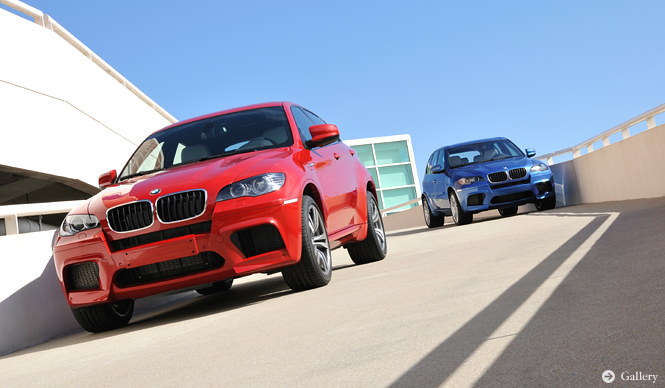
BMW X5 M & X6 M | The 'M' of SUVs
BMW X5 M & X6 M
The "M" of SUVs
BMW has announced the release of "M models" for the X5 and X6. This marks the first time M models have been offered for SUVs.
Text by Giraffe
Engine: 4.4-liter V8 with Twin-Scroll Turbocharger
According to the outline released today, the engine powering both models is a newly designed 4.4-liter V8 engine equipped with a twin-scroll turbocharger. It boasts a maximum output of 555 ps and a maximum torque of 69.7 kg-m.
The transmission is a 6-speed automatic. In addition to the standard "D" (Drive) mode, this automatic transmission features an "S" mode for sporty driving and an "M" mode for manual shifting, promising the same agile performance as traditional M models.
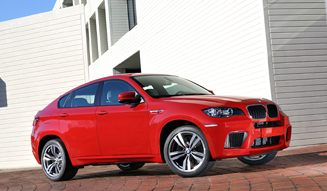
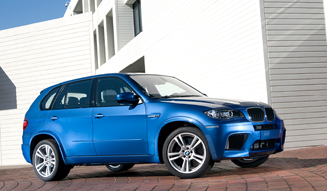
A Simple Yet Commanding Exterior
The visual differences from the base models, consistent with previous M models, lie in the understated yet impactful aerodynamic parts. The double-spoke wheels have been upsized to 20 inches, paired with 275/40 front and 315/35 rear tires, creating a powerful presence. The addition of exclusive M parts further enhances the sense of specialness.
With BMW's M models now gracing the SUV segment, many are undoubtedly eager to experience their performance. We eagerly await their delivery to Japan.
BRAND HISTORY
Instantly recognizable by its "kidney grille" and quad round headlights, BMW is a brand that consistently ranks high in Japan's imported car market. Yet, surprisingly few might know the meaning behind its name.
Bayerische Motoren Werke, which translates to "Bavarian Motor Works." Its predecessor, Rapp Motorenwerke, was founded in 1913 by Karl Friedrich Rapp in Bavaria, Germany, as a manufacturer of aircraft engines. Collaborating with fellow Bavarian aircraft manufacturer Otto-Flugmotorenbau, the business flourished. In 1916, it was renamed Bayerische Motoren Werke GmbH. Two years later, it reorganized as a stock corporation and registered its propeller logo, inspired by Bavaria's blue skies and white clouds.
BMW continued to enhance its presence through innovative technology, but the defeat in World War I forced the cessation of aircraft engine production. BMW then channeled its expertise into motorcycles, gaining attention with the shaft-driven "BMW R32" in 1923. Not content with this, they acquired Dixi, which held the license to produce the Austin Seven. This acquisition provided a foothold in the automotive business, and in 1929, they launched the "BMW 3/15 PS," marking the start of their history as an automobile manufacturer.
Incidentally, Otto-Flugmotorenbau, a company with deep ties to BMW, was founded by Gustav Otto, the son of Nikolaus August Otto, who established the theory of the internal combustion engine. This connection likely explains BMW's continued focus on internal combustion engines.