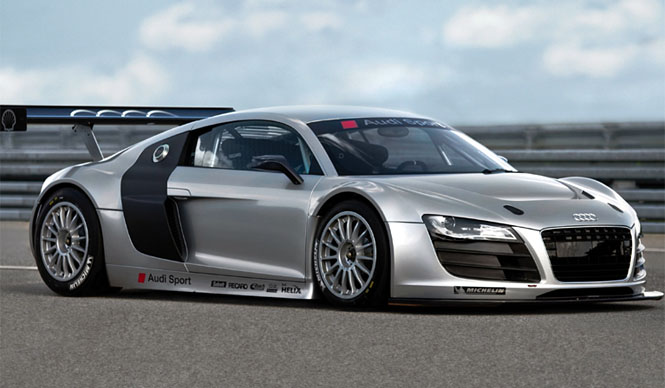
Audi R8 GT3 | The Racing Version of the Audi R8, the GT3, is Announced
Audi R8 GT3: Racing Version of the R8 Unveiled
Germany'sAudiAG has announced the development of the "GT3," a race-spec version of its road-going sports car, the R8, slated for debut in 2009.
The R8 GT3, which can compete in international races, will join the R8, Audi's first mid-engined sports car, sharing its name with the Le Mans-winning racer.
To comply with the GT3 category within the GT series, it will switch from the production version's all-wheel drive to rear-wheel drive, and its transmission will be replaced with a six-speed sequential sports gearbox. Furthermore, aerodynamic parts will be fitted to the front and rear of the body to enhance downforce.
The car is scheduled for test participation in races, primarily in Europe, starting in 2009. It will play a role in shaping the image of high-performance cars from the Four Rings, a relatively young marque in the sports car segment.
BRAND HISTORY
Audi's emblem, the "Four Rings," represents four automotive manufacturers: Audi, DKW, Horch, and Wanderer. As you may know, each ring symbolizes a brand that was at the forefront of the German automotive industry in the early 20th century, all based in Saxony. However, in the wake of the Great Depression following World War I, these four companies, facing survival challenges, formed Auto Union in 1932. Their strategy was to specialize: DKW focused on motorcycles and small cars, Wanderer on mid-sized cars, Audi on premium mid-sized cars, and Horch on luxury vehicles.
Following Germany's defeat in World War II, Saxony, located in East Germany, fell under Soviet occupation, leading to the dissolution of Auto Union. Anticipating this, a new Auto Union was established in Ingolstadt, Bavaria, in West Germany. Unlike BMW and Mercedes-Benz, Auto Union faced a challenging start without existing factories, but gradually built its strength through the production of vehicles like the DKW delivery van.
Acquired by Volkswagen at the end of 1964, Auto Union soon introduced new models bearing the Audi name. In 1969, it merged with NSU (known for its development of the Wankel engine), based in Neckarsulm, becoming Audi NSU Auto Union. From 1985 onwards, it has continued as Audi to the present day. Technologies such as Quattro, dynamic performance backed by motorsport activities, elegant design, and high-quality finishes are driving Audi's popularity.