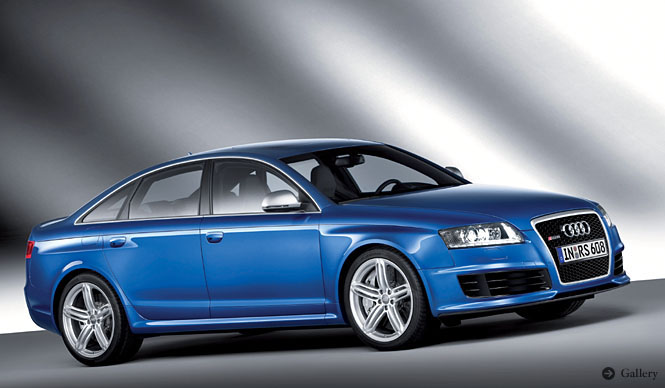
Audi RS 6 | Audi's High-Performance Sedan "RS 6" Unveiled
Audi RS 6 | The Audi RS 6
Audi Unveils High-Performance Sedan, the RS 6
Germany'sAudiAG announced the RS 6, a sedan version of its high-performance wagon, the RS 6 Avant, on August 12, 2008.
0-100 km/h in 4.5 Seconds
The RS 6 Avant, announced in Japan this June with deliveries to follow shortly, is priced at ¥16.6 million. The sedan joins the high-performance station wagon, which boasts up to 580 ps from its 5-liter V10 twin-turbo engine.
The powertrain is the same as the Avant's, featuring direct-injection FSI technology, producing 580 ps and 650 Nm. Its substantial torque is available across a wide range from 1,500 to 6,250 rpm, allowing for an easily imagined smooth and powerful drive.
The transmission is a 6-speed Tiptronic. Its response time is a swift 0.1 seconds, and shift times are claimed to be halved compared to the previous model. The ability to drive in manual mode using the shift lever or paddles is also a key feature. The drivetrain is the "quattro" 4WD system.
It takes 4.5 seconds to reach 100 km/h from a standstill. The top speed is electronically limited to 250 km/h, but can be increased to 280 km/h with an optional package.
It incorporates "Dynamic Ride Control" to manage driving behavior and "ESP" for safety. The ESP includes a sport mode, allowing drivers to turn off the system for a more engaging experience.
Sports Car Performance, Sedan Utility
The stopping power has been enhanced to match the high output. The front features 6-piston aluminum calipers with 390mm discs, and the rear has single-piston floating calipers with 365mm discs. Opting for the available 20-inch alloy wheels over the standard 19-inch allows for the selection of a lighter ceramic brake system.
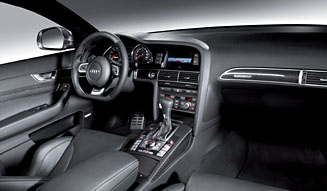
The interior makes extensive use of premium materials such as carbon fiber, aluminum, Alcantara, and Nappa leather. Supportive bucket seats and a leather-wrapped multifunction steering wheel contribute to the sporty ambiance.
Standard equipment includes dual-zone automatic climate control, a parking assistant that alerts to obstacles around the vehicle, and a BOSE sound system. Optional features include "Audi Lane Assist" to prevent unintended lane departure and "Adaptive Cruise Control" to maintain distance from the vehicle ahead.
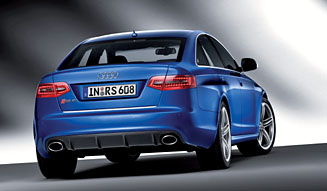
The "RS 6" positions itself with the dynamic performance of a sports car and the high utility of a sedan. It is scheduled for release in Germany in mid-October, with prices starting from €105,550 (approximately ¥17.1 million).
BRAND HISTORY
Audi's emblem, the "Four Rings," represents the four automotive manufacturers Audi, DKW, Horch, and Wanderer. Each ring symbolizes one of these brands, all based in Saxony and pioneers of the German automotive industry in the early 20th century. However, the four companies, hit hard by the Great Depression after World War I, formed Auto Union in 1932 to survive. DKW focused on motorcycles and small cars, Wanderer on mid-size cars, Audi on premium mid-size cars, and Horch on luxury cars.
Following World War II, Saxony fell under Soviet occupation, leading to the dissolution of Auto Union. Anticipating this, the new Auto Union was established in Ingolstadt, Bavaria, in West Germany. Unlike BMW and Mercedes-Benz, Auto Union faced a challenging start without existing factories, but gradually gained strength through the production of vehicles like the DKW delivery van.
In late 1964, Auto Union came under the umbrella of Volkswagen and soon introduced new models bearing the Audi name. In 1969, it merged with NSU, known for its development of the Wankel engine and based in Neckarsulm, becoming Audi NSU Auto Union. In 1985, it was renamed Audi, as it remains today. Audi's popularity is driven by its technological innovations, including quattro, its dynamic performance backed by motorsport activities, elegant design, and high-quality finishes.