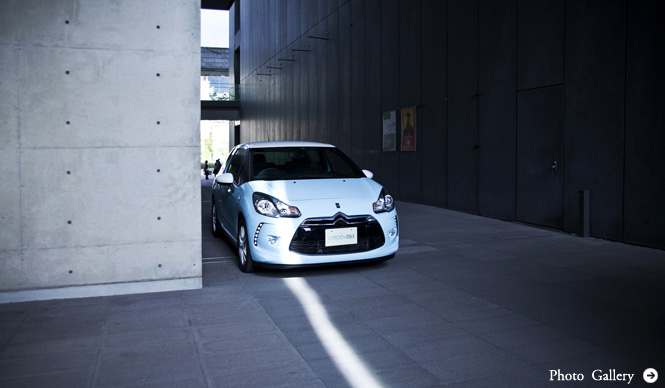
CITROEN DS3 | Kobe Chapter
CITROEN DS3 | Citroën DS3
CITROEN DS3 @ KOBE
The Sophisticated Port City, Always at the Forefront (1)
The French are fond of the phrase “l’Art de Vivre,” which roughly translates to the art of living. It signifies each person’s unique way of enjoying life. The Citroën DS3, born in France, is a car that enriches our lives. In Japan, Kobe might be the prime example. Both share a commonality in their refined taste.
Text by Fumio OgawaPhotos by Takahiro Igarashi
Driving Through Kobe, a City of Transformation
The Citroën DS3 is a masterful fusion of design and functionalism. In France, originality is highly valued for chefs aiming for Michelin stars. Designed, built, and appreciated in a country that emphasizes such originality, the DS3’s styling possesses a distinct individuality that sets it apart.
The French also prioritize practicality in daily life. For cars, this means high standards for interior space, cargo capacity, handling, and fuel efficiency. Their philosophy is that all tools should serve to enhance human comfort. Consequently, cars are designed with an pursuit of comfort in every sense. The Citroën DS3 is therefore not just stylish, but also an excellent partner for everyday life.
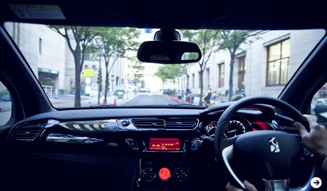
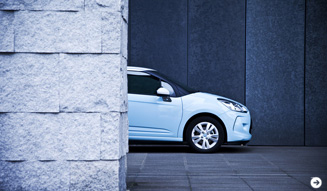
The DS3 handles Kobe’s varied street widths with nimble agility.

It embodies French culture with both authenticity and innovation.
“Citroën products (editor’s note: cars) are a testament to cultured, design-conscious taste.” So wrote British design critic Stephen Bayley in ‘The Conran Directory of Design.’ Citroën can be said to have transformed the automobile by focusing on taste. The rich content of the Citroën DS3 might also be described as taste, but a powerful force is undeniably felt.
Things with taste are worthy of appreciation in all fields. Cars like the DS3, and cities like Kobe. Kobe, with its history dating back to its opening as a port in 1868, has skillfully integrated Western elements into traditional Japanese culture, creating a unique lifestyle. Despite its narrow terrain between the sea and mountains, it has ingeniously utilized its topography, lining the hillsides with beautiful architecture and successfully creating magnificent, unparalleled landscapes. The power of transformation is acting creatively.
CITROEN DS3 | Citroën DS3
CITROEN DS3 @ KOBE
The Sophisticated Port City, Always at the Forefront (2)
The Hyogo Prefectural Museum of Art: A Layered World within Monumental Architecture
The Hyogo Prefectural Museum of Art evokes a sense of “l’Art de Vivre” (the art of living). Designed by Osaka-born architect Tadao Ando and completed in 2001, it features observation spaces called the “Sea Deck” and the “Mountain Deck.” Particularly interesting is its orientation towards the sea, opposite the main entrance, reflecting Kobe’s identity as a trading port. This architecture is uniquely born from Kobe’s setting between mountains and sea.
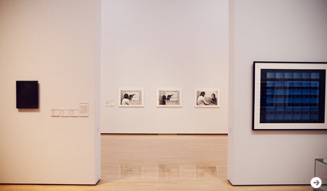
Photography is also an important theme in contemporary art exhibitions.
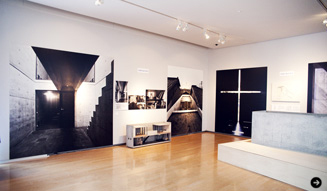
Works by architect Tadao Ando, also from Osaka, are exhibited in various forms.
Ando’s design places two buildings, a gallery and an exhibition hall, side-by-side within the site. Upon entering, one is struck by the imposing presence of the concrete walls. However, as one moves through the buildings, the numerous elements designed to connect with Kobe’s atmosphere—such as the aforementioned Sea and Mountain Decks, and the circular terrace—leave a lasting impression of profound intellectual engagement.
Exceptional artists have emerged from the Kansai region, both in the past and present. Tadao Ando is one such figure. The Hyogo Prefectural Museum of Art also boasts popular, substantial collections of works by two Hyogo-born painters, Heizo Kanayama and Ryohei Koiso. Furthermore, it holds collections of contemporary artists, including video works by Tabaimo, also from Hyogo.
“In the autumn of 2010, we exhibited the modern art collection of the Winterthur Museum, and in January next year, we will host an exhibition of Yasumasa Morimura’s works. We are planning exhibitions that balance modern and contemporary art, making them accessible to a wide audience. We also feature works inspired by the experience of the Great Hanshin-Awaji Earthquake in 1995. These works, along with the Tadao Ando section, are considered important from the perspective of reflecting on history through art, serving as symbols of reconstruction,” says Koichi Kawasaki, Manager of the Curatorial Department.
One might expect the focus on artists from Hyogo to result in regionally limited expressions, but instead, the worldview becomes layered. The deeply explored motifs possess a global synchronicity, drawing viewers powerfully into the artist’s world. This sense of expansion is particularly intriguing.
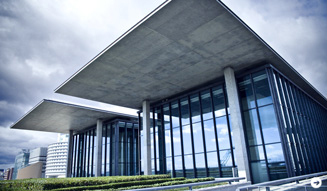
The Sea Deck offers a panoramic view of Ando’s architectural masterpiece.
The power of Art, both as artistic expression and as a technique to achieve a purpose, permeates both. Historical works do not feel dated, and new works do not lean towards excessive personal expression. While curation plays a role, the world experienced here shares something with the Citroën DS3’s paradoxical blend of individuality and universality. Art is taste, but it is also a breakthrough into a new era. The DS3 shares this quality.
CITROEN DS3 | Citroën DS3
CITROEN DS3 @ KOBE
The Sophisticated Port City, Always at the Forefront (3)
Innovative French Cuisine at the Kobe Kitano Hotel
Taste can be translated as flavor, leading to a simple connection with cuisine, but there is a deeper philosophy at play. Chef Hiroshi Yamaguchi, General Manager and Executive Chef of the auberge Kobe Kitano Hotel, renowned throughout Japan, teaches us this. Having trained under the late Bernard Loiseau, a French chef hailed as a genius, Yamaguchi’s every move has drawn attention since he opened “La Côte d’Or,” named after Loiseau’s restaurant, in 1992.
His culinary philosophy, inherited from Loiseau—known for his “cuisine of water,” using little butter or cream—gives rise to many memorable dishes that ingeniously utilize the flavors of ingredients. It is no wonder that the Kobe Kitano Hotel is almost always fully booked.
“What I learned from Loiseau was decomposition and reconstruction. Even with a recipe considered complete, I break it down into its constituent elements: each part of the ingredient, the components of the sauce, even the garnishes. Then, having identified the essence of the dish, I reassemble it using my own methods and techniques.”
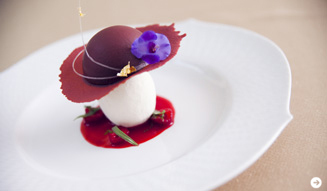
Dessert: "Elegant"
Decomposition and reconstruction. Taking a simple fried egg as an example: separate the yolk and white. Fry the white, then place the yolk on top. The round yolk rolls around on the cooked white. This creates a surprisingly novel fried egg, with a flavor distinct from both sunny-side up and over-easy.
“The basis of decomposition and reconstruction is questioning conventional methods. Cuisine also evolves with the times. Loiseau began creating dishes with little butter or cream after hearing restaurant patrons ask for ‘lighter options.’ The French were becoming wary of French cuisine. Therefore, it was necessary to reject past approaches and create something new. That was the starting point. True transformation arises from critically re-examining what has been done. Chefs, too, must not become complacent, or they will lose touch with what the era demands.”
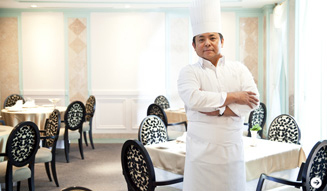
Chef Hiroshi Yamaguchi, General Manager and Executive Chef of the Kobe Kitano Hotel.
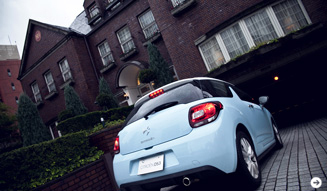
The DS3’s concept, proclaiming “anti-retro, no progress in clinging to the past,” strongly conveys a drive for transformation. Even those who dismiss cars as mere transportation should perhaps reconsider the joy of driving. The design seems to convey such a message. While a hatchback, it incorporates the sleek lines of a coupe, with a seemingly floating roof and distinctive headlamps and LED daytime running lights that add a sense of dynamism. It can be described as a design that reconfigures the elements of an automobile based on “enjoyment.”
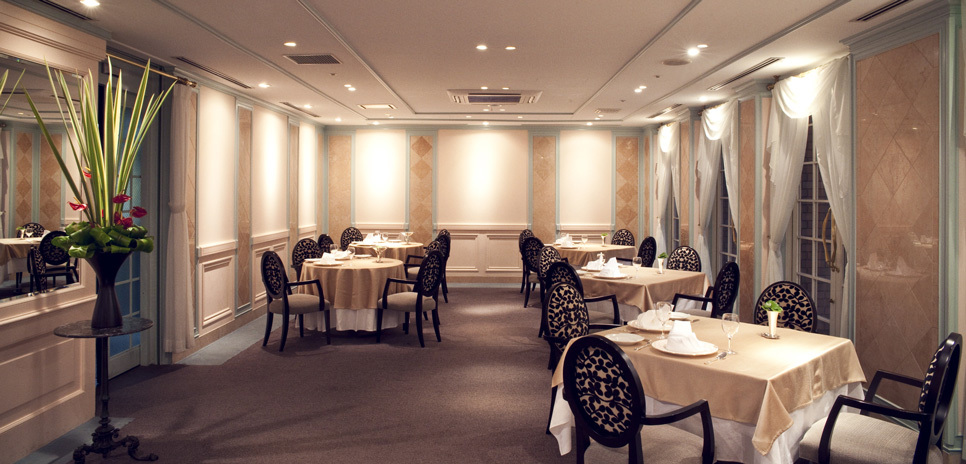
The French restaurant "Ash" at Kobe Kitano Hotel
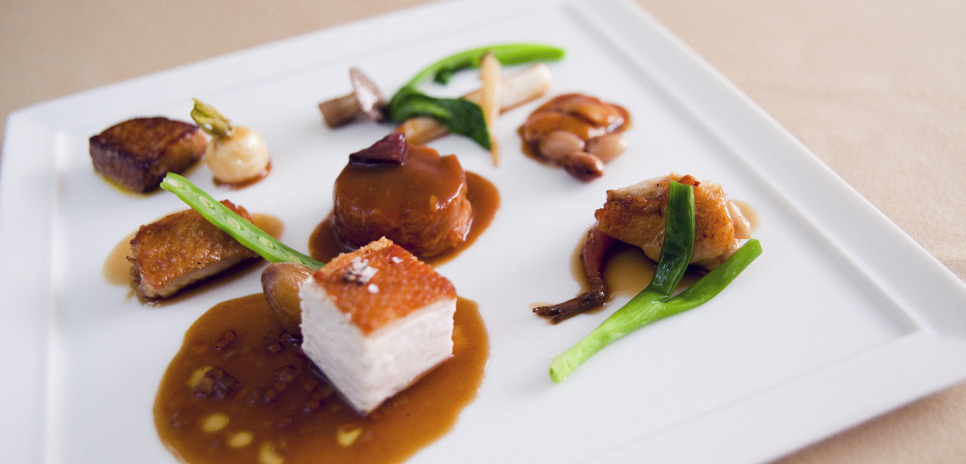
Main dish: "Pan-seared Tanba chicken with organic vegetables"
Isn’t the DNA of the Citroën brand to consistently offer what is considered optimal, from its mechanics to its design? The hydropneumatic suspension, utilizing hydraulics and gas, introduced in the 1955 DS and still found in the C5, is a prime example. The novelty of its styling has always garnered attention and been welcomed in the market. “German and British cars are old-fashioned. Even in terms of design, looking at the relationship between the wheels and the body—short front overhangs and long rear trunks—is the same as in 1920s classic cars,” a Citroën designer once told me. The pursuit of betterment, rather than mere newness, is reflected in its styling. The DS3 is not just new; as one drives it, one begins to feel that its innovation is rooted in the desire to offer something superior.
CITROEN DS3 | Citroën DS3
CITROEN DS3 @ KOBE
The Sophisticated Port City, Always at the Forefront (4)
The Oriental Hotel: Kobe’s Revived Symbol
Kobe’s enduring brilliance likely stems from the crossover of tradition and innovation. A prime example is the Oriental Hotel, located at 25 Kyomachi in the Motomachi foreign settlement. The “former” settlement, where foreigners resided in the 19th century, still evokes the atmosphere of that era with its rows of stone buildings. The imposing structures, housing luxury boutiques, demonstrate a harmonious coexistence of past and present.
“We aimed for guests to feel that this is a hotel that transcends time—new, yet nostalgic,” says a public relations representative. Design details reminiscent of a bygone era are employed, which, combined with the latest facilities, create a unique sense of comfort only found here.
The Oriental Hotel itself has a history dating back to its founding by the Dutch around 1870. It was visited by literary giant Junichiro Tanizaki, and in 1954, by Marilyn Monroe and Joe DiMaggio during their honeymoon. It tragically collapsed during the Great Hanshin-Awaji Earthquake. However, its historical significance remained strong, and it reopened in March 2010, preserving its legacy as one of Japan’s oldest hotels.
Large fans circulate overhead, and potted plants with broad leaves create a nostalgic ambiance befitting an exotic atmosphere. The staging by Ryū Kosaka of Nomura Co., Inc. is meticulous. The use of different materials—wood, stone, and carpet—on the floor is intended to provide a varied sensory experience with each step. It stimulates sight, touch, and other senses. By revitalizing and emphasizing the inherent essence of traditional elements, newness is created. This can be described as an anti-retro sensibility.
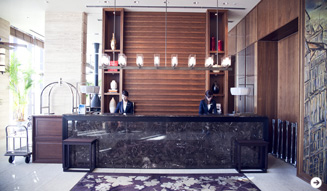
A distinctive reception area.
“Our design concept is based on the image of Japan as perceived by foreigners,” explains a public relations representative. This unique hospitality is also comfortable for Japanese guests. The spacious rooms with large windows and bathrooms, such as in the popular junior suites, are functional yet exude a warm, home-like coziness.
The main dining room and adjacent bar, offering views of Mount Rokko from the 17th floor, encourage guests to linger, testament to their comfort. While the open kitchen is modern, the hotel also serves dishes from the past for guests who favored the original Oriental Hotel.
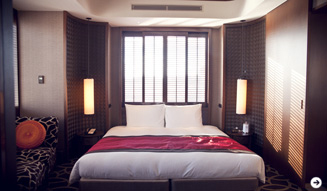
The bedroom of a junior suite (77.39 sqm), characterized by a mix of Eastern and Western tastes.
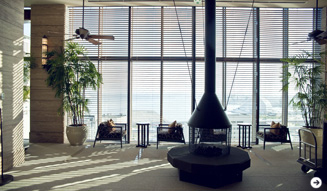
The Kobe sea is visible from the 17th-floor reception.
At the Oriental Hotel, one senses a concept that sets it apart from other hotels. At its core, however, lies a commitment to providing the ultimate hospitality. Offering a unique taste is important, but it is done without being overbearing, aiming always for maximum guest satisfaction. From its design to its service, the Oriental Hotel skillfully blends tradition with modern hospitality. This, too, embodies an anti-retro sensibility.
The Citroën DS3 lacks any sense of heaviness. The DNA of Citroën, which has produced numerous iconic cars, resides within the DS3 as if it were an element of the air, light and present. This message is intuitively conveyed to those who encounter the car, yet it is far from superficial. Driving it reveals that it was developed not through arbitrary novelty, but through the pursuit of what is best for humans.
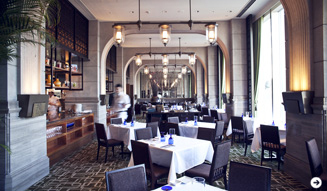
Main Dining by The House of Pacific
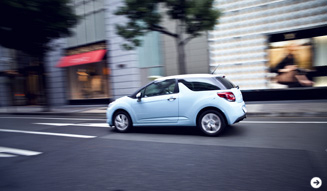
Kobe is blessed with an environment ideal for enjoying driving: Mount Rokko. As you ascend from the city, you can savor the changing atmosphere with each curve. The DS3 boasts handling capabilities that allow it to navigate European roads with their unpredictable weather without a hint of anxiety. Once you’ve driven a Citroën over the Alps, you’ll realize how incredibly reliable it is. It combines the pleasure of driving with the peace of mind that comes from secure handling. Both are essential elements.
With its firmly planted suspension, agile handling, and an engine with ample torque that is easy to manage, the DS3 excels. Whether it’s the 120ps Chic model or the Sport Chic with its 156ps turbo-charged engine and manual transmission, its European origins are reaffirmed on the winding roads of Rokko. Furthermore, it offers comfort, absorbing road imperfections with refined suspension. It is a car that prioritizes the human element, setting it apart from its German, Italian, and Japanese rivals.
When asked about the Citroën DS3, many would likely mention its styling first. Indeed, its distinctive appearance is a major draw. However, upon driving it, one understands that this car was born from the pursuit of what is best for humans. The transformation embodied in the DS3 is not change for its own sake, but a profound desire for change driven by the pursuit of human happiness. Although seemingly a traditional city, Kobe is constantly undergoing internal transformation. The Citroën DS3 is a car that possesses the same power for change aimed at happiness.
CITROEN DS3 | Citroën DS3
CITROEN DS3 @ KOBE
The Sophisticated Port City, Always at the Forefront (5)
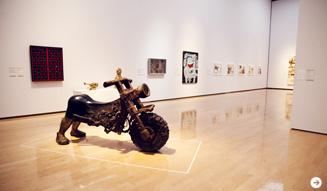
<PLAY>
Hyogo Prefectural Museum of Art
1-1-1 Wakihama Kaigandori, Chuo-ku, Kobe, Hyogo (HAT Kobe)
Opening Hours | 10:00–18:00 (Last admission 17:30)
Closed | Mondays (if Monday is a public holiday, the following Tuesday), New Year holidays (December 31–January 1), and other maintenance closures
Tel. 078-262-0901
http://www.artm.pref.hyogo.jp/
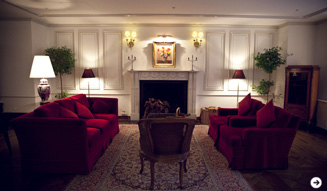
<DINING>
Kobe Kitano Hotel French Restaurant "Ash"
3-3-20 Yamamoto-dori, Chuo-ku, Kobe, Hyogo 1F
Business Hours | 11:30–14:00, 18:00–21:00
Open Daily
Tel. 078-271-4007
http://www.kobe-kitanohotel.co.jp/
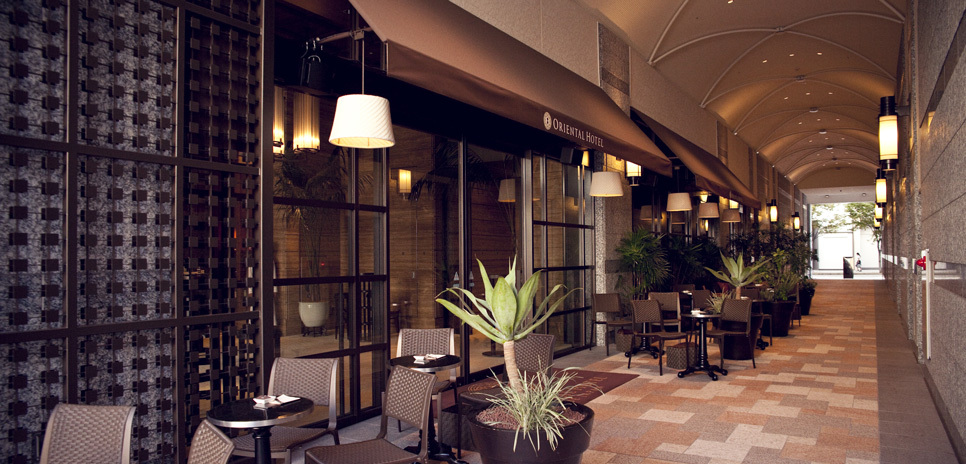
<STAY>
Oriental Hotel
25 Kyomachi, Chuo-ku, Kobe, Hyogo
Tel. 078-326-1511
http://www.orientalhotel.jp/