CITROEN DS3 | Yokohama Chapter
CITROEN DS3 | CITROEN DS3
CITROEN DS3 @ YOKOHAMA
A City Where You Can Experience "Innovation" Rooted in Tradition (1)
Brands aren't built overnight. What remains becomes the foundation, built over time through maturation. Citroën, founded in France in 1919, has become a solid brand precisely because it has layered innovation upon tradition. The representative model in its modern lineup is the stylish DS3. Tradition and innovation. Yokohama, which celebrated its 150th anniversary of port opening in 2009, is a city that resonates with the DS3 through these keywords.
Text by Fumio OgawaPhotos by Hirotaka Shimizu
A City of Innovation That Has Developed Uniquely Since Its Port Opening
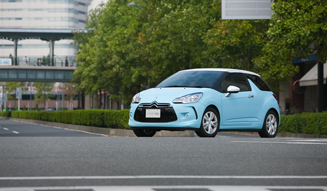
The Citroën DS3 is a French-made compact two-door coupe introduced to Japan this year. It comes in two versions: the "Chic," equipped with a 1.6-liter engine producing 120 horsepower and a 4-speed automatic transmission, and the "Sport Chic," featuring a 1.6-liter turbo engine with 156 horsepower and a 6-speed manual.
It's often said that experience is the most important thing in car manufacturing. The accumulation and application of past technologies realize truly modern engineering. Indeed, the excellent quality of the DS3 may have been achieved thanks to Citroën's experienced engineers.
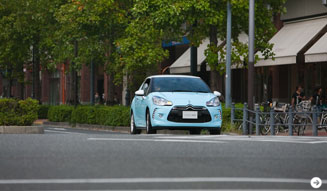
However, this doesn't mean the DS3 is bound by the past. It also understands the importance of anticipating the needs of the times and what will be required next. Even in the rapidly changing urban environments of modern Japan, there are no shortcomings; on the contrary, you'll be impressed by its excellence with every change in driving scene. Its supple suspension performs on highways, while its stable grip holds firm on winding roads.
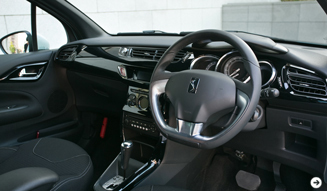
In city driving, the refined, compact design piques the owner's pride. This, too, can be considered a form of performance. These aspects align with Citroën's slogan for the DS3: the concept of "anti-retro." While it couldn't exist without the tradition of Citroën's many legendary cars, its reality is full of innovation. That is the true essence of the DS3.
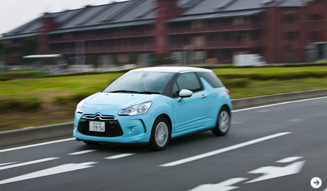
When applying the keywords "tradition and innovation" to cities, Yokohama immediately comes to mind. It has a history dating back to its opening in 1859 based on the Treaty of Amity and Commerce between Japan and the United States. It's a city built around its port with traditional buildings remaining, yet it also boasts numerous parks and cultural facilities, allowing one to experience seemingly contradictory elements of tranquility and intellectual curiosity simultaneously. Its ability to maintain its own unique culture, despite being adjacent to Tokyo, is a significant charm.
In 1860, hotels built by foreigners opened one after another. Restaurants serving international cuisine, using ingredients like beef that didn't exist in Japan, also appeared. Yokohama's "tradition" is a blend of Japanese culture and customs with the foreign cultures of that era. Because it's organically mixed, it has the strength to subtly change its form according to the flow of the times. Perhaps this is why hotels and commercial facilities are not confined to being mere museum exhibits. It walks with the times, but does not pander to them. One can visualize tradition walking hand-in-hand with innovation.
CITROEN DS3 | CITROEN DS3
CITROEN DS3 @ YOKOHAMA
A City Where You Can Experience "Innovation" Rooted in Tradition (2)
Yokohama's New Cultural Landmark: Yokohama Creative City Center
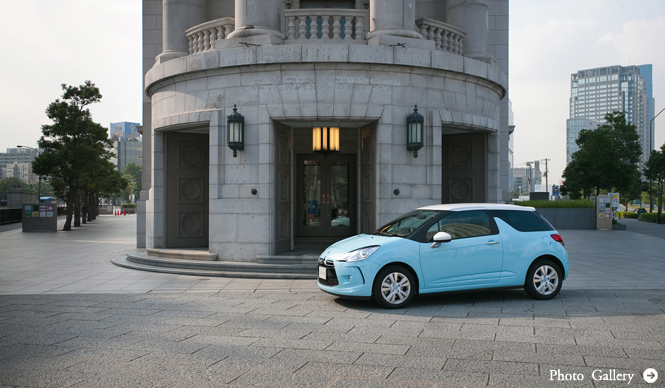
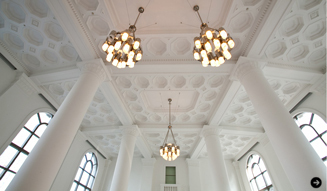
Yokohama is now beginning to see a successful coexistence of history and modernity. Take, for example, the Yokohama Creative City Center. While utilizing the building of the former Bank of Yokohama, constructed in 1929, it is a facility that plays a role in Yokohama's urban development by integrating culture, art, and regional promotion. It stands with a unique presence on a triangular plot of land, a short walk from the well-known Bashamichi street towards the port. It is a regional landmark, built in what is called the "Tuscan style." New activities supporting Yokohama's future are emerging from this center.
"Yokohama City is currently promoting urban development that leverages the creativity of culture and art, known as 'Creative City Yokohama (Cultural and Artistic Creative City).' To this end, Yokohama City and the Yokohama Arts Foundation are working to create an environment where artists, creators, NPOs, citizens, companies, and schools gather and engage in various creative activities. Our mission here is to be a place where people meet, and where exchange and creativity can flourish, providing strong support for those engaged in creative endeavors." (Public Relations Representative)
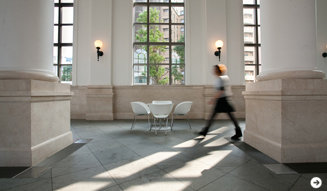
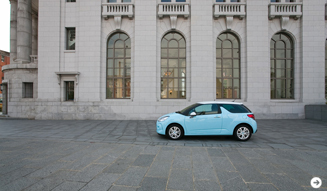
The Yokohama Creative City Center hosts music concerts and seminars on art and urban development. It is also scheduled to hold a kick-off event for the major art exhibition "Yokohama Triennale 2011" in 2011.
"Around this center, there is also the Yokohama campus of Tokyo University of the Arts, and we are seeing an increase in art-oriented young people and art spaces. Against this backdrop, Yokohama City also engages in activities such as inviting Asian artists to stay in Yokohama and create works, known as artist residencies."
However, the Yokohama Creative City Center emphasizes broadening its scope. It is also actively involved in regional revitalization, such as promoting tourism in Yokohama through art tours and fostering industry. It is a wonderful combination that vibrant activities emerge from within a building whose thick columns evoke a sense of historical weight. While it might be a slight overstatement to call it European, the French art scene has also been revitalized by supporting new activities based on history. In that respect, it unexpectedly connects with Citroën.
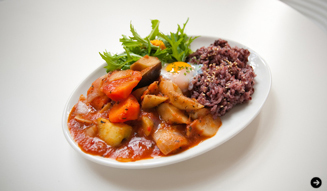
The cafe restaurant on the first floor, which also serves as an exhibition space, features large windows with soft light and a high ceiling, creating a comfortable atmosphere. The cuisine is prepared by a local gem known as "80*80 (Hachimaruhachimar).
The concept here is to focus on the core essence and build development around it. That core is defined by whether it is comfortable for "people." This is where it connects with the Citroën DS3. Because the DS3, in terms of ride comfort and handling, prioritizes whether the driver feels "good." To evolve, one needs an unwavering axis. And because that axis is human-centric, it gives rise to persuasive innovation.
CITROEN DS3 | CITROEN DS3
CITROEN DS3 @ YOKOHAMA
A City Where You Can Experience "Innovation" Rooted in Tradition (3)
Savor Yokohama's Present at "The Tower Restaurant Yokohama"
Yokohama has several symbolic structures, one of which is the "Marine Tower." For those visiting Yokohama by car, it serves as a landmark, and many drivers may feel indebted to it. Built in 1961 as part of Yokohama's 100th-anniversary port opening celebration, it will mark its 50th anniversary in 2011, making it a part of Yokohama's history.
Towers and Citroën have a connection. The Eiffel Tower, Paris's symbol, was built for the 1889 World's Fair. Before World War II, Citroën famously illuminated the Eiffel Tower with giant "CITROEN" lettering. Charles Lindbergh, who made the first solo non-stop transatlantic flight between New York and Paris in 1927, is said to have seen these "CITROEN" letters from his plane. At the time, towering steel structures symbolized an industrializing society, so Citroën's use of the Eiffel Tower for advertising was likely a clever strategy. The Marine Tower evokes this connection.
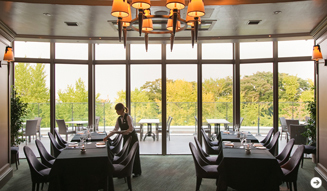
The current Marine Tower was renovated in 2009 as part of Yokohama's 150th-anniversary port opening celebration. Its exterior, previously painted red and white, was updated to a metallic gray, which was striking. Simultaneously, the interior was significantly transformed, with enhanced dining options. The first floor welcomed the cafe-restaurant "The Band" and the bar "mizumachi bar." On the fourth floor is "Tower Restaurant Yokohama," offering a refined dining experience. Beyond the windows, an expansive view unfolds of ginkgo trees, the sea, and the sky.
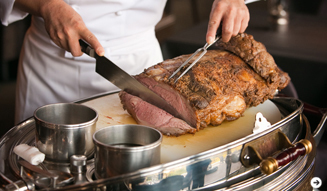
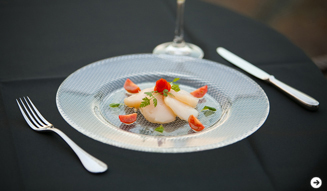
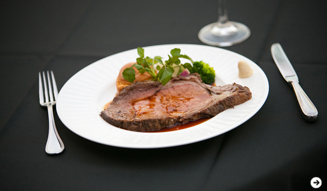
The "Tower Restaurant Yokohama" is characterized by its sophisticated atmosphere, suitable for men in suits. The roast beef has already become a signature dish, and the service of bringing a juicy, slow-cooked beef roast on a carving cart to the table is a delightful touch. The chef selects American long-grain beef, known for its rich flavor, primarily serving the rib-eye cut. The exterior is seared to a crisp, while the interior remains so juicy that the mere sight of a knife cutting into it makes one's mouth water. It is served with a subtly flavored gravy and Yorkshire pudding.
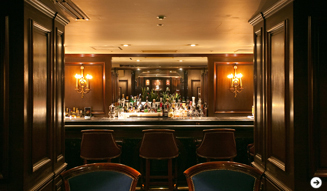
The interior, with its predominantly black decor and large wrap-around windows, exudes a sense of allure amidst its openness, making one feel special just by being there. While restaurants in Paris once served primarily as places for nourishing soup, the functions they serve change with the times. It is precisely because the restaurants at the Marine Tower understand this that they constantly strive to satisfy customers not only with their appetite but also with their ambiance and presentation, evolving with ingenuity.
Furthermore, the observation deck, offering a 360-degree panoramic view of Yokohama from the 29th and 30th floors, is not to be missed. The scenery is a blend of the transformed Minato Mirai district and the intricate, traditional landscape of the port facilities and parks. Yokohama shares a certain resonance with Paris, where innovation continuously emerges within historical structures. In such a city, one would feel even more inclined to drive the French-born DS3 and enjoy its harmony with the urban landscape.
CITROEN DS3 | CITROEN DS3
CITROEN DS3 @ YOKOHAMA
A City Where You Can Experience "Innovation" Rooted in Tradition (4)
Hotel New Grand: Preserving Tradition While Continuing Innovation
A hotel representing a city. This might be an uncommon occurrence. If anything, the French "Guide Michelin," which rates dining and accommodation establishments, uses hotels and restaurants to represent cities from a cultural perspective.
Yokohama is one of the few exceptions where a hotel stands as a symbol of the city, even without the Guide Michelin. This is the "Hotel New Grand," located opposite the beautiful green expanse of Yamashita Park. It was built to succeed the "Grand Hotel," which collapsed in the Great Kanto Earthquake of 1923, around the same time as Yokohama's port opening, with the philosophy of creating a premier hotel once again. It opened in 1927.
As it is registered as a modern industrial heritage site designated by Yokohama City, the building of New Grand seems fittingly described as majestic. It is said that many people who remember the 1960s vividly still wish to stay at New Grand, even those living in Tokyo. Even now, many people who have vivid memories of that era, even those living in Tokyo, wish to stay at New Grand at least once.
"We do not discard historical value. We believe that the charm of this hotel lies in allowing younger generations to appreciate the weight of history." (Public Relations Representative)
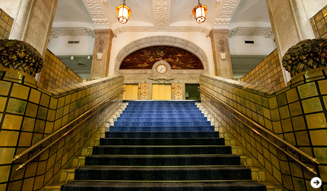
Emphasizing its aspect as a cultural heritage, Hotel New Grand opened the "New Grand Tower" adjacent to the main building in 1991. This tower features more contemporary elements in its room designs, and some rooms offer panoramic views of the port city of Yokohama, providing a unique value.
The main building also underwent partial renovations around the same time as the opening of New Grand Tower. One of these was the opening of the Italian restaurant "Il Giardino." This restaurant offers a wide range of Italian cuisine tailored to Japanese tastes, from northern to southern Italy. It also boasts a distinctive interior feature: a mosaic floor made of marble imported from Italy. The intricate marble forms a beautiful pattern. In 1991, there was a significant interest in Italian traditional culture in Japan. It is fascinating that a historic hotel focused on the tradition of "Italy" at that time, which was itself an innovation reflecting the era.
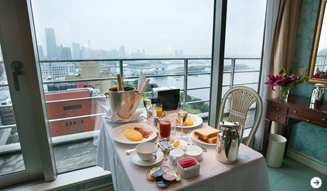
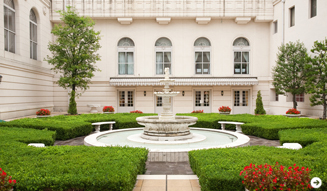
When we talk about innovation, the English term "cutting edge" is sometimes used. However, innovation does not necessarily mean novelty. The true essence of innovation lies in how historical heritage is utilized. Hotel New Grand also offers various plans that align with modern health consciousness, such as "Detox Plans" and accommodation packages that combine a medical check-up with a hotel stay in cooperation with the nearby Minato Red Cross Hospital's health screening center. There is also an esthetic salon using French essential oils. Because it holds the most crucial key to innovation – not forgetting the value of what has built its tradition – these initiatives seem to attract people.
What constitutes tradition is not always visible. At Hotel New Grand, from the bell staff at the entrance to reception, room attendants, and restaurant service, there is a "warmth" that embodies the hotel's charm. Unlike large hotels, there is a personal touch to the service here. This is why repeat guests always stay here.

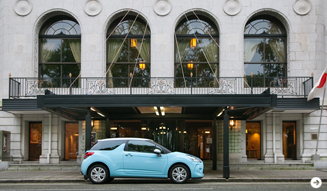
When a car undergoes a model change, its appearance can become completely different. It goes without saying that André Citroën, the founder of Citroën, could never have imagined the current DS3. However, the company's philosophy of thoroughly pursuing the functions of a car – such as organizing the "Yellow Submarine Fleet" for expeditions in Africa or adopting the revolutionary hydropneumatic suspension technology in the 1950s – and translating that into value for the driver, remains unwavering.
The stylish Citroën DS3's true essence is best understood when driving it. A short trip to Yokohama allows for a full appreciation of the Citroën's value.
CITROEN DS3 | CITROEN DS3
CITROEN DS3 @ YOKOHAMA
OPENERS Recommended Spot
< PLAY >
Yokohama Creative City Center
6-50-1 Honcho, Naka-ku, Yokohama-shi, Kanagawa
Opening Hours | 11:00 - 19:00 (Cafe last order 18:30)
Tel. 045-221-0325
http://www.yaf.or.jp/ycc/index.php
< DINING >
THE TOWER RESTAURANT YOKOHAMA
15 Yamashita-cho, Naka-ku, Yokohama-shi, Kanagawa
Opening Hours | 11:30 - 15:00 (Last order 14:00) / 17:00 - 23:00 (Last order 22:00)
Open Year-round
Tel. 045-263-8117
http://marinetower.jp/