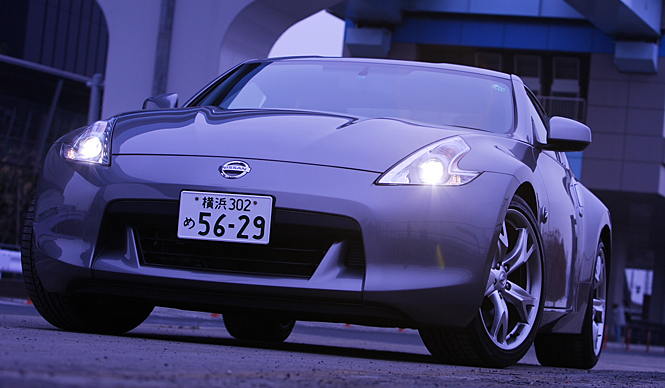
NISSAN FAIRLADY Z | The 27th (Part 1) | An automaker led by a president passionate about sports cars
The 27th: NISSAN FAIRLADY Z (Part 1)
A Sports Car Maker Led by a President Who Loves Sports Cars
This year marks the 40th anniversary of the Fairlady Z, a pioneer of Japanese sports cars. The new, sixth-generation model has arrived with further refinements to its fundamental sports car performance, including a 10cm shorter wheelbase and a weight reduction of approximately 100kg.
By Yasushi ShimonoPhotos by Masayuki Arakawa
Launched Against the Odds of a Once-in-a-Century Economic Crisis
This is the sixth-generation Fairlady Z. The first model debuted in 1969, making this year its 40th anniversary. That it's still only the sixth generation, in an era where Japanese cars typically see model changes every four years, suggests a remarkably long lifecycle. If memory serves, there was a two-year hiatus before the previous model was released. The Z was revived in 2002 as the fifth generation, a pet project of Carlos Ghosn, the turnaround specialist brought in to wield the axe at the struggling Nissan.
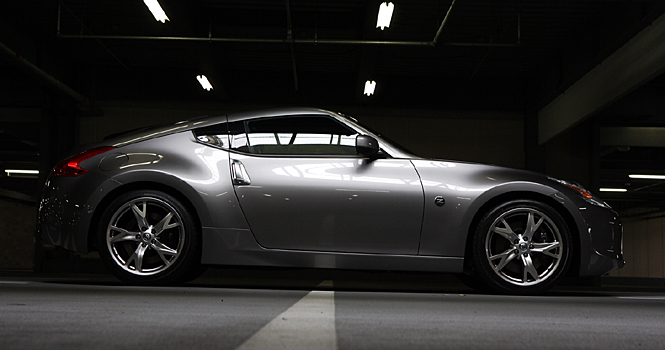
The new Z is 65mm shorter in overall length and has a 100mm shorter wheelbase compared to its predecessor. Its silhouette, with a more pronounced long nose, is striking.
The latest generation, however, is launched against the backdrop of a once-in-a-century economic crisis. Yet, I find myself rooting for it. The Yomiuri Group eventually abandoned Tokyo Verdy, a team that never quite became a giant. But when Ghosn first took the helm, he didn't abandon the Z, nor did he abandon Yokohama F. Marinos. Here's a car maker led by a president who loves both sports and sports cars. Isn't that a spec that makes you want to cheer it on?
Automatic Blip Control: No Heel-and-Toe Required
The new model's specifications are equally compelling. While it's almost an automotive instinct for cars to grow larger with each model change, the Z has become smaller and lighter than its predecessor. The wheelbase has been shortened by 10cm, and the overall length by about 7cm. Thanks to the use of aluminum for the hood, doors, and tailgate, the vehicle's weight has been reduced by approximately 100kg. The lighter, the better, when it comes to sports cars.
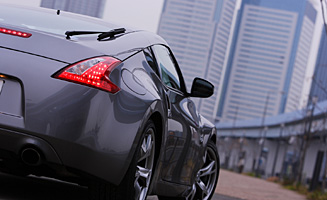
The voluptuously flared rear fenders are a key design feature of the new Z. The overall width has increased by about 30mm compared to the previous model.
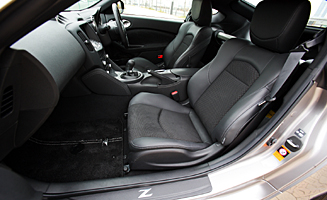
The interior quality has been significantly improved compared to the previous generation. The top-tier "Version ST" grade comes standard with a BOSE sound system, part of a three-grade lineup.
The engine has been upgraded from the previous model's 3.5-liter to 3.7 liters. This 3.7-liter V6, the VQ37HR, is already found in the Skyline Coupe. However, the 6-speed manual transmission features a world-first innovation: "Synchro Rev Control." When the clutch pedal is depressed during driving and the driver is about to shift gears, the system detects the next gear and automatically matches the engine speed.
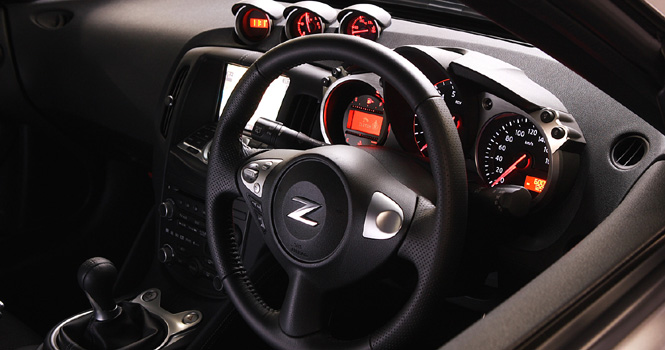
A snug interior space befitting a sports car. Color options include the pictured black, along with Vermilion Orange and Gray.
This is the automatic blipping system that eliminates the need for heel-and-toe shifting. Any manual transmission enthusiast will be intrigued just hearing about it. Surprisingly, a significant number of Z owners prefer manual transmissions; over 30% of initial orders for the new model were for the MT version. In the main market, the US, the proportion is even higher, with nearly 50% still choosing the MT. While supported by such demand, Nissan's commitment to incorporating new technology into the increasingly rare manual transmission is, once again, uniquely Nissan.
Nissan Motor Co., Ltd. Customer Service Center
0120-315-232
http://www.nissan.co.jp/