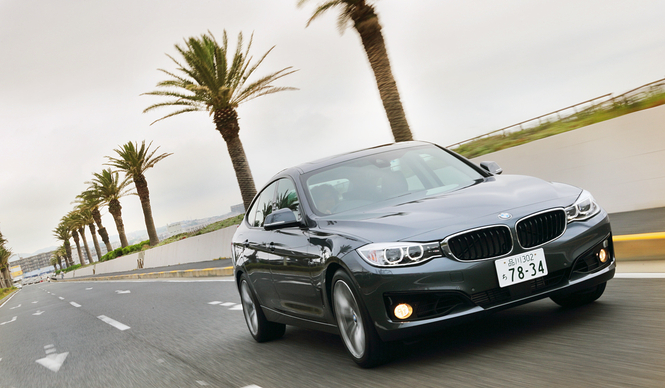
Test Drive: BMW 3 Series Gran Turismo | BMW
BMW 335i Gran Tourismo | BMW
Test Drive: BMW 3 Series Gran Turismo
BMW“3 Series” has been newly added to the lineup, and the “BMW 3 Series Gran Turismoboasts a coupe-like style and interior space that surpasses the Touring wagon. Satoshi Shiomi test drives the top-grade 335i Gran Turismo and discusses its origins.
Text by SHIOMI SatoshiPhotographs by ARAKAWA Masayuki
Why Do Models Keep Increasing?
Many readers may be surprised by the ever-increasing number of MINI models, but it's not just MINI; BMW, the core brand, is also expanding its model lineup at a considerable pace.
In 2003, BMW had 13 models and MINI had 1. By 2013, this had grown to 22 BMW models and 7 MINI models. The current BMW models have multiple trim levels within each model, meaning there are even more specifications.
BMW's eternal and greatest rival,Mercedes-Benzalso offers a variety of body styles and engine variations, so BMW cannot afford to rest on its laurels.
When Mercedes took the lead in importing 6-cylinder clean diesels into Japan, BMW not only offered 6-cylinder diesels but also 4-cylinder versions. When Mercedes introduced the "CLS-Class" as a four-door coupe, BMW responded with the "6 Series" and added the "Gran Coupe". They have consistently responded to competitive moves.
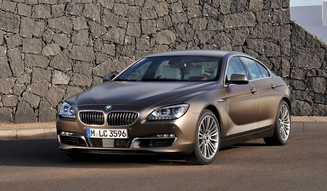
BMW 6 Series Gran Coupe
Mercedes, too, responded by introducing the "X1" and "X3" into the compact SUV category that BMW pioneered, and then introduced the "GLK". To counter MINI's success in expanding the premium compact segment and the "1 Series", they refreshed the "A-Class" and "B-Class". They also introduced the "CLA" (launching soon in Japan). As a result, domestic sales in 2012 were closely matched: 41,911 units for Mercedes-Benz and 41,102 for BMW. Including MINI's 16,212 units, BMW holds a significant lead (according to JAIA statistics).
However, each manufacturer has many more specifications available in their home markets. It's not feasible to import all of them into a market as small as Japan. While increasing the number of models can boost sales, the costs associated with importation and the risks of holding inventory also increase, not necessarily leading to profit. Conversely, limiting the number of models hinders sales growth.
The importer's skill lies in accurately forecasting demand several months in advance (considering shipping time) and determining the optimal number of models. Recently, both BMW and Mercedes-Benz have adopted an aggressive strategy of increasing their model lineup to capture diverse needs. This may reflect their economic forecasts for the country.
A Newcomer in the 3 Series Schedule
The "3 Series Gran Turismo" may be the clearest example of BMW Japan's aggressive approach.
“3 Series" traditionally saw the sedan and touring models released first, followed by the coupe and convertible, and then the special "M" versions. However, with the current 3 Series, the Gran Turismo, a completely new body style for the series, has been introduced after the sedan and touring.
Incidentally, the coupe variants appear to be spun off into the "4 Series".
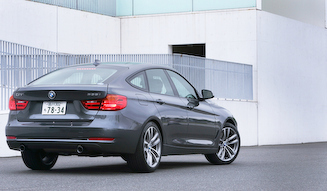
BMW 3 Series Gran Tourismo
Speaking of Gran Turismo, it already exists in the "5 Series". The "5 Series Gran Turismo" utilizes many components from the "7 Series" and was introduced ahead of the current 5 Series. It's a five-door hatchback with a larger body than the 5 Series sedan and touring, and its sheer size may have surprised some BMW fans, as it represented a departure from BMW's traditional design language.
It's a five-door hatchback with a larger body than the 5 Series sedan and touring, and its sheer size may have surprised some BMW fans, as it represented a departure from BMW's traditional design language.
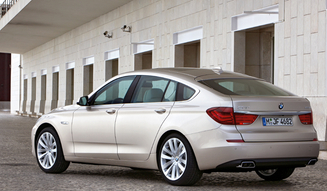
BMW 5 Series Gran Tourismo
BMW 335i Gran Tourismo | BMW
Test Drive: BMW 3 Series Gran Turismo (2)
The Extended Wheelbase Makes a Huge Difference
However, the 5 Series Gran Turismo has been a huge hit in markets like the US and China, where size is valued. Buoyed by this success,BMWhas also introduced a Gran Turismo version for the 3 Series.
In China, where there's a unique demand for using the 3 Series as a chauffeured vehicle, BMW offers a sedan version with a 110mm extended wheelbase. The 3 Series Gran Turismo was developed based on this.
The extended wheelbase has a dramatic effect, creating an unbelievably spacious rear seat and luggage area with the 110mm increase. For someone of average Japanese height, the knee room in the rear seat might even feel excessive. The rear overhang is also 145mm longer than the sedan and touring's 955mm, measuring 1,100mm, and the luggage space is so vast it leaves the touring model no room to compete.
Indeed, its capacity exceeds the touring's 495-1,500 liters, boasting 520-1,600 liters. The rear seatbacks can be folded upright, allowing for the creation of a boxy cargo area with minimal wasted space if desired.
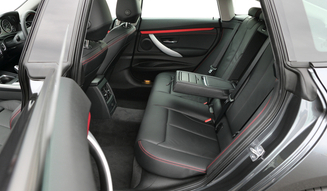
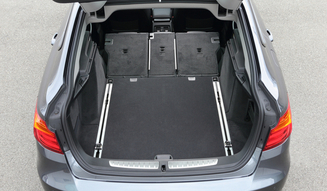
The Japanese market 3 Series Gran Turismo lineup includes the following, similar to the sedan and touring models:
"320i Gran Turismo"—Equipped with a 2.0-liter inline 4-cylinder gasoline turbo engine producing 135 kW (184 hp) at 5,000 rpm and 270 Nm (27.5 kgm) of torque between 1,250-4,500 rpm.
"328i Gran Turismo"—Equipped with a 2.0-liter inline 4-cylinder gasoline turbo engine producing 180 kW (245 hp) at 5,000 rpm and 350 Nm (35.7 kgm) of torque between 1,250-4,800 rpm.
"335i Gran Turismo"—Equipped with a 3.0-liter inline 6-cylinder gasoline turbo engine producing 225 kW (306 hp) at 5,800 rpm and 400 Nm (40.8 kgm) of torque between 1,200-5,000 rpm.
are available.
Conversely, the "ActiveHybrid 3" with a 3.0-liter inline 6-cylinder gasoline turbo engine and electric motor, and the " 320d" with a 2.0-liter inline 4-cylinder diesel turbo engine, offered in the sedan and touring models, are not currently available for the Gran Turismo.
BMW 335i Gran Tourismo |
BMW 335i Gran Tourismo
Test Drive: BMW 3 Series Gran Turismo (3)
Mastering High Technology
I test drove the top model, the 335i Gran Turismo. The view from the driver's seat is the same as the sedan and touring. Once the destination, cabin temperature, audio, and other settings are configured using iDrive, you can focus on driving.
With most operations now possible via a single dial, there's no practical need to angle the center panel towards the driver for ease of use. However, like the inline-6 engine, it's a tradition thatBMWcannot easily abandon.
BMW's characteristic of adhering to adopted concepts for a long time, while also skillfully utilizing high technology such as Valvetronic and twin-scroll turbochargers, is why a sense of the futuristic and the nostalgic coexist in their vehicles.
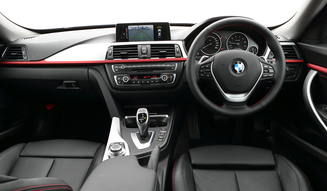
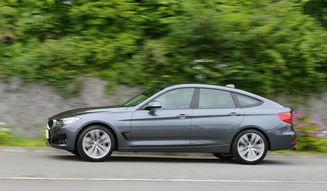
The most significant feature of this model is its inline-6 engine, renowned for its refined feel. However, when confronted with an engine that delivers a maximum torque of 400 Nm (40.8 kgm) across a wide range, the sheer power from the turbo boost is overwhelming, leaving little room to calmly appreciate the precision of the revs.
Nevertheless, as you accelerate gradually or cruise at high speeds, you begin to appreciate it as a smooth and enjoyable engine. However, with rival V6 engines also becoming remarkably smooth, the absolute superiority of an inline-6 is no longer as apparent.
While I hesitate to make a definitive judgment after less than an hour of driving, perhaps the appeal of an inline-6 now lies more in its tradition than its inherent mechanical advantage. The 8-speed automatic transmission shifts gears directly, yet without noticeable jolts.
BMW 335i Gran Tourismo |
BMW 335i Gran Tourismo
Test Drive: BMW 3 Series Gran Turismo (4)
Perhaps the Best Ride Comfort in the 3 Series?
The handling is typical ofBMW, conveying a sense of inherent quality derived from its 50:50 front-rear weight distribution. The car's behavior is predictable, and it turns precisely as the steering is directed.
The variable ratio steering, once called Active Steering, didn't always provide a natural feel. However, with the more recent system, now called Variable Sport Steering, the variable ratios and power assistance have become considerably more natural.
They understand that "sporty" doesn't necessarily mean a stiff suspension. Unless it's an M model, they don't unnecessarily stiffen the suspension just because it has a powerful engine.
The suspension works effectively, handling both small and large inputs with ease, despite the 19-inch tires and wheels fitted to the test car. This results in a high level of comfort.
Perhaps due to the longer wheelbase, the ride comfort, especially on highways, felt superior to that of the sedan and touring models.
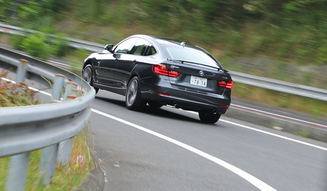
I would recommend the 3 Series Gran Turismo to those who immediately envision carrying passengers or cargo. However, given its price, those who might hesitate when asked to "carry something" may be better served by the sedan or touring.
That said, it's not uncommon for a lifestyle to develop after acquiring the vehicle, so if you like the styling, singles and those without specific hobbies are also welcome to consider it.

BMW 335i Gran Turismo | BMW
Body Dimensions | Length 4,825 x Width 1,830 x Height 1,510 mm
Wheelbase | 2,920 mm
Tread (Front/Rear) | 1,540 / 1,585 mm
Minimum Ground Clearance | 165 mm
Minimum Turning Radius | 5.7 meters
Trunk Capacity | 520 - 1,600 liters
Weight | 1,740 kg
Engine | 2,979cc Inline-6 DOHC Direct Injection Twin-Scroll Turbo
Maximum Output | 225 kW (306 hp) / 5,800 rpm
Maximum Torque | 400 Nm / 1,200-5,000 rpm
Transmission | 8-speed Automatic
Drivetrain | FR
Tires | 225/55R17
0-100 km/h Acceleration | 6.1 seconds
Maximum Speed | 250 km/h
Fuel Economy (JC08 Mode) | 12.5 km/ℓ
CO2 Emissions (EU Cycle) | 178 g/km
Price | 7.3 million yen; Sport/Modern/Luxury: 7.5 million yen; M Sport: 7.76 million yen