December 16, 2014
Test Drive of the Audi A1 Sportback | Audi
Audi A1 Sportback
Audi's Compact Four-Door Offering
Test Drive of the A1 Sportback in Spain
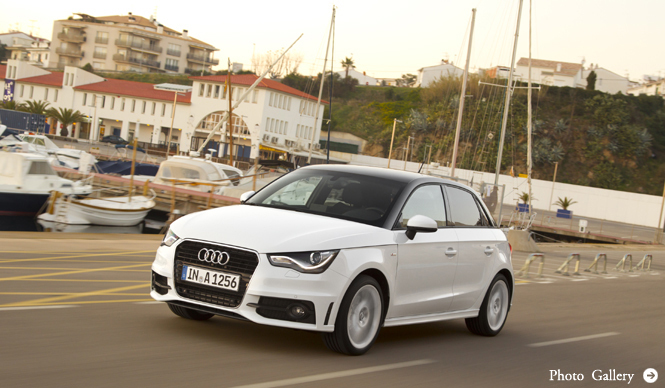
The Audi A1 is popular for its stylish design and practical size. Now, joining the lineup which previously only offered a two-door hatchback, is the four-door "A1 Sportback." Announced at the 2011 Tokyo Motor Show, this compact and sporty model is finally going on sale. An international test drive event was recently held in Spain.
Read Tatsuya Otani's domestic test drive review here
Text by OGAWA Fumio
Targeting Young Urban Families
"Its defining characteristic is driving enjoyment." With this statement, an Audi head office PR representative began the presentation for journalists gathered from around the world. The location was Costa Brava, a resort on Spain's Mediterranean coast. Audi is known for its adeptness at setting up impressive venues in parking lots adjacent to airports.
"The four-door A1 Sportback represents a new functionality. Our target is primarily young families living in urban areas, and we've added everyday practicality to the A1 that was released earlier. We expect it to be well-received in Japan and Latin countries," said Sandra Gelles, who is in charge of product marketing.
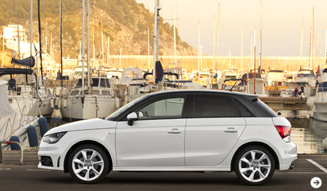
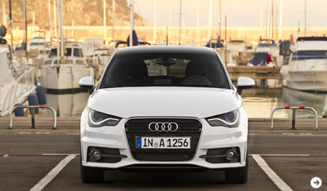
The body dimensions are 3954mm in length, 1746mm in width, and 1422mm in height. Compared to the A1 (two-door), the height has increased by only 6mm and the width by 6mm, maintaining its compact size. The engine offered in Japan is a 1.4-liter turbo unit producing a maximum output of 122ps, paired with a 7-speed dual-clutch transmission called S tronic.
Audi A1 Sportback
Audi's Compact Four-Door Offering
Test Drive of the A1 Sportback in Spain (2)
Unparalleled Luxury in the Compact Class
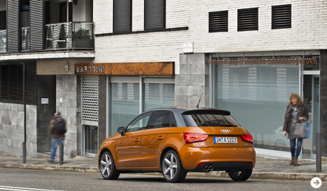
A spectacular lineup of A1 Sportbacks in various body colors—Samoa Orange, Scuba Blue, Misano Red, and Glacier White—was displayed in the venue's parking lot. The most striking exterior difference from the two-door A1 is the roof design. While the two-door model featured a contrasting accent color only on the pillars, the Sportback extends this contrasting roof treatment (an option) across the entire roof.
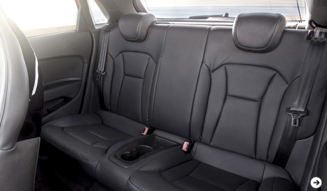
The B-pillar has been moved forward by approximately 230mm, and the roof extended by about 80mm to enhance rear passenger space. However, the visual distinction between the two-door and four-door models remains quite subtle. This marketing strategy likely aims to appeal to both markets that prioritize the personal feel of a two-door and those that value functionality and ease of use in urban environments.
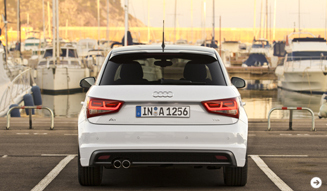
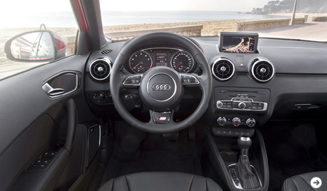
As Sandra Gelles from product marketing noted, "It offers improved usability in tight parking spaces." The front doors are 240mm shorter, and while entry might feel slightly cramped when focusing on the front seats, the interior exudes a sense of luxury rarely found in cars of this size, with seamlessly fitted synthetic resin panels and beautifully finished metallic controls.
"While the A1 is our most compact Audi, we believe that being part of the family is paramount, so we've been meticulous about the quality of materials and craftsmanship," stated Jürgen Leffler, who oversaw the design. Furthermore, optional two-tone seat fabrics, accent colors for the center console, door armrests, and air vents can be added. The test car featured these options, and while not essential to the car's core function, they undeniably added a touch of vibrancy and uplifted the mood.
Audi A1 Sportback
Audi's Compact Four-Door Offering
Test Drive of the A1 Sportback in Spain (3)
The Benefits of a Lightweight Body Are Immediately Apparent
The full model range includes engines with diverse characters, from an efficiency-focused 1.2-liter to a sporty 1.4-liter twin-charger producing 185ps. Simultaneously, 1.6-liter and 2-liter turbo-diesel engines are available, likely forming the core of sales in Europe.
The 140ps 1.4-liter TFSI is equipped with a cylinder deactivation system. When driving at a constant speed, such as on the highway, the cams for the second and third cylinders shift, deactivating valve operation to improve fuel efficiency. "Even if you're paying close attention, you probably won't notice when the cylinders deactivate or reactivate," said Jörg-Uwe Fuchs, who was in charge of technical development for the A1 Sportback.
Indeed, observing the fuel economy gauge on the instrument panel, while cruising at around 100 km/h on the highway, the fuel consumption reading of "4 liters/100km" (meaning 25 km/liter) drops to "2 liters/100km" (a remarkable 50 km/liter!) when cylinder deactivation engages. "Introduction to the Japanese market is undecided," stated Audi Japan.
Fuel efficiency was also a primary objective for the body structure, which Audi refers to as 'ultra.' In the chassis design, stress distribution was meticulously analyzed, and lightweight materials such as ultra-high-strength steel were used to balance strength and weight reduction. Similar weight-saving technologies have been applied to the transmission and engine itself, resulting in only a 25kg weight increase for the four-door version.
The benefits of the lightweight body are immediately apparent upon setting off. The moment the clutch engages, the car glides forward with a sense of lightness. Acceleration is satisfying, and the car handles nimbly whether on the highway near the Mediterranean or on winding mountain roads. Costa Brava, being a summer resort, is quiet in winter, making it ideal for test drives. During peak season, a design-focused model like the A1 would undoubtedly stand out.
Audi A1 Sportback
Audi's Compact Four-Door Offering
Test Drive of the A1 Sportback in Spain (4)
Impressive Quietness
The test drives included the 86ps 1.2 TFSI (5-speed manual), the 140ps 1.4 TFSI (S tronic), and the 143ps 2.0 TDI (6-speed manual). A common characteristic across all models was their remarkable quietness. Even at considerable speeds, wind noise was effectively suppressed.
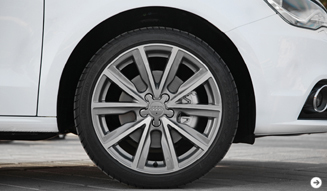
The 1.4 TFSI revs eagerly, with exhaust notes subtly audible, clearly designed to engage the driver. With 17-inch tires, the ride is slightly firm, making it particularly appealing to driving enthusiasts. The S tronic transmission responds quickly, offering the convenience of an automatic while embodying the concept of combining manual directness with efficiency.
The 2-liter diesel boasts a substantial torque of 230Nm, allowing it to run at just 1000rpm, which contributes to its excellent fuel economy. At highway speeds, around 100 km/h, the engine operates at approximately 1200rpm, ensuring a quiet ride. This strong torque translates into agile acceleration, providing a different kind of driving pleasure with its robust power delivery compared to the gasoline engine. This is a model one would certainly desire in Tokyo.
A pleasant surprise was the 1.2 TFSI. While familiar from the Polo, this engine is exceptionally well-tuned. It offers good acceleration and, on the open roads of Spain, proved more than adequate for practical use, with no hint of sluggishness. Furthermore, the ride comfort is excellent, with no harshness from the tires whatsoever; it provides a smooth and comfortable driving experience. While frequent stop-and-go traffic might impact fuel economy due to heavier accelerator input, it remains a strong choice for use outside congested urban areas.
The model planned for introduction in Japan is expected to be the 1.4-liter four-cylinder with an intercooled turbocharger, producing 122ps, familiar from the current A1 two-door. Although a test car for this specific configuration was not available, considering the minimal weight increase, it is likely to offer enjoyable handling characteristics.

Audi A1 Sportback
Body | Length 3954 x Width 1746 x Height 1422mm
Engine | 1.4L Inline 4-cylinder + Intercooled Turbocharger
Max Output | 90kW [122ps] at 5000rpm
Max Torque | 200Nm / 1500–4000rpm
Drivetrain | FWD
Fuel Consumption | 4.6–6.5 L/100km
CO2 Emissions | 122g/km
Transmission | 7-speed S tronic
Price | Undecided


