February 27, 2015
PORSCHE 911 Carrera | Porsche 911 Carrera Test Drive
PORSCHE 911 Carrera
The Enduring Appeal of the Supercar's Origin (1)
While there are many types of super sports cars, the Porsche 911 Carrera, the origin of the sports car, continues to impress with its superb driving performance.
Text by Fumio OgawaPhotos by Hirotaka Shimizu
The Driving and Steering Feel That Embodies Porsche
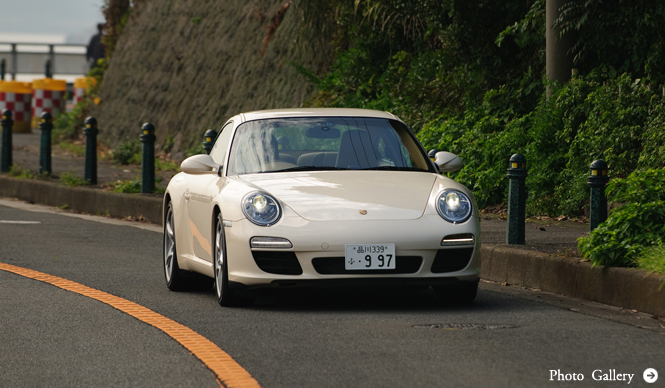
The Porsche 911 Carrera (codename 997) is entering its seventh year since its debut in 2011. This year marks a full model change. Has it become outdated? Absolutely not. If you haven't driven a 911 yet, we highly recommend getting behind the wheel.
The 911 Carrera driven was equipped with the 7-speed PDK, offering the direct feel of a manual transmission with the ease of an automatic (¥12.67 million). It's a rear-wheel-drive model powered by a 3.6-liter flat-six engine mounted in the rear. While the current 911 lineup is extensive, this car seems to possess all the fundamental elements that make a 911 a 911.
Let's list the 911 lineup here. The base model is the Carrera with 345ps. Above that are the Carrera S with 385ps, the Carrera GTS with 408ps, the Turbo with 500ps, the Turbo S with 530ps, and the GT3, which is close to a race car. The lineup is extensive.
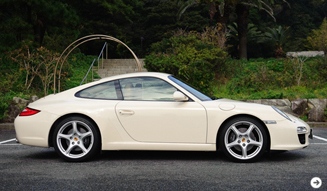
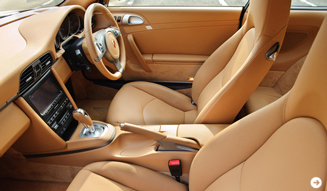
The transmission options are primarily manual and the dual-clutch system, PDK. Drivetrain options include 2WD and 4WD. The body styles range from coupe and cabriolet to Targa, offering a rich variety of combinations. If you crave speed, there's the GTS or the Turbo above it. For a more direct steering feel, the GT3. Porsche's current strategy is to finely segment its models to match the driver's preferences.
The appeal of the 911 Carrera lies in its straightforward, direct feel. The steering, the solid suspension, the sharp throttle response, the rigid brakes, and the assertive six-cylinder engine – all contribute to its character. Driving this car makes you realize that most of the higher-end models emphasize 'excess' in their features. For instance, it doesn't have the sheer acceleration of the Turbo, but it offers more than enough. In essence, the great appeal of the base 911 model is its balanced nature.
Porsche's lineup also includes sports cars like the Boxster and Cayman, in addition to the 911. These are also options when considering a Porsche sports car, but the 911's individuality shines through here as well. While mid-engined models like the Boxster and Cayman might offer superior agility, the 911's understated charm lies in its substantial feel, robust engine torque, and precise steering.
PORSCHE 911 Carrera
The Enduring Appeal of the Supercar's Origin (2)
A Unique Product
For those familiar with the 911, its solid steering feel is a comforting weight. While it might feel heavy to newcomers, this moderate resistance helps prevent over-steering through a series of corners. When the car reacts quickly to steering input, you can control it effortlessly, even if it requires a bit more steering effort.
Since the 1960s, Porsche has offered the 911 alongside more compact sports cars. In the 1980s and 90s, models like the 924 and 944 also enjoyed considerable popularity. They offered the distinct appeal of sports cars with their direct steering and powerful acceleration. However, upon switching to a 911, the presence of those cars diminished. This was due to the 911's superior ride comfort, abundant engine torque, and sharper steering. The same holds true today.
The 911's strength lies in its sporty yet practical handling. The test car was equipped with 19-inch Potenza tires, and the ride comfort was surprisingly soft. However, perhaps due to its relatively short wheelbase of 2,350mm, it tended to bounce over road imperfections. This is an unavoidable characteristic of the 911, with its rear-engine layout limiting the potential for a longer wheelbase.
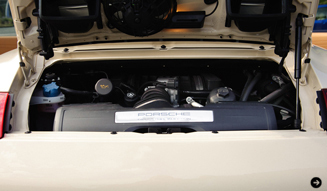
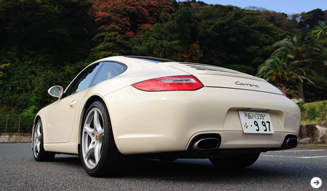
In the past, rivals to the 911 included cars like Ferrari. However, in today's performance inflation and intense competition, even the California, Ferrari's entry-level model, boasts a maximum output of 460ps and a price tag of ¥23.6 million, far exceeding the 911's reach. Conversely, this means that a sports car focused on sporty driving, like the 911, with a price tag of just under ¥13 million, is virtually non-existent. Therefore, the 911 can be considered a truly unique product.
Neither output nor price alone determines a car's value; it's the balanced integration that matters, as one realizes when driving the 911. It serves as an entry point into the world of super sports cars, yet it stands complete with its own unparalleled character. Rumor has it that the new model will lean more towards luxury. If that's the case, perhaps now is the perfect time to experience the 911 Carrera.

PORSCHE 911 Carrera
Body | Length 4,435 x Width 1,810 x Height 1,310mm
Wheelbase | 2,350mm
Engine | 3.6-liter flat-six
Max Output | 254kW (345ps) / 6,500-6,750rpm
Max Torque | 390Nm / 4,400rpm
Drivetrain | Rear-wheel drive
Transmission | 7-speed dual-clutch
Fuel Economy | 9.6 L/100km
CO2 Emissions | 225g/km
Price | ¥12.67 million
*Fuel economy and CO2 emissions are based on European data.