PORSCHE CAJUN | Porsche Cajun: A New Model Range is Planned
PORSCHE CAJUN
Announcing Plans for a New Model Range
PorscheOn November 29th, Porsche AG's Supervisory Board made decisions that form the foundation for the company's continued success and growth.
By Dai Matsuo
Attracting New Customers, Centered on the Cajun
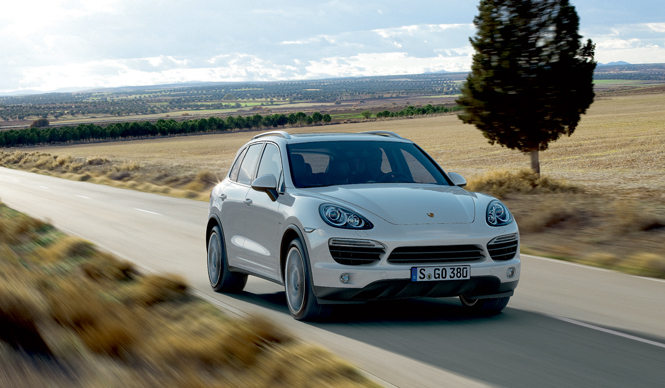
It has been announced that the Porsche AG Supervisory Board has instructed the Executive Board to aim for the development and commercialization of a new model range. This new model is said to be the compact SUV with the development name "Cajun," for which the name "Roxster" was previously rumored.
The Cayenne, a global hit and particularly successful in the North American market, was the model that rapidly revived Porsche AG's performance. Its success even led to Porsche becoming the largest shareholder in Volkswagen and making it a subsidiary. However, in the wake of the subsequent global recession, Porsche's business environment, with its lineup of primarily luxury models, cannot be described as bright. While the Porsche brand's power remains immense in emerging markets, it is likely that the company recognized the need for a more affordable model in developed countries where the economic recovery has been slow.
The upcoming Cajun is expected to be lighter and more compact than the Cayenne, and will likely use the same platform as the Audi Q5. With its superior handling and agility, it is anticipated to stand out among SUVs in its class.
Another likely objective for releasing the Cajun is environmental performance. With many large models and high CO2 emissions, Porsche faces increasingly stringent CO2 emission regulations, particularly in Europe. The need to offer smaller models to comply with these regulations is also apparent.
Furthermore, Porsche aims to attract a younger and new customer base with the Cajun.
BRAND HISTORY
PORSCHE is a globally admired sports car brand from Germany, earning overwhelming support from skilled drivers worldwide. Its origins trace back to 1931. Ferdinand Porsche, a prodigy who distinguished himself as an automotive engineer from his twenties, gained experience as technical director at Daimler before establishing his own "Porsche Design Office" in Stuttgart, Germany. From then on, he was entrusted with the development of various vehicles by automobile manufacturers. Among these, the "Volkswagen Beetle," which greatly contributed to motorization as Germany's "people's car," is particularly famous.
The first car to bear his name as an automobile manufacturer was the "356," introduced in 1948. Since then, Porsche has released sports cars such as the "911," "924," and "928," while also focusing on motorsport. For instance, they achieved 16 victories in the 24 Hours of Le Mans, arguably the world's most grueling race, and contributed to three series championships as an engine supplier in Formula 1, accumulating a brilliant track record. It goes without saying that their technological prowess and dedication to driving continue to live on in their products today.
Currently, the lineup, all of which are highly popular, includes the "911," which continues to be highly regarded as a top-tier sports car even 45 years after its debut; the open-top sports car "Boxster"; its coupe counterpart, the "Cayman"; and the premium sports SUV, the "Cayenne."