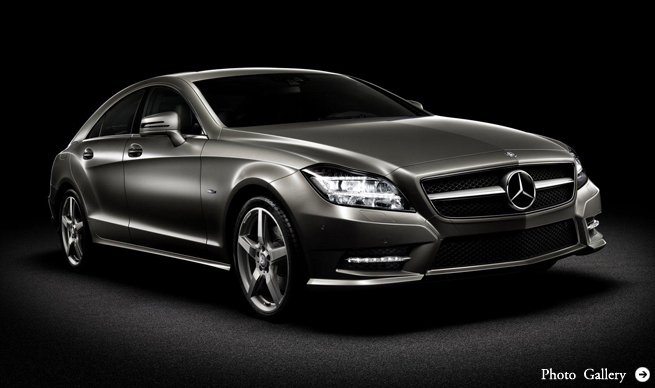
Announcing the New Mercedes-Benz CLS
Mercedes-Benz CLS
The Second-Generation CLS: The Pinnacle of Elegance
Debuting in 2004 with the concept of a "four-door saloon with coupe-like flowing lines," the Mercedes-Benz CLS created a new category in the premium car market. Daimler has now announced the details of its new model.
Text by Giraffe
A Design Flowing with Grace from Front to Rear
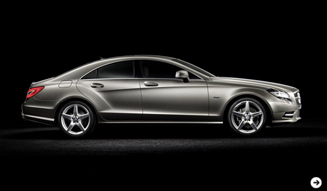
The new CLS, presented as the second generation, refines the four-door coupe styling inherited from its predecessor. It boasts a dynamic design that combines elegant grace with a sense of robustness.
The front fascia is inspired by the distinctive design of the "SLS AMG," while the line extending from the front fenders to the rear incorporates the "dropping line," a foundational element of Mercedes sports cars throughout history.
A Hybrid Sensation Enhanced by Handcrafted Interiors
The headlights feature LEDs with a dynamic light function, a world-first. The turn signals, position lights, and low beams are integrated into a single unit. A total of 71 LEDs are used, becoming a distinctive feature of the car.
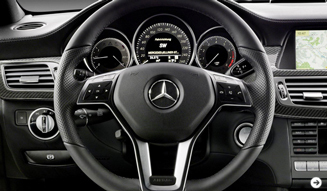
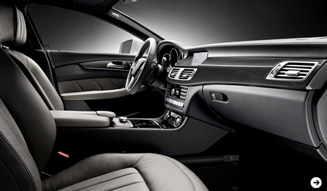
The interior is characterized by a wrap-around design that flows from the instrument panel to the doors. Furthermore, the use of carefully selected materials such as wood and leather, along with handcrafted stitched leather seats and dashboard accents, creates a sporty yet luxurious atmosphere.
While no official engine specifications have been released yet, it is speculated that the gasoline engines will include the new-generation 4.7-liter V8 twin-turbo (435 ps) and a 3.5-liter V6 (301 ps) found in the "CL" class, and the diesel engines will be the 250 CDI (201 ps) and 350 CDI (261 ps).
This new CLS will be officially unveiled at the Paris Motor Show, opening on September 30th.
BRAND HISTORY
When tracing the history of the automobile, we arrive at two German pioneers: Gottlieb Daimler and Karl Benz. It is common knowledge that these two men independently developed gasoline-powered automobiles between 1885 and 1886, laying the foundation for the automotive society. Although their respective automotive companies were once seen as rivals, they joined forces to overcome the post-World War I recession, leading to the merger and establishment of Daimler-Benz AG in 1926.
The name "Mercedes," given to the products, originated when Emil Jellinek, a customer of Daimler, named the cars after his eldest daughter in exchange for taking charge of sales outside Germany. The trademark was registered by Daimler in 1902.
Thus born, Mercedes, and subsequently Mercedes-Benz, has consistently led the way in automotive development, actively introducing cutting-edge technologies such as the safety passenger cell, airbags, ESP (Electronic Stability Program), and night vision.