LOOPWHEELER | Order a Special Edition "Rumors" Sweat Hoodie! An Interview with Representative Satoshi Suzuki Gallery - Web Magazine OPENERS

OPENERS

  • JP
  • |
  • EN
Today
Login My Page
OPENERS
  • Fashion
  • Beauty
  • Car
  • Watch & Jewelry
  • Design
  • Lounge
  • News Board
  • Collectors O
  • About
  • Log in
  • 日本語
  • English

today
LOOPWHEELER | Order a Special Edition "Rumors" Sweat Hoodie! An Interview with Representative Satoshi Suzuki Gallery
Gallery

LOOPWHEELER | Order a Special Edition "Rumors" Sweat Hoodie! An Interview with Representative Satoshi Suzuki Gallery

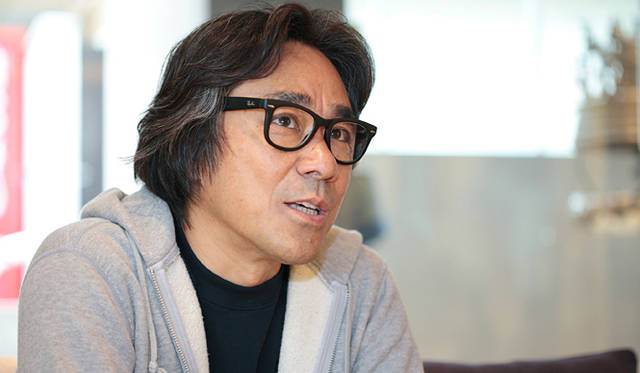
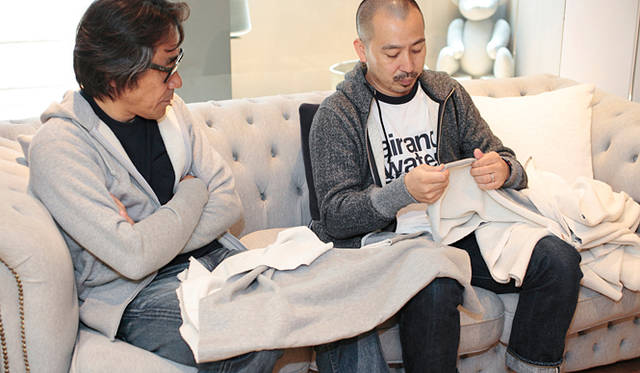
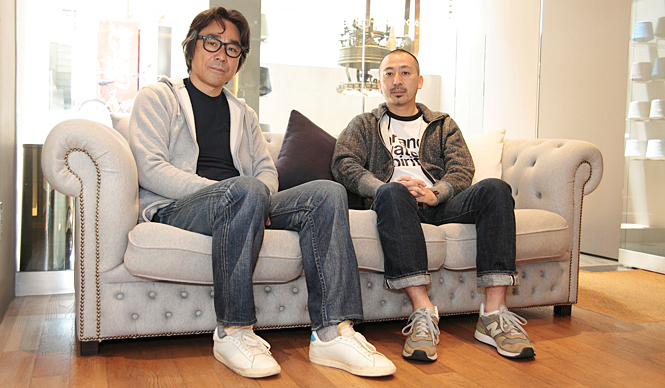
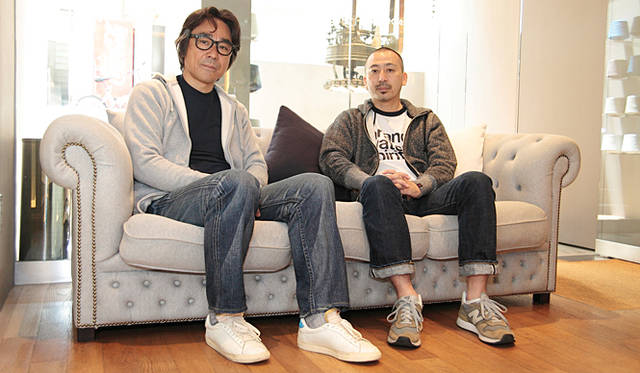
<strong>LOOPWHEELER</strong> | A Special Order Sweat Hoodie from "LUMOREZ"! An Interview with Representative Satoshi Suzuki<br/>From left: Satoshi Suzuki, Representative of "LOOPWHEELER"; Hiroyuki Matsumoto, Director of "LUMOREZ"
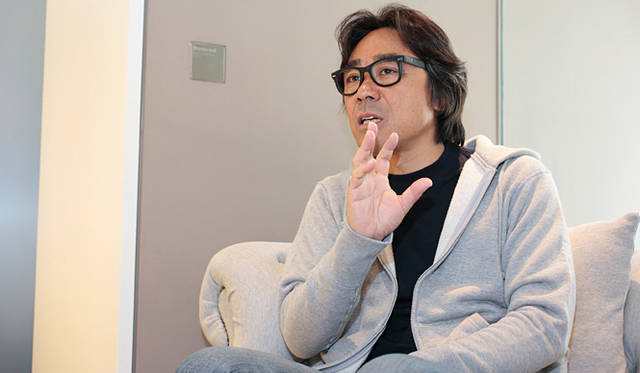
<strong>LOOPWHEELER</strong> | Fashion shifts with the prevailing trends of the times, and people are keenly attuned to new styles. Satoshi Suzuki, the representative of LOOPWHEELER, is the person who has been working behind the scenes.
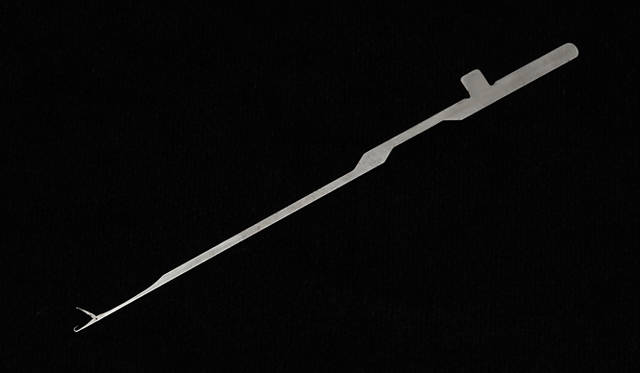
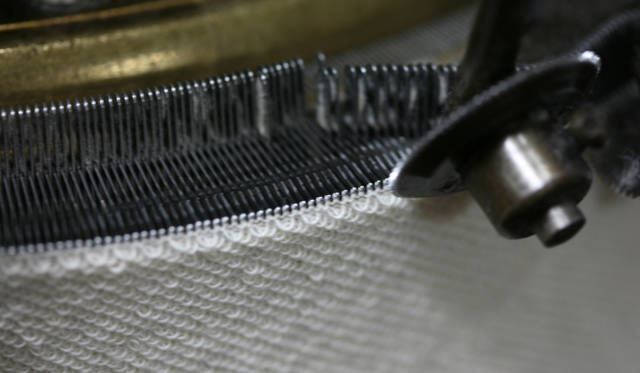
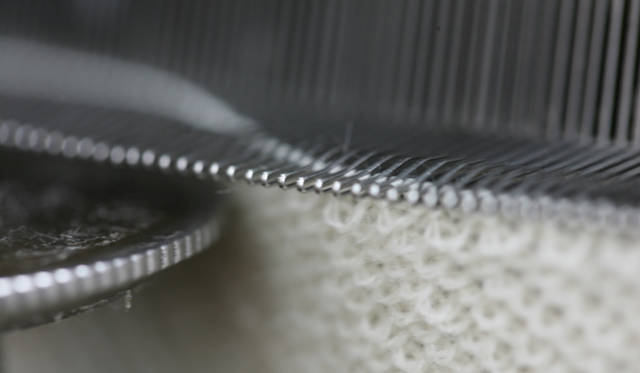
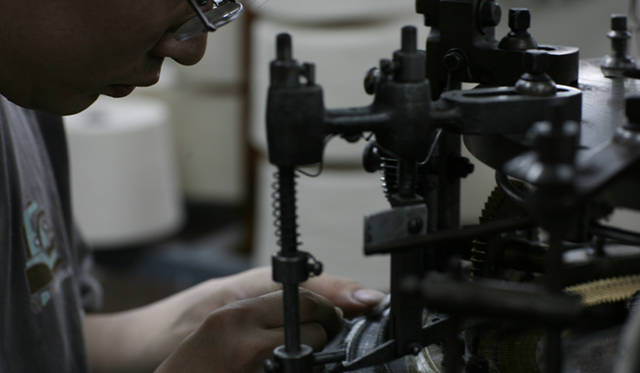
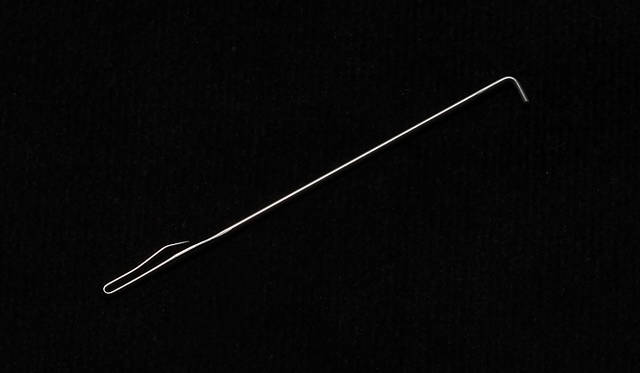
<strong>LOOPWHEELER</strong> | The needles of a loopwheel machine. "The needles of a loopwheel machine are shaped like fishing hooks, simply catching the yarn. The yarn can sometimes slip out unexpectedly."
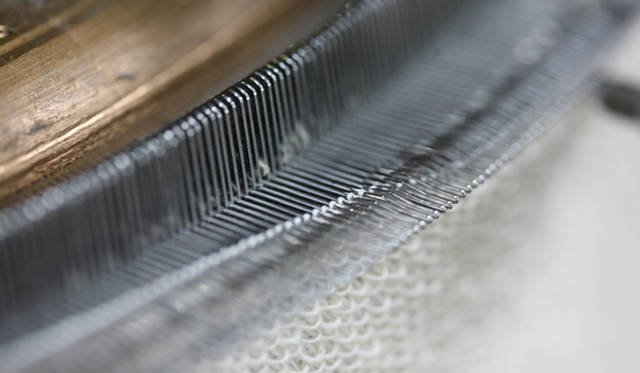
<strong>LOOPWHEELER</strong> | The needles of a modern high-speed knitting machine. "The needles of modern high-speed knitting machines have movable tips that firmly grip the yarn. This prevents the yarn from slipping out even at high speeds. However, the constant centrifugal force continuously pulls on the yarn."
<strong>LOOPWHEELER</strong> | "Until the mid-1960s, most knitting machines worldwide were loopwheel machines. Why did they decline? Simply put, they were inefficient. For example, with sweatshirt fabric, depending on the material and other conditions, a loopwheel machine could only knit about one meter per hour. The 60s and 70s were a time of rapid societal growth, and machine manufacturers developed vastly superior modern high-speed machines that could knit 10 to 20 meters per hour."
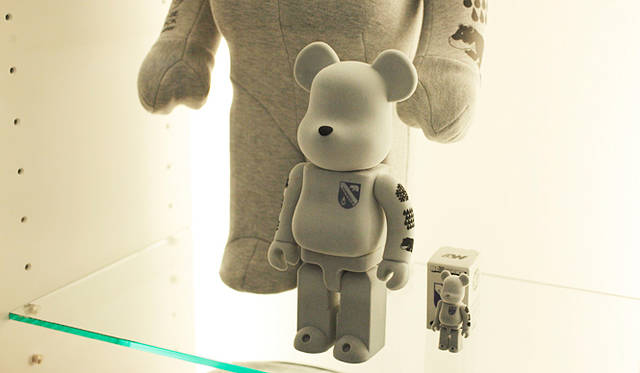
<strong>LOOPWHEELER</strong> | A Special Order Sweat Hoodie from "LUMOREZ"! An Interview with Representative Satoshi Suzuki<br/>At the Sendagaya shop, a large collaborative BE@RBRICK greets visitors! Over a decade since its launch, the brand's new releases consistently sell out, and orders for special collaboration items from popular brands and select shops are ceaseless.
<strong>LOOPWHEELER</strong> | "I've worked in fashion my whole life, wearing clothes from all sorts of brands. But in the end, my 'normal' is my everyday life, wearing the hoodies and sweatshirts made from our loopwheel fabric. I realized anew, 'Ah, this is what I love most. This is what feels most like me."
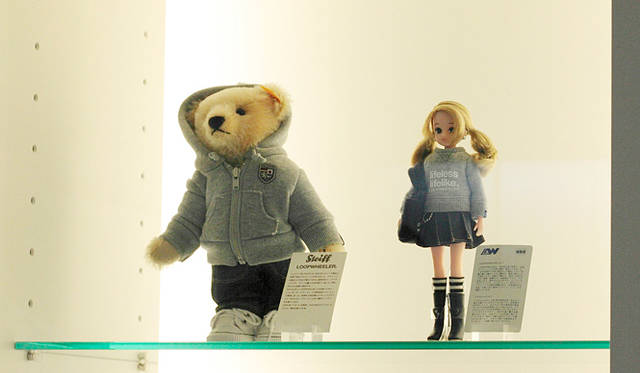
<strong>LOOPWHEELER</strong> | Collaborations extend beyond fashion brands to include characters.
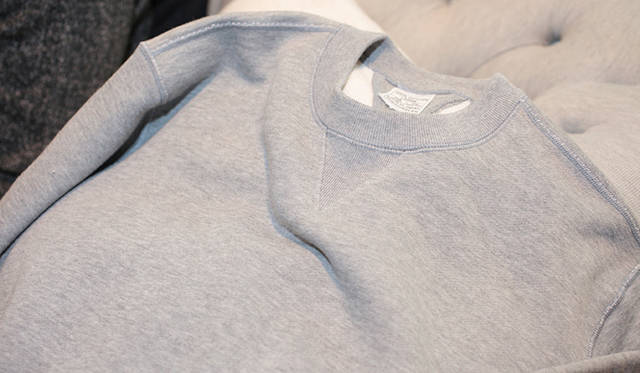
<strong>LOOPWHEELER</strong> | "01," the brand's very first item, is the origin of the sweatshirt, featuring no side seams and V-gussets (sweat guards) at the neckline. It's said that LOOPWHEELER's item model numbers are assigned sequentially in order of creation: 01, 02, 03...
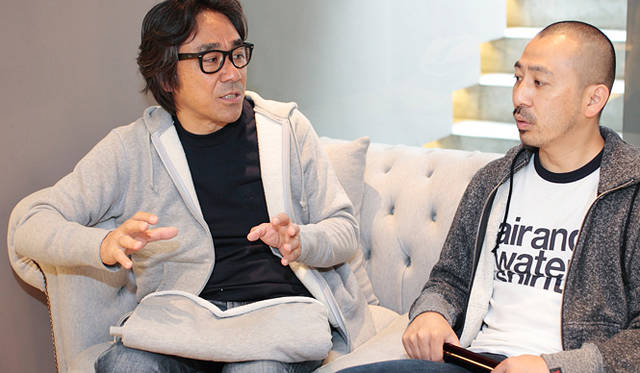
<strong>LOOPWHEELER</strong> | A Special Order Sweat Hoodie from "LUMOREZ"! An Interview with Representative Satoshi Suzuki<br/>From left: Satoshi Suzuki of LOOPWHEELER, Hiroyuki Matsumoto of LUMOREZ
<strong>LOOPWHEELER</strong> | From left: Satoshi Suzuki, Representative of "LOOPWHEELER"; Hiroyuki Matsumoto, Director of "LUMOREZ"
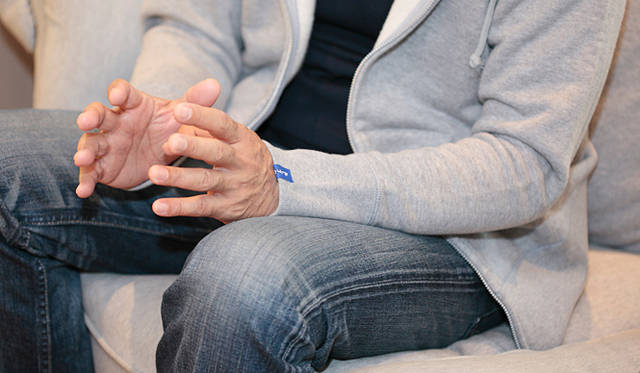
<strong>LOOPWHEELER</strong> | "When we collaborate with other brands, we create a special colorway for the name tag on the sleeve, unique to that brand."
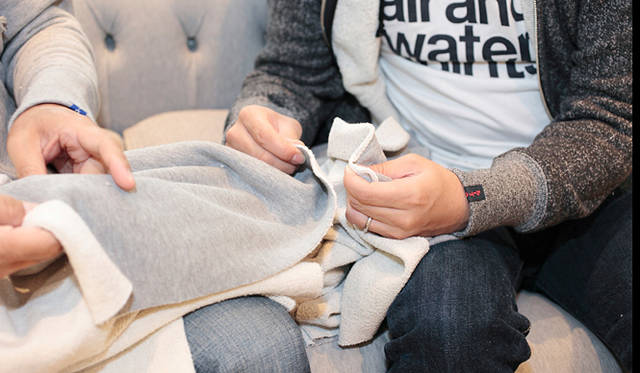
<strong>LOOPWHEELER</strong> | "The design itself is based on the hoodies LOOPWHEELER offers, and generally, we leave the details to LUMOREZ. However, this time, we plan to use a new material that hasn't been offered before."
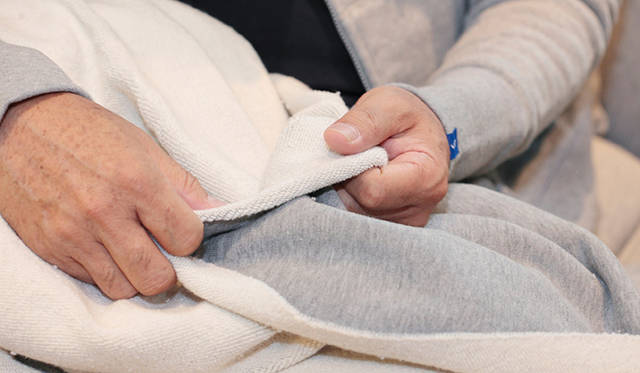
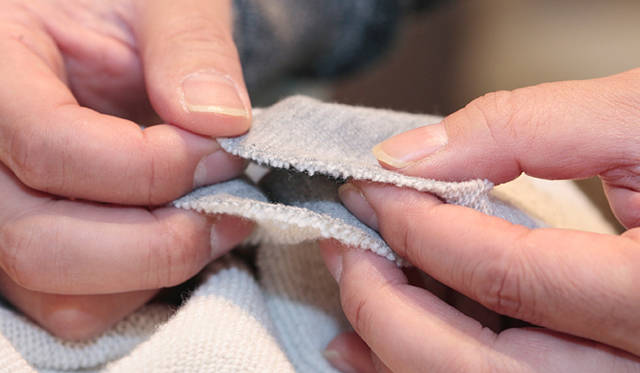
<strong>LOOPWHEELER</strong> | "When it comes to creating fabric that retains the natural softness and inherent potential of the yarn's cotton fibers, the fabric produced by loopwheel machines is arguably the best. With current technology, no knitting machine surpasses this."
<strong>LOOPWHEELER</strong> | "The fabric we envision is thicker than the 'Extra Light' fabric released this spring and sold out instantly, but thinner than our standard 'Light' fabric, with a slight crispness. This is because LUMOREZ wants to propose a 'spring sweatshirt for adults,' and for that, I felt a certain body and crispness were needed, which couldn't be achieved with Extra Light."
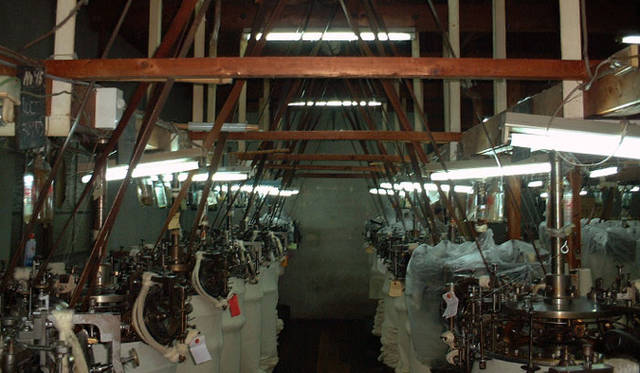
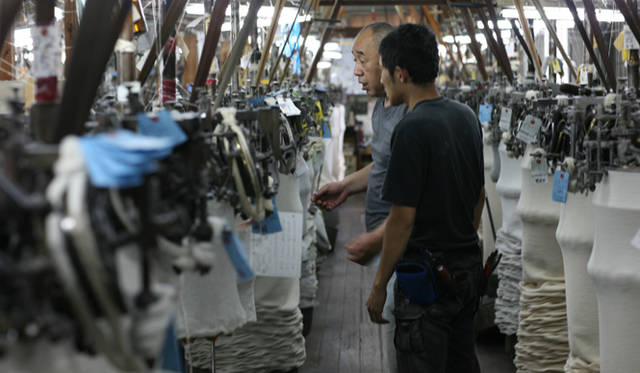
<strong>LOOPWHEELER</strong> | Inside the Kanekichi Kogyo factory in Wakayama. "After the bubble burst, production rapidly shifted to 'Made in China' around 1995. As far as I know, there used to be about ten loopwheel factories in Wakayama. Some went bankrupt, others closed down, and by the late 90s, only two remained... In the end, only two loopwheel factories were left in Japan."
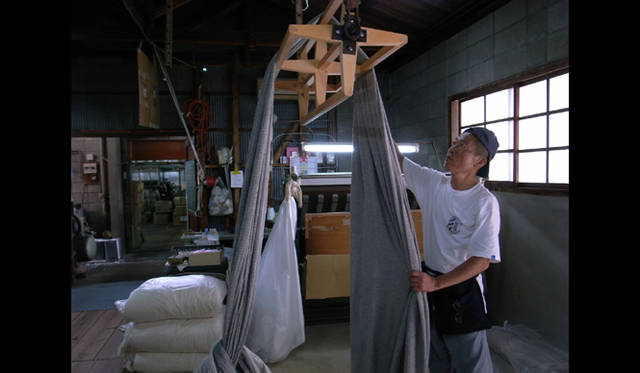
<strong>LOOPWHEELER</strong> | Inside the Kanekichi Kogyo factory in Wakayama. "To increase knitting speed, the yarn must be kept taut to prevent tangling. Also, the finished fabric must be wound up at the same speed; otherwise, it will bunch up at the exit and stop the machine. In short, to increase speed, the yarn must constantly be under tension."
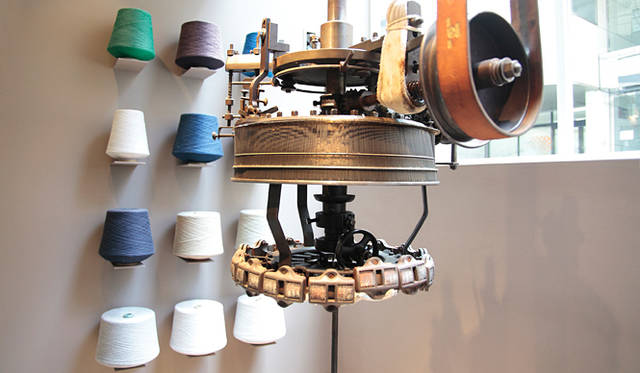
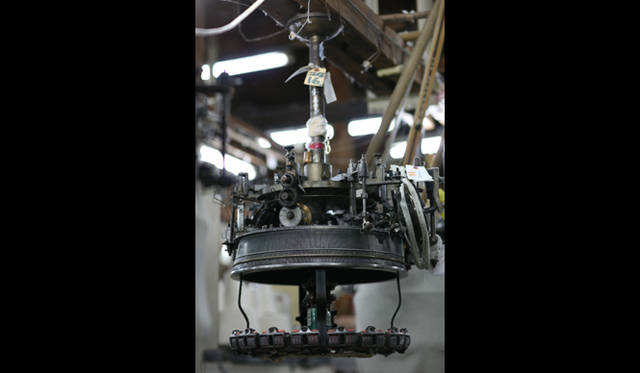
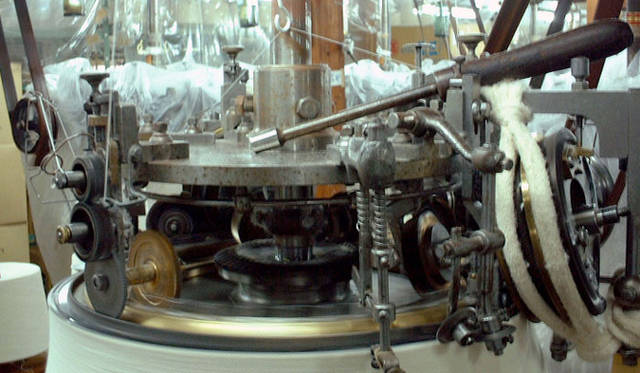
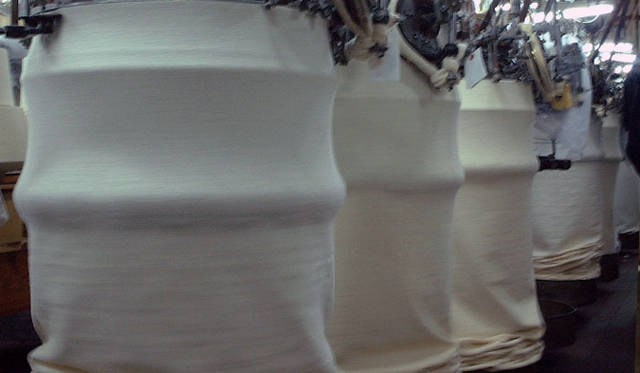
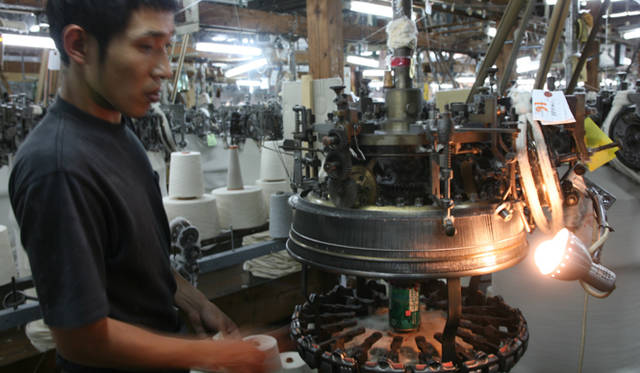
<strong>LOOPWHEELER</strong> | Inside the Kanekichi Kogyo factory in Wakayama. "Loopwheel machines knit fabric with almost no tension on the yarn. Depending on what's being knitted, the average speed is about 24 rotations per minute. It's a speed you can clearly follow with your eyes."
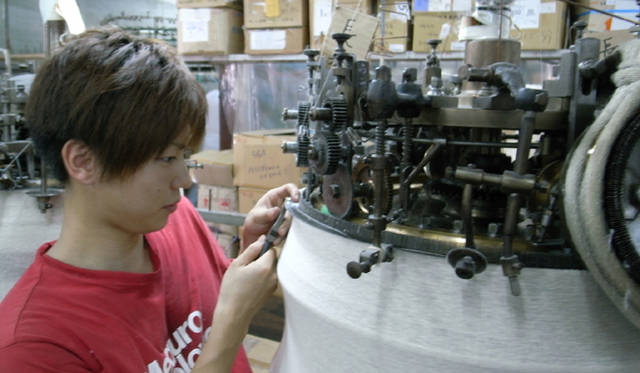
<strong>LOOPWHEELER</strong> | Inside the Kanekichi Kogyo factory in Wakayama. "Cotton fibers naturally have a hollow structure, making them fluffy and soft as they trap air, which also enhances insulation. You'll notice the difference compared to fabric made on high-speed machines the more you wash it."
<strong>LOOPWHEELER</strong> | Inside the Kanekichi Kogyo factory in Wakayama. "Initially, my job felt like explaining the fabric made on loopwheel machines. But honestly, by simply conveying the truth and letting people experience it, we earn their trust. We continue to do the same today. By wearing it, washing it, and spending time with it, those who understand will return."
<strong>LOOPWHEELER</strong> | Inside the Kanekichi Kogyo factory in Wakayama. "If you have sewing thread at home, try this: imagine a thread 1 meter long and 1mm in diameter. If you pull it with all your might, it might stretch to 1.01 meters, becoming thinner, say 0.9mm in diameter. When knitted like this, the fabric becomes denser due to the thinner yarn, resulting in a tight, stiff fabric."
<strong>LOOPWHEELER</strong> | Inside the Kanekichi Kogyo factory in Wakayama. "The knitted fabric also hangs down due to gravity, accumulating in a round tray like a basin placed below. Meanwhile, modern high-speed knitting machines operate at least 10 times faster, and some up to 30 times faster. It's certainly not a speed you can follow with your eyes."
<strong>LOOPWHEELER</strong> | Inside the Kanekichi Kogyo factory in Wakayama. "Considering everything, I believe that by creating a brand using fabric knitted on loopwheel machines and producing it systematically throughout the year, we can pass on the culture of loopwheel knitting to future generations. This, in turn, helps preserve 'Made in Japan'... forgive me for sounding a bit presumptuous (laughs)."
<strong>LOOPWHEELER</strong> | Inside the Kanekichi Kogyo factory in Wakayama. "I've always been supported by people in the factory industry, and I felt a sense of sadness seeing Japanese manufacturing disappear. Amidst changes in production backgrounds and markets, I deeply considered whether to expand our manufacturing to China or to remain committed to Japanese production. What could I do? What did I love most? Returning to my roots, I realized, 'I truly love this sweatshirt knitted on a loopwheel machine.'"
<strong>LOOPWHEELER</strong> | Inside the Kanekichi Kogyo factory in Wakayama. "I've worked in fashion my whole life, wearing clothes from all sorts of brands. But in the end, my 'normal' is my everyday life, wearing the hoodies and sweatshirts made from our loopwheel fabric. I realized anew, 'Ah, this is what I love most. This is what feels most like me."
<strong>LOOPWHEELER</strong> | Inside the Kanekichi Kogyo factory in Wakayama. "I thought that if we could establish ourselves as a 'case study' that is genuinely recognized by the world, it might inspire younger people to realize that such things exist, and perhaps spark a movement like, 'Let's try making something with fabric knitted on loopwheel machines.'"
<strong>LOOPWHEELER</strong> | Inside the Kanekichi Kogyo factory in Wakayama. "If things spread out like that, and various brands get involved, perhaps this industry could become more vibrant. Not just brands, but maybe more young people would knock on factory doors."
/

LOOPWHEELER | Order a Special Model Sweat Hoodie from LUMOREZ! Interview with Representative Satoshi Suzuki - Gallery

Back to Article
  • Share
  • Tweet
BRAND
  • HOME
  • Gallery
  • LOOPWHEELER | Order a Special Edition "Rumors" Sweat Hoodie! An Interview with Representative Satoshi Suzuki Gallery
TOP
Follow us
Get the latest information from OPENERS official account
CART 0 PAGE TOP
Web Magazine OPENERS
  • Fashion
    • MEN
    • WOMEN
    • NEWS
    • COLLECTION
    • FEATURES
    • CELEBRITY SNAP
    • BRAND INDEX
  • Beauty
    • NEWS
    • MEN
    • FEATURES
    • THE EXPERTS
    • BRAND INDEX
  • Car
    • NEWS
    • FEATURES
    • MOTOR SHOW
    • LONG TERM REPORT
    • IMPRESSION
    • BRAND INDEX
  • Watch & Jewelry
    • WATCH NEWS
    • JEWELRY NEWS
    • FEATURES
    • SIHH&BASEL
    • BRAND INDEX
  • Design
    • FEATURES
    • INTERIOR
    • PRODUCT
    • ARCHITECTURE
    • DIGITAL
    • BRAND INDEX
  • Lounge
    • TRAVEL
    • EAT
    • MOVIE
    • ART
    • MUSIC
    • BOOK
    • FEATURES
  • News Board
  • Collectors O
  • Login
  • Company Profile
  • Site Policy
  • Privacy Policy
  • Specified Commercial Transactions Act
  • Advertising Inquiries
  • Feedback
  • Careers
  • 日本語
  • English
Unauthorized reproduction of articles and photographs published in web magazine "OPENERS" is prohibited. copyright 2006-2026 ContrappuntoNippon Inc.