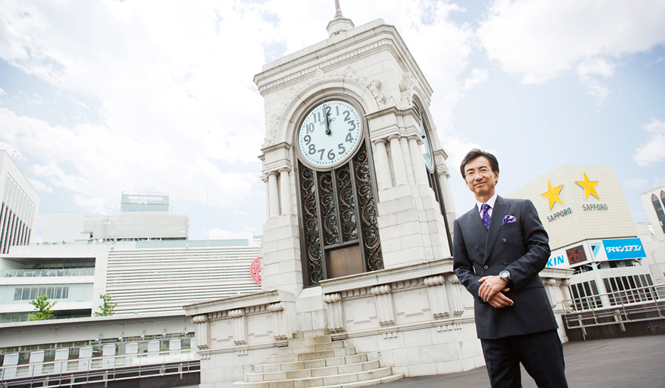
SEIKO | Shinji Hattori, President of Seiko Watch Corporation: A Special Interview
SEIKO
SEIKO WATCH President Shinji Hattori Special Interview
100 Years Since the Start of Watch Manufacturing. And Towards the Next 100 Years (1)
Towards a watch brand that enriches the lives of all people around the world. This year marks exactly 100 years since the start of production of the "Laurel," born as Japan's first wristwatch.a centuryThe history of Seiko began with Hattori Watch Store, established in Ginza, Tokyo, in 1881.Towards the past 100 years and the next 100 yearsWe asked Shinji Hattori, president of Seiko Watch, about his aspirations for the future.
Text by SHIBUYA Yasuhito
The Biggest Driving Force Behind 100 Years of Development: "Customer Trust"
—This year marks the centenary of the start of production of the "Laurel," Japan's first wristwatch and the first domestic wristwatch product. Looking back, what were the significant events or products that served as major catalysts for the development over these 100 years?
Counting from the company's founding, this year marks 132 years. I believe there are three major events that formed the foundation for these 100 years.
The first is a decision made by our founder, Kintaro Hattori, during the Great Kanto Earthquake in 1923, which I learned about from past accounts. The earthquake reduced the store and all factories to ashes. Furthermore, most of the watches entrusted to us for repair were also lost. At that time, the founder replaced the entrusted watches with new ones and returned them to customers free of charge. I believe the deep trust gained from customers then is the foundation of Seiko today.
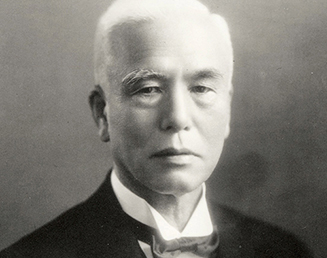
Founder Kintaro Hattori, who established Hattori Watch Store (now Seiko) at the young age of 21 in 1881.
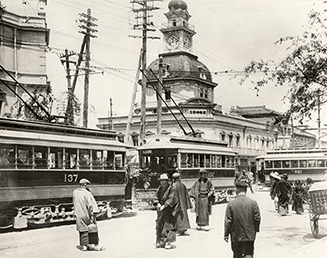
Hattori Watch Store around 1897 (Meiji 30). A photograph from that time near the intersection of Ginza 4-chome, where Wako stands today.
The second is the 1964 Tokyo Olympics. Seiko was the official timekeeper for the first Olympics held in Asia, and it was a great success. It was the first Olympics to introduce electronic timing systems, backed up by mechanical systems, both of which Seiko had developed independently. In the men's marathon, Abebe Bikila won the gold medal, following his victory in the previous Rome Games. I still vividly remember the impressive "SEIKO" logo on the four sides of the pace car running ahead of Bikila.
The name "SEIKO" gained global recognition thanks to the Tokyo Olympics. Another significant event was the series of achievements in precision competitions: top rankings in the Neuchâtel Observatory competition in Switzerland in 1967 and the Geneva Observatory competition in 1968. This culminated in the launch of the world's first quartz wristwatch, the "Quartz Astron," in 1969. These events proved that Seiko had reached the pinnacle of both mechanical and quartz watchmaking. Although I was a high school student at the time and learned about this later through books, looking back, I consider it a major milestone.
In terms of products, the first wristwatch "Laurel" in 1913, and the world's first quartz wristwatch "Quartz Astron" in 1969. The precision, which was orders of magnitude greater than mechanical watches, transformed the lifestyles of people worldwide.
Furthermore, there is the "Seiko Astron," the world's first GPS solar watch, launched last year in 2012. This, too, is currently transforming the common understanding and lifestyles of people worldwide regarding wristwatches. I believe the founder Kintaro Hattori's philosophy of "always one step ahead of the times" is alive in all these products.
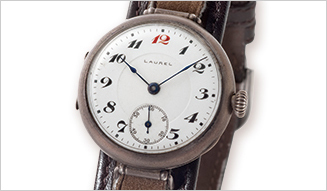
The "Laurel," born in 1913 as Japan's first wristwatch, in an era when pocket watches were mainstream.
SEIKO
SEIKO WATCH President Shinji Hattori Special Interview
100 Years Since the Start of Watch Manufacturing. And Towards the Next 100 Years (2)
Towards the Next 100 Years: A "Global Brand Loved by Young People, with a Sense of Playfulness"
—Looking towards the next 100 years, what are the challenges that you, President Hattori, are currently addressing?
We at Seiko Watch have three challenges and goals for the next 100 years. The first challenge and goal is to re-establish "SEIKO" as a unique, unparalleled international brand.
Seiko became a global brand through the Tokyo Olympics and its quartz technology, symbolized by the world's first quartz wristwatch. However, the commoditization of quartz technology led to a decline in brand power. Although we subsequently developed and introduced new technologies like Kinetic (auto-quartz) and Spring Drive, they did not have the same impact as the advent of quartz watches in 1969. While the brand name is known in Europe, it is unfortunately perceived as a "mid-range product."
We aim to dispel this image with "Grand Seiko" and "Seiko Astron" as our two flagship lines, establishing "SEIKO" as an international brand occupying a unique position, entirely distinct from Swiss watch brands.
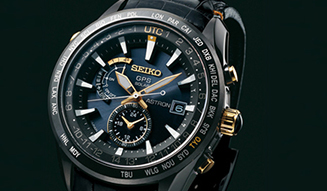
The "Seiko Astron," the world's first GPS solar watch, launched last September. This year, marking the 100th anniversary of Seiko's wristwatch manufacturing, the first model bearing the name of founder Kintaro Hattori was released.
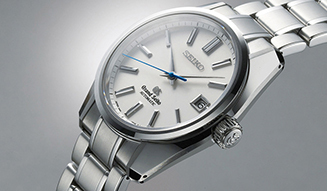
"Grand Seiko," launched in 1960 as Japan's premium watch brand. This model is a modern interpretation of the "44GS," which became the origin of what was later called "Seiko Style."
The second challenge and goal is the development and innovation of the brand image of "Technical Seiko." Over the past 100 years, based on the founder's philosophy of "always one step ahead of the times," Seiko has continuously pursued technological innovation, earning a reputation for precision, accuracy, reliability, and durability.
While this reputation is invaluable, I believe it is no longer sufficient for the times ahead. Pursuing technological innovation is important, but I feel that "playfulness" must be incorporated into future technologies; that is what truly matters.
I refer to this new approach to technology as "technology that appeals to the senses," or "emotional technology." With the "Seiko Astron," for example, displaying the number of captured satellites during GPS signal reception adds an element that excites and delights the owner, weaving a sense of wonder into the technology. I am eager to establish an image of "Seiko with playfulness" alongside its outstanding technology.
The third challenge and goal is to expand Seiko's fan base, which has been somewhat skewed towards the senior demographic, specifically to attract younger customers. For instance, "Grand Seiko," already positioned as an international brand, used to primarily attract buyers in their 50s and 60s.
However, by employing promotional activities that appeal to a wider age range, including young people, such as featuring pitcher Yu Darvish, who plays in Major League Baseball, as a spokesperson, over half of our buyers are now under 40. Moving forward, we aim to leverage the power of digital media, including social media, to extend this popularity to the 20s and 30s age groups and to other brands, thereby establishing an image of "Seiko as an object of aspiration for the young."
SEIKO
SEIKO WATCH President Shinji Hattori Special Interview
100 Years Since the Start of Watch Manufacturing. And Towards the Next 100 Years (3)
Towards the Creation of "Wristwatches that Enrich Life"
—From mechanical watches to quartz, Spring Drive, Kinetic, and now GPS solar. There is no other watch brand in the world that develops and commercializes such a diverse range of advanced technologies in-house. Leveraging this technological prowess, what kind of brand does "SEIKO" aspire to be in the next 100 years?
For example, some watch enthusiasts express a desire for complications that rival the mechanisms of prestigious Swiss watch brands, utilizing world-class mechanical technology. Indeed, models like the "Spring Drive Sonnerie," a complication powered by Spring Drive, have been released.
Seiko aims to be a watch that accompanies the important moments in the lives of all people worldwide, enriching and bringing happiness to everyone, not just a select few. That is my vision.
Therefore, we do not intend to directly compete with European luxury watch brands on the same playing field. Instead, we will leverage our unique technologies, which other companies do not possess, in areas where we do not compete, and deliver watches with high added value that are ahead of their time and cannot be replicated by others, through our comprehensive capabilities to people around the world.
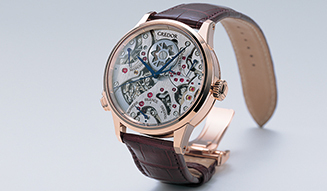
The "Credor Spring Drive Sonnerie," announced by Seiko in 2006, Japan's first complication watch.
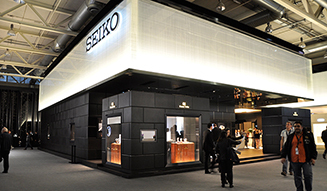
Baselworld, a watch trade show held in Switzerland. Seiko showcased its 100-year history of watch manufacturing and its pioneering spirit that has rewritten watchmaking history through technological innovation.
The "Seiko Astron," the world's first GPS solar watch, is a product born precisely from this comprehensive strength. The original idea stemmed from a "Future Watch" development project with Seiko Epson, and it was realized through the integration of technologies from various departments. Furthermore, Spring Drive is a "third type of mechanical movement" that even Switzerland could not achieve. We developed and released complication models of Spring Drive as practical and unique products.
While I cannot disclose future development plans at this moment, we will continue to pursue our endeavors with a unique approach distinct from Swiss watch brands.

Shinji Hattori
Born January 1, 1953. After graduating from Keio University's Faculty of Economics, he joined Mitsubishi Corporation. In July 1984, he joined Seikosha, and in 1992, he was assigned to Seikosha UK. In June 2003, he became President of Seiko Watch Corporation, and in October 2012, he assumed the position of Chairman and Group CEO of Seiko Holdings Corporation. He holds this position to date.
Seiko Watch
http://www.seiko-watch.co.jp/