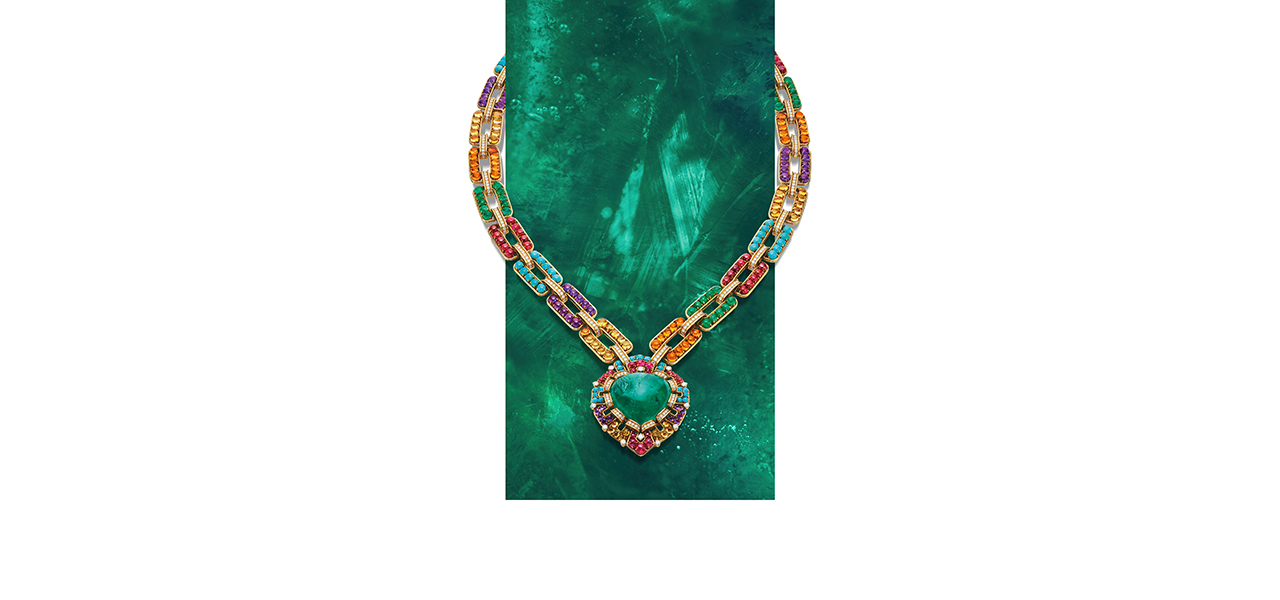
Convertible Sautoir-Bracelet. Gold, amethyst, turquoise, citrine, ruby, emerald, and diamonds. Circa
September 2, 2025
Experience Bulgari's revolution of color.
BVLGARI: The Art of Color, Culture, and Craftsmanship
Bulgari will present the exhibition "Bulgari: The Art of Color, Culture, and Craftsmanship" at The National Art Center, Tokyo. This marks Bulgari's first exhibition in Japan in a decade and will be its largest ever. It runs from September 17, 2025 (Wednesday) to December 15, 2025 (Monday).
Text by Kosaku Waseda
A Kaleidoscope of Color: Approximately 350 Jewels on Display
The exhibition title, "Kaleidos," derives from the Greek words "kalos" (beautiful) and "eidos" (form), symbolizing a dynamic, ever-changing world of color where beauty and creativity harmoniously converge.
Visitors can immerse themselves in a vibrant, kaleidoscopic world of color through approximately 350 meticulously selected jewels from the Bulgari Heritage Collection and precious private collections.
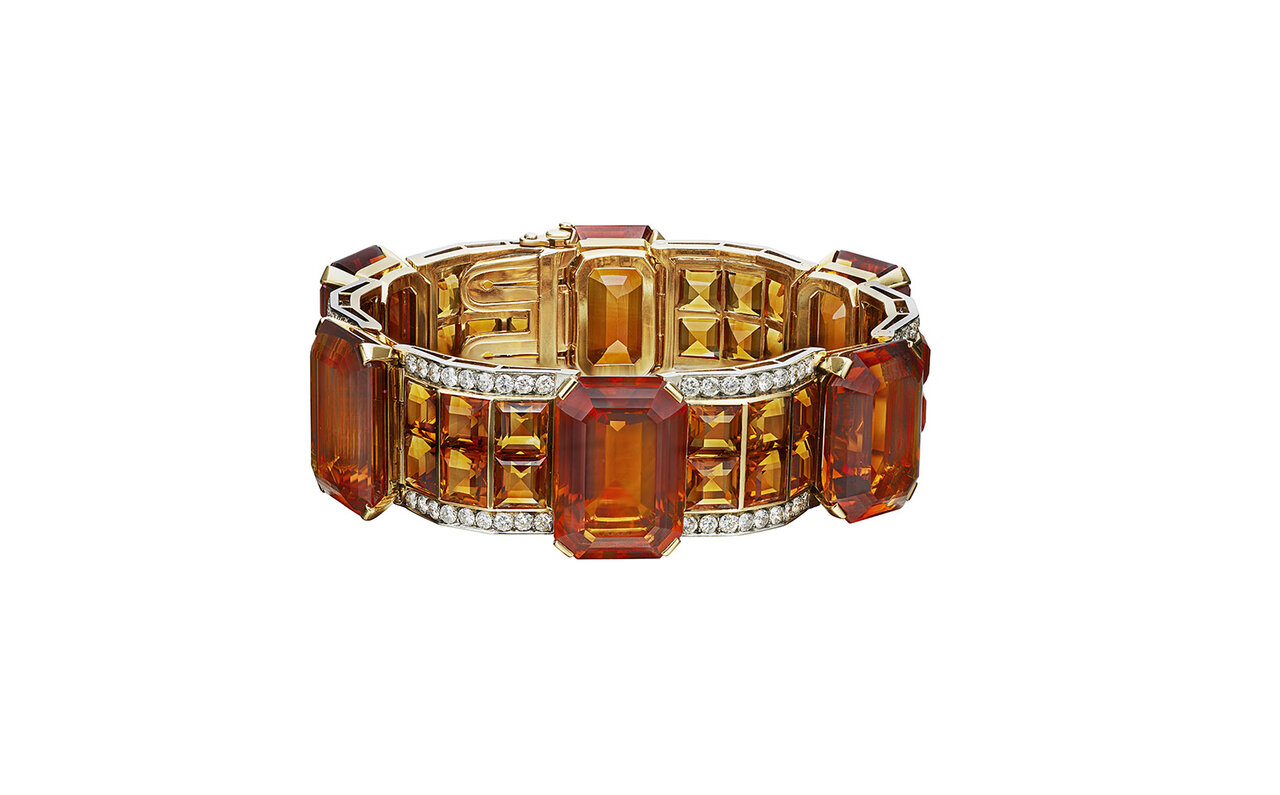
Bracelet. Gold, platinum, citrine, diamonds. Circa 1940. Bulgari Heritage Collection.
Bulgari became renowned in the 20th century as a maison that instigated a "color revolution" in high jewelry. While founder Sotirio Bulgari's early silver creations already showed a keen interest in color, the true revolution unfolded in the 20th century. In the early 1900s, traditional high jewelry predominantly featured monochromatic designs using platinum, adhering to conventional, limited color palettes.
However, in the post-World War II era, as Italy emerged as a center of chromatic transformation, Bulgari established a bold style in the 1950s, combining yellow gold with sapphires, rubies, and emeralds, harmonized with diamonds.
Even more innovative was the maison's embrace of gemstones previously considered semi-precious, such as amethyst, citrine, and turquoise, thereby expanding the aesthetic possibilities of jewelry.
This technique, maximizing the depth, brilliance, and color intensity of gemstones through Bulgari's signature cabochon cut, cemented the maison's status as "magicians of colored stones." This fearless approach to color remains one of Bulgari's most vital sources of inspiration today.
The exhibition is structured into three sections. The first, "The Science of Color," takes a scientific approach to the effects of color, exploring chromatic interactions through a selection of iconic jewels. A particular highlight is a citrine bracelet from circa 1940, never before exhibited outside of Italy, whose rich spectrum of orange hues evokes the warmth of a Roman sunset.
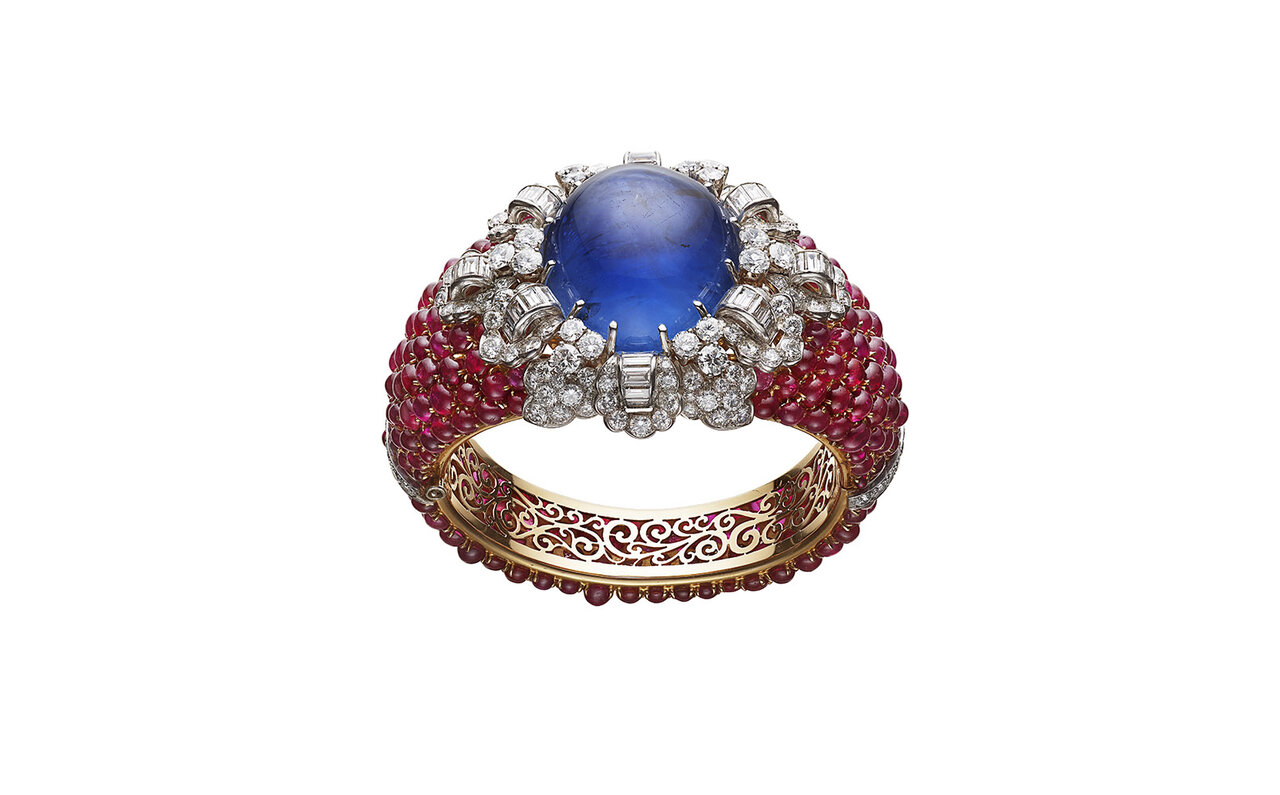
Bangle. Gold, platinum, rubies, sapphires, diamonds. 1954-55. Bulgari Heritage Collection.
-

"Bib" Necklace. Gold, platinum, emeralds,
amethyst, turquoise, diamonds. 1968. Formerly in the collection of Lynn Revson. Bulgari Heritage Collection. -

Pendant Earrings. Gold, platinum, emeralds, amethyst, turquoise, diamonds. 1968. Formerly in the collection of Lynn Revson. Bulgari Heritage Collection.
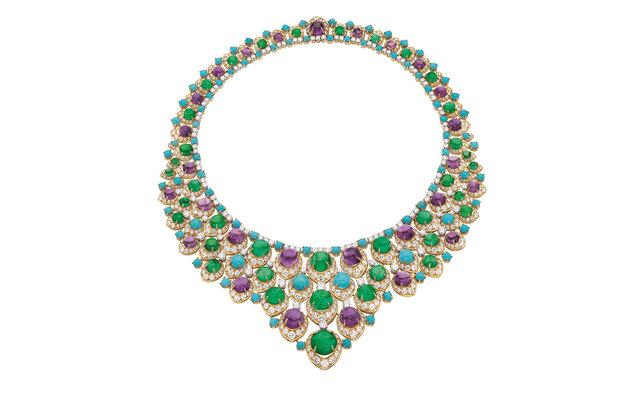
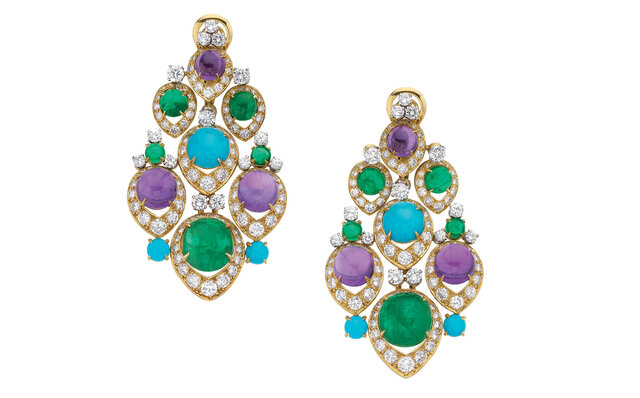
Also featured is an impressive bangle from circa 1954-55, crafted from platinum and adorned with cabochon-cut sapphires, rubies, and diamonds, embodying Bulgari's signature contrast of red and blue. This section also showcases a necklace and earring set that boldly combines emeralds, amethysts, turquoise, and diamonds, allowing visitors to appreciate Bulgari's daring use of color and innovative gemstone pairings.
The second section, "The Symbolism of Color," delves into the cultural and symbolic meanings of color, exploring how hues convey meaning and emotion. A notable piece is the legendary "Seven Wonders" emerald necklace (1961), favored by Italian actresses Monica Vitti and Gina Lollobrigida.
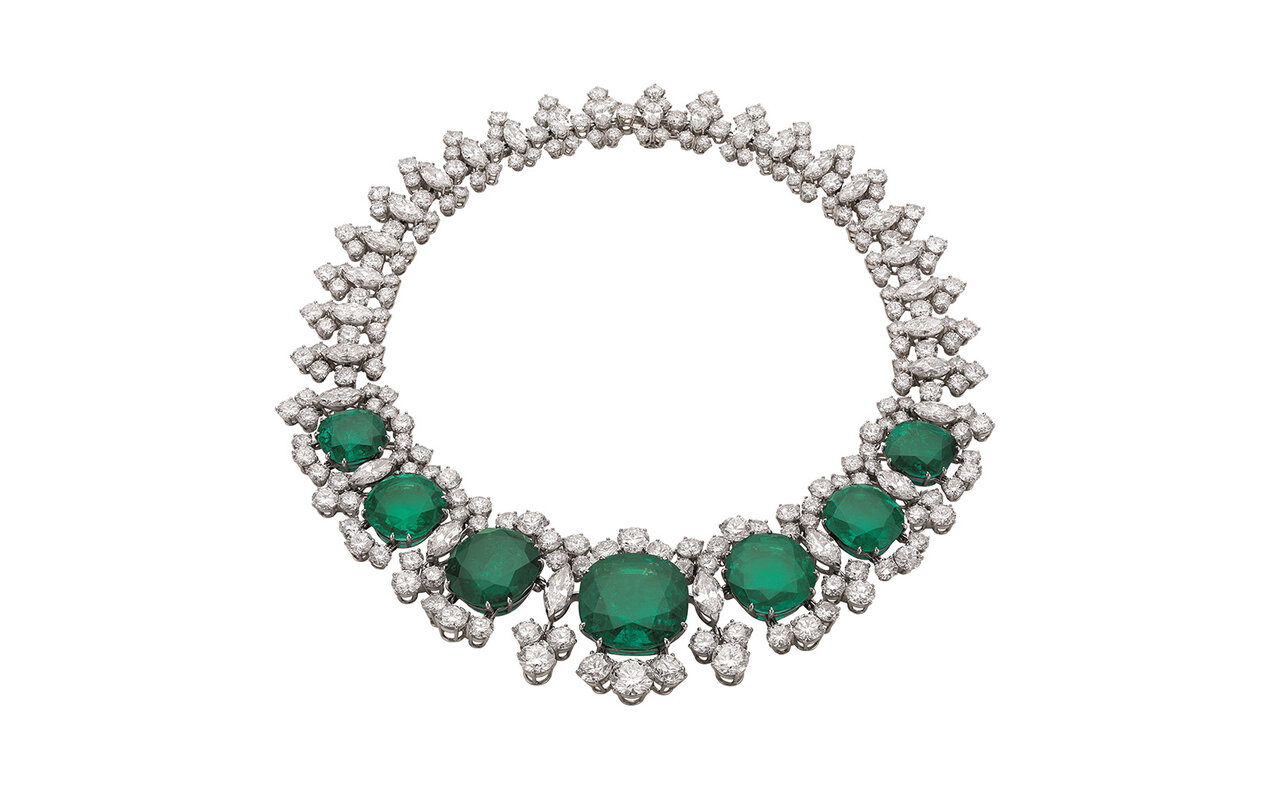
Necklace. Platinum, emeralds, diamonds. 1961. Bulgari Heritage Collection.
This exceptional piece, featuring platinum set with diamonds and seven magnificent emeralds, was once part of the Invernizzi Collection. It was exhibited in Tokyo ten years ago and is now housed in the Bulgari Heritage Collection.
The third section, "The Power of Light," focuses on the role of light in our perception of color, particularly how it interacts with reflective materials like silver and gold.
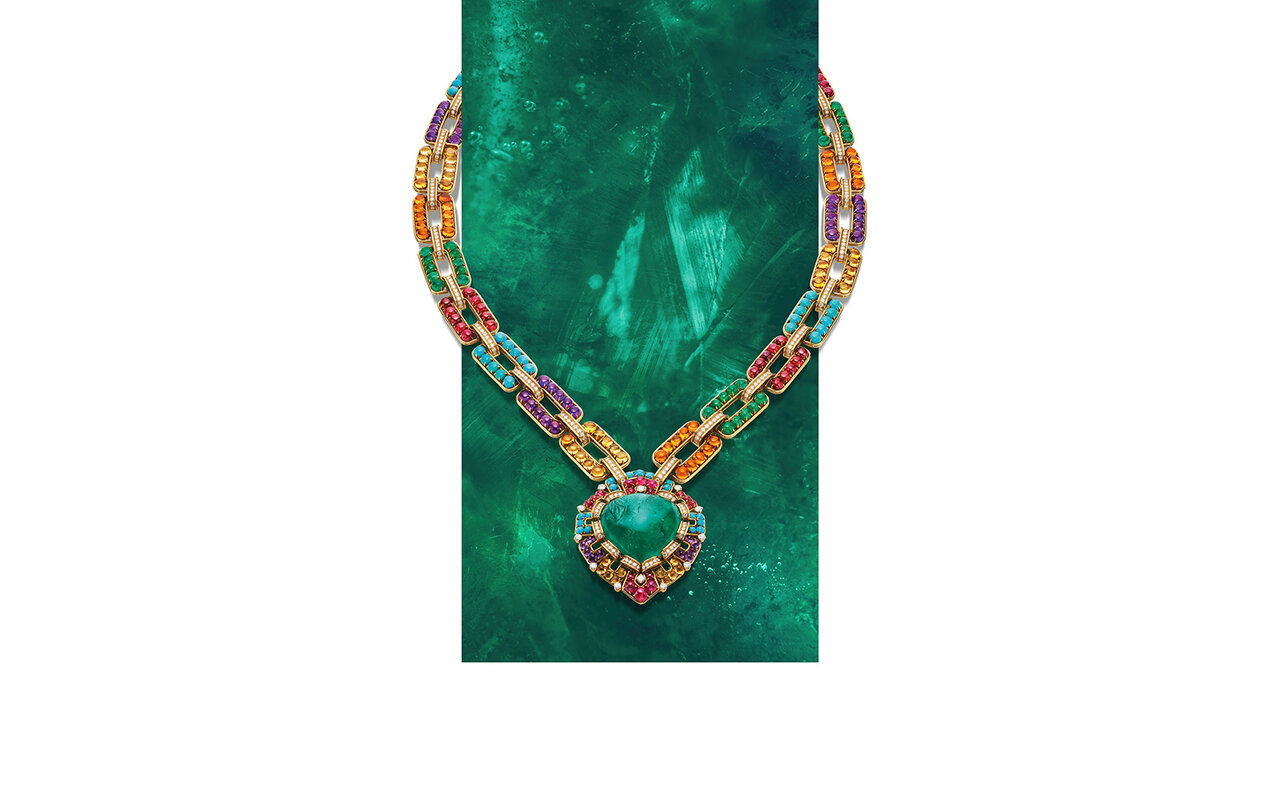
Convertible Sautoir-Bracelet. Gold, amethyst, turquoise, citrine, ruby, emerald, diamonds. Circa 1969. Bulgari Heritage Collection.
The highlight of this section is the unique masterpiece, the "Convertible Sautoir-Bracelet" from circa 1969. This piece, transformable into both a sautoir and a bracelet, is adorned with amethyst, turquoise, citrine, rubies, emeralds, and diamonds set in yellow gold, perfectly embodying the exhibition's kaleidoscopic spirit.
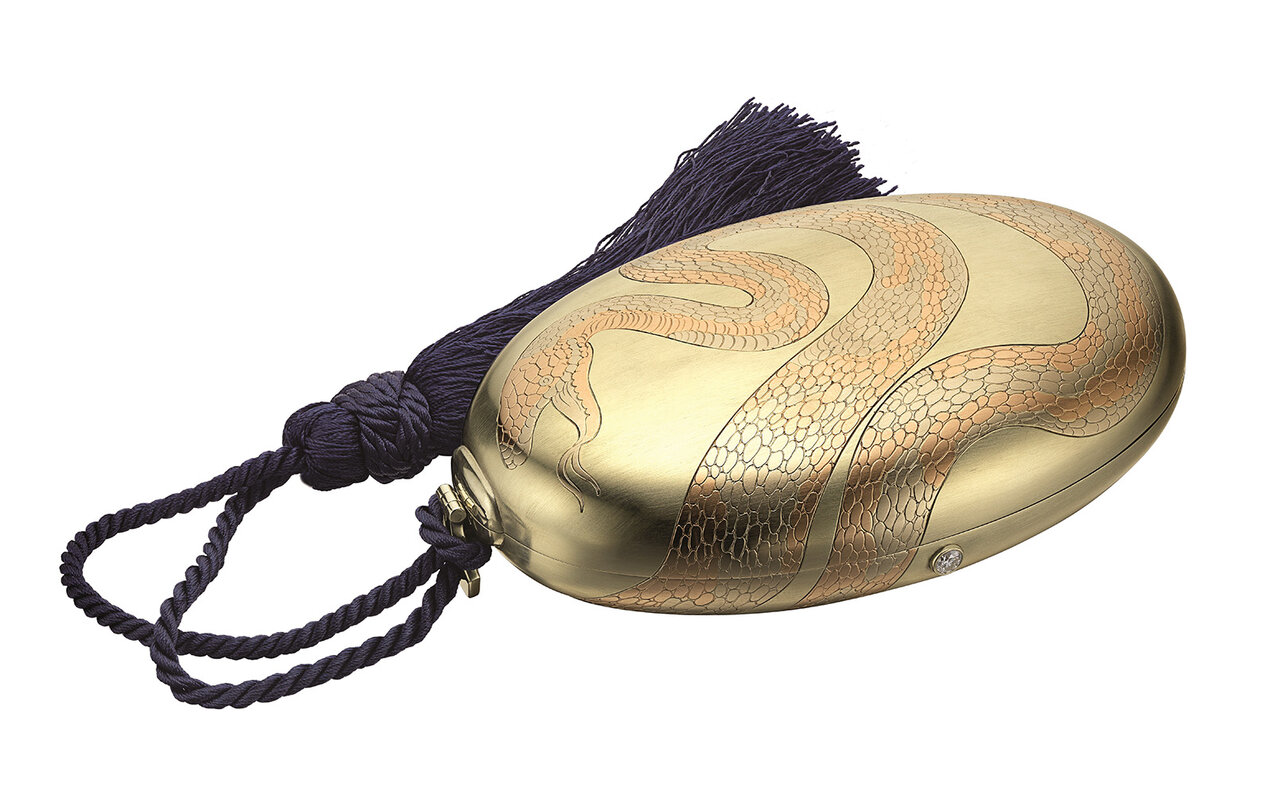
"Serpenti" Evening Bag. White, red, "Sea Water" green gold, silk cord, diamonds. Circa 1978. Bulgari Heritage Collection.
Also on display is the elegant "Serpenti" evening bag (circa 1978), crafted from three-tone gold with a silk cord and diamonds. This treasured bag, a testament to the legendary success of Bulgari's "Melone" bag, features interwoven tones of white, red, and a rare blue-green known as "Acqua di Mare" against gold, showcasing the maison's exceptional goldsmithing artistry.
Beyond jewelry, the exhibition also features a significant dialogue with contemporary art. Three female artists have created new works, each offering a unique perspective on color.
Lara Favaretto's site-specific installation, "Level 5," comprises rotating car wash brushes in various colors. Detached from their industrial context, the brushes become soft sculptures, exploring the boundary between the mechanical and the organic through a hypnotic visual meditation that fuses movement, rhythm, and chromatic energy.
Mariko Mori's "Onogoro Stone III" draws inspiration from the Kojiki, evoking a sacred creation myth. It merges futuristic materials with spiritual minimalism, crafting a meditative space that symbolizes cosmic balance. Through the symbolic power of color and form, it offers an experience of origin that is both personal and universal.
Akiko Nakayama's dynamic installation, "Echo," projects fluid forms created by the interplay of water, sound, and mineral pigments throughout the space. Presented as "Alive Painting," where art, nature, and physics intersect in constantly shifting light, it engages in a dialogue with the Bulgari Heritage Collection's "Convertible Sautoir-Bracelet," expressing the ephemeral beauty of ever-transforming colors.
This exhibition is a fusion of high jewelry, heritage pieces, contemporary art, precious historical archives, and immersive installations. It traces Bulgari's journey of over 140 years, from its founding to the present day, while highlighting the deep cultural connections between Italy and Japan.
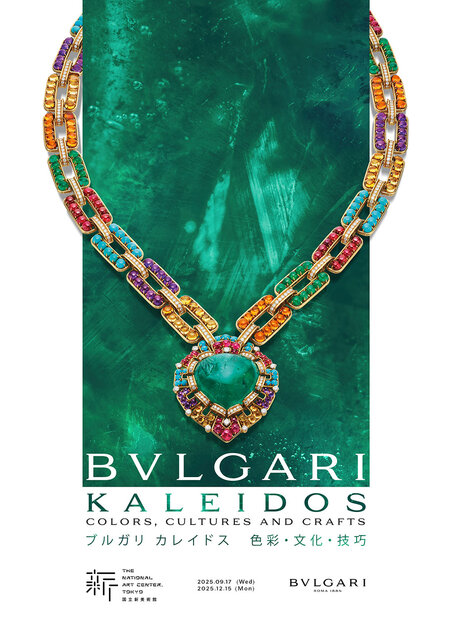
Bulgari: The Art of Color, Culture, and Craftsmanship
Exhibition Dates: September 17, 2025 (Wednesday) - December 15, 2025 (Monday)
Closed: Tuesdays, except Tuesday, September 23 (public holiday), which will be open. Closed Wednesday, September 24.
Opening Hours: 10:00 - 18:00 (Fridays and Saturdays until 20:00. Last admission 30 minutes before closing.)
Venue: The National Art Center, Tokyo, Special Exhibition Gallery 2E
7-22-2 Roppongi, Minato-ku, Tokyo
Admission: General ¥2,300, University Students ¥1,000, High School Students ¥500 (All prices include tax)
Free admission for junior high school students and younger.
Free admission for visitors with a disability certificate (and one accompanying person).
Timed-entry tickets will be required for this exhibition. Details will be announced later on the website and other platforms.
Exhibition Dates: September 17, 2025 (Wednesday) - December 15, 2025 (Monday)
Closed: Tuesdays, except Tuesday, September 23 (public holiday), which will be open. Closed Wednesday, September 24.
Opening Hours: 10:00 - 18:00 (Fridays and Saturdays until 20:00. Last admission 30 minutes before closing.)
Venue: The National Art Center, Tokyo, Special Exhibition Gallery 2E
7-22-2 Roppongi, Minato-ku, Tokyo
Admission: General ¥2,300, University Students ¥1,000, High School Students ¥500 (All prices include tax)
Free admission for junior high school students and younger.
Free admission for visitors with a disability certificate (and one accompanying person).
Timed-entry tickets will be required for this exhibition. Details will be announced later on the website and other platforms.
Inquiries
Bulgari: The Art of Color, Culture, and Craftsmanship
Tel. 050-5541-8600 (Hello Dial)
https://www.bulgari.com/ja-jp/stories/kaleidos-exhibition