Ulysse Nardin: a manufacture of freedom | ULYSSE NARDIN
ULYSSE NARDIN | Ulysse Nardin
Interview with Jean-Christophe Sabatier, Director of Product Marketing at Ulysse Nardin (Part 1)
Ulysse Nardin is undergoing a major transformation. It's now evident to everyone that the brand is shifting from its traditional positioning, built on the success of its marine chronometers, to a contemporary stance that expresses exciting concepts. In this interview, we asked key figures at the brand what Ulysse Nardin is thinking and where it's headed.
Interviewed by TSUCHIDA Takashi
A world of a few centimeters requiring immense constraints and challenges
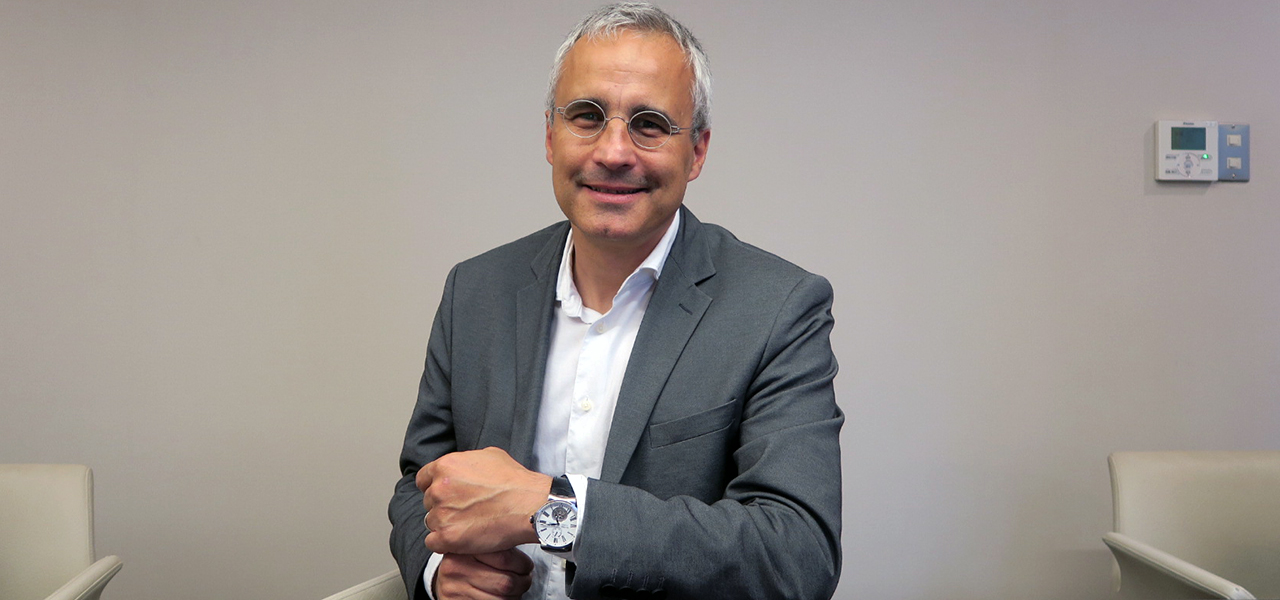
First, some background on our interviewee. Jean-Christophe Sabatier, Director of Product Marketing at Ulysse Nardin. Born in Dijon, France, in 1970. He is responsible for the brand's entire product lineup and leads a team of 10, including artists, designers, and project managers, from new product design to management expertise.
After graduating from business school, Jean-Christophe (JC) entered the automotive industry at 23, gaining experience at Peugeot before transitioning to the watchmaking world. In 2002, he was appointed Marketing and Communications Director at Baume & Mercier. He moved to the Kering Group in 2011, serving as Director of the watch division at Boucheron for five years, and then joined Ulysse Nardin in 2016. He holds his current position to this day.
— It's a pleasure to meet you. Before we begin, could you tell us about your impression of Ulysse Nardin before you joined the company?
JCOne impression was of "freedom." I felt the brand was very free in its ideas, its expressions, and its innovation. Another was its highly regarded technical expertise. With its many innovative technologies, I also had the impression of it being an "engineering collective."
— What do you hope to achieve at Ulysse Nardin?
JCUlysse Nardin is like a dream brand. It's a brand where you can use all sorts of means; everything is in place. We have our own movements, and thanks to SIGATEC, we can also work with silicon materials.
JCYes. We have a factory owned by Ulysse Nardin called SIGATEC. That's where we make Ulysse Nardin's silicon components. On the other hand, we are also adept at more traditional techniques like enamel flammé, grand feu, cloisonné, and champlevé.
— You have the Donzé Cadrans workshop, after all.
JCIndeed. We can also do skeletonization and incorporate automata. Truly, there are all sorts of choices. The Ulysse Nardin brand is like a wonderful toolbox.
As for what I want to achieve, I want to inherit that know-how while also streamlining the existing collections to clarify the purpose of each one. In the past, Ulysse Nardin was somewhat weak in product structuring from a marketing perspective. This meant that even well-crafted products couldn't shine.
— My perception is that Ulysse Nardin's transformation began with SIHH in 2017. The old Ulysse Nardin had a traditional appeal, with the marine chronometer as its icon.
JCIn a way, Ulysse Nardin is a brand with two distinct paths.
One is tradition, represented by the marine chronometer. The marine chronometer is based on the design of clocks installed on naval vessels, known as deck chronometers.
The other is technological innovation that breaks existing molds, exemplified by the "Freak." Two years ago, Ulysse Nardin began to focus more on the latter, resulting in products like the "Skelton X" and "Freak X."
— Could you please explain the current brand message again?
JCWe often use the phrase "a manufacture of freedom" to describe Ulysse Nardin. As I mentioned earlier, Ulysse Nardin is an engineering collective. This signifies freedom in terms of technology. And in the sense that we can create watches with unique designs, I believe we also possess freedom in our creativity.
— How has this "freedom" been cultivated throughout Ulysse Nardin's history?
JCI believe it's because the brand has always had a strong spirit of challenge. The people who have been involved with Ulysse Nardin for generations have continued the brand with this challenging spirit. The brand embodies a spirit of not limiting imagination and trying anything, doing what others haven't done.
Going back to the founding days, Paul David Nardin, the founder's son, was born and raised in the Jura mountains of Switzerland, yet he boldly pursued mastery in the world of marine chronometers.
— People who lived in the mountains ventured into the world of the sea?
JCThat's right. At that time, marine clocks were made in France or England. In such an era, a company from a landlocked country mastered instruments for use at sea. The result, as you know, was that they were used by the navies of 50 countries.
Another example is the "Freak," unveiled in 2001 by then-CEO Rolf W. Schneider. I believe it was a groundbreaking moment. The "Freak" is a watch with no dial and no crown. Furthermore, it was the first to use silicon, a material not previously used in watches, garnering significant attention. This was truly a feat of challenging spirit. Also, naming a high-end mechanical watch "Freak" is right on the edge of marketing acceptability (laughs).
ULYSSE NARDIN | Ulysse Nardin
Interview with Jean-Christophe Sabatier, Director of Product Marketing at Ulysse Nardin (Part 2)
— Now, at SIHH 2019, the X-ray series was released. How does this concept differ from regular skeletonization?
JCThese are watches created with the concept of a platform for communication. In other words, we wanted to capture the attention of the millennial generation towards watches as an item. They are authentic mechanical watches, yet stylish and appealing to younger people.
-
![]()
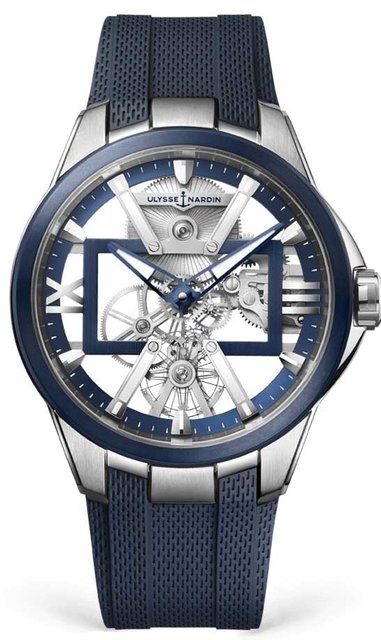
Skelton X
-
![]()
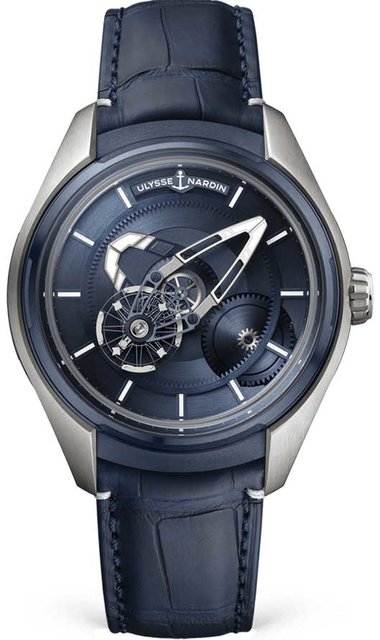
Freak X
What "Skelton X" and "Freak X" have in common is the absence of a dial. The X-ray concept of seeing through something is shared.
— I believe this is about giving meaning to skeleton design, but what is the significance of Ulysse Nardin undertaking this?
JCSkeletonization of watches typically evokes an image of very traditional, old-fashioned timepieces. However, when aiming to reach a younger generation, design is crucial. In addition to that, the feeling on the wrist is important. The weight of the case, its thickness – we value elements that appeal to the senses. In fact, the skeleton models offer a light and comfortable feel.
— What I found particularly novel was how the bridges, forming the skeleton, are emphasized, much like seeing bones through an X-ray. This is a distinct element compared to the material-removed skeletonization seen in other brands.
JCIn the case of the "Freak X," the movement itself rotates to indicate the time, which imposes design constraints. The challenge was how to introduce the new design concept of X within these limitations. On the other hand, the "Skelton X" was designed from the outset. We focused on how to best express the design concept, and then determined what kind of movement would be suitable for it.
Both are the result of approaching the challenge from opposite directions.
— I see. Ulysse Nardin offers a range of models covering mid to high price points. Could you explain the reason behind this product composition?
JCUlysse Nardin has historically created innovative items at the top end and then brought them down to more accessible price points.
For example, we have a highly cost-effective product with a tourbillon and a grand feu enamel dial in a stainless steel case for 3.24 million yen. This is achievable because we already have the Caliber 118, a representative Ulysse Nardin caliber, and its mass production system is in place. The price is possible because the caliber's performance has been proven through many years of manufacturing.
Having movements that can be produced in volume allows us to maintain our uniqueness. It improves production efficiency and also increases design freedom.
— I understand. While there are such fortunate examples, some Swiss luxury watch brands have lost momentum due to the global economic recession. How do you view this situation?
JCThe Swiss watch industry has been on a steady upward trajectory for a long time. However, I believe we are currently in a period of change. During such times of change, some brands will continue to grow, while others may falter temporarily.
In this context, Ulysse Nardin has been steadily increasing its sales, so I hope that this period of change in the industry will work to our advantage.
— What do you predict for the future of the Swiss luxury watch industry?
JCPreviously, I think it was a battle for market share among luxury watch brands. However, going forward, it won't just be watch brands competing. It will be about choices within various aspects of lifestyle, such as travel, cars, hobbies, and so on.
In such a situation, I believe it will be difficult to choose a watch unless it offers significant added value.
— What kind of brand do you envision Ulysse Nardin growing into?
JCFirst, we will continue the direction established in recent years. We will also continue to organize and clarify our collections.
— Please be as specific as possible. What is the future battleground for mechanical watches? Please explain the reasons and technical background.
JCOne aspect is design. I believe design has become an even more crucial element than in the past. Another is added value that brings surprise. This could be in various forms: surprisingly light, exceptionally long power reserve, made from recycled materials, or easy movement repair. Added value can be considered from many perspectives.
— So, what are Ulysse Nardin's specialties in terms of added value?
JCFor example, silicon. We can provide highly practical added value with silicon materials. Or, at the Donzé Cadrans enamel workshop, we can create dials that do not fade.
The greatest strength of Ulysse Nardin lies in integrating advanced technology into daily use and providing high-spec added value.
— Incidentally, what are the benefits of Ulysse Nardin being part of the Kering Group?
JCOne is the support functions from the group.
— Are you referring to financial support?
JCNo. Each brand operates on a self-sustaining basis. The Kering Group exists to support each brand, rather than the brands being under Kering's control.
I see the group's backup as having a positive impact on brand management, not just in terms of simple investment in manufacturing, but also through the sharing of know-how within the group and in various other aspects.
— Is this different from other holding companies?
JCI'm not unaware of other groups, but with the Kering Group, I would highlight the strong independence of each brand.
— I understand. My final question: For you, JC, what does a mechanical watch represent?
JCIt's "a world of a few centimeters requiring immense constraints and challenges." Of course, it must look good, but it's not enough for it to just look good. Price must also be considered, and it must be comfortable to wear. All these elements must be contained within 3 to 4 centimeters, yet possess uniqueness and tell a story.
It's a world where various elements are incorporated under constraints. That's precisely why I love it.
Deciding whether to use traditional techniques or cutting-edge modern methods, how to combine them to create something excellent, how to imbue it with uniqueness and a story – it's a very enjoyable world where all these aspects are condensed into a small item.
*This interview was conducted in July 2019.