April 1, 2015
Grand Seiko Mechanical Hi-Beat 36000 | Part 1: A New Design Challenge
Grand Seiko Mechanical High Beat 36000
Part 1: A New Challenge in Design
In 2009, a new model was announced from Grand Seiko, Seiko's signature collection. This was the newly developed "Grand Seiko Mechanical High Beat 36000," equipped with a high-frequency movement that beats at 36,000 vibrations per hour. While the model, which incorporated cutting-edge technology starting with its movement development, showcased Seiko's commitment to practical watches, evident in its meticulous watchmaking, including the development of its mainspring. Through conversations with people involved with this high-beat model, we gain insight into Seiko's guiding principles for watchmaking, born from its sincere dedication to practical timepieces.
By Aki NagatomiPhoto by Jamandfix
The Designer's Role in New Development
This year, the "Grand Seiko Mechanical High Beat 36000" garnered attention for its newly developed movement. Beyond the movement itself, there was also a person who supported this new development from a design perspective.
Mr. Nobuhiro Kosugi is a designer who has been responsible for Grand Seiko's watch designs. For over 15 years, he has crafted new designs while upholding the "Seiko Style," evident in the mechanical models of the "9S" series and the classic line that evokes a sense of nostalgic charm.
The "Seiko Style" is a design aesthetic inherited from Grand Seiko's 1960s designs, perfected in 1967. At the time, it was the result of extensive research to ensure Japanese watches could rival those from abroad, and it also serves as a design language that leverages Seiko's expertise in "Zaratsu polishing." As a fundamental principle for practical watches, this style has been meticulously maintained in Grand Seiko to this day.
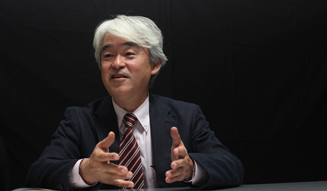
Seiko designer Nobuhiro Kosugi. He oversees the design of all of Seiko's main lines, including "Grand Seiko" and the luxury brand "Credor."
A New Interpretation Inheriting the Seiko Style
The brand's heritage is evident in elements like the tangent lines flowing from a conical shape to a flat surface, the multi-faceted indices, and the five-faceted dauphine hands. Within these numerous constraints, Mr. Kosugi has strived to create designs that align with the brand's evolution. For this project, he meticulously refined the design while preserving the Seiko Style, focusing on how to express the characteristics of the new movement.
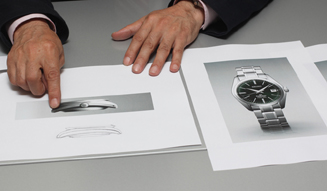
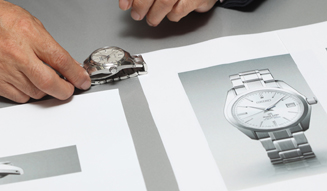
"With the revival of the high-beat movement, I aimed to capture the essence of its initial debut in 1968 while maintaining a sharp aesthetic. Of course, showcasing the advancements in Zaratsu polishing for the modern era was also a key objective. For instance, the indices. Previously, they were often thick and robust, but this time, I deliberately made them 'slender and long,' following the design of that era. This not only expresses the 'tension' inherent in the high-beat movement but also enhances legibility."
Design 'Subtraction' for Practicality
For this high-beat model, the deep commitment of those involved meant there was much they wanted to convey. However, Mr. Kosugi consistently bore in mind the principle of "subtraction" to uphold Grand Seiko's practicality.
"We considered adding a power reserve indicator, but knowing the inherent quality of the movement, we deliberately avoided unnecessary embellishments. Given the 10-beat frequency, a 1/5th second scale was also proposed, but ultimately, Grand Seiko is a practical watch."
"As visually distracting elements were deemed unnecessary, we decisively opted for a 60-second display only. The very origin of the Seiko Style exemplifies this: our watches are crafted with an emphasis on elegance derived from practicality. "
"This time, the mainspring was redesigned to be more easily wound, so we made the crown easier to grip. However, a large, protruding crown would have been out of character. Therefore, by setting the diameter to 7mm, we achieved both a slim, sharp profile and improved operability. This iterative approach was key."
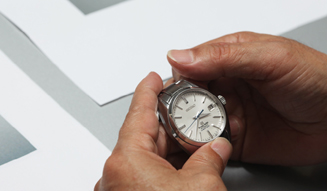
The Fascination of Design Within Constraints
Beyond the Seiko Style, the process of harmonizing design elements within a three-dimensional form is an incredibly patient endeavor. Yet, Mr. Kosugi finds joy in the unexpected discoveries and pleasures that emerge from this work.
"To achieve a soft light reflection on the wrist, the case's curvature was meticulously controlled. Starting from the 3 and 9 o'clock positions, we pushed the lines to their absolute limit, minimizing the curve to further enhance its sharpness."
"Defining the overall form from the side led to the serendipitous creation of a unique line, which was a success. Grand Seiko, in particular, attracts watch enthusiasts with a keen eye for detail, both among creators and customers. This time, the heightened awareness from those around us likely contributed to the creation of an even better design. The Seiko Style, grounded in practicality, presents high hurdles for innovation precisely because of its inherent constraints. This, in turn, makes the design process increasingly fascinating."
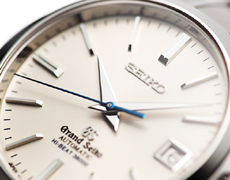
"Grand Seiko Mechanical High Beat 36000"
This model features a newly developed high-frequency movement that beats at 36,000 vibrations per hour. While increased vibration frequency can lead to reduced power reserve and durability issues, new mainspring and balance spring materials were developed. This achieves approximately 1.5 times the torque required for 36,000 vibrations and a power reserve of up to 55 hours. Additionally, the escapement wheel and pallet fork utilize the new "MEMS" material. This watch seamlessly integrates artisan craftsmanship and cutting-edge technology within the traditional Seiko Style.
Stainless steel case and bracelet, ¥577,500.
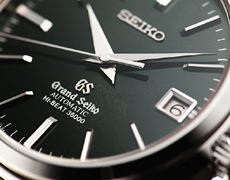
Limited Edition of the "Grand Seiko Mechanical High Beat 36000"
Achieves higher precision (static accuracy: +5 to -1 seconds per day) than the regular model's accuracy (static accuracy: +5 to -3 seconds per day).
The deep, rich green is striking. This color was inspired by the fresh greenery that adorns Mount Iwate, visible from the Shizukuishi Watch Studio.
Stainless steel case and bracelet, limited to 200 pieces (with serial number), ¥630,000, scheduled for release in June.
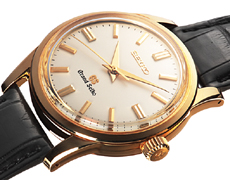
"Grand Seiko Mechanical Yellow Gold Model"
A hand-wound model that carries the spirit of Grand Seiko's early days. Through the see-through case back, one can admire not only the beauty of the "9S54" movement but also the intricate motion of the balance wheel. The box-shaped crystal evokes antique watches, and the three-dimensional bar indices, embodying the Seiko Style, lend it a classic and elegant appeal.
Hand-wound, yellow gold case x crocodile strap, ¥1,050,000.
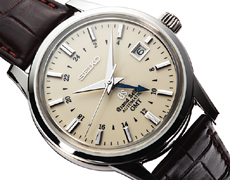
"Grand Seiko Mechanical GMT"
A GMT model with a 24-hour display, powered by the mechanical movement "9S56." The "9S" caliber series, born in 1998 with the revival of mechanical watches, meets Seiko's unique and stringent accuracy standard, the "Grand Seiko Standard (New GS Standard)." This watch offers a glimpse into Grand Seiko's commitment to "practical watches." The thick bar indices, ivory dial, and box-shaped crystal express the Seiko Style in a more classical manner.
Automatic (with manual winding), stainless steel case x crocodile strap, ¥451,500.
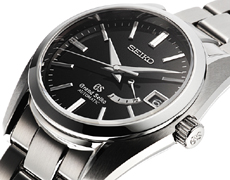
"Grand Seiko Mechanical Automatic 3 DAYS"
Equipped with the newly developed "9S67" automatic movement from 2006, it boasts a 72-hour power reserve. Although it's a 3-day movement, by improving the thickness and width of the mainspring, its length was extended by 10 cm, enabling a long power reserve without altering the thickness of the barrel.
Automatic (with manual winding), stainless steel case and bracelet, ¥525,000
Seiko Watch
http://www.seiko-watch.co.jp