The Ultimate Quartz Has Arrived: Towards a New Future for Quartz | LONGINES
LONGINES | Longines
The Most Accurate and Intelligent Quartz Watch
Longines "Conquest V.H.P." (1)
From March 23 to 30, 2017, Basel, the third-largest city in Switzerland, hosted "Baselworld 2017," the world's largest watch and jewelry fair. Longines, founded in Saint-Imier, Switzerland, in 1832, held a press conference two weeks prior to the fair, on March 9, at the Neuchâtel Observatory in Switzerland, inviting about 100 journalists and influencers from around the world to unveil its groundbreaking, ultra-high-precision quartz watch, the "Conquest V.H.P. Collection," equipped with innovative new technology. As one of the participants and reporters from Japan, I will explain the reason why Longines held its new product launch event just before Baselworld, the event itself, and an overview of this model.
Photographs & Text by SHIBUYA Yasuhito (Office Nomad)
Ahead of Baselworld 2017
Unveiled in the Legendary Land of Neuchâtel!
The Neuchâtel Observatory, the venue for the unveiling, is a legendary place with deep ties to the Swiss watch industry and high-precision timekeeping. This is because it was established in 1858 at the request of the Swiss watch industry to primarily serve as a testing ground for chronometers (high-precision watches), rather than for astronomical observation, by the Neuchâtel Cantonal Department of Economic Affairs.
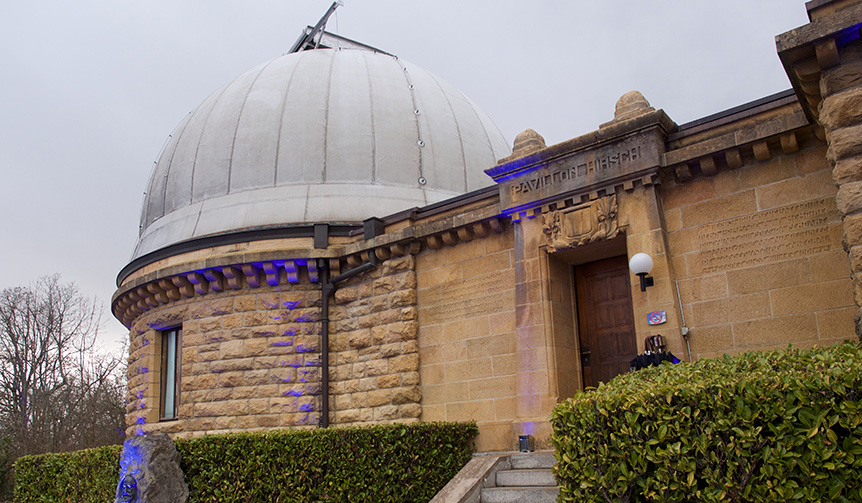
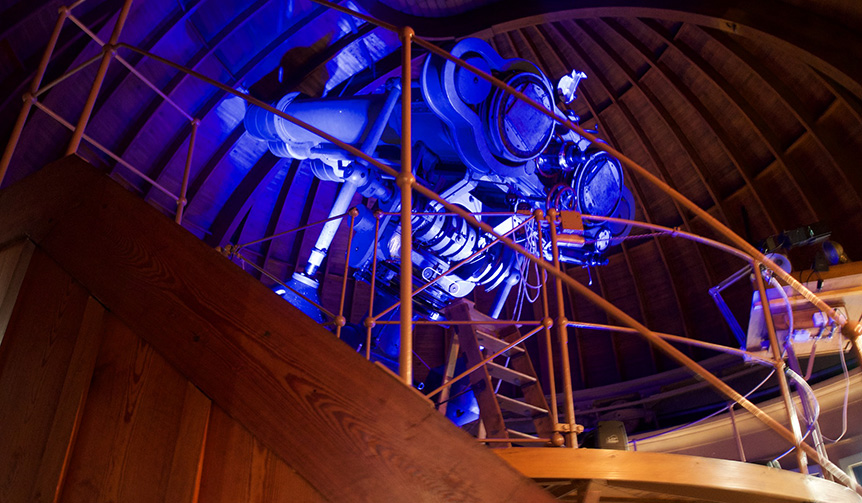
The press conference and exhibition venue was the old Neuchâtel Observatory, situated on a hill overlooking the city and lake of Neuchâtel. It now houses facilities for the Swiss Center for Electronics and Microtechnology (CSEM), a non-profit corporation established in 1984 by the watch industry, the University of Neuchâtel, the Swiss Confederation, and the Canton of Neuchâtel, which bridges basic research conducted by universities and public research institutions with the commercialization of new technologies. Longines' presentation and exhibition of its historical quartz models and new products took place within the telescope dome and its adjacent facilities of the old observatory.
Just two years after its establishment, in 1860, it began its chronometer testing services for pocket watches. Eventually, chronometer competitions, where various watch brands competed in accuracy and regulation techniques, were held at this Neuchâtel Observatory, similar to the pioneering Geneva Observatory in Switzerland. Approximately 90 years later, in 1952, it became one of the few observatories in Europe, along with the old Geneva Observatory, authorized by the International Committee for the Coordination of Standards in the Field of Mechanical Chronometers (CIJ) of Switzerland and France to certify watches for chronometer competitions and officially regulated watches, and to issue certificates of official chronometer rating. Enthusiasts of fine watches may know this place as the site where Japan's Seiko competed and achieved excellent results in the observatory's chronometer competitions from 1964 to 1968, and where the chronometer models it sold were tested.
For Longines, which was founded in 1832 and grew into one of Switzerland's leading comprehensive watch manufacturers from the late 19th to the early 20th century, the Neuchâtel Observatory holds significant memories and is a place of great importance. It served as a third-party institution for chronometer testing, as the stage for chronometer competitions where the brand gained renown not only for mechanical watches but also for quartz watches, and as the venue for the unveiling of the first "Conquest V.H.P." model announced this time.
A History and Passion Known to Few.
Longines' Superior Quartz Technology
The quartz watch first developed by Longines in 1954 set a series of new accuracy records at this observatory. The "Chronocinégines," a chronograph device combining a 16mm camera with this quartz watch, captured and tracked the movements of track athletes in 1/100th-second increments. From these negatives, officials could reliably determine an athlete's position at the finish line, marking a significant leap forward in sports timing.
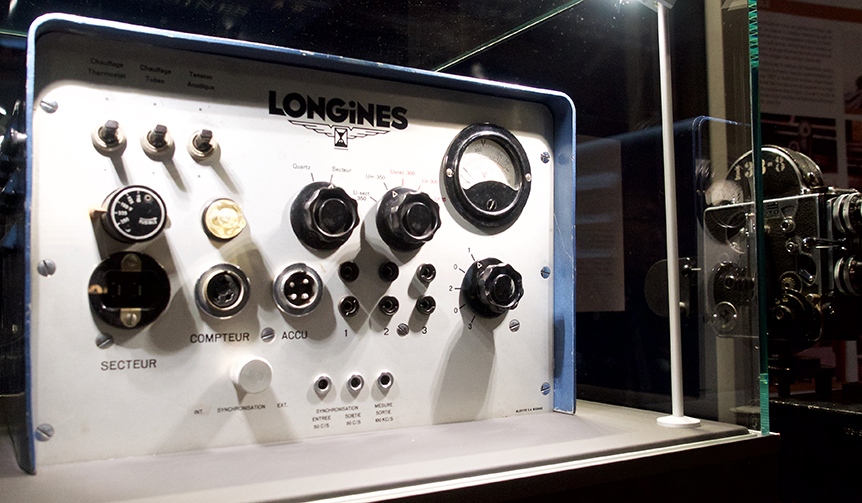
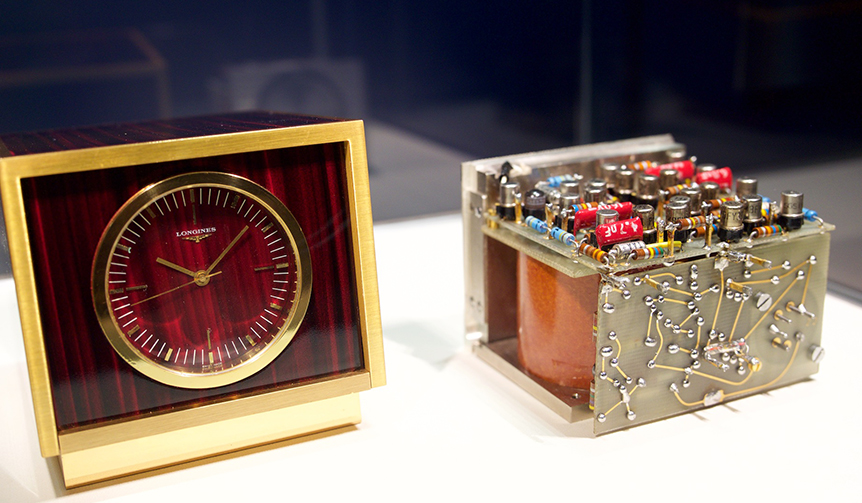
Left: The "Chronocinégines," Longines' first quartz watch. Combined with a 16mm film camera, it created a system for continuous shooting of track athletes crossing the finish line in 1/100th-second increments. Right: The "Caliber 800," a high-precision quartz movement for marine chronometers. It surpassed all previous accuracy records set by mechanical watches at the Neuchâtel Observatory.
Longines' quartz technology continued to evolve steadily, starting with this timing device. In 1965, they developed the "Caliber 800" quartz movement for marine chronometers. This chronometer broke all the records previously set by mechanical watches in observatory competitions. While Longines continued to collaborate with other companies, including the CEH (Centre Electronique Horloger) in Neuchâtel, which developed the first analog quartz watch in 1967, on quartz watch technology development, they also secretly pursued their own "Project Hourglass" internally to develop and manufacture a quartz watch by 1970. Although they narrowly missed the honor of "world's first mass-produced quartz watch" to Seiko, they announced a prototype model for mass production of the "Ultra-Quartz," equipped with the movement called "Caliber 6512," in September 1969.
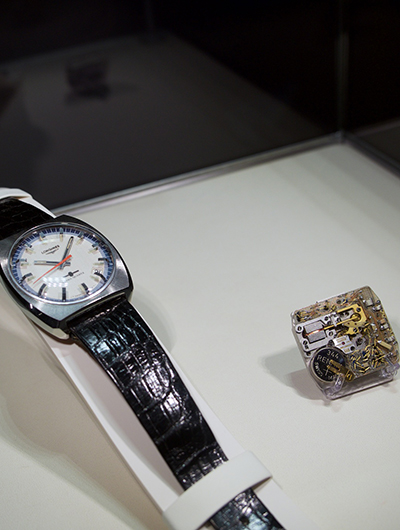
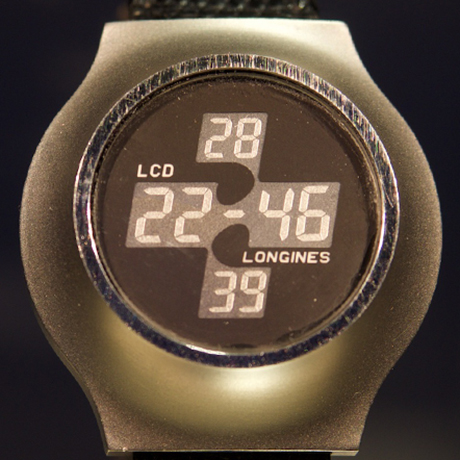
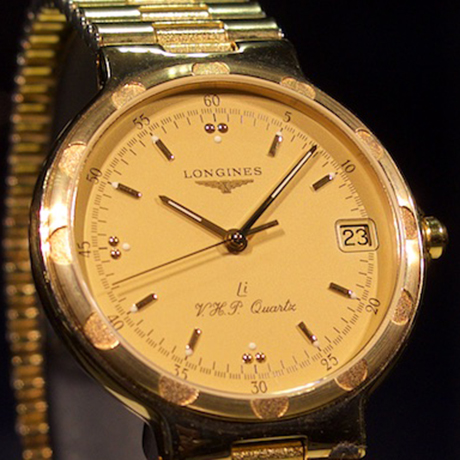
Left: Separately from the CEH (Centre Electronique Horloger) in Neuchâtel, jointly established by various watch companies, Longines secretly developed "Ultra-Quartz Caliber 6512" internally under the name "Project Hourglass," completing a mass-production prototype model in the fall. Unfortunately, mass production did not begin within the year. Top right: Longines' first digital watch, jointly developed with Ébauches SA (now ETA) and semiconductor manufacturer Texas Instruments in Silicon Valley. Its innovative design received high acclaim. Bottom right: The first model of the "Conquest V.H.P." collection. Its accuracy was ±10 seconds per year.
Furthermore, in the 1970s, Longines vigorously pursued the development of quartz wristwatches. In 1972, they collaborated with Ébauches SA (later ETA) and semiconductor manufacturer Texas Instruments to create their first digital watch, the "Longines LCD," and subsequently introduced ultra-thin quartz models. Then, in 1984, Longines unveiled the first-generation "Conquest V.H.P.," a highly accurate quartz watch at the forefront of technology at the time, at the Neuchâtel Observatory.
Therefore, the unveiling of the latest "Conquest V.H.P. Collection" held just before Baselworld, despite the short notice, and attended by media from around the world, marks the first event in 21 years since the launch of the perpetual calendar model in 1996, and the first event at this commemorative venue since the collection's debut 33 years ago. This clearly demonstrates Longines' exceptional confidence and ambition for this new collection.
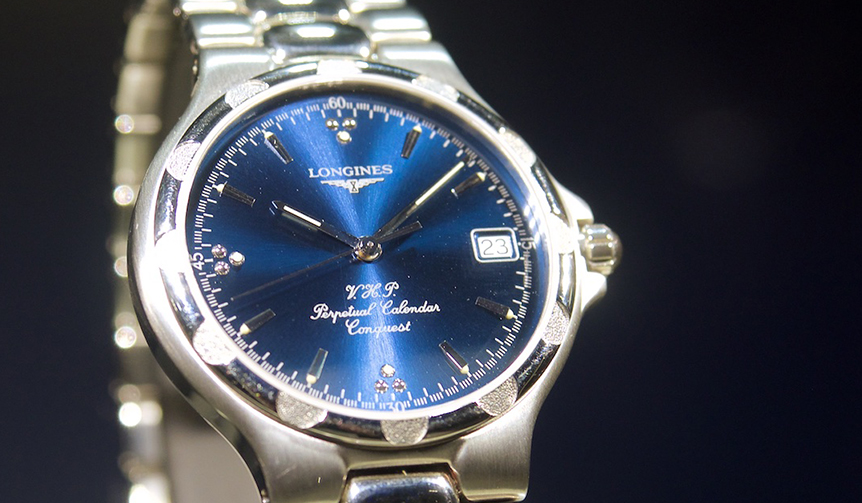
"Conquest V.H.P. Perpetual Calendar" equipped with a perpetual calendar function. Later, this name would be temporarily retired amidst the mechanical watch boom.
Page 02.Highest Level of Quartz Accuracy Plus a New Mechanism for Precise Hand Display!
LONGINES | Longines
The Most Accurate and Intelligent Quartz Watch
Longines "Conquest V.H.P." (2)
Longines has always been at the forefront of the Swiss watch industry, even with quartz watches. The quartz technology incorporated in its latest collection, the "Conquest V.H.P.," is undoubtedly at the cutting edge. This is evident from the ambitious tagline in the brochure distributed at the press conference: "THE ULTIMATE QUARTZ INNOVATION — BACK TO THE FUTURE OF QUARTZ," which seems to acknowledge the challenge posed by smartwatches.
While packed with innovative features and technologies, the most significant aspect of the "Conquest V.H.P." is its ultra-high precision, with an annual deviation of just ±5 seconds, representing the pinnacle of quartz accuracy. Even among Japanese quartz watches, very few models boast this level of precision. For Swiss quartz watches, ±10 seconds per year has been the previous benchmark for high accuracy. This new model achieves double the accuracy of conventional high-precision watches.
Technically, however, the method for improving accuracy remains the same as before: compensating for slight deviations in the oscillation frequency of the quartz crystal, which subtly changes with ambient temperature, using a temperature sensor and electronic circuitry.
However, what is truly groundbreaking and remarkable about this watch is its new mechanism that ensures accurate display of time, even under strong shocks or magnetic influences, maintaining its ±5 seconds per year accuracy. The core of this mechanism is the Gear Position Detection (GPD) system, which constantly monitors the position of the hour, minute, and second hands.
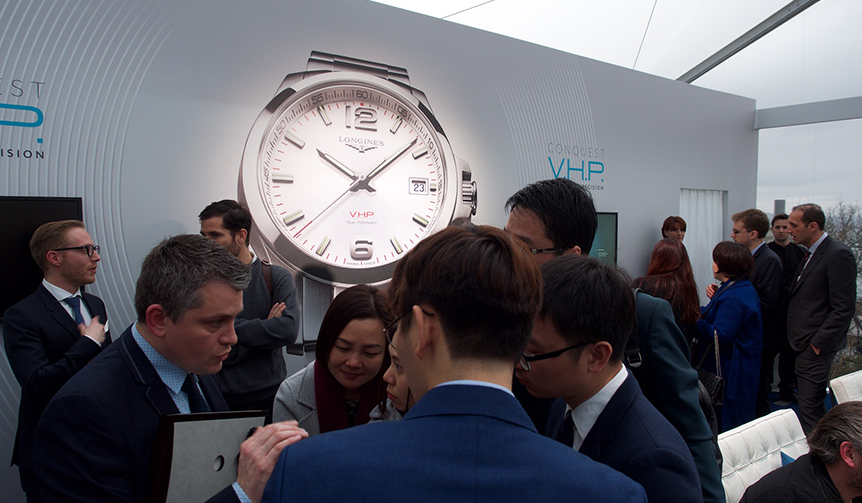
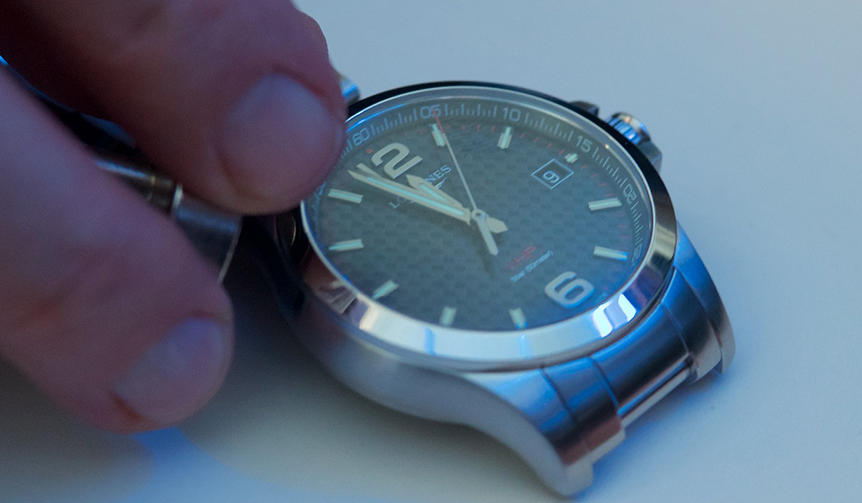
The GPD system continuously monitors the position of all three hands. If the displayed time deviates from the highly accurate quartz circuit's time data (which runs at ±5 seconds per year) due to external forces such as shocks or magnetic fields, the system immediately detects this discrepancy, sends a command to the hand drive circuit, and automatically returns the hands to their correct positions.
For instance, when the watch is subjected to a physical shock, the built-in G-sensor detects the magnitude of the impact. If the force applied to the watch is up to 500G, the hand positions are instantly corrected. If the force exceeds 500G, the hands are temporarily stopped to minimize damage to the hands and gears, and then automatically corrected based on the current time data once the shock has subsided.
Additionally, the watch is equipped with a built-in magnetic sensor that is always active. If it detects magnetic fields exceeding the limit for proper operation, it instantly stops the hands to prevent damage to them and the gears. Once the magnetic field dissipates, the hands are automatically returned to their correct positions based on the current time data, thanks to its anti-magnetic and correction functions.
Furthermore, even if the watch is not exposed to strong shocks or magnetic fields, the GPD system automatically activates every day at 3 AM to correct any deviation in the hand positions.
Moreover, the mechanism for correcting the time display incorporates a new system called "Power Drive 400." This system utilizes three motors in three-hand models and five motors in chronographs, driving each hand at an ultra-high speed of 400 Hz (400 steps per second) in both clockwise and counter-clockwise directions. Consequently, after the hands stop, they return to their correct positions with astonishing speed. This system also enables functions that utilize the hands for various displays.
Other notable features include the "Smart Crown" function, which allows for seconds synchronization by operating the crown and easy switching for daylight saving time, as well as a perpetual calendar mechanism that eliminates the need for manual date adjustments.
At first glance, it appears to be an authentic analog watch, but Longines' new "Conquest V.H.P." boasts exceptional shock and magnetic resistance, surpassing even outdoor watches, along with an ultra-high accuracy of ±5 seconds per year. Thirty-three years after its debut, the "ultimate analog quartz watch" has returned.
LONGINES Conquest V.H.P.
Longines Conquest V.H.P.
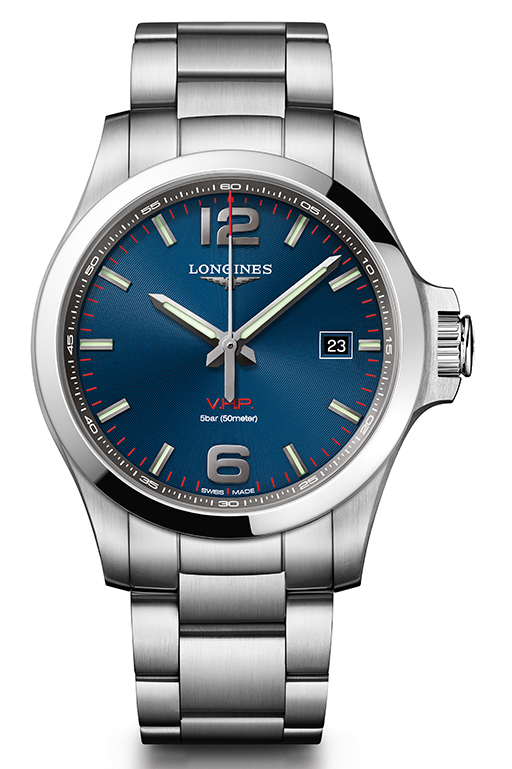
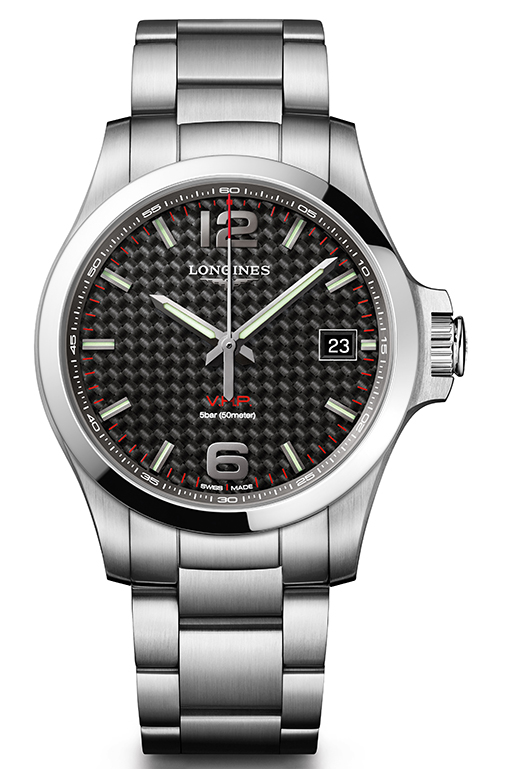
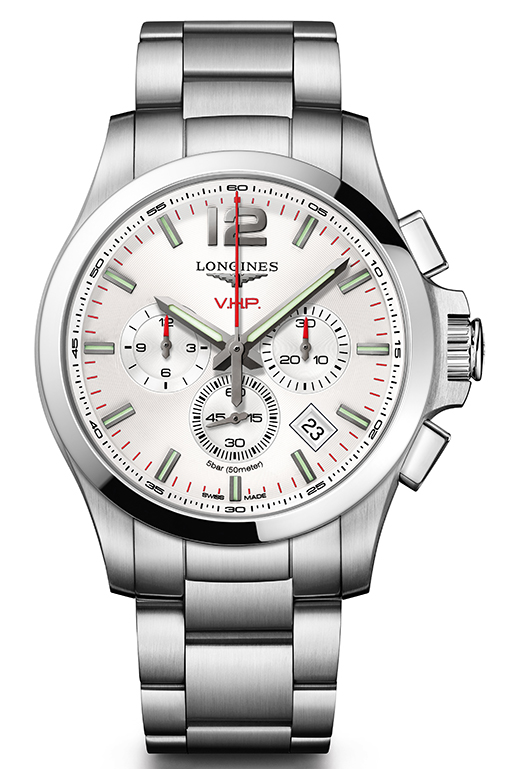
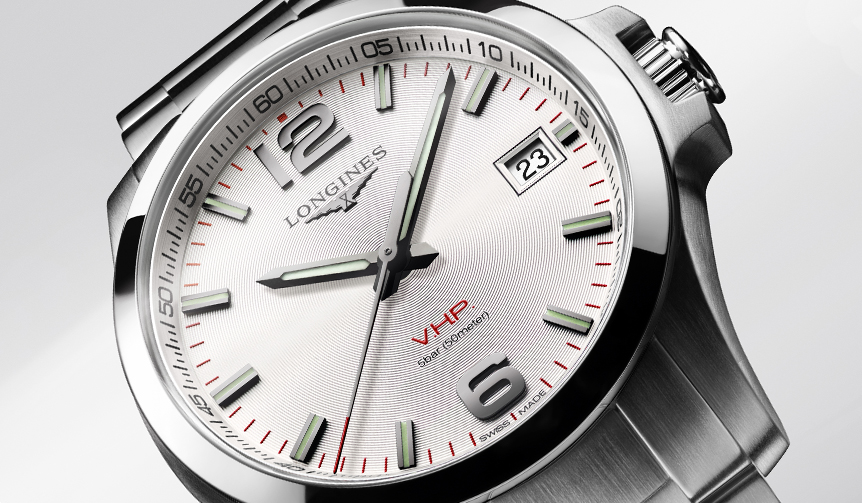
This collection of the "Longines Conquest V.H.P.," which began in 1984 as a high-precision quartz watch, inherits its history and legend. It represents the pinnacle of quartz watches in the industry with an annual accuracy of ±5 seconds. V.H.P. stands for "Very High Precision." There are two models: a three-hand version and a chronograph. Each is available in four dial colors and designs: silver, blue, black, and black carbon, resulting in a total of eight variations. The case diameter is 41mm for the three-hand model and 42mm for the chronograph model. All cases and bracelets are made of stainless steel. They are water-resistant to 5 atmospheres. The price is ¥121,000 (excluding tax) for the three-hand model and ¥196,000 (excluding tax) for the chronograph model. Scheduled for release this autumn.
Swatch Group Japan Longines
Tel. 03-6254-7351
http://www.longines.jp