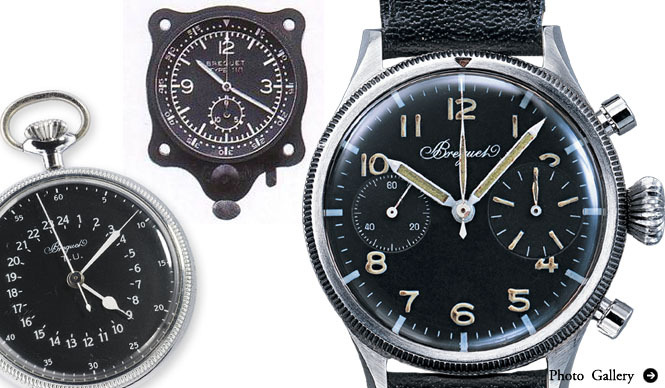
Breguet | Chapter 1: The Unsung, Grand Trajectory of Breguet!
Breguet|Breguet
The Breguet Family's Inherited Genius
The Untold Grand Trajectory of Breguet!
In the world of watches, "Breguet" holds a special place. So much so that its name graces watch design and mechanisms like Breguet numerals, Breguet hands, and the Breguet balance spring. All of these were created by the founder, Abraham-Louis Breguet. Furthermore, many of the complex mechanisms we see in watches today, such as the tourbillon, perpetual calendar, and minute repeater, are his inventions. Decorations like guilloché and coin-edge are also original to Breguet. Moreover, these are not merely decorative; guilloché was developed to reduce dial reflections and improve legibility, while the coin-edge served as a non-slip grip. Breguet's genius is also evident in how these elements enhance the fundamental essence of the watch through functional beauty.
By Norio TakagiPhoto courtesy of Breguet
The DNA of the Breguet Family: Genius in Watches and Aircraft
It is said that Breguet produced approximately several thousand watches from the opening of his workshop in Paris in 1775 until his death in 1823. Among these were marine chronometers. In 1815, he was appointed watchmaker to the French Ministry of the Navy, and records indicate he supplied a total of 22 marine chronometers to the navy. This record proves that Breguet's unique talent and technology held significant value for the nation.
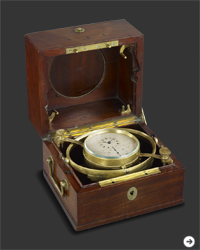
The marine chronometer "Breguet No. 3196," produced by the founder Abraham-Louis Breguet and delivered to the French Ministry of the Navy.
The name "Breguet" is also special in the world of aviation. In 1907, an aircraft with a giant propeller on its roof took to the air. This was the world's first helicopter. One of its developers was Louis-Charles Breguet. A descendant five generations removed from Abraham-Louis Breguet, he demonstrated extraordinary talent in aircraft development. In 1909, he completed his own biplane and founded the "Breguet Aviation Company."
The technical prowess of the Breguet Aviation Company, which developed its first seaplane in 1912 and its first bomber in 1915, earned high acclaim. Then, in 1917, the renowned "Breguet XIV," which would etch its name in aviation history, was completed. At the height of World War I, the high-performance Breguet XIV was modified into a light bomber and greatly contributed to the Allied victory. History repeats itself. Just as the first Breguet's watches were recognized by the French Ministry of the Navy, the Breguet family's talent was once again recognized by the military, and thus the nation. Its majestic form can still be seen today at the Le Bourget Air and Space Museum near Paris.
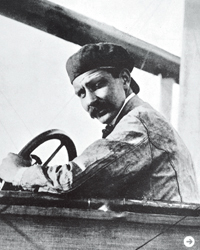
Louis-Charles Breguet, the fifth generation. A pioneer of the French aviation industry and a pilot himself.
Furthermore, the Breguet Aviation Company was also a pioneer in long-distance flight. In 1930, the Breguet XIX, developed by the company, achieved the world's first non-stop flight between Paris and New York, once again marking a milestone in aviation history.
The technical prowess of the Breguet Aviation Company, which developed its first seaplane in 1912 and its first bomber in 1915, earned high acclaim. Then, in 1917, the renowned "Breguet XIV," which would etch its name in aviation history, was completed. At the height of World War I, the high-performance Breguet XIV was modified into a light bomber and greatly contributed to the Allied victory. History repeats itself. Just as the first Breguet's watches were recognized by the French Ministry of the Navy, the Breguet family's talent was once again recognized by the military, and thus the nation. Its majestic form can still be seen today at the Le Bourget Air and Space Museum near Paris.
Furthermore, the Breguet Aviation Company was also a pioneer in long-distance flight. In 1930, the Breguet XIX, developed by the company, achieved the world's first non-stop flight between Paris and New York, once again marking a milestone in aviation history.
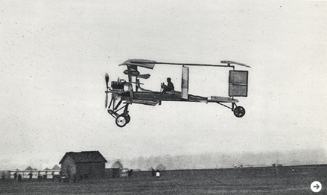
The biplane "Breguet I," completed by Louis-Charles Breguet in 1909.
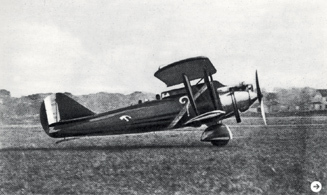
The "Breguet XIX," which succeeded in the world's first non-stop flight between Paris and New York in 1930.
Breguet|Breguet
The Breguet Family's Inherited Genius
The Untold Grand Trajectory of Breguet!
The Continuing Lineage of Pilot's Chronographs
During the era when Louis-Charles Breguet lived, the Breguet watchmaking workshop was no longer under the control of the Breguet family. His grandfather, Louis-Clément Breguet, the third generation, inherited the workshop but demonstrated his genius primarily in the field of electrical communications, expanding his business there. He was known as one of Europe's leading experts in telegraphy and left behind numerous inventions. It seems that the cutting-edge technology of the time was more stimulating than watchmaking. He then entrusted the watch manufacturing division to Edward Brown, a talented British watchmaker working at the workshop.
Naturally, the close relationship between the founding Breguet family and the Brown family continued for a long time. Louis-Charles's talent blossoming in the field of aviation brought a new turn for the Breguet watch company: its entry into aviation instruments. Just as the first Breguet contributed to safe navigation with his marine chronometers, Breguet's high-precision aviation instruments were mounted on cockpit panels, aiding pilots' safety.
First, in 1918, they supplied aviation instruments to the U.S. Air Force. From 1922 onwards, the Louis Breguet Aviation Company became a client. The cockpit of the Breguet XIX, which achieved the aforementioned non-stop flight between Paris and New York, was equipped with Breguet instruments.
The experience gained in aviation instruments eventually culminated in a wristwatch. In the mid-1950s, the French Naval Air Force secretly commissioned Breguet to produce a watch. The codename was "Type XX." Thus, the development of the pilot's chronograph, which is still part of the Breguet collection today under the same model name, began here. Initially, it was a rare model that only military pilots were permitted to own.
Looking back, the first Breguet was also a pioneer in chronographs, introducing innovations such as the split-seconds chronograph capable of measuring two elapsed times. Even during the era of the Brown family, chronographs remained one of their specialties. Many of the Breguet aviation instruments mounted on cockpit panels were chronographs, and in 1930, they were the first in the industry to develop a wristwatch chronograph. The "Type XX" delivered to the French Naval Air Force was an improved version of this.
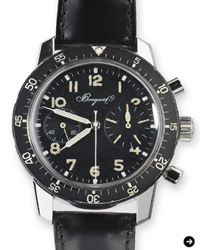
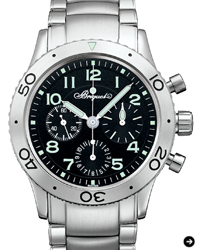
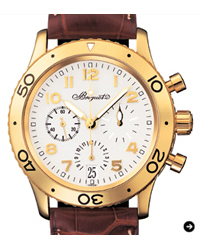
Its most distinctive feature is the flyback mechanism, which allows the chronograph to be reset at any time without stopping the hands, enabling the immediate start of the next timing. This is a highly convenient function for pilots who perform various timing operations repeatedly. While the movement becomes more complex, Breguet's technical expertise succeeded in developing a flyback chronograph that combined durability suitable for military use with high precision.
The first model was later produced with variations in dial and bezel specifications and was sold not only to the military but also to the general public. Then, in the late 1960s, a full model change occurred, giving birth to the second generation.
The bezel was changed to a thicker black bakelite, engraved with a minute counter. The case also became more robust with larger, squared lugs. Of course, the highly legible dial design was inherited. The flyback mechanism was also, naturally, incorporated.
In the 1970s, due to the quartz crisis that struck the watch industry, the mechanical "Type XX" production was temporarily halted. However, it made a comeback in 1995. The third-generation model was named "Type XX Aeronavale," bearing the nickname of the French Naval Air Force. The movement was automated, featuring a 12-hour counter with three subdials, and its water resistance was enhanced to 100 meters, evolving into modern specifications. The Type XX's identity, the flyback mechanism, was, of course, inherited. The dial, similar to the first model, retained its high legibility. A significant change was also the addition of coin-edging along the entire case side.
Furthermore, in 1998, the fourth-generation "Type XX Transatlantique" was born, featuring a date display at the 6 o'clock position. These third and fourth generations are still part of the current collection. The Aeronavale's long run of 18 years and the Transatlantique's 13 years are a testament to their high level of completion. The pilot's chronograph, born from the genius of the Breguet family, forms a core part of modern Breguet.
Save the date for “BREGUET IN THE SKY – TYPE XX EXHIBITION ”
Breguet in the Sky – Type XX Exhibition
In June, Breguet will host the event "Breguet in the sky – Type XX Exhibition," themed around Breguet's deep connection with French aviation. Showcasing a range of exquisite timepieces, from cockpit watches and vintage models to the latest creations from the "Type XX" series – Breguet's enduringly popular line born from the passion of Louis-Charles Breguet, the fifth generation, for aircraft development and the brand's ties to aviation. This exhibition conveys its timeless charm to the present day.
Period: Saturday, June 18, 2011 – Sunday, June 26, 2011
13:00 – 19:00 (Closes at 18:00 on June 18 only)
Venue: Cité du Temps Ginza
14th Floor, Nicolas G. Hayek Center, 7-9-18 Ginza, Chuo-ku, Tokyo
Admission: Free
"Breguet in the sky" Official Twitter
Twitter ID: Breguet_JAPAN
OPENERS NIGHT to be held!
OPENERS readers are specially invited from 19:00 on the 18th!
A talk show will be held with Tomoyuki Tanaka, also known as FPM, a DJ/producer making remarkable achievements both in Japan and globally, who is a Breguet enthusiast, and Koichi Yamaguchi, Editor-in-Chief of OPENERS.
We will invite 50 pairs (100 people). Applications for individuals are also welcome. If applications exceed the capacity, a lottery will be held.
Application period: Until noon on June 9, 2011. Please refer below for application methods.
Saturday, June 18
18:00 Exhibition Close
19:00 Open
19:30–19:50 or 20:00 Talk Show
FPM Tomoyuki Tanaka and Editor-in-Chief Koichi Yamaguchi
–20:30 Tomoyuki Tanaka DJ Performance
Applications have closed.
Thank you for your many applications.
Breguet Boutique Ginza Tel. 03-6254-7211