To Iki Island, a place rich in both human activity and natural bounty! | TRAVEL
TRAVEL | Iki Island
Iki Island Report: Part 1
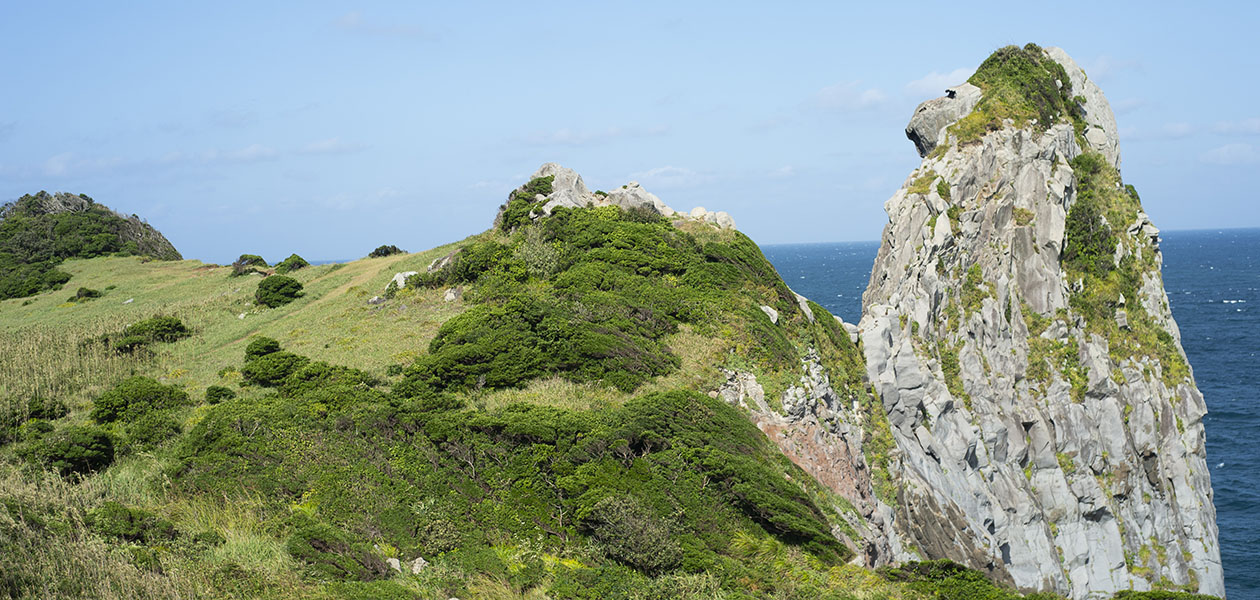
Iki Island is about an hour from Hakata Port. This compact island, roughly the size of a loop of the Yamanote Line, offers a wealth of natural scenery. It is also a precious island where traces of ancient history are scattered throughout. Let's go to Iki Island!
Text by KITAHARA Toru
Experience its history and landscape.
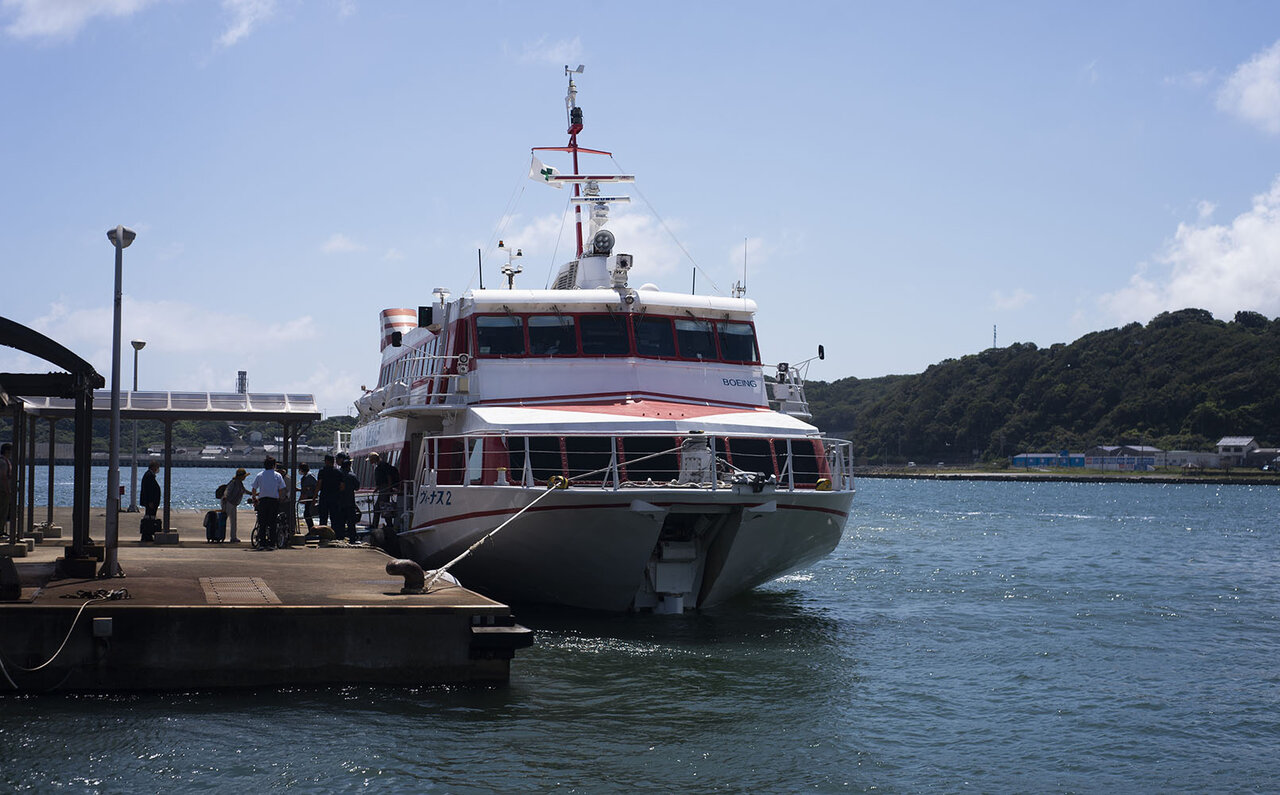
You can reach Iki Island in about an hour from Hakata by jetfoil.
Take a flight departing from Haneda in Tokyo around 6 AM, arrive at Fukuoka Airport, take the subway from Fukuoka Airport to Hakata Station, and then a bus to Hakata Port. From Hakata Port, take the Kyushu Yusen jetfoil, and you'll arrive at Iki Island in about 1 hour and 10 minutes (70 minutes to Gonoura Port, 65 minutes to Aabe Port). Incidentally, this jetfoil has a "BOEING" logo on its right side, despite being a boat. While I encourage you to research the details, it's essentially a "sea plane" that flies using lift generated from the water. Although it's a boat, it was manufactured in Boeing's aircraft factory in Seattle, USA. Thanks to this, you can enjoy a boat trip without the typical boat's gentle rocking, traveling at 80 km/h with a ride quality similar to an airplane or a car.
Returning to the topic, if you leave Tokyo early in the morning, you'll arrive at Aabe Port, the town's port on Iki Island, by 11:35 AM. For Iki Island, I highly recommend experiencing the island itself. Many people say, 'There's nothing here, yet everything is complete.' The island itself is abundant, and I want you to feel that richness.
Experience the compact island.
Production materials / Mr. Takatsukasa Akiyama of "Crossport Takeomizu"
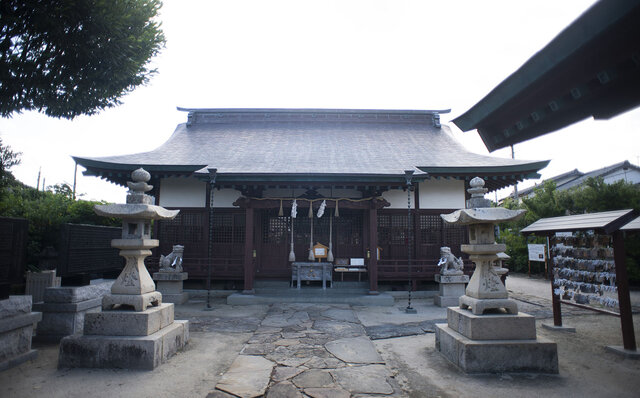
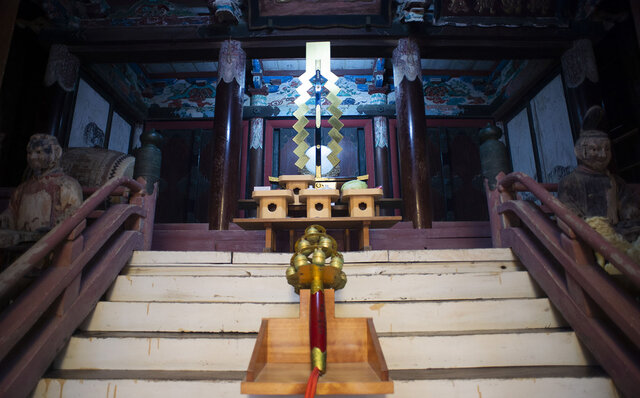
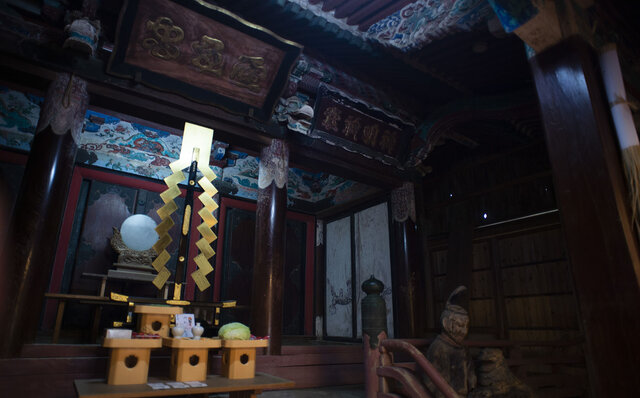
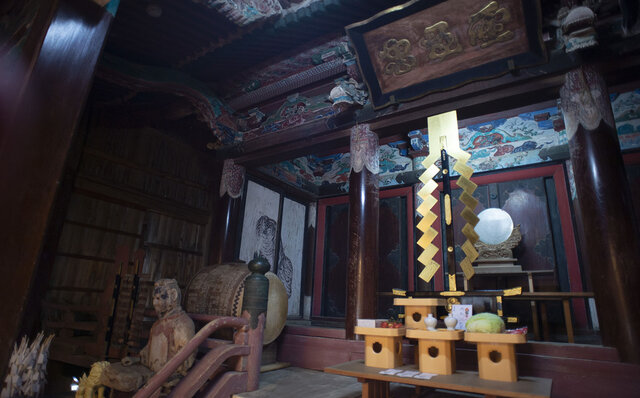
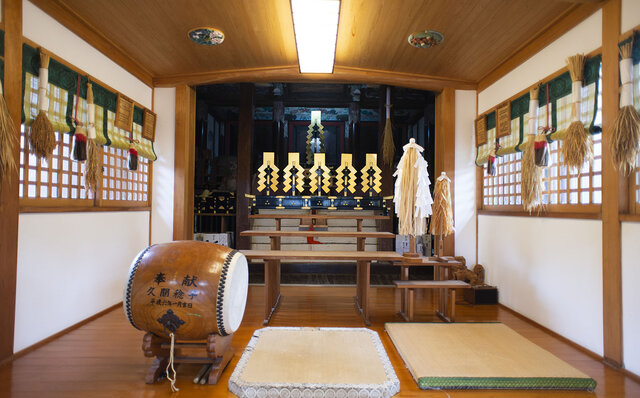
The precincts of Seibō-gu Shrine. Inside the shrine, ancient structures, considered among the finest in Nagasaki Prefecture, remain.
Furthermore, something else you should quickly appreciate is how compact this island is. If you rent a car and start driving from Aabe, you can reach almost anywhere on the island in about 20 minutes. If you overlay it with the Yamanote Line, it's like Shibuya is Gonoura Town, Jujo is Katsumoto Town, and Aabe is Ueno (an idea from Mr. Takatsukasa Akiyama of Crossport). While exploring Aabe town is fine, I want you to experience the entire island first. From Aabe, you can drive to Gonoura, visit the Harunotsuji Site, or explore the ancient shrine "Seibō-gu" in Katsumoto (the author's favorite). No matter where you go, it's about a 20-minute drive. Driving around this compact island while enjoying the scenery will surely lead to many discoveries. One thing you'll notice while driving is that despite being an island with a car-centric culture (car ownership per capita is among the highest in Japan), there are few cars; seeing more than ten cars lined up at a traffic light feels like a lot. Therefore, you won't get stuck in traffic for 30 minutes. I believe this sense of compactness is essential for enjoying a leisurely stay on the island.
The island's history and culture: 1,000 gods' shrines and sanctuaries
Among Iki Island's shrines, Kojima Shrine is particularly popular. A path appears at low tide, allowing visitors to walk and worship. This is why some call it "Japan's Mont Saint-Michel."
Iki Island is famous as a historic island, and you can glimpse the culture built up through its history everywhere. A notable characteristic of the island is the sheer number of shrines. Niigata, known for its many shrines, is also a rice-producing region. This implies that shrines are often built in areas where people can live prosperous lives.
Driving around Iki Island, you'll be surprised by the abundance of rice paddies. The island boasts one of the highest production volumes among remote islands nationwide, even exporting its rice. Despite this, the number of shrines is still remarkably high. According to Mr. Masakatsu Kawa-kubo, the chief priest of Seibō-gu Shrine, there are about 150 registered shrines with the Shrine Association, plus another 150 unregistered ones, totaling around 300. Furthermore, if you include the small stone shrines referred to as "earth gods," the total number exceeds 1,000. Mr. Kawa-kubo speculates that the reason for so many shrines is the practice of subdividing and establishing new shrines from existing ones near people's homes. Additionally, almost every household has a Shinto altar. This is one reason why the island is called "the island where gods reside."
Also, while driving around the island, you'll often encounter shrine torii gates suddenly appearing along the road. Just as there's a saying, "There are green hills everywhere one goes," on Iki Island, it's "There are shrines everywhere on the island." Given the island's compact size, the impact of their sheer number is fully palpable.
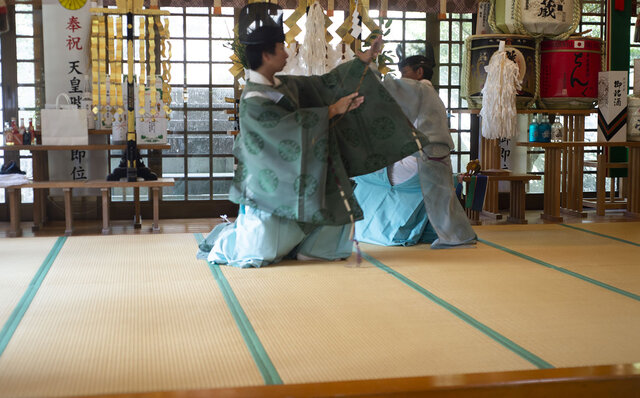
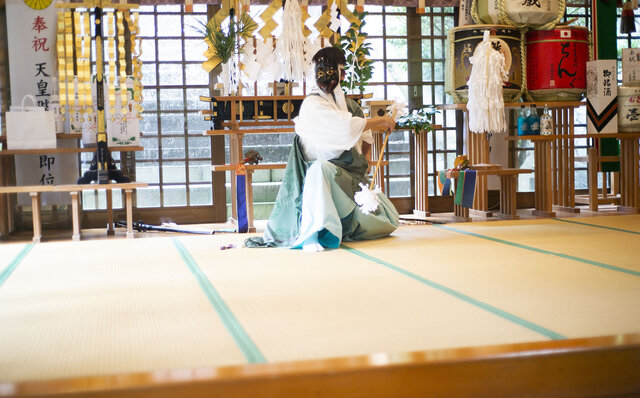
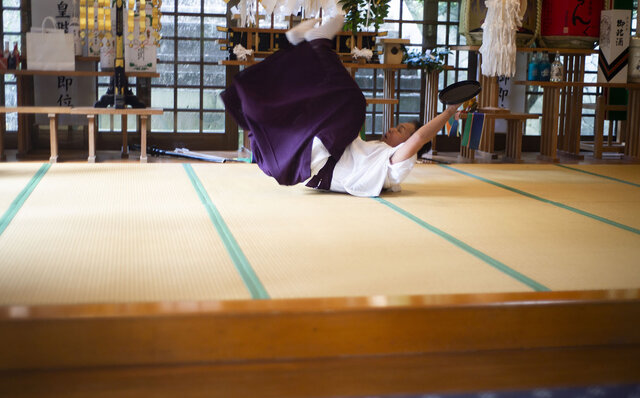
A performance of Iki Kagura. Ancient rituals, including those involving the Yatagarasu, are performed for about 40 minutes.
Furthermore, "Iki Kagura," a sacred ritual performance, has continued on Iki Island for 700 years and is still performed today. Designated as an Important Intangible Cultural Property of Japan, only Shinto priests serving at Iki's shrines are permitted to perform the dances and accompaniment. The ancient forms of dance and performance were traditionally held in confined spaces. "Iki Kagura" is passed down orally without musical scores and is performed on a tatami mat measuring two tatami mats. It is offered almost daily from autumn to winter, so if you have the chance, I highly recommend seeing it. The performance lasts about 40 minutes.
The story of Iki Island's gods appears in Japan's oldest history book, the "Kojiki." According to the creation myth, "Ikijima" (Iki Island) is the fifth of the eight islands created by the divine couple Izanagi and Izanami.
Learn about Iki Island's history at the Iki-koku Museum.
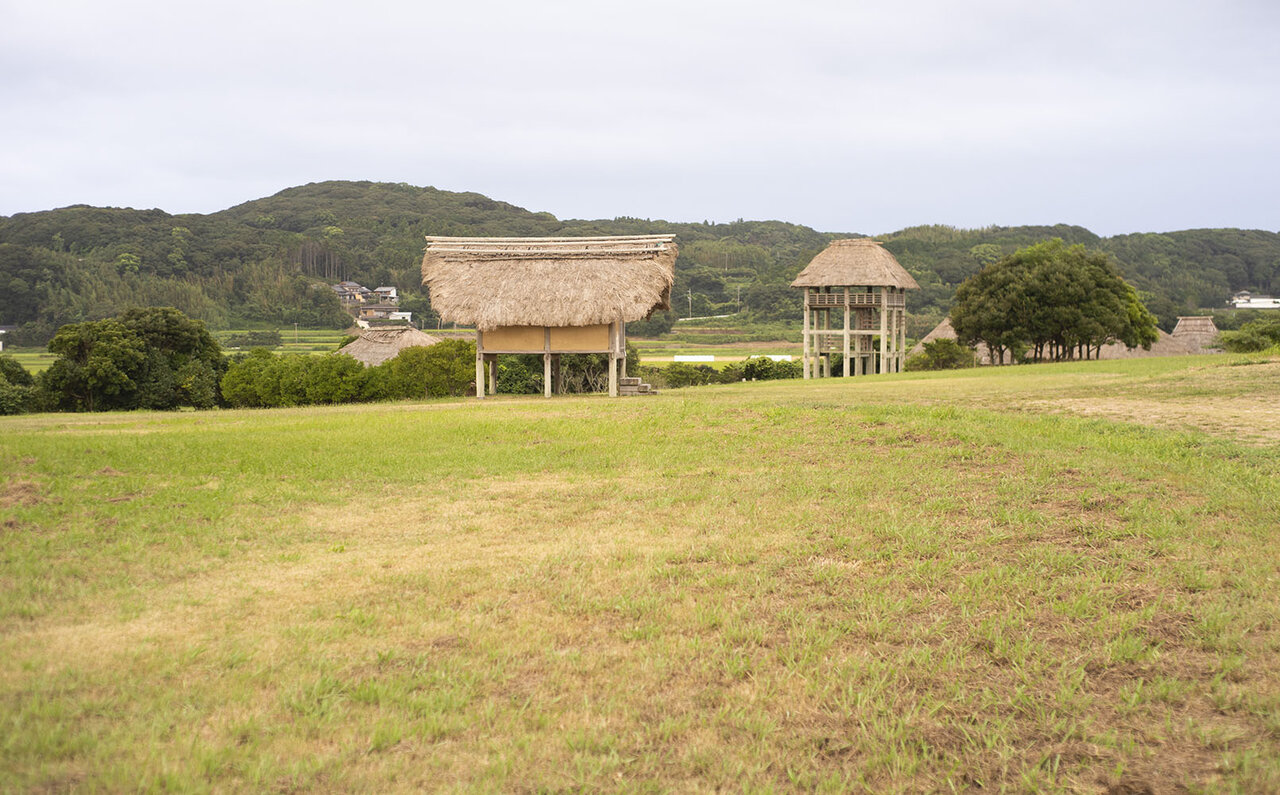
Since the "Kojiki" has been mentioned, let's delve a little into history. Iki Island is synonymous with the Harunotsuji Site; it is the island's symbol and a precious site designated as a National Special Historic Site, alongside the Toro Site (Shizuoka Prefecture) and the Yoshinogari Site (Saga Prefecture), as one of Japan's three great Yayoi period ruins. It is considered a "National Treasure of Historical Sites."
It is said that lying on the ground at Harunotsuji at night and gazing at the stars makes one feel as if floating in the universe.
Harunotsuji is identified as the capital of "Iki-koku," mentioned in the "Gishi Wajinden" (abbreviated name for the "Account of the Wei Dynasty, Volume 30, Biographies of the Wuhuan, Xianbei, and Dongyi, Section on Wa"). This valuable site, formed between the 2nd-3rd centuries BCE and the 3rd-4th centuries CE (Yayoi period to early Kofun period), is a large, multi-moated settlement spanning approximately 1 km square both east-west and north-south. However, Mr. Yuji Matsumi, a curator at the Iki City Board of Education, suggests that people likely did not live here. It was known as "Mimitore no Tsuji" (Ear-Taking Pass) due to its cold winters, and it's believed people probably lived at the foot of nearby hills. He indicated that the site was likely not a residential area.
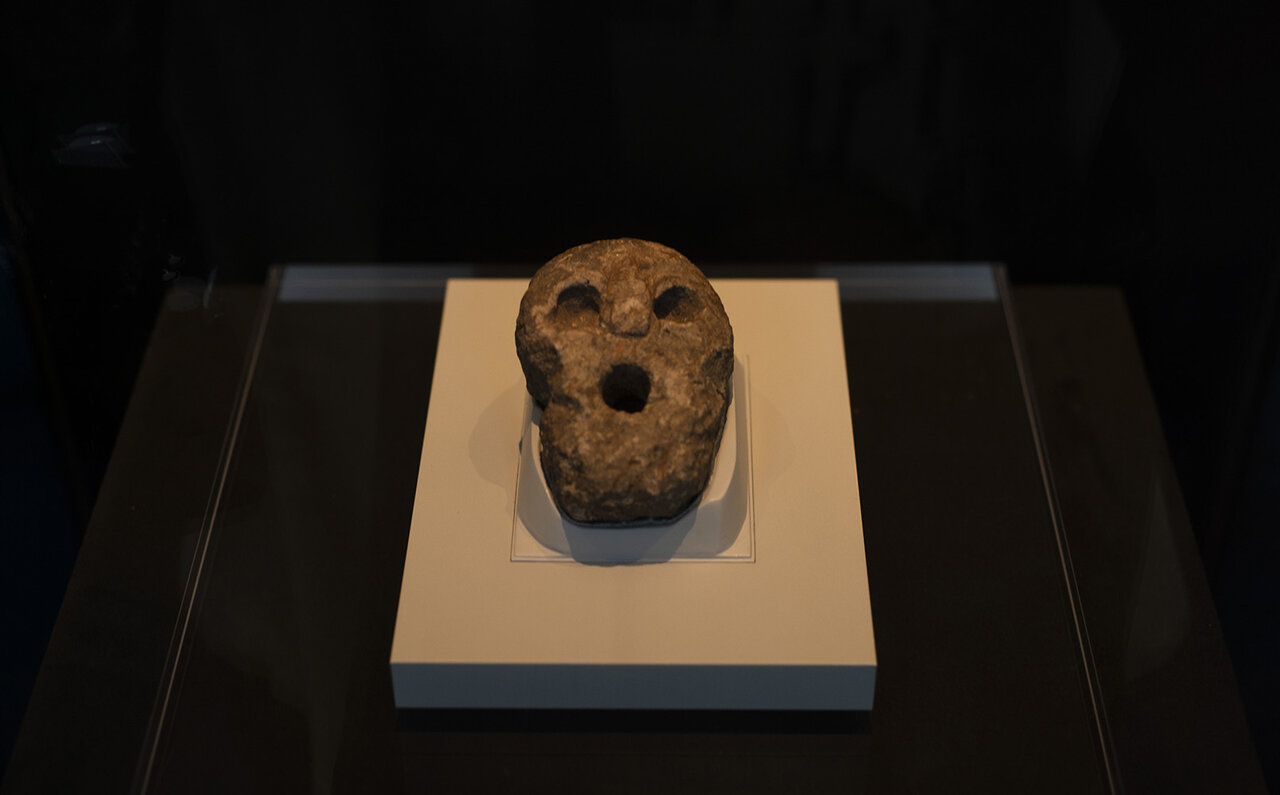
The "Human-Faced Stone," believed to have been created around the 3rd to 4th century, has also garnered attention. This stone, with its unique resemblance to Edvard Munch's famous painting "The Scream," is displayed in the permanent exhibition hall of the Iki-koku Museum.
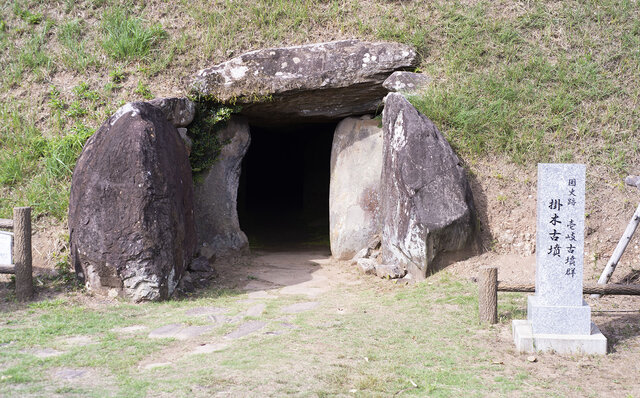
Kakeki Tumulus. A circular tomb built in the late 6th to early 7th century.
The entrance to Kakeki Tumulus is open to everyone.
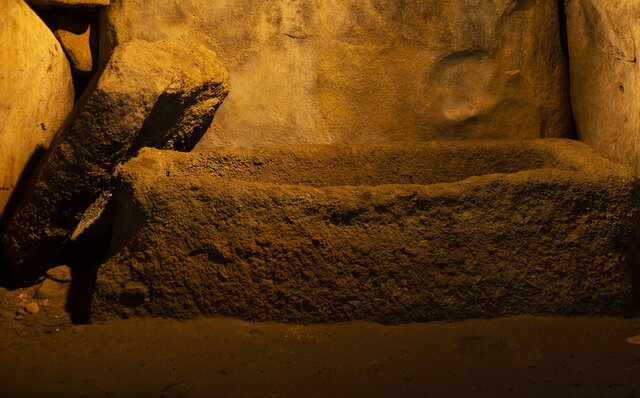
The stone coffin inside Kakeki Tumulus.
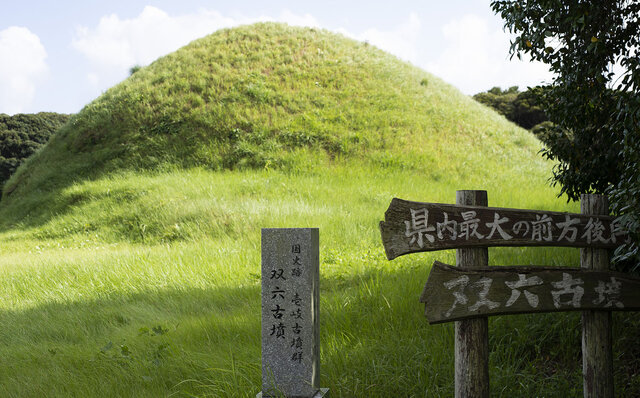
Suguroko Tumulus, the largest keyhole-shaped tomb in Nagasaki Prefecture.
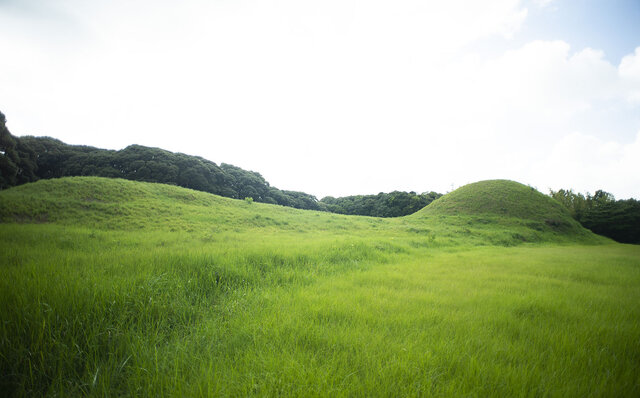
The full view of Suguroko Tumulus.
A total of 280 tumuli have been identified on the island. Many were built during the Kofun period (5th-7th centuries), while Tsushima has more from earlier periods. This suggests that the strategic importance for external defense gradually shifted to Iki. Iki's tumuli have a peculiar characteristic. While large tumuli symbolize the authority of local chieftains, similar to those elsewhere, they appear to have been built not for a single ruler but for families, akin to modern-day family graves. This is thought to have served as a deterrent, projecting an image of a powerful island with many chieftains capable of constructing such tombs.
You might wonder, "What is this for?" However, it is believed to have been highly effective in deterring external threats by showcasing the island's numerous powerful chieftains capable of constructing such large burial mounds.
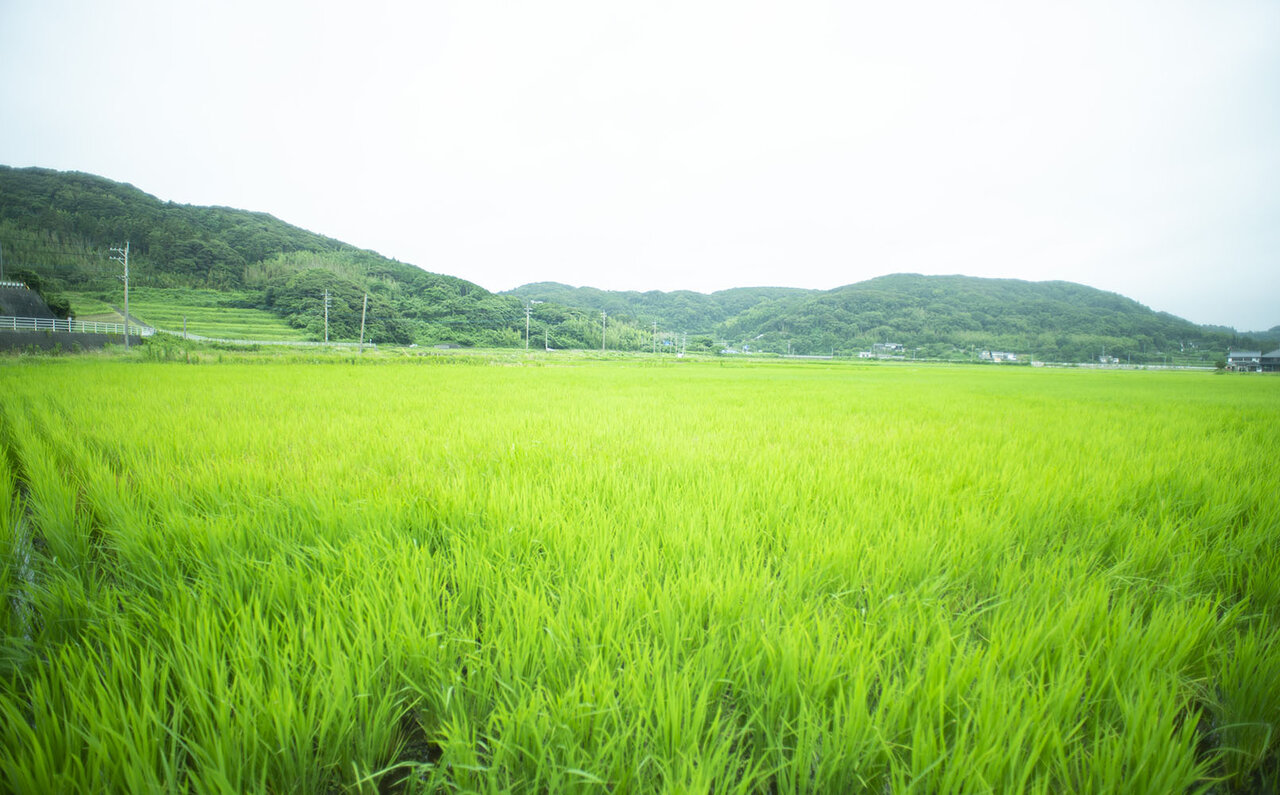
Abundant groundwater and numerous rice paddies are truly a miracle.
Rice paddies, where delicious rice is harvested, stretch across the plains.
Here, let's focus on one of Iki Island's charms: the abundance of rice paddies. As you drive around the island, you can't help but notice the rice paddies. Historically, rice cultivation has been prosperous here since ancient times, spanning the Yayoi period, Kofun period, and continuing through the Mongol invasions (Kamakura period, 750 years since the Bun'ei War this year), Toyotomi Hideyoshi's Korean expeditions, and most significantly, the expansion of rice cultivation under the Hirado domain's policies. This prosperity has continued to the present day, with Iki Island consistently being a rich region, largely due to rice cultivation.
Despite its compact size, Iki Island has rivers and springs. Incidentally, during my eight-day stay, I never saw a single spring.
"Iki Island was formed by the uplift of thick layers of sand and mud (Katsumoto Formation) that accumulated on the seabed approximately 40 to 30 million years ago during the Paleogene period (Oligocene epoch) due to crustal movements. Subsequently, prolonged volcanic activity created faults along the Yumoto-Tsutsukami line, and magma erupted through weaker points in the strata. Primarily, basaltic lava flows repeatedly covered the entire island, forming a gently sloping lava plateau. Between the lava flows are layers of volcanic ejecta such as sand, mud, gravel, and pumiceous tuff. Over long periods, water seeped into these layers, forming underground aquifers that emerged as springs, nourishing the island and supporting rice cultivation and the lives of its people." (Masashi Yamauchi)
"Fundamentally, Iki Island has little flat land. Rice cultivation was carried out in the alluvial plains along the Hatahoko River, Tanigawa River, and Karitain River, as well as in the small areas downstream of these rivers. The current landscape was achieved through land reclamation projects by the Hirado domain during the Edo period, which created flat land for rice paddies. Wealthy whaling companies ordered the excavation of moats and the reclamation of wetlands and coastlines, with islanders providing labor to earn daily wages." "The Hirado domain implemented a strict land division system, granting general islanders residential land, vegetable gardens, and mountain areas for windbreaks. The remaining land was allocated based on each household's labor capacity and redistributed every 5 to 10 years. This system is the reason why Iki Island's farming villages are scattered." (Masashi Yamauchi)
In other words, the flat land on this island was not formed naturally but was "created."
2024 marks the 750th anniversary of the Mongol invasions.
Having discussed historical matters, I would like to mention that 2024 marks the 750th anniversary of the Mongol invasions. The "Genkō" refers to the full-scale invasion of Japan by a foreign power (Gen, or the Mongol Empire) during the Kamakura period. In 2024, we mark the 750th anniversary of the Mongol invasion during the "Bun'ei War." History textbooks often describe how Japanese samurai fought valiantly in Hakata Bay, and how a divine wind ultimately repelled the Mongol forces. However, it is not widely known that a desperate battle against the Mongol army took place on Iki Island before the conflict in Hakata Bay.
Let's briefly explain the Mongol invasions.
In the 13th century, the Yuan Dynasty, having unified the Mongol people, established a vast empire stretching from China in the east to Europe in the west. After subjugating Goryeo on the Korean Peninsula, they repeatedly sent envoys with a message demanding Japan's submission. However, the Kamakura Shogunate, under Regent Hōjō Tokimune, ignored these demands. Enraged, Kublai Khan, the Yuan emperor, ordered Goryeo to provide troops, provisions, and ships for an invasion. In the 11th year of Bun'ei (1274), the first expedition, the "Bun'ei War," began.
On October 3, 1274, a fleet of 900 ships carrying 25,000 Yuan troops (Mongol and Goryeo soldiers) departed from Goryeo. They attacked Tsushima on October 5th and invaded Iki on the 14th. In the evening, they landed on the shores of Uromi, Babasaki, and Amagahara on the northwestern part of the island. The defender against the Yuan army during the Bun'ei War was Taira no Kagetaka, who served as the deputy governor of Iki. Kagetaka, leading about 100 mounted retainers from his castle, Hinotsume Castle, engaged the Yuan forces at Tōjinbaru in front of Saburōga-jō in the town. Outnumbered, Kagetaka and his men were forced to retreat to Hinotsume Castle. The following day, the 15th, the castle came under a full-scale assault from early morning and was completely overrun.
Prior to the "Genkō," there was the "Toi Invasion" in 1019. This incident involved pirates, believed to be a faction of the Jurchens called Toi, who sailed from the continent and attacked Japan. The Toi raid resulted in numerous deaths. Tsushima and Iki suffered particularly severe damage; even livestock and dogs were killed and eaten, grain was plundered, and houses were burned. Records indicate that only 35 people remained on Iki.
The Toi attacked on March 28, 1019, and an urgent report was sent to Dazaifu. The de facto highest official in Dazaifu at the time was Fujiwara no Takaie, the Dazai Gon no Sotsu. Takaie, a formidable figure, is said to have bravely fought and repelled the Toi. He will appear in the 2024 NHK Taiga drama "Hikaru Kimi e."
At this time, the Toi tribe landed at Katanae Bay on the west coast of Iki. Fujiwara no Michitada, the provincial governor of Iki, confronted them but was killed in fierce fighting. Michitada's grave is located on a hill overlooking the site of this ancient battlefield. Takaie pursued the fleeing Toi by boat, engaging in a chase. It is said that many Japanese people abducted from Tsushima and Iki were on the Toi ships, and Takaie fought relentlessly to rescue them. Incidentally, Fujiwara no Takaie was the nephew of Fujiwara no Michinaga, who supported Murasaki Shikibu in writing "The Tale of Genji." Takaie was also the younger brother of Fujiwara no Teishi, whom Sei Shōnagon served, and his story is briefly mentioned in "The Pillow Book."
While present-day Iki Island may only showcase its rich prosperity, it has indeed experienced many twists and turns and tragic historical events.
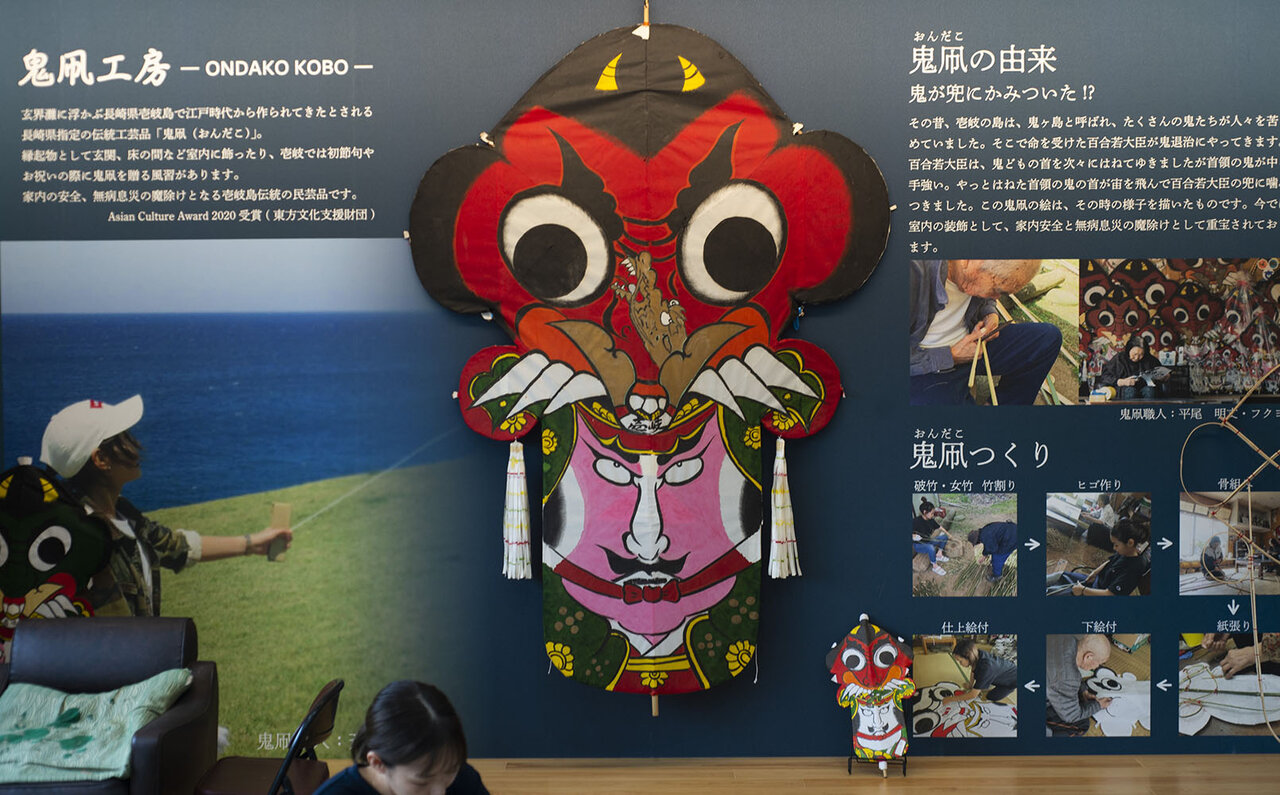
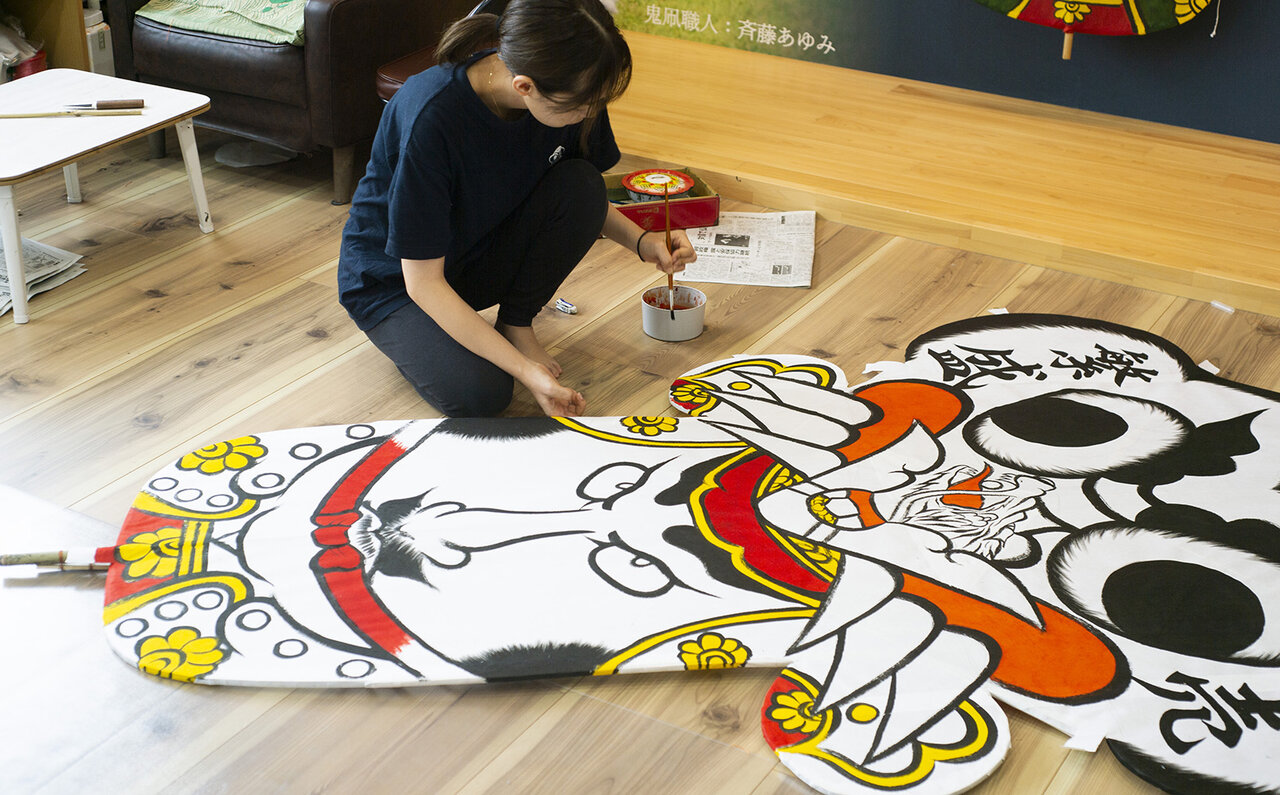
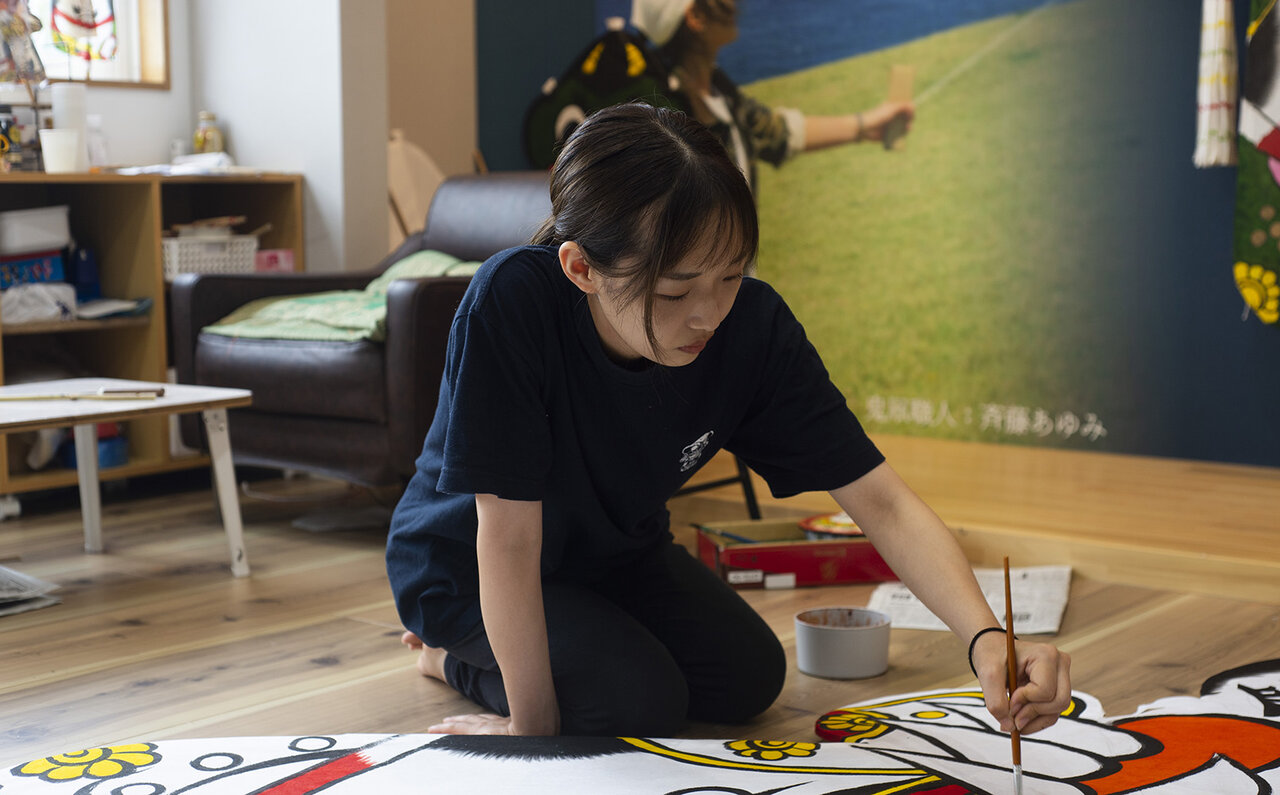
Finally, I would like to introduce "On-dako," a traditional craft of Iki Island, to conclude the first report on Iki Island. "On-dako" (demon kite) originates from the legend of Iki Island being "Onigashima" (Demon Island). According to the legend, a demon's head, severed during a demon-slaying, flew into the sky and bit the helmet of the young warrior who defeated it, leading to his death. The kite depicts this heroic figure. Made since the Edo period, it is an auspicious item, and the custom of gifting it for first celebrations and special occasions continues today. Ms. Ayumi Saito is currently the sole inheritor of the On-dako craft. She diligently splits bamboo, makes bamboo strips, constructs the frame, applies paper, and paints the designs in her workshop.
"I've been watching my grandparents make On-dako since I was a child. I used to come here after school. My mother would pick me up at night, so I spent my summer vacations here. Until recently, I lived in Fukuoka, but my grandfather got injured. At first, I visited him and helped out, but I found myself coming more often. I returned to the island solely to take over the craft. Then, I began learning the techniques in earnest from my grandfather, sometimes with my grandmother's help."
I've seen them displayed on the ceilings in various places, including inns and restaurants on the island. It's one of the traditions that breathes life into the island.
Interviews with: Mr. Mototaka Sudo (Director of Iki-koku Museum), Mr. Yuji Matsumi (Cultural Properties Division, Iki City Board of Education), Ms. Ayumi Saito