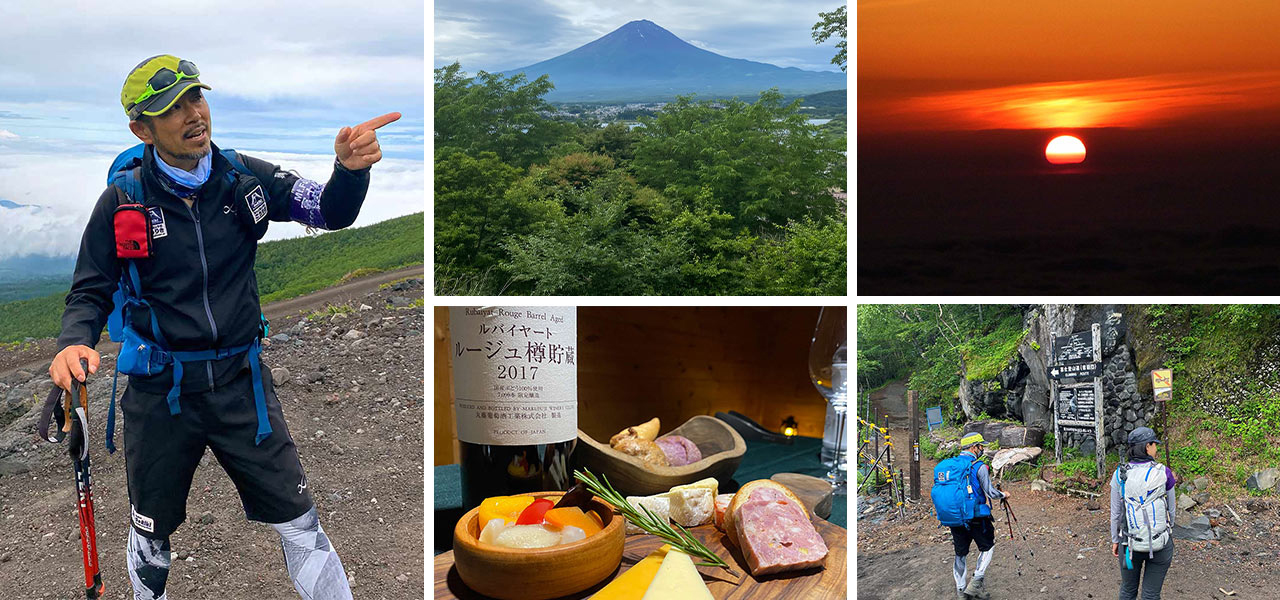
An Exceptional Ascent with a Leading Mount Fuji Expert: The Allure of "Glamorous Fuji Climb"
TRAVEL | HOSHINOYA Fuji
An ultra-premium experiential program to connect with the natural environment of Mt. Fuji, a World Heritage site, and learn its history and culture through practice.
"Glamorous Fuji Climb," offered by HOSHINOYA Fuji since its opening, will resume this year with thorough COVID-19 countermeasures. The 2021 dates are August 30 (Mon), September 1 (Wed), 3 (Fri), and 6 (Mon), for a total of four sessions. Although only one group per day is accepted, with a maximum of four people, I guarantee that you will be able to touch upon the profound essence of Mt. Fuji, registered as a World Cultural Heritage site in 2013 as "Mount Fuji - Object of Worship and Source of Art."
Text & Edit by Takashi Tsuchida
Receive a lifelong memento on Japan's most sacred peak, Mt. Fuji.
The "glamorous" in "Glamorous Fuji Climb" is named after the positioning of HOSHINOYA Fuji, which was born as Japan's first "glamping resort" (glamorous camping resort). Indeed, this activity is "ultra" exceptional.
Koichi Kondo, a leading figure in Mt. Fuji climbing, from "Gouriki Mt. Fuji Climbing School," who practices premium tourism trained in Zermatt, Switzerland.http://www.fujitozan.jp/tour/This is because, with private guiding by Mr. Koichi Kondo and the hospitality of HOSHINOYA Fuji, the experience is not merely luxurious but deeply resonant.
Mr. Koichi Kondo. Born in Fujiyoshida City, Yamanashi Prefecture in 1967. Representative of Gouriki Mt. Fuji Climbing School. 23 years of guiding experience on Mt. Fuji. Over 650 ascents of Mt. Fuji. Since establishing Gouriki Mt. Fuji Climbing School in 2002, he has been guiding small groups with the motto of conveying the essential charm of climbing Mt. Fuji. In 2016, he received the Minister of Internal Affairs and Communications Award for the "Furusato-zukuri" (hometown development) Grand Prize. Mr. Kondo himself generally leads the tours as a guide.
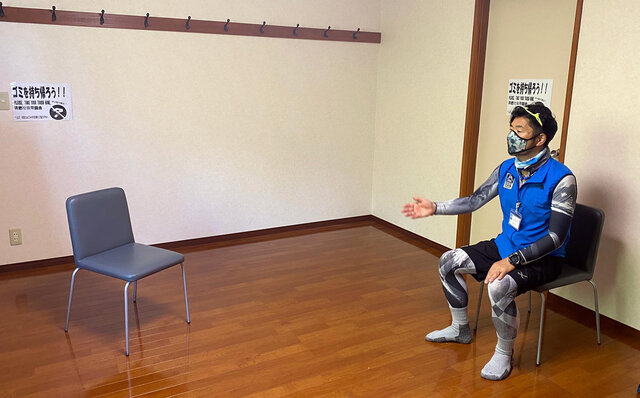
HOSHINOYA Fuji's private room within "Unjokaku" on the 5th station of Mt. Fuji. Before the climb, this space is used for briefings. You can listen to the explanations calmly here, even amidst the bustle of climbers preparing to ascend.
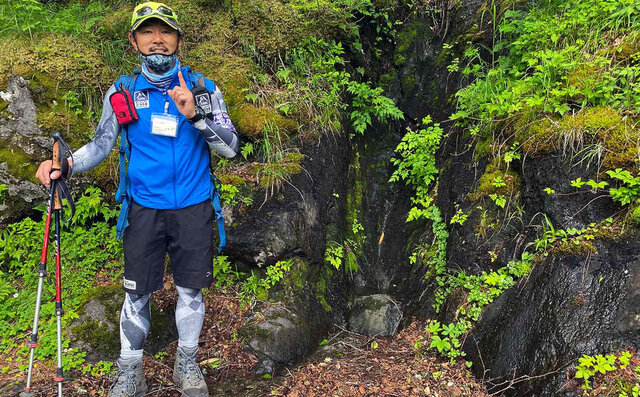
"This was once a waterfall where people used to purify themselves," says Mr. Kondo. Sometimes he stops to explain its history and background.
In the first place, the route navigated by Mr. Kondo is free from the human congestion that is common on Mt. Fuji climbs. The climbing congestion seen on television. The climbing season for Mt. Fuji is typically from early July to early September. It is unavoidable that climbers flock during this short period, but it would be too disappointing to travel all the way to Japan's most sacred peak only to be disheartened by the crowds. Mr. Kondo, however, skillfully navigates through less crowded areas with a clever timetable based on his experience.
And Mr. Kondo's guidance begins with breathing techniques.
"To inhale plenty of air, you must exhale the air in your abdomen completely. If you can exhale, fresh air will naturally enter your body."
The air, which we normally take for granted, is thin on Mt. Fuji. Truly, it is thin.
Even at the 5th station, which can be easily reached by car, the air is already thin. Therefore, "it is important to consciously breathe," says Mr. Kondo. He repeatedly explains the importance of deep breathing and demonstrates it by exhaling audibly, "Hee, Hoo." During the climb with Mr. Kondo, one is constantly in a state of practicing "mindfulness." As I walked, I felt my senses becoming sharper.
The sound of footsteps, "zak, zak." The summer breeze on my cheeks. The conversations of wild birds, whose intentions are unclear but welcoming, can be heard everywhere.
Mt. Fuji is unexpectedly dramatic. One moment, the midsummer sun shines intensely, and the next, the surroundings are enveloped in mist; its changes are extraordinary. This is due to the overwhelming altitude, incomparable to Mt. Takao or Mt. Tsukuba, and the extreme weather changes characteristic of an isolated peak.
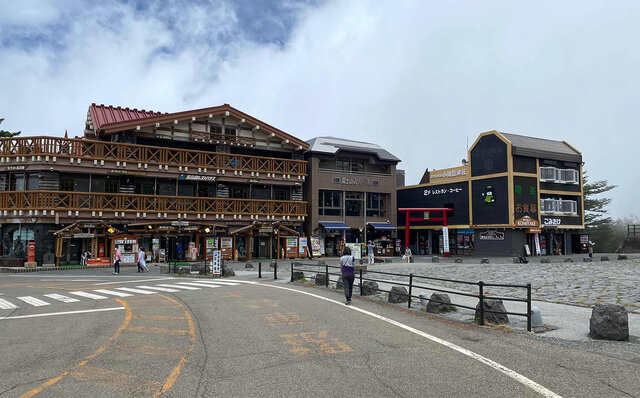
The weather was clear upon arrival at the 5th station of Mt. Fuji. Visibility was good, but...
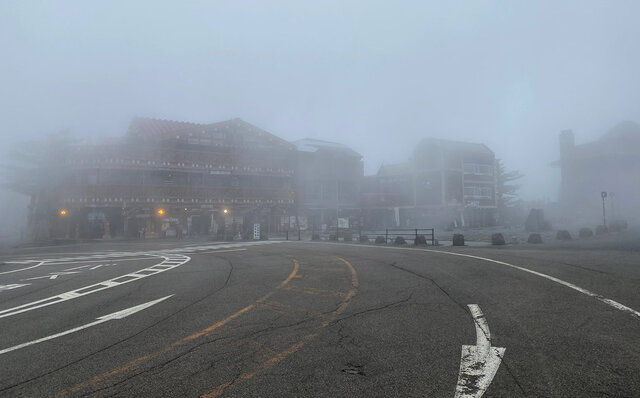
Within 30 minutes at the same location on the same day, the situation changed to this. It's far beyond the saying "mountain weather changes easily."
By the way, why do people climb Mt. Fuji?
"In the past, climbing Mt. Fuji was part of religious practice. People would chant 'Rokkon Shōjō' (purification of the six senses) and, by enduring the hardships of the climb, they sought to sever their worldly desires and delusions and be reborn pure," says Mr. Kondo.
Mr. Kondo's guidance covers a wide range of topics, including the historical background of Mt. Fuji and environmental issues, stimulating the imagination.
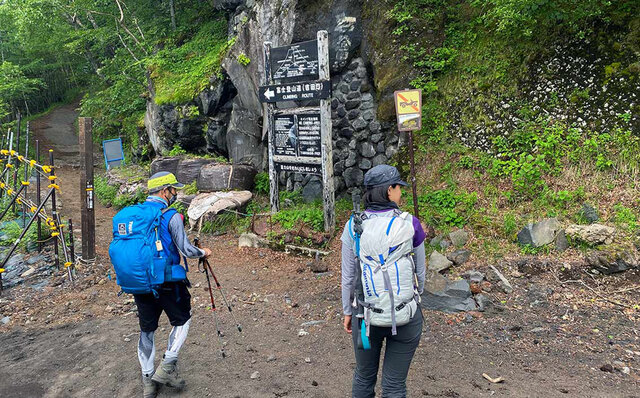
Entering the climbing trail from the 5th station, the path is initially gentle, like a leisurely stroll. After passing the 6th station, the gradient gradually steepens.
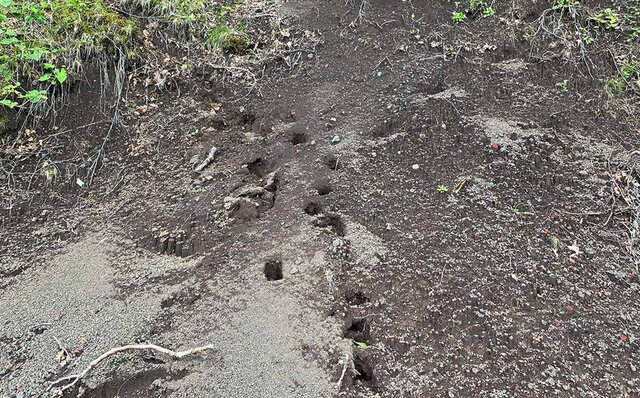
"Those are the tracks of wild sika deer," says Mr. Kondo.
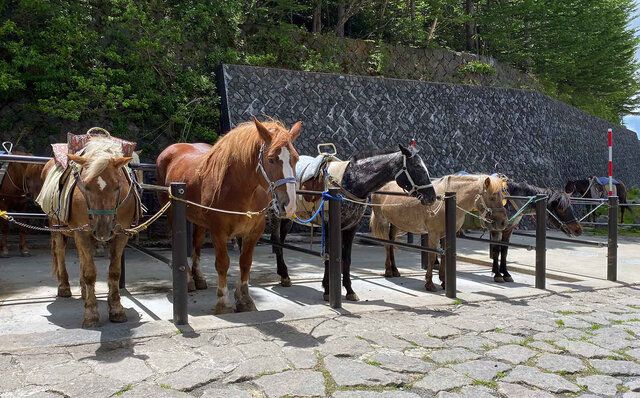
From the 5th to the 7th station, up to Hanagoya, it is possible to travel by horse.
In exchange for the 1,000 yen "Mt. Fuji Conservation Contribution," I received a wooden tag! I attached it to a visible part of my backpack.
Now, let me explain the program's outline.
Example Stay Schedule: This is for staying the night before the climb. Day 1 15:00 Check-in 16:00 Energy Bar Making 18:00 Dinner at the cabin: "HOSHINOYA Fuji Style Oshi Cuisine" 20:00 Pre-climb lecture and equipment check by guide
Day 2 10:00 Check-out 11:30 Meet at the 5th station of the Fuji Subaru Line 13:00 Meet with guide, warm-up exercises 14:00 Start climbing 18:00 Arrive at mountain hut 19:00 Dinner
Day 3 5:00 Depart from mountain hut, breakfast en route 10:30 Arrive at Yoshida Trail summit, lunch (additional charge) 12:00 Start descent 16:00 Arrive at 5th station of Fuji Subaru Line, climb ends
The "Glamorous Fuji Climb" program includes spending one day at HOSHINOYA Fuji either the day before the climb or after the descent, and spending one night during the climb at a partner mountain hut. By the way, Mr. Kondo recommends the above course, which includes staying at HOSHINOYA Fuji the night before.
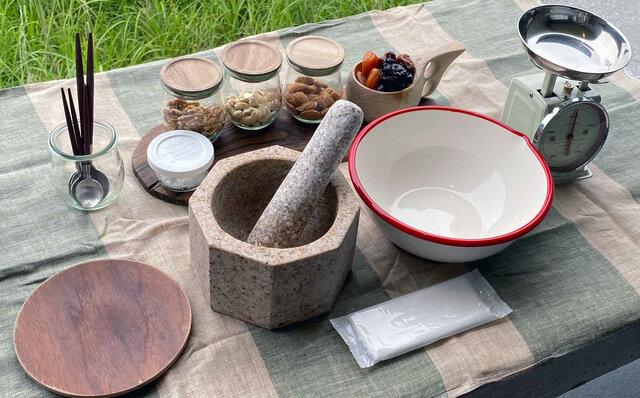
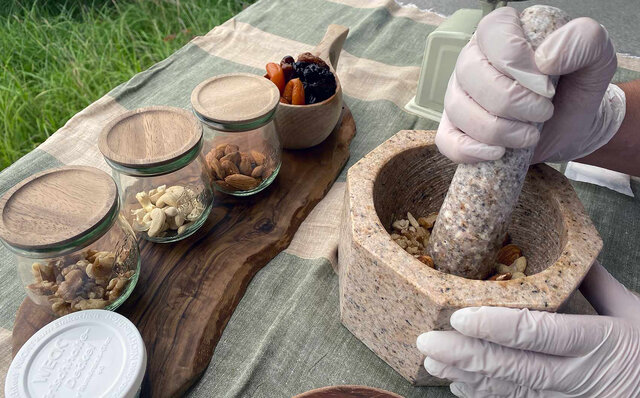
At 4:00 PM on Day 1, the "Energy Bar Making" session is scheduled. You will combine nuts and dried fruits in your preferred proportions as snacks for during the climb.
Thinking about the climb the next day, it's easy to feel nervous. No matter how much you tell yourself to relax, it's not always easy. Instead, by focusing on the task at hand, you can find moments of clarity. The casual conversation with the HOSHINOYA staff who taught me how to make them helped to ease my mind.
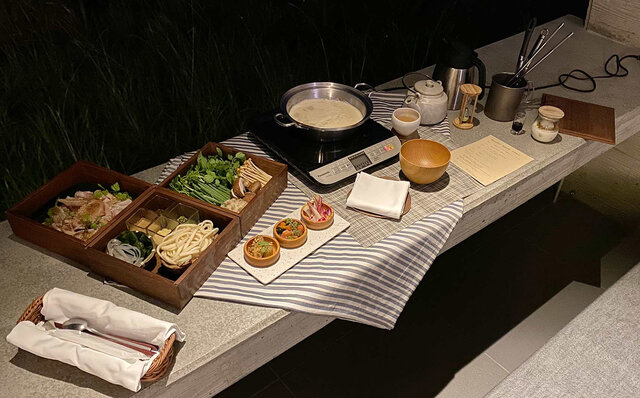
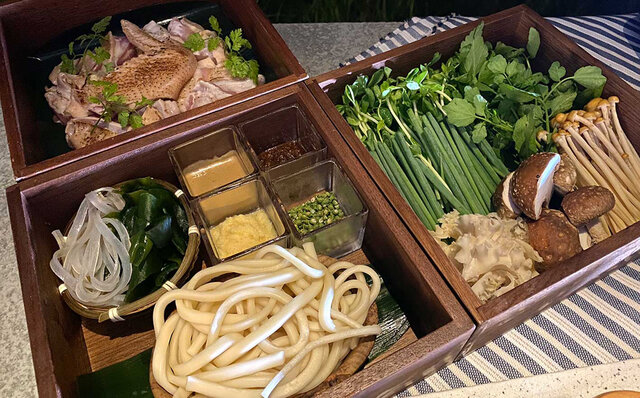
This is the Oshi Cuisine served for dinner. "Oshi" were individuals in the Mt. Fuji faith who provided lodging and various services to those climbing the mountain. HOSHINOYA Fuji's original menu is inspired by the dishes served by these Oshi.
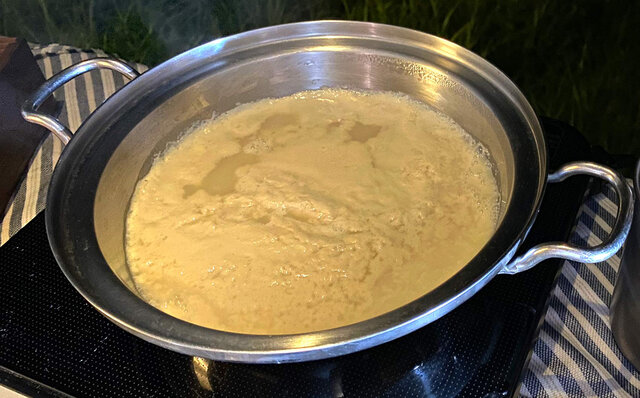
A protein and vitamin rapid charge menu featuring chicken parts from a whole bird, served with local mushrooms in a soy milk soup. For dessert, enjoy the local, chewy udon noodles that Fujiyoshida is proud of.
The soy milk soup has a rich, mellow flavor infused with dashi.
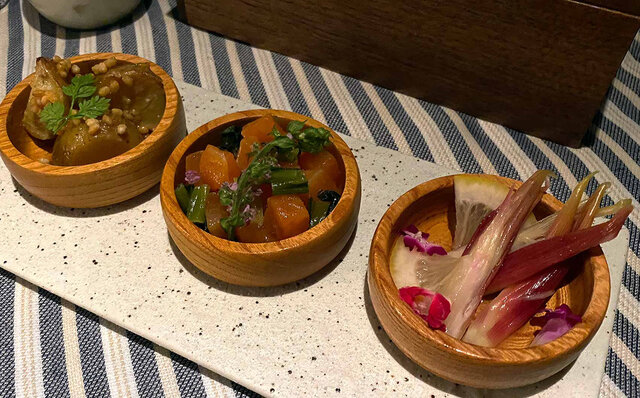
The side dishes are made with local ingredients and have a slightly sour taste to help relieve fatigue.
HOSHINOYA Fuji is located at an altitude of approximately 800 meters above sea level on the shores of Lake Kawaguchiko. For us living in the plains of the Tokyo metropolitan area, this is already high altitude. Therefore, acclimatizing at HOSHINOYA Fuji from the day before makes it easier for the body to adapt to the further environmental changes at Mt. Fuji's 5th station, which is at an altitude of 2,500 meters, giving you an advantage.
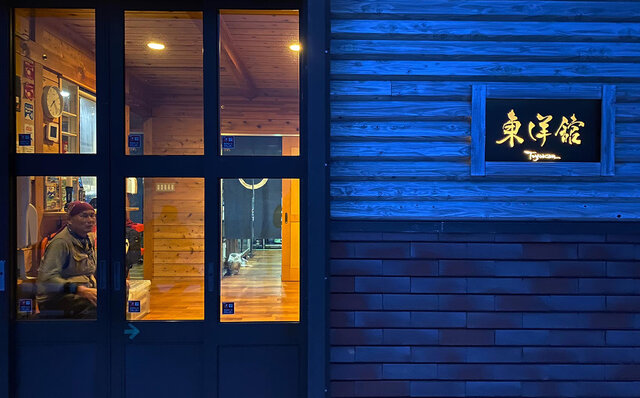
The mountain hut we will be staying at during the climb is called "Toyokan." It is located at an altitude of 3,000 meters on the 7th station and has a history dating back to the Edo period as the last mountain hut in the area.
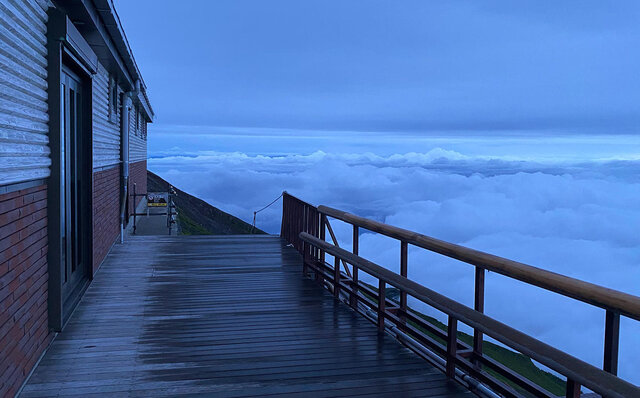
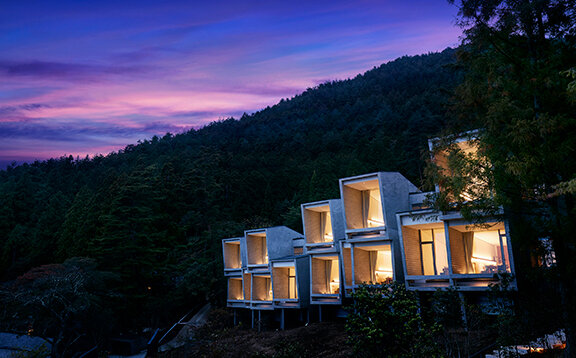
The exterior of "Toyokan" is modern, with a different atmosphere from other mountain huts.
At an altitude of 3,000 meters, you are in a world above the clouds. This is the view around 5:00 AM on the third day of the experience.
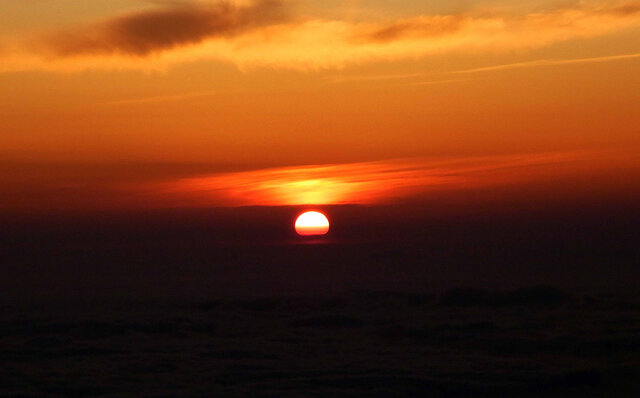
If the clouds clear, you can see the sunrise from the mountain hut. (Photo courtesy of Gouriki)
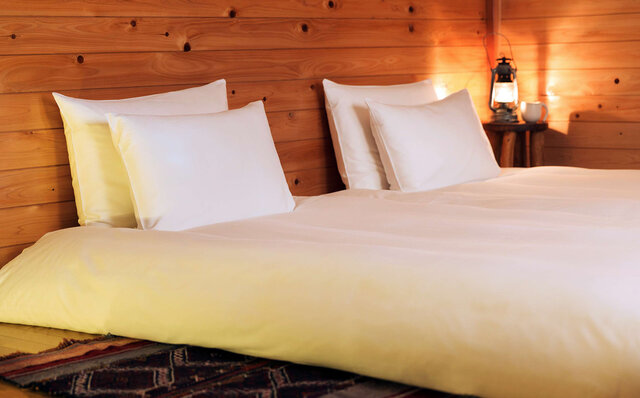
It is most welcome to be able to rest your body in a private room.
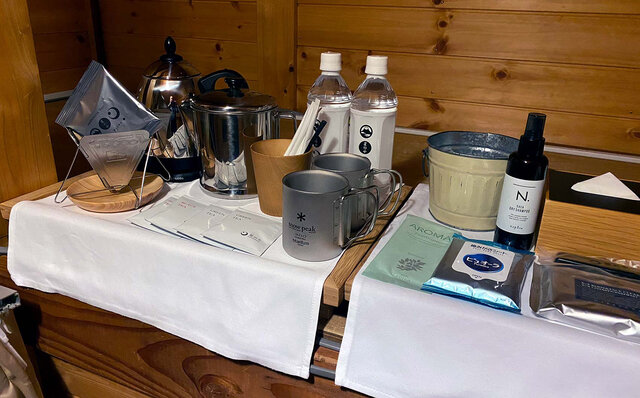
HOSHINOYA Fuji provides essential amenities such as drip coffee, tea bags, wet wipes for cleaning, and toothbrushing sheets.
Toyokan has been recently renovated and is a pleasant hut with a fresh scent of building materials. Remarkably, it features maisonette-style private rooms. The "Glamorous Fuji Climb" program allows you to have exclusive use of these rooms. Mountain huts typically involve sleeping shoulder-to-shoulder with strangers. It's common to be unable to sleep due to sharing a room with others, but this program eliminates such discomfort.
Furthermore, HOSHINOYA Fuji staff climb the mountain in advance specifically for this program to welcome participants. The staff, of course, climb the mountain themselves. I am deeply impressed by the staff's dedication, sweating it out to provide hospitality. Even at a 7th-station mountain hut, there are undoubtedly challenging sections.
Upon arrival at the mountain hut, participants of the "Glamorous Fuji Climb" are welcomed with a warm foot bath. How comforting this is! At mountain huts, even drinking water is extremely precious, let alone hot water... Yet, here, there is abundant hospitality. I was almost moved to tears.
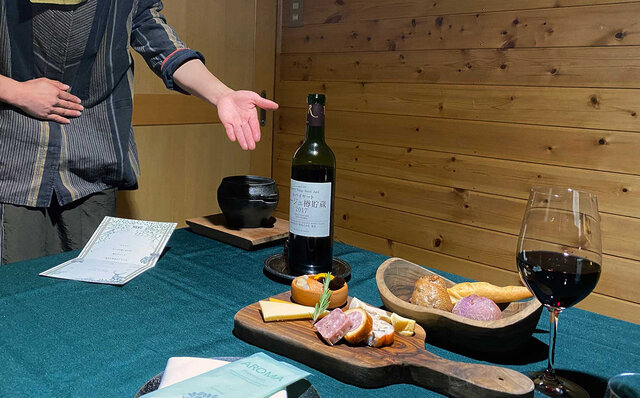
Although it's a simple setup with a folding table and tablecloth, the dinner is a multi-course meal. A wonderful time to momentarily forget the harsh natural environment of Mt. Fuji!
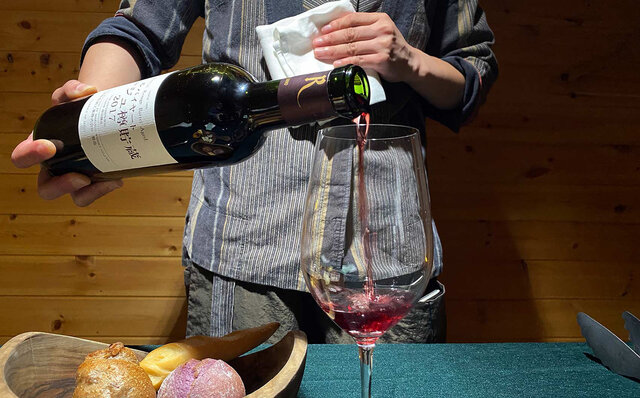
Ah, to be able to drink from a wine glass. There is no more memorable scene than this bottle service. Although the 7th station is still far from the summit, the sense of accomplishment and relief after overcoming the hardships so far brings tears to my eyes every time I recall it.
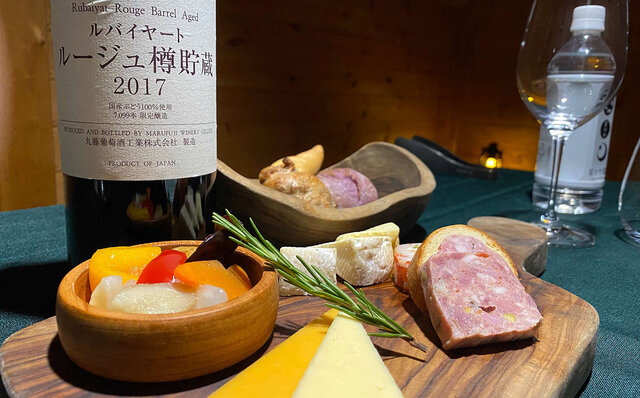
Pickles to soothe tired muscles, duck and shrimp and vegetable terrine for tomorrow's energy, sausage wrapped in brioche, and a cheese platter perfect for protein replenishment.
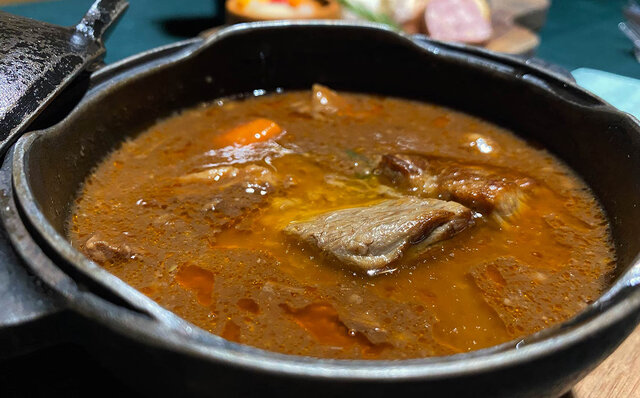
A piping hot beef stew prepared by the chefs at HOSHINOYA Fuji. I was surprised to be able to enjoy such quality at a mountain hut.
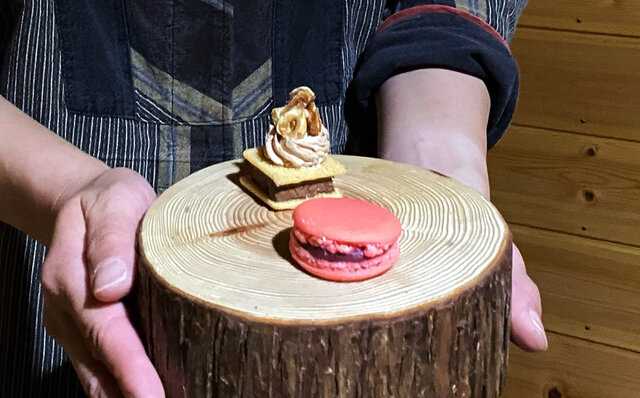
A small dessert after the meal was served on a log. It felt just like a resort restaurant.
The mountain hut dinner also features an astonishing table setting. In addition to the beef stew prepared by the chef of HOSHINOYA Fuji, dishes rich in protein for tomorrow's energy adorn the table. Even Koshu wine to pair with the stew! While heavy drinking at a mountain hut is not advisable, a moderate amount of alcohol can help ease tension and restore composure. The table service here is tens of times more appreciated than in the lowlands. This experience is truly a treasure.
Now, I have been writing as if I actually climbed, but yes, I did undertake the climb to create this article. And I reached the mountain hut "Toyokan." However, at 5:00 AM on the third day, the weather at the summit was unfortunately poor (the experiential coverage took place in July after the opening of the climbing season but before the end of the rainy season, and the rain front was still present that day), so I descended without attempting the summit. But honestly, I was also relieved to have to give up. Climbing Mt. Fuji, Japan's highest peak, is certainly not "easy."
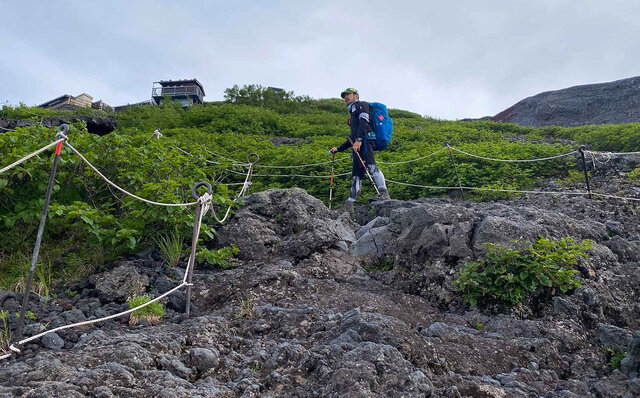
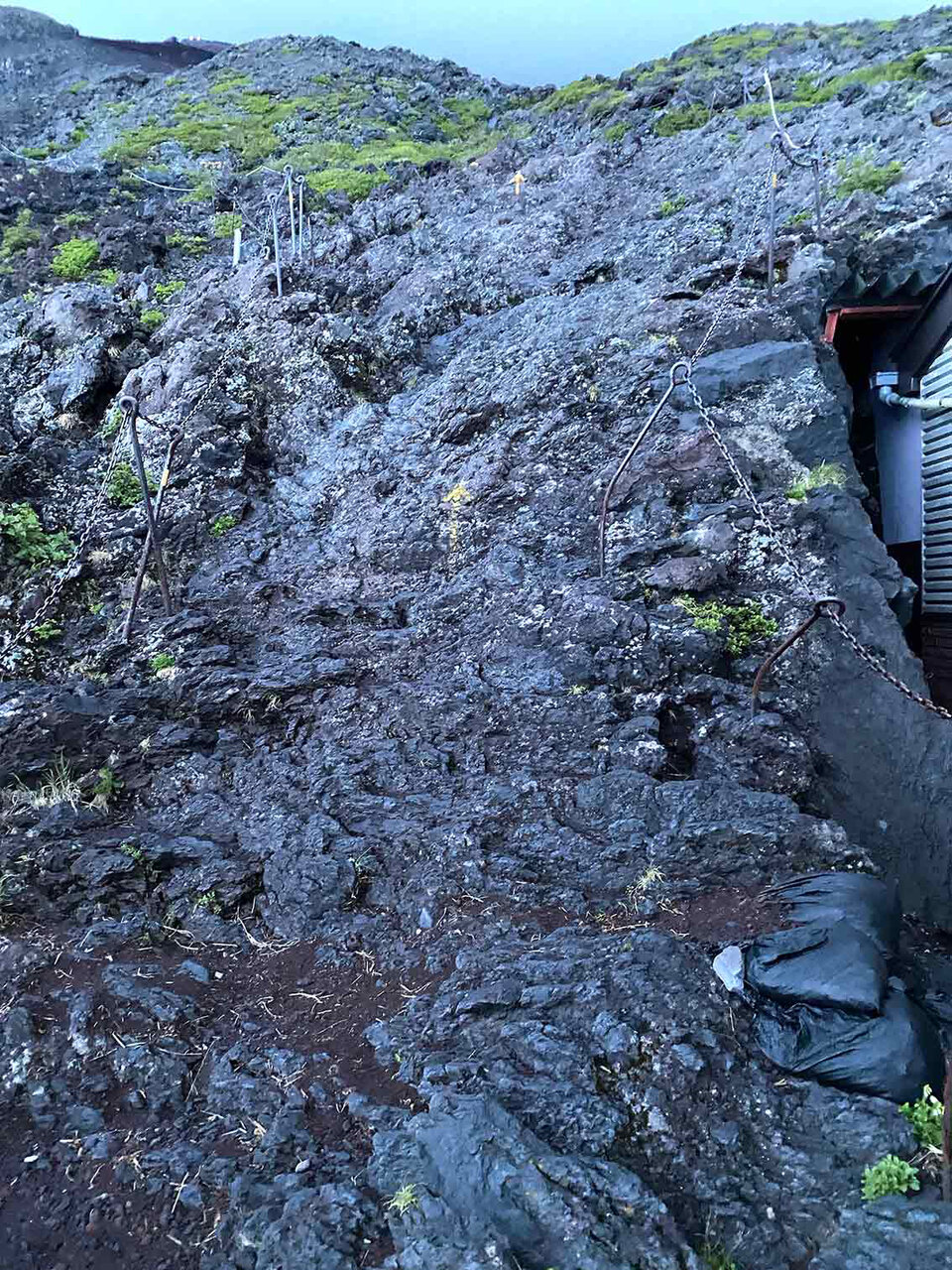
This is not a wall. It's the climbing trail on the Fujiyoshida route. The arrow indicates the path. Not all parts are like this, but it's true that there are several sections like this. (This is a rocky area immediately after leaving "Toyokan," leading to the 8th station.)
In climbing, everything is at your own risk. Guide Mr. Kondo offers the best suggestions at every point, but nothing changes unless you take the step yourself. The thin air and the rocky footing of the exposed nature ignite fear. This situation is truly a mirror reflecting one's mind. Confronting that weaker self is life itself, and I feel I have come to understand, even if only a little, the mindset of the people of old who sought rebirth.
Mr. Kondo said, "I am the guide who climbs the slowest among all Mt. Fuji guides." He explained that by taking small steps and exhaling deeply with each breath, one will eventually reach the destination. And that is true. You just need to walk at your own pace. If you feel it's tough, slow down. If it's still tough, stop and take a deep breath. The meaning of that advice resonated with me as a life amulet! I believe this was because I was able to match my steps with Mr. Kondo in that environment.
Ultimately, I was unable to reach the summit of Mt. Fuji, but it would be a waste to end the experience of Mt. Fuji with mere bragging rights of conquest. I now feel that the true fascination lies in the background of its selection as a World Heritage site. In that regard, the three locations below, which Mr. Kondo recommended visiting after the descent and which I visited myself, were wonderful places that corroborated his stories.
I sincerely hope to challenge Mt. Fuji again someday. And when I do, I want to climb with Mr. Kondo again. I am sure that everyone who has participated feels the same way. The story of Mr. Kondo, who has lived with Mt. Fuji and remains active at the age of 54, is still vividly etched in my mind.
Overview of "Glamorous Fuji Climb"
Dates | August 30, September 1, 3, 6, 2021
These are all departure dates for the climb. Separate reservations for accommodation at HOSHINOYA Fuji before and after the climb are required.
Price | 260,000 yen per person (tax and service charge included) *Excludes accommodation fees at HOSHINOYA Fuji and the mountain hut.
Includes | Pre-climb counseling, climbing guide, one dinner and one breakfast at the mountain hut,
If choosing accommodation before the climb: Energy bar making, Oshi cuisine
If choosing accommodation after the climb: Foot treatment, Oshi cuisine
Capacity | 1 group per session *1 to 4 people per group
Eligibility | Healthy individuals aged 10 and above and under 70.
Notes | Sunrise and starry skies may not be visible depending on the weather. The tour details may change due to the COVID-19 situation, natural conditions, participant's physical fitness, etc.