Exploring Forests with Professionals ~Nature and Activities in Gifu's Hida Region~ Chapter 2
Feature | Exploring Forests with Professionals – Gifu Prefecture's Hida Region
Chapter 2: Amō Prefectural Natural Park and Hida Furukawa
The Difficulty of Preserving Wetlands (1)
Since 2007, Gifu Prefecture has been promoting the "Hida Mino Pride Movement – Gifu's Treasures Certification Project" to discover new, original tourism resources. Certified as one of these "Gifu's Treasures" in fiscal year 2011 was "Amō Prefectural Natural Park." It is a vast forest with a high-altitude wetland and untouched primeval forest. We will venture into this area with an interpreter – a professional of the forest.
Photographs by JAMANDFIXText by KASE Tomoshige (OPENERS)
In the first report, we introduced a guided tour from "Toyota Shirakawa-go Nature School," designed as a very accessible first step to connect with nature. On the second day, we delve a little deeper into the natural world.
About 20 minutes from Shirakawa-go, via Route 360 and a winding mountain road, we arrive at "Amō Prefectural Natural Park." This forest spans approximately 1,600 hectares across the northern part of Gifu Prefecture, in Kawai Town, Hida City, and Shirakawa Village, Ono District. Its most distinctive features are the high-altitude wetland spreading out at an elevation of about 1,400 meters and the primeval forest, symbolizing the richness of Japan's woodlands.
On the morning of our departure, it was raining considerably, though not a downpour. Mid-September is typhoon season across Japan, and the weather is unstable. While rain would make the reporting easier by reducing the need for certain precautions, a rainy forest surely possesses its own unique beauty.
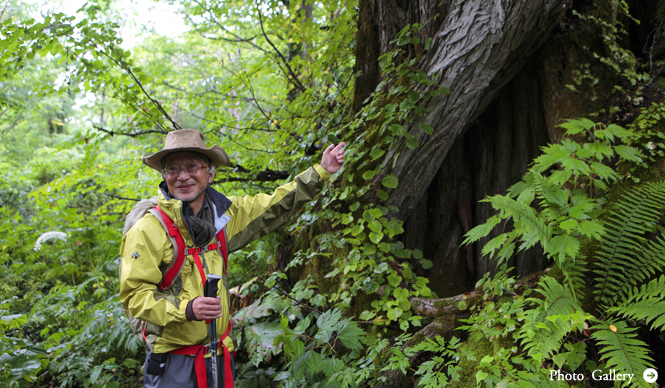
Appearing at the designated parking lot was Katsumi Iwasa, our guide for the day. He serves as a director and head of planning and development for the Hida City Tourism Association and is also a certified guide for the Amō forest. "It's turned out to be rather gloomy weather, but I actually like forests in the rain. I think we might see some phenomena that only appear when it's raining, so let's proceed with an eye for those," he said.
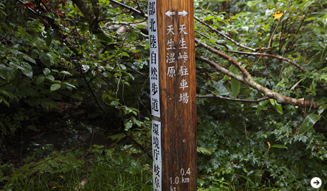
Donning rain gear, we ascended a gentle slope from the parking lot. After about a 10-minute walk, we reached the site of an old mountain pass. The forest presents different aspects north and south of this pass. To the north, the landscape is that of a managed satoyama (traditional rural landscape), while the south is largely untouched wetland and primeval forest.
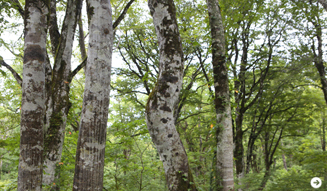
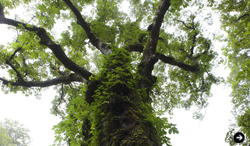
"Look, we've already encountered a phenomenon unique to the rain," Iwasa remarked, looking up. Water flowed down the smooth, white bark of a beech tree like a small river. "It's called 'jukanryū' (trunk flow). Rainwater that falls on the beech's leaves gathers and flows down the trunk. Beech leaves also have a distinctive feature: their veins form grooves, acting like countless gutters that channel water down the branches, which in turn channel it down the trunk." The water flowing down the beech's bark was surprisingly abundant and quite a sight.
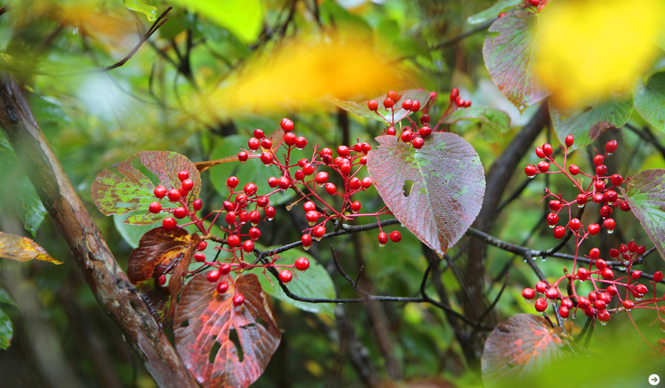
After walking for about 40 minutes, we arrived at the entrance to the high-altitude wetland. It was magnificently spacious. The wetland vegetation is incredibly rich, with flowers appearing sequentially from the Mizubasho (Japanese skunk cabbage) right after the snowmelt, through to Enkianthus perulatus, Nikko-kisuge (Hemerocallis middendorffii), and Shirohige-so (Silene sieboldii) well into mid-September. After October, it becomes a place of autumn colors. Maple varieties, beech, rowan, and Japanese sumac would paint the landscape in hues of gold with scattered crimson. Wooden boardwalks are laid out around the wetland, making it perfectly easy to walk.
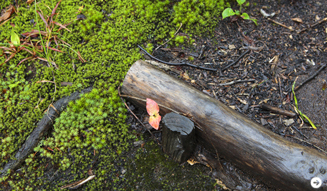
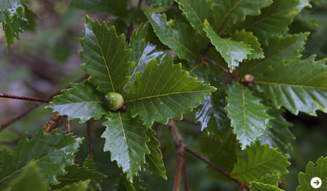
"Building these boardwalks around a wetland requires careful consideration," Iwasa explained. "Water seeps into the wetland from the surrounding forest. The flow of this water can change subtly with the seasons, or even year by year. If the boardwalk were to block this water, the vegetation would change." Therefore, he noted, it's necessary to create pathways for the water beneath the boardwalk, similar to a stilted structure.
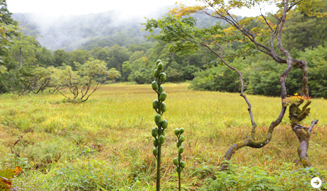
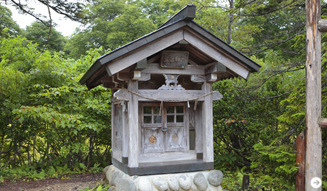
Usnea, a type of lichen that grows only in clean air, clings to the giant beech trees. After circling the wetland and enjoying the scenery, we ventured further. Beyond this point lies the primeval forest. Of the total area of 1,600 hectares mentioned earlier, a remarkable 1,000 hectares are designated as a conservation area within the Amō forest. The beech primeval forest, in particular, is a treasure trove of ecosystems, nurturing various animals such as Asiatic black bears, squirrels, and Japanese hares.
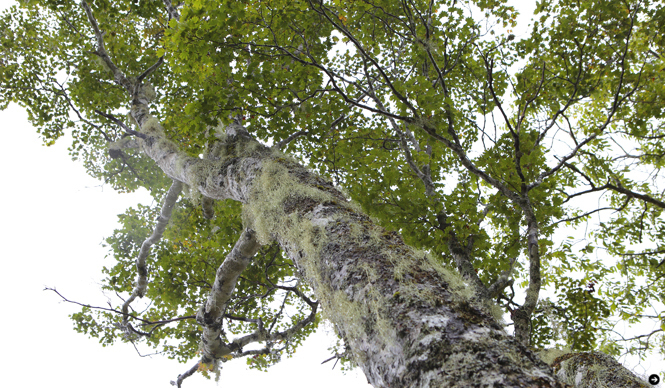
We proceeded along the Karatani hiking trail. Giant Katsura, Sawagurumi, and Ohyo trees lined both sides of the path, their presence overwhelming. Besides beech, forests with such large trees are unfortunately few in Japan, perhaps fewer than ten. Iwasa meticulously explained each tree. While his words were directed at us, the visitors, it felt as though he was speaking to each tree individually. "The leaves of this Katsura tree have a wonderful scent." "Ivy is entwined with this beech. A little further on, it turns bright red and is quite beautiful."──The forest guide continued his explanations, which he must have repeated hundreds of times, as if conveying them for the very first time. Iwasa himself was deeply moved by the nature around us. With a sense of wonder at this, I returned to the parking lot where we began.
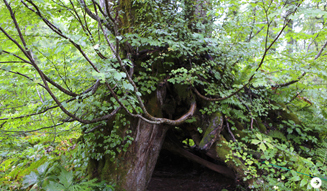
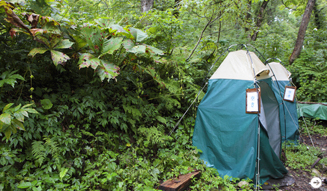
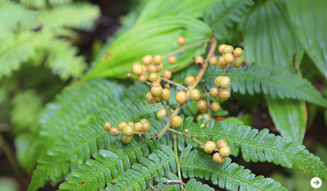
For Amō Prefectural Natural Park, it is highly recommended to explore it with a certified guide like Iwasa. They can teach you about nature from various perspectives, including its flora, geography, and history. We hope you enjoy a fulfilling forest walk with these professionals.
Finally, let me mention that protecting such nature, especially wetlands that rely on an extremely delicate balance, is no easy feat. Patrol staff and guides like Iwasa are constantly dealing with an endless stream of practical tasks, including boardwalk maintenance, installation and promotion of portable toilets, and security against the theft of alpine plants. Yet, Iwasa calmly states, "Elderly people often say the forest has become neglected compared to the past. Perhaps nature and humans have coexisted well for a long time with a moderate level of human intervention." I believe there is a hint for human-nature coexistence in these words as well.
Feature | Exploring Forests with Professionals – Gifu Prefecture's Hida Region
Chapter 2: Amō Prefectural Natural Park and Hida Furukawa
The Difficulty of Preserving Wetlands (2)
A Historic Town, A Historic Inn
We toured the wetlands and primeval forest within Amō Prefectural Natural Park and returned to the parking lot at the trailhead. It was about a two-hour hike. The rain had lessened, and the sky was brightening. We ate our packed lunches while drying our rain gear (though usually, lunch is taken within the park, the rain necessitated this), and then bid farewell to our forest guide.
Driving west towards Route 41, we reached Hida Furukawa after about an hour's drive. It is an old town located in the central northern part of Gifu Prefecture. In the Sengoku period, Nagachika Kanamori, under Toyotomi Hideyoshi's orders, unified Hida. In 1589, his second son, Arishige, built Hida's only flatland castle, "Masujima Castle," here and established a castle town, forming the foundation of the city. Going back even further to the Nara period, the carpenters from Hida who were active in constructing shrines and temples in the capital were known as "Hida no Takumi" (Artisans of Hida) for their exceptional skills. These skills are still passed down today, breathing life into the traditional wooden machiya townhouses that form the streetscape of Furukawa.
We will save the discussion of the residents' high awareness of traditional architecture and the modern artisans who physically support the townscape for the next report. This time, I will write about the inn where we stayed in Furukawa, "Yatsusankan."
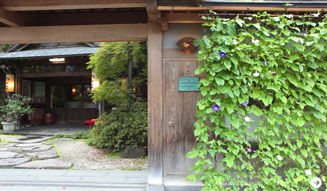
The name "Yatsusankan" is unusual, but it is said to be named after its founder, Sanugoro, who was from Yatsuo in Toyama Prefecture. This is an old inn dating back to the Ansei era (1854-1859). Parts of the building are designated as National Registered Tangible Cultural Properties.
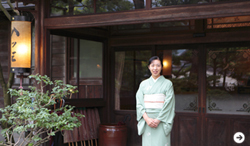
Yatsusankan stands quietly across the Araki River, facing Honkoji Temple, one of Hida Furukawa's landmarks. While it is within walking distance from Hida Furukawa Station, we recommend taking a taxi if you have a lot of luggage. We arrived late, but were welcomed by Rikae Ikeda, the young proprietress.
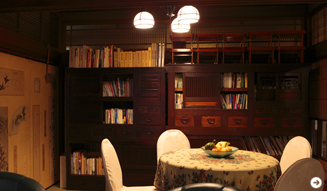
The first impression of the inn is its stately atmosphere. We were first served tea in the reception room, which felt like a "vintage" piece from the Taisho era. Similarly, the lounge and theater room on the first floor are furnished with antique pieces, exuding a unique ambiance.
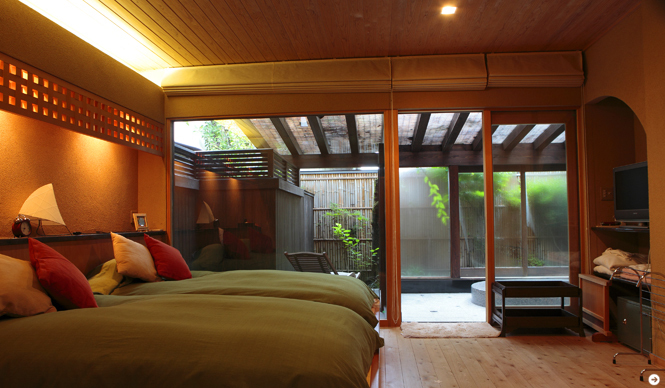
The guest rooms are similar. The six rooms in "Shogetsuro," rebuilt in 1905, retain their original appearance and convey the Hida merchant house style, preserving the atmosphere of the Edo period. This section is the aforementioned National Registered Tangible Cultural Property.
On the other hand, modern rooms are also available. "Ikezuki no Ma" in "Kogetsuro" features a bedroom, living room, and an 8-tatami mat room with an open-air bath. You can choose to stay in the historic cultural property rooms or the new style rooms, depending on your preference.
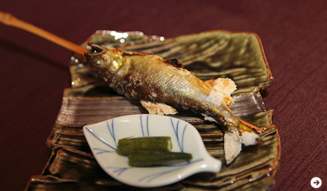
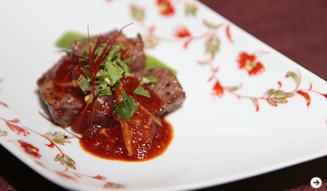

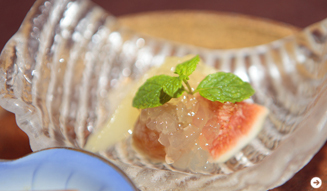
Dinner is served in a kaiseki style. Hida Furukawa is located in the northernmost part of Gifu, meaning seafood comes not from the Pacific but from Toyama Bay, the Sea of Japan. The inn offers an impressive array of seafood, including smoked scallops and saury, and sashimi of bonito, kanpachi, and sweet shrimp, belying its inland location.
Of course, exquisite dishes unique to Hida are served one after another. These include grilled Ayu (sweetfish) with roe, a seasonal autumn delicacy, Hida beef steak, and Tochitsuki (buckwheat) noodles. While the kaiseki cuisine reflects the inn's history, it is served with a sincerity that feels unpretentious. Gifu Prefecture is also known for its excellent water and sake, and I must add that we thoroughly enjoyed the local sake accompanying our meal.
In the final installment, we will discuss the artisan skills of Hida Furukawa, specifically its traditional architecture, and the people who live alongside the satoyama landscape today. Naturally, regarding our main theme of forests, we will report on "Goshikigahara Forest," which has entry restrictions, a rarity in Japan.
Amō Prefectural Natural Park
Hida City Tourism Association
Tel. 0577-65-3025
amounomori@hida-catv.jp
Hida City Tourism Division
Tel. 0577-73-2111 (General)
syokokanko@city.hida.gifu.jp
Hida Furukawa Yatsusankan
1-8-27 Mukōmachi, Furukawa-cho, Hida City, Gifu Prefecture
Tel. 0577-73-2121
Rates | From ¥18,000
(Per person, including dinner and breakfast; service charge not included)
Check-in/Check-out | 15:00 / 10:00
info@823kan.com
http://www.823kan.com/

Gifu Prefecture Tourism Division
Tel. 058-272-8393
http://www.kankou-gifu.jp/(Official Website of the Gifu Prefecture Tourism Federation)