Exploring Forests with Professionals ~Nature and Activities in Gifu's Hida Region~ Chapter 1
Feature | Exploring Forests with Professionals – Gifu Prefecture's Hida Region
Chapter 1: Shirakawa-go and Hida Takayama
The Meaning of Knowing Forests (1)
If you broadly divide Gifu Prefecture, you have Mino in the south and Hida in the north. The Hida area is embraced by the Northern, Central, and Western Alps, and the Hakusan mountain range, boasting vast forests and surrounded by nature. An ideal first step to experience such nature is "Toyota Shirakawa-go Nature School," where you can enjoy resort activities in Shirakawa-go, and "Oak Village," which has been active with the theme of coexistence with nature since 1974 in Takayama City.
Photographs by JAMANDFIXText by KASE Tomoshige (OPENERS)
Taking a Step into the Forest
Shirakawa-go, designated a UNESCO World Heritage site in 1995, can be called a "living cultural asset" where the great nature that nurtures village life and modern life harmoniously blend, centered around Gassho-zukuri farmhouses that have stood for centuries. Shirakawa-go is located in the innermost part of northwestern Gifu Prefecture, bordering Toyama and Ishikawa Prefectures, and as of 2012, it is by no means an easily accessible region from the metropolitan area. This inconvenience is intrinsically linked to the longing to "visit someday."
Arriving at Shirakawa-go takes a little over two hours from Nagoya by train, followed by a 40-minute drive from JR Takayama Station. Ultimately, Shirakawa-go is a village small enough to explore on foot, and beyond the rows of souvenir shops and guesthouses that serve as tourist attractions, the daily lives of its residents continue as they always have. There is a unique atmosphere, unlike other tourist destinations, where you find yourself blending into the village scenery without even realizing it. However, I will save the discussion of Shirakawa-go's charm as a "village" for another occasion.
Magari district, Shirakawa Village, Gifu Prefecture. This area is known for heavy snowfall, one of the highest in Gifu, and its harsh living conditions led to the collective departure of its residents in the past. In 1973, this land was purchased by Toyota Motor Corporation, and in 2005, "Toyota Shirakawa-go Nature School" opened. Although named a school, it is fundamentally an accommodation facility. It boasts facilities and services comparable to typical resort establishments, including rooms luxuriously built with wood, natural hot springs, and French cuisine utilizing the bounty of nature.
Yet, the name "school" is not without substance. The eco-tours led by interpreters, professionals of the forest, are the greatest appeal of "Toyota Shirakawa-go Nature School" and can be considered a "lesson" for us city dwellers.
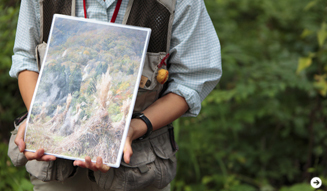
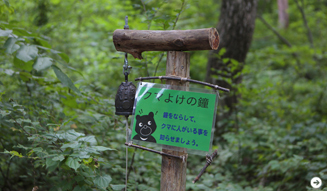
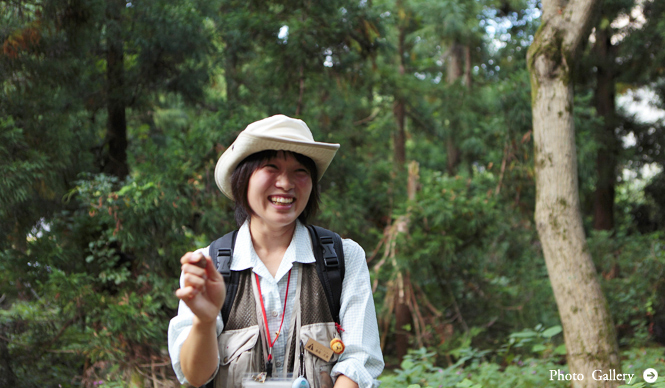
Exiting through the back door of the first-floor lobby leads directly to the nature tour. The guide is Kumi Kurosaka, a forest professional and interpreter. She will lead us along the "Forest Path," a loop of approximately 500 meters adjacent to the facility.
The walking path is made of wood, making it very easy to traverse. As we walk slowly, she introduces the surrounding plants, from the Impatiens in the soil underfoot to the Japanese walnut overhead. Using various animal stuffed toys, she explains how forest nuts are utilized as food for forest animals.

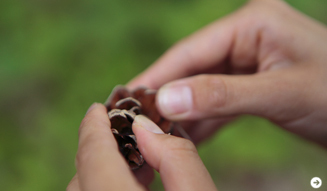
In a clearing along the way, we are handed pellets (small, finger-tip-sized solids made from compressed wood shavings) and begin a "hide-in-the-soil game." The purpose, as revealed later, is to explain the relationship between squirrels, nuts, and the forest. This forest walk concludes the approximately one-hour guided tour. The path is easy to walk, and the route is short, making it a recommended plan for families with children.
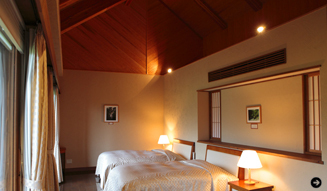

Naturally, for those who wish to engage more deeply with nature, various programs are available, including a two-hour course and night hikes (walking in the forest at night). And upon returning to the accommodation, clean and modern bedrooms, natural hot springs, and refined meals await. It is an ideal facility for urban dwellers to take their first step towards nature.
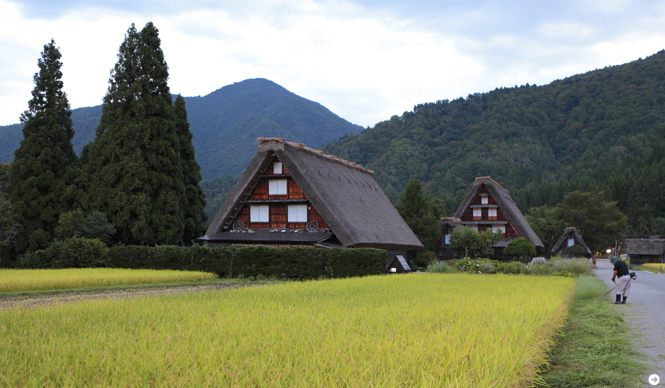
The operation of "Toyota Shirakawa-go Nature School" is managed by the NPO "Shirakawa-go Nature Coexistence Forum," a collaboration between Shirakawa Village, an environmental NGO, and Toyota Motor Corporation. Connecting nature and humans, and considering coexistence—it feels as though we have glimpsed something beyond the activities for enjoying nature.
Feature | Exploring Forests with Professionals – Gifu Prefecture's Hida Region
Chapter 1: Shirakawa-go and Hida Takayama
The Meaning of Knowing Forests (2)
A Little is Just Right
Heading west from Takayama City on Route 158, you arrive in Kiyomi Town in about 20 minutes. Long before the word "ecology" became common, since 1974, there has been an organization proposing "the realization of a sustainable, cyclical society through wood, a renewable resource." This is "Oak Village."
It is difficult to explain this organization in a single sentence, but "wood" is undoubtedly the keyword. From manufacturing and selling wooden furniture and lacquerware such as chairs and tables, to constructing wooden buildings, operating a cafe, and supporting afforestation and forest management activities. It is no exaggeration to say that it is a company that handles almost everything related to wood.
We went to interview "Sei Plus Co., Ltd.," a division of Oak Village that manufactures and sells products derived from the aromas of forest trees. We headed towards a cottage-like building located on the Oak Village premises.
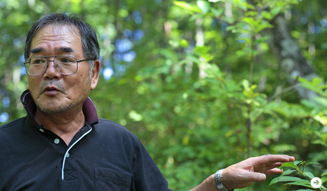
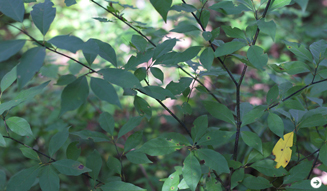
"Shall we go to the forest behind us?" With that, Mr. Kenji Kitagawa of the company guided us. Immediately upon entering the mountain from behind the cottage, he touched a low-growing shrub of the Lauraceae family with black branches, explaining, "This has antiseptic properties and was apparently used as toothpicks in ancient times. It grows to about 3 meters in height." This is one of the trees used in the company's aroma brand "yuica."
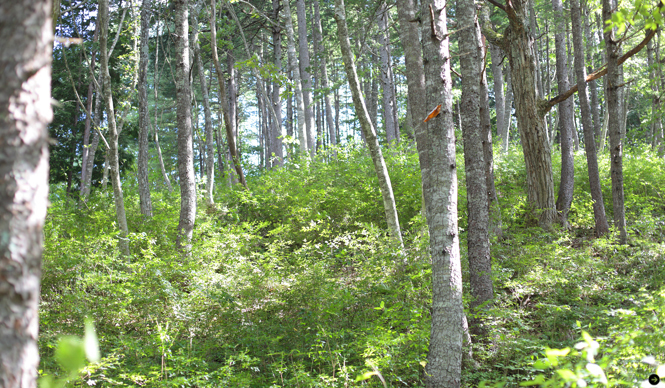
It is a remarkably bright forest, well-maintained. While broadleaf and evergreen trees are abundant, coniferous trees such as Hinoki cypress, fir, and Japanese red pine are also mixed in. This is what a healthy forest looks like. "Regarding this Japanese sweet viburnum (Tamsiva), a perfumer once said, 'In this state, it's a perfect blend.' It has a citrusy scent. When you cut this tree in the mountains, the fragrance drifts down to the foothills." Mr. Kitagawa continued his explanations as we walked through the forest.
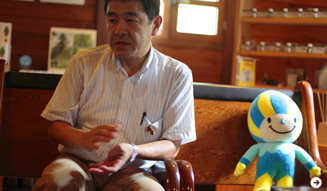
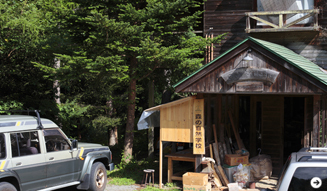
Back in the cottage, we continued our conversation. "It's been four years since we started commercializing aromas. Of course, there are various challenges, but one of the characteristics of our products is that we use wood from the surrounding mountains. It's locally sourced." The raw materials are gathered from the forests of Hida Takayama. If the goal were simply to collect as many tree species as possible for products, production volume could be increased by sourcing from all over Japan, and even from overseas. However, their refusal to do so is their commitment and the significance of this organization.
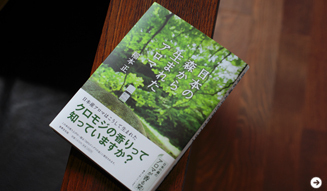

"We started with furniture making 40 years ago, and with the motto 'from bowls to buildings,' we have created everything from small items to large structures. The basic philosophy is to utilize the bounty of the forest without waste," says Hideki Iwamatsu, a director. The continuity of 40 years—his words carried great conviction.
"Let's go see how the oil is extracted," said Mr. Kitagawa. Following him, we climbed a slope. Wood, carefully selected by species and crushed to the optimal size, was stored in containers. The scent of the forest was palpable. "We extract the oil by heating it with steam. This distillation apparatus was also custom-made."

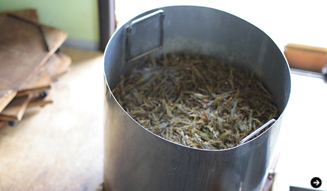

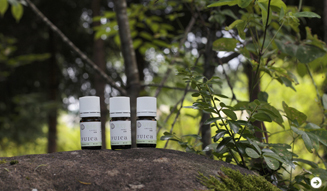
The extracted essential oil shone with a golden hue. It is said that from 5 kilograms of raw material, typically only about 5 milliliters of oil can be obtained. Water and impurities are removed, it is carefully filtered and refined, and then bottled in light-blocking containers to become a product. "It's just a small amount. But since everything is handmade, this much is just right, isn't it? (laughs)" said Mr. Kitagawa. It was a casual yet deeply moving remark.
Mr. Masashi Inamoto, the founder of Oak Village, states, "Half of our approximately 60,000 tsubo (about 200,000 square meters) site was once wasteland from a failed villa development. We built workshops and houses there, planted trees, and have been attempting to create a model of coexistence between humans and nature, a "Green Country," which continues to this day." In today's society, considering the coexistence of forests and humans is perhaps one of the meanings of knowing forests. And indeed, without experiencing nature firsthand, one may not be able to truly contemplate it—with such thoughts, we concluded the first day's coverage.
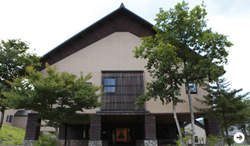
Toyota Shirakawa-go Nature School
223 Magari, Shirakawa Village, Ono District, Gifu Prefecture
Tel. 05769-6-1187
Fax. 05769-6-1287
Rates | From ¥10,600
(per person, including 2 meals)
Check-in/Check-out | 15:00 / 10:00
http://www.toyota.eco-inst.jp/
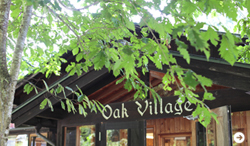
Oak Village Takayama (Showroom)
846 Makigado, Kiyomi Town, Takayama City, Gifu Prefecture
Tel. 0577-68-2220
Business Hours | 9:30 – 16:30
Closed | Year-round (except New Year holidays)
*Cafe open only on Saturdays, Sundays, and public holidays from April to November, and during fair periods.
http://www.oakv.co.jp/index.html

Gifu Prefectural Government Tourism Division
Tel. 058-272-8393
http://www.kankou-gifu.jp/(Official Website of the Gifu Prefectural Tourism Federation)