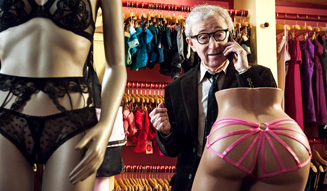
INTERVIEW | A Special Interview for the Release of 'Fading Gigolo'
INTERVIEW | The Man Who Unlocked Woody Allen's Talent!?
“Fading Gigolo”: Director, Screenwriter, and Star
John Turturro: An Interview on the Occasion of the Film's Release (Part 1)
“We’ll fill the voids in your heart with love and kindness.” With such a tagline, two middle-aged men embark on a “gigolo business.” The story unfolds in the bustling metropolis of New York. It all begins when Murray, played by Woody Allen, faces the ruin of his family’s bookstore. Murray proposes to his friend Fioravante, portrayed by John Turturro, that he become a gigolo. Initially hesitant, saying, “You must be joking, I’m not even good-looking,” Fioravante gradually transforms into a gigolo who captivates women. John Turturro, an actor known for his unique presence under directors like the Coen Brothers, takes on the triple role of director, screenwriter, and star in “Fading Gigolo.” Woody Allen, captivated by the story he happened to hear, became deeply involved in the script and, for the first time in 14 years, appeared in a film not directed by himself. To commemorate the film's release, we conducted a phone interview with John Turturro. We delved into everything from the friendship that blossomed between him and Woody to his views on women.
Interview & Text by Junko Tanaka (OPENERS)
A Tale of Friendship with Woody Allen
—Where are you now?
I’m in the Marche region of Italy. With Marco Pontecorvo, who was the cinematographer for “Fading Gigolo.” We’re shooting a film here. He’s the director this time. He’s not just a colleague, but also a close friend, so I felt I had to lend a hand (laughs).
—Speaking of friendship, in this film, you played the role of Woody Allen’s close friend. What was Woody like as a co-star?
He’s incredibly diligent and serious. He has that cynical, critical side that everyone imagines, but if you can navigate that well, it’s not difficult to get along with him.
—Did you happen to have the same barber?
Yes, before co-starring in this film, we barely knew each other. But the barber kept enthusiastically saying, “You and Woody should do something together,” which made me seriously consider it. I thought, “This might work. Let’s give it a try.” In any case, chemistry is everything. I was lucky to have plenty of time to confirm that before shooting began.
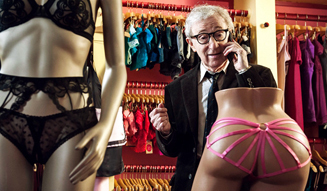
One day, I told the barber an idea I'd just come up with spontaneously. When he told Woody, he really liked it. So, I wrote the script, and Woody gave me feedback. That’s how we finished it. Sometimes his opinions were harsh, but I think Woody was encouraging me in his own way to delve deeper into the story. It was a luxurious experience.
Even after shooting began, Woody was a constant support. There’s no actor easier to work with. He’s just himself in front of the camera, without any pretense, which allowed me to approach the filming very relaxed.
—But it must take some courage to tell Woody “cut,” right?
If I felt something was “a little off,” I’d tell him gently. “Could we be a bit more delicate here?” or “Let’s drop this line, but I’d like you to say this.” And then, in the next moment, bang! He’d deliver the perfect performance. I think he’s a vastly underestimated actor.
—Your chemistry with Woody was also a highlight. Is there a secret to that?
Before this film, I worked on a Broadway play. I was invited to direct “Relatively Speaking,” written by Woody, Ethan Coen, and Elaine May. I accepted immediately. It was a golden opportunity to get to know Woody. Auditions, rehearsals, previews. Theater requires such a long preparation time that by the end, we had become very close. I think that carried over into the film.
—Does the friendship that blossomed between you two continue to this day?
Of course. Well, we’re both busy, so we can’t see each other very often. Once this shoot is over and I return to New York, I plan to get in touch. I’d like to work together again.
—By the way, what inspired the theme of gigolos?
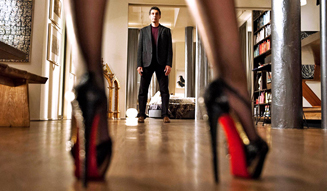
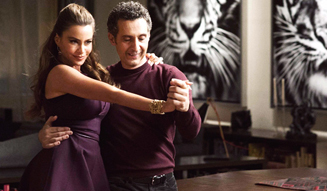
Why was it, I wonder? (laughs) The first thing on my mind was that I really wanted to make a film with Woody. I wanted to see how our chemistry would play out in front of the camera.
As I explored various ideas, I became interested in businesses on the verge of closing down. Whether it was a bookstore, a movie theater, or a record shop, the type of business didn’t matter, but the story was about a small shop in a big city being forced to close. People who lose their jobs in such situations have to rebuild themselves from scratch. Like the protagonists in this film, Murray (note: the former bookstore owner played by Woody) and Fioravante (note: the former bookstore employee played by John).
As we age, everyone encounters situations where they have to rebuild themselves at least once or twice. Especially now, with jobs being taken by robots and machines becoming a reality. Interestingly, even in times like these, there are businesses that are never forced to close down. That’s the sex industry.
—Hearing that, the original title, “Fading Gigolo,” feels quite profound.
I wanted a title with a bit of irony. “Not Too Pretty” would have worked too (laughs). Normally, when you hear “gigolo,” you imagine a young, sexy man, right? I deliberately wanted to make a gigolo out of a man who’s “not that type.” But in reality, a person’s charm isn’t just about looks. Some people become more attractive the more you get to know them, while others, no matter how good-looking, can be incredibly boring once you talk to them.
INTERVIEW | The Man Who Unlocked Woody Allen's Talent!?
“Fading Gigolo”: Director, Screenwriter, and Star
John Turturro: An Interview on the Occasion of the Film's Release (Part 2)
Everyone Has a Little Gigolo in Them
—I see. So that’s how the “un-handsome gigolo” was born.
Yes. Another reason was that I wanted to portray him not as someone serving women, but as someone receiving their services. While male prostitutes are rarer than female prostitutes, the market certainly exists. I thought a film centered on a male prostitute would be somewhat unusual and interesting.
—Despite Fioravante not being conventionally handsome, he’s very popular with women. The “gigolo business” he started on a whim at Murray’s suggestion is also booming. He’s a good listener, sensitive, and genuinely devoted to the women he’s with. It’s natural that women are drawn to him. Did you model him after anyone? Perhaps yourself?
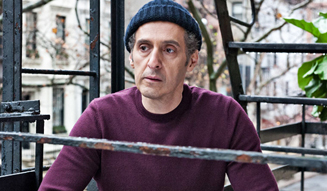
(Laughs) Doesn’t everyone have a little bit of the gigolo in them? But Fioravante isn’t me. Of course, I’ve reflected some of my own qualities in him. But the biggest inspiration came from my male friends. Guys who have never had a serious relationship with a woman. Guys who can do anything, from DIY to cooking. They’re grounded and don’t try to sell themselves. Watching them reminds me of old cowboys or samurai. And guys who are good listeners. It’s quite difficult to be yourself when you’re in front of a woman without being overly self-conscious. Many guys say they want a girlfriend, but when they’re actually with a woman, they put on an act.
—So, he’s an “ideal person” assembled from the best qualities of everyone?
Something like that. With a good dose of original elements, too.
—Did this character, Fioravante, seem quieter than your usual roles?
I’ve played quite a variety of roles. I might have an image of playing eccentric characters, but in films like “Box of Moonlight” (1996) or “The Truce” (1997), I played quiet men. I don’t want to be confined to one type of role. As for Fioravante, I’ve always loved cowboy and samurai movies, so perhaps I made him old-fashioned and quiet. He’s a bit like a modern samurai, isn’t he? He doesn’t overestimate himself. He’s cool and relaxed. I like that kind of man.
—How was the experience of acting while directing?
There were times when it was very easy, and times when it was difficult. It was due to time constraints. We had to finish everything in six weeks. If we’d had eight weeks, I think it would have been a breeze. The preparation was perfect, and the crew included people I’d worked with for years, like cinematographer Marco and costume designer Donna Zakowska. They helped me a lot.
—I heard the entire film was shot in New York?
Yes. Shooting in New York is fun, but expensive (laughs). Around that time, New York was experiencing a filming boom. TV shows and movies were being shot day and night. That made it difficult to find skilled staff. We were very lucky to have wonderful people, from the makeup artists to the hairstylists.
—Speaking of hairstyles, Vanessa Paradis’s transformation was surprising.
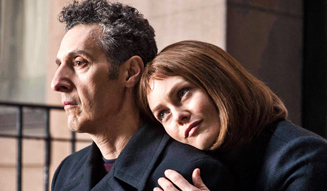
She’s wonderful. As an actress and as a person. For me, she’s the most important person in this film.
—This time, she played Avigal, a strictly religious Jewish widow. She showed a different side of herself.
Yes. Vanessa projected her own sensitivity beautifully into the role. Avigal’s mysterious aura was also something she possessed herself. We co-starred again in a short film for “Rio, I love you” (note: an omnibus film set in a city, following “Paris, je t'aime” and “New York, I Love You”). Again, in a style where I directed and she acted. Working with her is truly enjoyable.
—As a director, how did you bring out that new side of her?
It’s easier to work with someone you don’t have to be overly careful around. When I was writing the script, I met with several Jewish people to research the Jewish community. When Vanessa decided to play Avigal, I introduced her to them right away. And ultimately, the character of Avigal she created was far more wonderful than I had imagined. She’s my number one candidate for future collaborations.
—I look forward to it. Lastly, it was striking how the film depicted the theme of gigolos with a bright and lighthearted touch, unlike the sexy image often associated with them. Was there a particular reason for this?
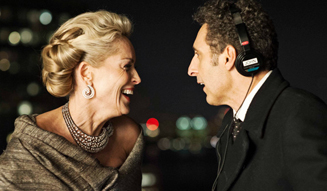
I intended for the sex scene with Dr. Parker, played by Sharon Stone, to be longer. But in the end, I decided to shorten it. As I mentioned earlier, if I’d had more time, I might have included more such scenes. What’s interesting is that sex scenes that are considered “well-done” often have some kind of obstacle. Something else is happening, which makes the scene stand out. But in most cases, they don’t function well. They often feel like they were just filmed without adding any meaning to the story. This time, I didn’t have the time, and I didn’t want to make it cheap, so I chose to “imply” it. I think it turned out to be interesting in its own way.

John Turturro
Born in New York, USA, in 1957. After studying at the Yale School of Drama, he made his stage debut in John Patrick Shanley’s “Danny and the Deep Blue Sea,” winning the Obie Award and the Theatre World Award. In film, he won the Best Actor Award at the Cannes Film Festival in 1991 for his role in the Coen Brothers’ “Barton Fink.” The following year, he made his directorial debut with “Mac,” winning the Caméra d’Or at Cannes. His other acting credits include Spike Lee’s “Do the Right Thing” (1989), Robert Redford’s “Quiz Show” (1994), the Coen Brothers’ “O Brother, Where Art Thou?” (2000), and Michael Bay’s “Transformers” series.
“Fading Gigolo”
Now playing at TOHO Cinemas Shinjuku and other theaters nationwide.
Directed and Written by John Turturro
Starring John Turturro, Woody Allen, Vanessa Paradis, Liev Schreiber, Sharon Stone, and others.
Distributed by Gaga Corporation
2013 / USA / 90 min / Original Title: “Fading Gigolo” / PG-12
http://gigolo.gaga.ne.jp/
c 2013 Zuzu Licensing, LLC. All rights reserved