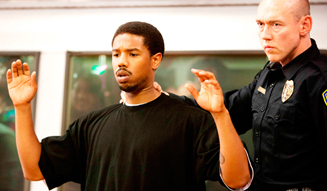
MOVIE│ 'Fruitvale Station,' winner of both the Grand Jury Prize and the Audience Award at the Sundance Film Festival.
MOVIE│The final day of an unnamed young man, killed by police, leaving behind his 3-year-old daughter
Fruitvale Station, winner of the Grand Jury Prize and Audience Award at Sundance Film Festival (1)
Fruitvale Station, a film by first-time director Ryan Coogler, is based on the true story of a 22-year-old Black man who was shot and killed by police in San Francisco in 2009, an event that became a national social phenomenon. The film opens in theaters nationwide on Friday, March 21st, at Shinjuku Musashinokan, Human Trust Cinema Yurakucho, and other locations.
Text by YANAKA Tomomi
Oscar-winning actor Forest Whitaker, captivated by the director's talent, steps in as producer
Known as the largest independent film festival, it is renowned for discovering new talent each year.Sundance Film FestivalLast year, Fruitvale Station garnered significant attention by achieving the remarkable feat of winning both the Grand Jury Prize and the Audience Award, and also received the Future Award in the Un Certain Regard section at the Cannes Film Festival. Now, the film is finally set for its theatrical release in Japan.
The director, Ryan Coogler, was born in 1986. Despite this being his feature film debut, he crafted a work that deeply resonated with audiences, instantly establishing him as a promising figure in the American film industry. Furthermore, Oscar-winning actor Forest Whitaker, impressed by Coogler's talent, joined the production.
Michael B. Jordan, known for Chronicle, delivers a powerful performance as the lead, Oscar Grant. Octavia Spencer, also an Oscar winner, plays his mother, adding depth to the narrative.
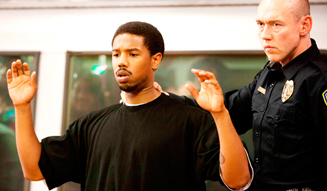
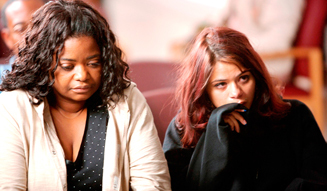
Oscar goes to see fireworks with his girlfriend to celebrate the New Year
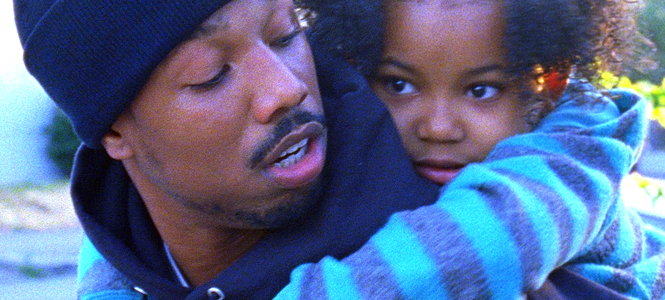
Oscar Grant, a 22-year-old living in San Francisco, has a criminal record but is a kind-hearted young man. On New Year's Eve, waking up with his girlfriend Sophina and their 3-year-old daughter Tatiana, he takes Tatiana to daycare and Sophina to work as usual.
On his way back in the car, Oscar calls his mother Wanda, whose birthday it is, to wish her a happy birthday. As the New Year approaches, he resolves to become a better son, husband, and father.
Later that evening, the family and relatives gather to celebrate his mother's birthday. Afterward, Oscar and Sophina head out with friends to watch fireworks. The incident occurs on their way back after celebrating the countdown and watching the fireworks.—.
At Fruitvale Station in San Francisco, crowded with people celebrating the New Year, Oscar gets caught up in a scuffle. He is dragged onto the platform by a police officer and shot dead while unarmed.
Why did Oscar meet such a tragic end, leaving behind his 3-year-old daughter? The film powerfully conveys the preciousness and weight of a single human life, not just as a news report, but through the lens of his "last day."
MOVIE│The final day of an unnamed young man, killed by police, leaving behind his 3-year-old daughter
Fruitvale Station, winner of the Grand Jury Prize and Audience Award at Sundance Film Festival (2)
—What compelled you to make this film?
“What compelled me to make this film was the incident itself and its aftermath. When the incident happened, I was back in the Bay Area from school for the Christmas holidays, and I heard that someone had been shot at a BART station and died the next morning. I saw the news footage on New Year's Day and was deeply moved. I thought Oscar could have been me… I was around the same age, his friends were similar to my friends, and I was shocked that something like this happened in the Bay Area.
During the trial, I witnessed the situation becoming politicized. Depending on their political stance, people either saw Oscar as a saint who had done nothing wrong in his life, or as a villain who got what he deserved that night. In that process, I felt that Oscar's humanity was being lost.
The footage, the trial, and the aftermath left me with an immense sense of powerlessness. Many people in the Bay Area community protested, and others participated in rallies and demonstrations. There were also many riots stemming from despair. I wanted to do something to change the situation, and I thought that if I could bring this story to life through film and give the audience an opportunity to spend time with someone like Oscar, it might help reduce the occurrence of such events.
—How long did it take to develop the film? Were there any obstacles?
Around the same time I pitched the project to producer Forest Whitaker, I was developing an outline and my friend Ephraim Walker, who was working with the family's lawyer John Burris, began obtaining the official records. After Significant Productions gave the project the green light, I met with the family and pitched them on allowing Significant to hold the rights to Oscar's story.
It was very difficult to gain the trust of the family, and I had to assure them that I would not handle the story in a sensationalized way under any circumstances. What I wanted to do was tell this story from the perspective of someone my age, in the same demographic, and from the Bay Area. That took time. I showed the family my short film, talked about myself, and explained why I thought this story should be told from an independent film perspective. Ultimately, the family agreed to let us move forward with the film.
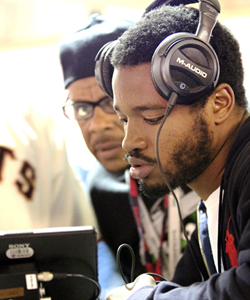
Another challenge was maintaining a certain artistic quality while making it on a low budget. We wanted to shoot in the Bay Area and on Super 16mm. These factors meant we had to find creative solutions and work at a fast pace. We had 20 days for principal photography, and I had no connections for casting. Even after production wrapped, this whirlwind schedule didn't end. We shot in July 2012 and were screening at Sundance six months later. This schedule was incredibly demanding and a source of stress for everyone involved.
The most difficult part was wanting to shoot at the actual locations—primarily BART—and the constant worry about how to film scenes at BART stations and on trains. Many people doubted we would get cooperation, as this was a painful event for the company and the community. I met with them, explained the project, and why I wanted to film within BART facilities. After hearing our pitch, they agreed to cooperate with the production.
—Oscar Grant's story generated a national media frenzy, leading to significant controversy and intense coverage. Why did you choose to tell this story as a drama rather than a documentary?
There are several reasons why I decided to make this a drama. Firstly, I wanted to make it without delay because events like this tend to repeat themselves. One advantage of fiction filmmaking over non-fiction filmmaking is that it can be completed more quickly. All the documentaries I admire took several years to complete. Another reason is the difference in perspective between character-driven fiction films and documentaries. In my personal opinion, if done well, dramas can create a deeper emotional connection with the characters than documentaries. In this film, I wanted the audience to feel as close to Oscar as possible, so I wanted to avoid the awkwardness that comes from being aware of being filmed. This is often a barrier in documentaries, especially on tight schedules.
—Beyond letting people know about Oscar being shot and his tragic death, what else do you want to tell the public about Oscar Grant through this film?
I want the audience to know that Oscar Grant was a real person. He was someone who struggled and had personal conflicts, but also had hopes, dreams, and goals. And that his life was incredibly precious to the people who loved him most. Through this film, I hope people can feel a sense of closeness to someone like Oscar, something they can't get from just reading a newspaper headline.
Fruitvale Station
Opens nationwide on Friday, March 21st, at Shinjuku Musashinokan, Human Trust Cinema Yurakucho, and other locations.
Directed and Written by Ryan Coogler
Starring Michael B. Jordan, Octavia Spencer, Melonie Diaz
Distributed by Clockwork
2013 / USA / 85 min / PG12
http://fruitvale-movie.com
© 2013 OG Project, LLC. All Rights Reserved.