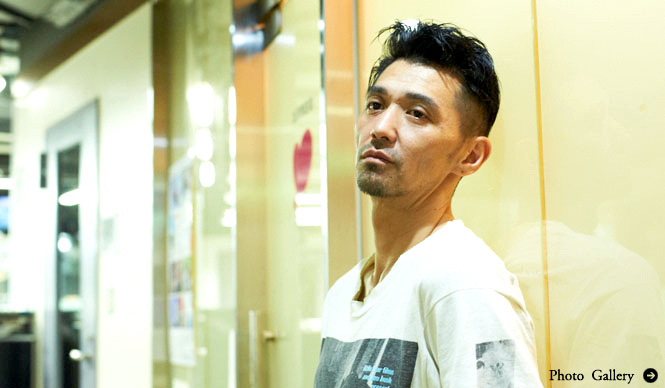
MOVIE | Jun Murakami on Sion Sono's 'The Land of Hope'
The issue of nuclear power will continue to challenge Japan and the world for a long time to come.
The Land of Hope: An Interview with Jun Murakami (Part 1)
In Sion Sono's film "Himizu,"Great East Japan Earthquakedirector Sion Sono, who delved into the disaster-stricken areas of the Great East Japan Earthquake, depicted a family facing a nuclear accident in "The Land of Hope." Because the film tackles a nuclear accident—an experience far too real for each viewer—it grips the deepest parts of our hearts, despite being fiction. For us, who still live in fear, anger, and struggle against radiation, what is the land of hope? We asked Jun Murakami about this family's story.
"The Land of Hope" will be released in theaters nationwide, starting October 20th (Saturday) at Shinjuku Piccadilly, Human Trust Cinema Yurakucho, and other locations.
Text by KAJII Makoto (OPENERS)Photographs by HARA Emiko
Director Sono said, "I want to bring out the best in Murajun."
<STORY>
Several years after the Great East Japan Earthquake, in a certain town in Japan. The Ono and Suzuki families live side-by-side, leading modest yet happy lives. One day, a major earthquake strikes, followed by a nuclear accident that transforms their lives. The Suzuki family is forcibly evacuated as their home falls within the 20-kilometer exclusion zone around the nuclear plant, while the Ono family, separated only by a road, remains outside the evacuation area. Amidst this, Yoichi (Jun Murakami) of the Ono family's son, his wife Izumi (Megumi Kagurazaka) becomes pregnant, and driven by a desire to protect their child, their fear of radiation intensifies.
──What were your thoughts when you were asked to appear in this film?
I felt a surge of "Yes, I'm in!" within me. I was thrilled to be in a film by Director Sono, and I had been waiting for an opportunity to be in a project that tackles a subject many wouldn't dare to approach.
──What is it like on the set of a Sion Sono film?
A good director's set has an atmosphere where the entire staff moves in unison towards the director's vision. Director Sono leads the set with incredible energy. Denden-san, who also acted in the film, and I discussed it, saying, "On Director Sono's set, actors find themselves getting into character before they even realize it." That's what's called Sono Magic; he knows how to handle actors, how to draw them in, and how to make them think.
What particularly surprised me on the first day was seeing the director set up a tripod and position the camera. At that moment, I felt the director's resolve. He, who was known for his dynamic, camera-moving style, defied expectations to shoot what could be considered a "classic film," made only a few times a year. It was also remarkable to witness the performances of Isao Okishima and Naoko Otani on that set.
──Do you discuss specific acting plans with the director?
Before principal photography began, I had a chance to have dinner with the director. He told me, "Don't try to act." He also said, "I want to bring out your natural brightness and your nonchalant side, Murajun." During filming, my co-star Kagurazaka-san was also a tremendous presence, so it was a great set.
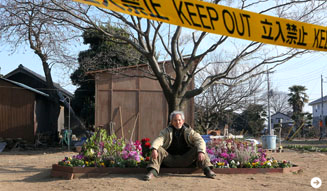
© 2012 The Land of Hope Film Partners
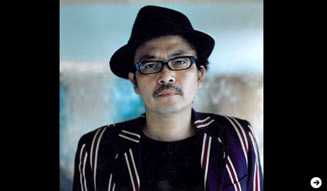
Yoichi, the character I played, is Director Sono himself.
──What are your thoughts on the title "The Land of Hope"?
His previous works like "Love Exposure," "Cold Fish," and "Guilty of Romance," and his next, "Why Don't You Play in Hell?"... Director Sono's titles have an exceptional sense of style. He is someone who embodies the poet, the director, and the writer simultaneously, always considering how to deliver a message directly and seamlessly. For "The Land of Hope," I can't imagine any other title.
──What was your reaction when you saw the completed film?
I was a wreck after watching it the first time. Reading interviews with Director Sono, he mentioned that Yoichi, the character I played, is essentially himself. While Yoichi's role isn't overwhelmingly central, he represents the state of many Japanese people today.──Regarding nuclear power, there's a sentiment of "it'll probably be okay" or "I'm vaguely aware, but I'm afraid to know more." Yet, this is an issue that will continue to challenge Japan and the world indefinitely. Director Sono's desire to pose this question through film is something I deeply trust, and it made me reflect on many things.
It's a great era that "The Land of Hope" is being shown at Shinjuku Piccadilly.
The Land of Hope: An Interview with Jun Murakami (Part 2)
When entertainment in the form of film becomes necessary someday...
The protagonist of "The Land of Hope," Yasuhiko, is portrayed by the masterful character actor Isao Okishima, with Naoko Otani as his wife. Jun Murakami plays their son Yoichi, and Megumi Kagurazaka plays his pregnant wife. Furthermore, in response to Director Sono's call, actors such as Yusuke Iseya, Mitsuru Fukikoshi, Yoshitaka Akehi, and Tetsu Takahashi also make appearances, which should not be missed. Accompanied by the strains of Mahler's Symphony No. 10, the first movement "Adagio," the serene and beautiful visuals capture the earnest struggle of a family grappling with a new daily reality in the aftermath of the earthquake.
──Where were you on "3/11"?
I was at a movie theater. The shaking started when I went to the restroom after a screening, and I knew it was something serious. When I went outside, it was chaotic. The next day or the day after, I resolved to go see a movie, to spend money on entertainment, and I did. However, I don't remember which movie I saw on March 11th.
──Has anything in your daily life changed since 3/11?
Yes, in my own consciousness, I've felt the powerlessness of entertainment, and that feeling grows daily. For those affected by the disaster, who have no homes, no place to sleep, no food, movies are surely unnecessary. But one thing I believe is that when entertainment in the form of film becomes necessary someday, we all worked through gritted teeth to create this work, hoping people would encounter it. I am in favor of Director Sono bringing his camera to the disaster-stricken areas in "Himizu."
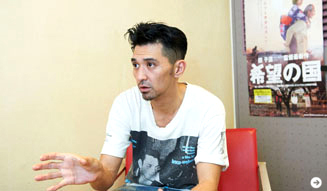
──So, you believe in the power of film?
I enjoy escaping to a movie theater when I've had a bad day at work or am tired of relationships, letting myself forget about those things for two hours. Conversely, I also like the idea of confronting a particular issue for two hours.
The only thing entertainment in the form of film can do is evoke emotions, provoke thought, and connect us to the world. I believe the very existence of film is being questioned.
In this film, I challenged myself on set, awestruck by the presence of Isao Okishima in the father's role and the cinematic power of Naoko Otani. Including Kagurazaka-san, they were more than just co-stars.
──The theme is quite heavy, isn't it?
The theme is nuclear power, something that's often taboo. But as it's released and years pass, and even one more person sees it, I believe I can once again trust in the potential of film. In the past, films that tackled social issues were often ignored by society, so the fact that "The Land of Hope" is being shown at Shinjuku Piccadilly feels like a sign of a truly good era.
──What's next for you, Murakami-san?
I believe in the power of entertainment, and all I can do is face my work with greater sincerity.
"The Land of Hope"
Screenplay & Direction: Sion Sono
Starring: Isao Okishima, Naoko Otani, Jun Murakami, Megumi Kagurazaka, Yu Shimizu, Hikari Kajiwara, Mariko Tsutsui, Denden, and others
Production: "The Land of Hope" Production Committee
Distribution: Bitters End
2012 / Japan-UK-Taiwan / 133 min / Color / Vista
© 2012 The Land of Hope Film Partners
www.kibounokuni.jp
Twitter: @kibou_movie
facebook: www.facebook.com/kibounokuni