Optimizing Work Styles Amidst Rapid Market Shifts and High Growth: Why the Fast-Growing Startup EventHub Chose a "Setup Office" | LOUNGE
Sponsored
LOUNGE | EventHub
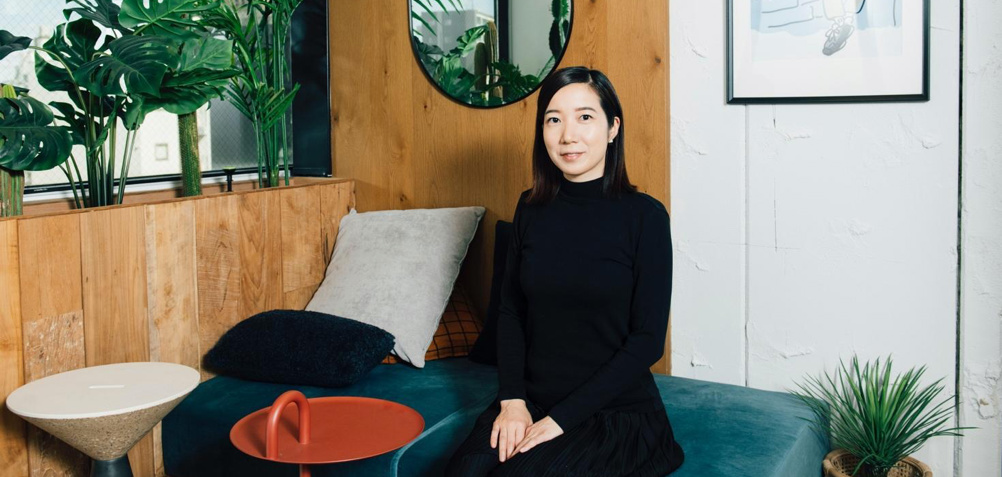
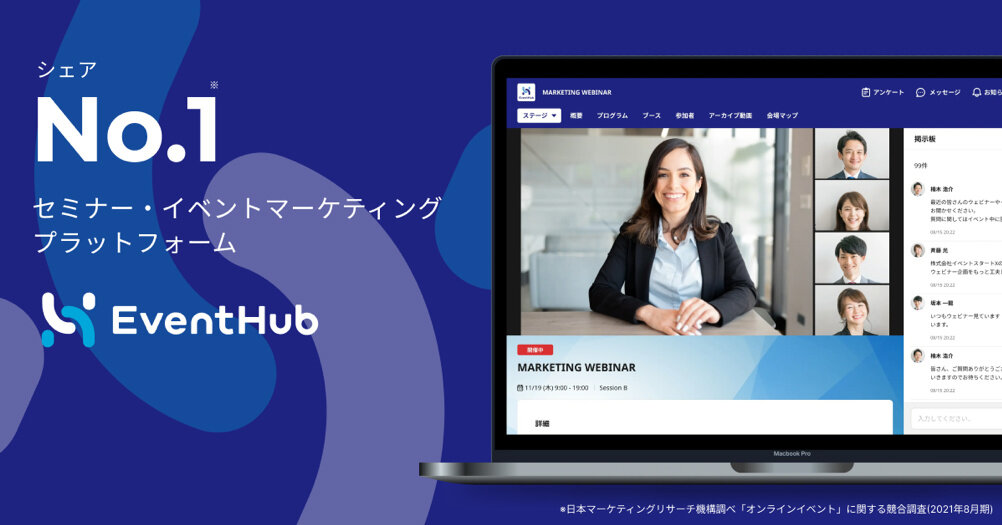
EventHub Inc. operates "EventHub," an event marketing SaaS that contributes to acquiring leads and business meetings, and building relationships with existing customers, for all kinds of online and offline events, including webinars, seminars, conferences, exhibitions, and networking events. We interviewed Rie Yamamoto, Representative Director, CEO.
We asked her about the background leading to her entrepreneurship, the unique features of the service, and her future business outlook, as well as what kind of "setup offices" she has chosen and utilized while flexibly adapting to changes in the world and organizations.
An Office is a Place Where "Serendipitous Communication" Happens
First, could you tell us about the background that led you to found EventHub?
I grew up in the United States from childhood until I started working. When I returned to Japan after 18 years due to a dispatch program at McKinsey & Company, where I was employed, I eventually resigned and worked as a freelance marketer for a period. During that time, through my experience exhibiting at various events and seminars, I personally realized the value of events: the opportunity to meet people you wouldn't normally encounter and to connect with others over shared interests.
I also had the chance to attend events in Singapore and the United States. These global events attracted large numbers of people from various countries, and companies were very enthusiastic, striving to secure as many business meetings as possible to expand their business potential. On the other hand, when I participated in events in Japan, I felt a sense of dissonance: 'There are only Japanese people at Japanese events.' Upon closer observation, I noticed some people left the venue without speaking to anyone from the exhibiting companies.
Furthermore, even when leads were acquired at events, Japan's adoption of technology lagged behind other countries at the time. Tasks like scanning business cards or handwritten surveys would take days, and by the time we made calls, the opportunity for a business meeting had often passed. Wanting to improve these various inconveniences and inefficiencies related to events, I decided to start a business in the field of event marketing.
When you released the event marketing platform "EventHub" in 2019, wasn't the concept of "event marketing" still not widely understood in society? Could you tell us about the changes in how companies and society perceive event marketing from then until now?
There have been various changes over the past few years. Firstly, 2019, the year we released "EventHub," was a time when the movement to promote DX was gaining momentum. As companies were increasingly adopting technologies like SaaS, we experienced a tailwind for our event management SaaS business.
The impact of the COVID-19 pandemic was also significant for our business. From 2020, for several years, events such as seminars, exhibitions, and conferences, which were traditionally held offline, could not be conducted. This situation forced us to solve problems with software, for better or worse, leading to an increase in the implementation of online events using "EventHub."
Furthermore, in the future, with the advancement of paperless initiatives from an SDGs perspective, it is conceivable that lead generation methods like distributing flyers for seminars and exhibitions will decrease.
Compared to just a few years ago, I feel that operating and conducting events using technology is becoming the norm in society.
What kind of event marketing can companies achieve by utilizing "EventHub"?
The term "event" itself encompasses various types, such as seminars, webinars, conferences, exhibitions, and networking events. Previously, many companies viewed all these events as isolated "points," sometimes using different tools for lead generation, participant management, video streaming, and event broadcasting for each individual event.
Using "EventHub" allows a shift from viewing events as "points" to a comprehensive strategy of "drawing a line." Specifically, by using "EventHub" for everything from webinars to conferences, companies organizing events can reduce their effort and costs, and gain a horizontal view of customer engagement. For participants, there are benefits such as eliminating the stress of inputting information and saving time due to different methods and user interfaces for applications and surveys for each event.
Companies that were previously just focused on holding events are now, with the advancement of technology, able to focus on operational efficiency, data analysis, and how to leverage the collected data with MA (Marketing Automation – systems and tools for automating and streamlining marketing tasks) and CRM (Customer Relationship Management – strategies for building and maintaining good customer relationships).
As EventHub's business is to support companies and customers in meeting and connecting through events, how do you perceive the role of an "office"?
I'd say it's "a place where serendipitous communication happens."
I'm sometimes asked, "Which is better, online or offline events?" My answer is the same as asking, "Which is better, working in an office or working remotely?" – I believe "each has its advantages."
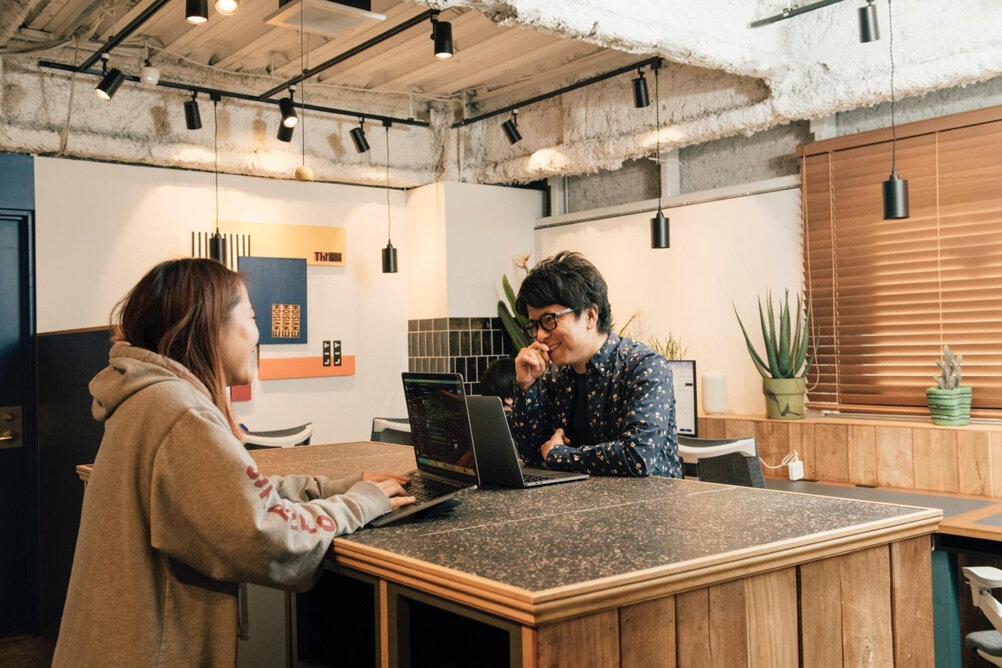
For example, if you want to concentrate on your work without interruption, remote work might be better. However, for discussions, one-on-one meetings where you sit down together, or casual chats over drinks, an office might be preferable. The sight of 'an engineer chatting with someone from accounting' can arise precisely because they are spending time together in the same physical space, the office.
I believe it's important to create a situation where there are always options for how to work, depending on what you are doing and with whom, and where individuals and teams can make decisions based on their respective situations. In that sense, having an offline space, an office, is essential for us.
The Decision to Move into a Setup Office Was Driven by the Desire to "Dedicate Time to Business" and "Accelerate Decision-Making Speed"
Could you tell us about EventHub's office history? What kind of office did you first move into after founding the company?
Our first office was located near Ichigaya Station. We weren't particularly set on the Ichigaya area; we had established selection criteria beforehand, such as 'commute distance for members,' 'proximity to the station,' and 'bright atmosphere.' We chose the property because it met those criteria at the time.
What led you to move from that Ichigaya office to the "Higashi Nihonbashi EX Building," a property managed by Sun Frontier Fudosan?
The primary reason for the move was simple: we had outgrown the space as our employee count increased. When considering a new location, we established selection criteria similar to when we first looked for an office, but with one non-negotiable prerequisite: it had to be a "setup office."
Why was moving into a setup office a mandatory condition?
The main reason was that "we wanted to prioritize focusing on our business rather than spending time choosing furniture and interior decor." Of course, the office environment is crucial for employee comfort, and I do have a desire to be particular about furniture and decor. In my personal life, I don't mind thinking about and choosing interior items that match my home; I actually enjoy it. However, at our company's current stage, I felt there were things we needed to do before spending tens of hours deliberating and deciding on the ideal office.
Also, "lightness" was another reason for choosing a setup office. Constantly buying and disposing of furniture for each office move represents a financial waste. Based on my own experience of moving frequently throughout my life, I felt that being hesitant to make decisions because of having just bought new furniture would slow down our decision-making speed.
We felt that setup offices, with their ready-made facilities, are a good fit for us, allowing us to flexibly adapt to various situations and promote swift decision-making by eliminating the hassle of procuring new furniture.
After moving to the "Higashi Nihonbashi EX Building" in September 2020, what changes occurred in the office environment?
One of our selection criteria for choosing an office was "a bright atmosphere," and the "Higashi Nihonbashi EX Building" perfectly fit that requirement. The entire floor was glass-enclosed, eliminating any sense of confinement. It also had a balcony, and sunlight streamed in through the windows, creating a space I personally found very appealing.
Additionally, having a bar counter in the center of the office was great; we could buy lunch and eat with other members, or have a drink after work.
Then, in August 2021, you moved to "Grand First Kanda Konyacho," the largest setup office owned by Sun Frontier Fudosan. Why did you decide to move offices again?
Following the release of the online version of "EventHub" in April 2020, we received a great deal of positive feedback, and our employee count doubled within a year, which prompted us to consider a move. Although we had prepared enough space and seating for all our members to work on the same day, the company culture had shifted towards remote work, so we weren't effectively utilizing the large office space.
The occupied space per person was quite large, so it might have been a good environment for members who prefer to concentrate in a spacious, quiet setting like a library rather than at home (laughs).
However, we came to realize that an office that allows members to work autonomously remotely while also facilitating regular in-person communication once a month would be a better fit for us at that time. While searching for a suitable office, we discovered the "WEEK" plan at the setup office "LIT HIGASHI NIHOMBASHI" in December 2022 and decided to move in.
However, after moving in, we found that the need to gather at times of our choosing was greater than we had anticipated, so we decided to switch to a monthly contract within the same property.
Looking back at our office history like this, I feel we've flexibly adapted to the organizational situation and employee needs at each stage. Perhaps the setup office model, which allows for flexible decision-making, was a good fit for us precisely because it was a time when we couldn't predict what the company or the world would be like.
*"WEEK" is a service that allows companies to have their own office space with flexible contract terms, rentable from one day a week. Unlike typical shared offices, the contracted days allow exclusive use of the office space by a single company.
The Ability to Use Shared Spaces Capable of Accommodating Large Numbers Was the Deciding Factor for Staying in the Same Office
When switching from the "WEEK" plan at "LIT HIGASHI NIHOMBASHI" to a monthly contract, did you consider moving to other setup offices?
We had another property that met our criteria in terms of facilities, cost, and accessibility. However, when comparing, we were attracted by the "flexibility of the contract period" and the fact that "the address wouldn't change since it's the same building," so we decided to stay at "LIT HIGASHI NIHOMBASHI."
How has switching to a monthly contract allowed you to utilize the office?
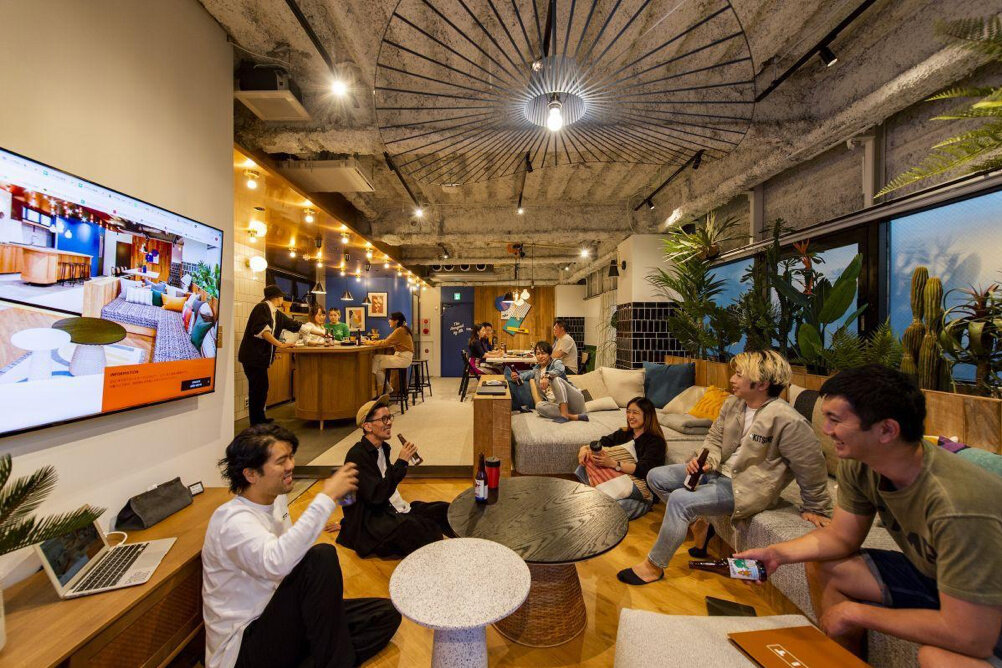
The biggest advantage of being in "LIT HIGASHI NIHOMBASHI" for us, and one of the key reasons for staying, is the ability to rent the first-floor lobby and the event space on the 10th floor called "The Hangout by illi" on an exclusive, full-floor basis.
We hold a general meeting once a month where all our members gather, with over 40 people attending. Since it's difficult to accommodate everyone in our monthly contracted private space, being able to rent the shared event space is extremely helpful.
Additionally, we film our own webinars and have recently been hosting offline events inviting external guests, so having an event space eliminates the need to search for other rental spaces each time, allowing us to prepare for events smoothly.
Also, the cafe on the first floor is popular among our staff. We often say, 'Let's go to the cafe!' and chat or discuss work over coffee.
If you were to move offices in the future, what criteria would you use to search for a property?
For the immediate future, whether it's a setup office is one of the criteria we're considering. Also, as opportunities for offline seminars and networking events are increasing, a user-friendly event space is necessary.
If I had any requests for our current office, it would be that adding more meeting rooms and phone booths in the common areas would make it even more convenient for business.
We Want to Broaden the Recognition of Our Service as Being Strong in Both Online and Offline Capabilities
EventHub has continuously updated its business by reading the flow of the world and market conditions. Lastly, could you tell us about your future outlook?
Our event marketing platform, "EventHub," is a service that maximizes the effectiveness of both online and offline events. However, during the pandemic, the perception of "EventHub" became focused on it being a tool for online events and webinars. As a result, there's still a misconception that it's primarily a service for online events.
As offline events are making a comeback, we want to strengthen our awareness activities to ensure that both existing and new customers understand that "EventHub is also incredibly useful for offline events."
The pandemic led companies to engage in online events, resulting in two channels for events: online and offline. This has increased costs and effort for event organizers, placing a significant burden on them. We aim to continue updating "EventHub" so that our service can enable comprehensive event marketing.
*Article content is as of October 30, 2023.