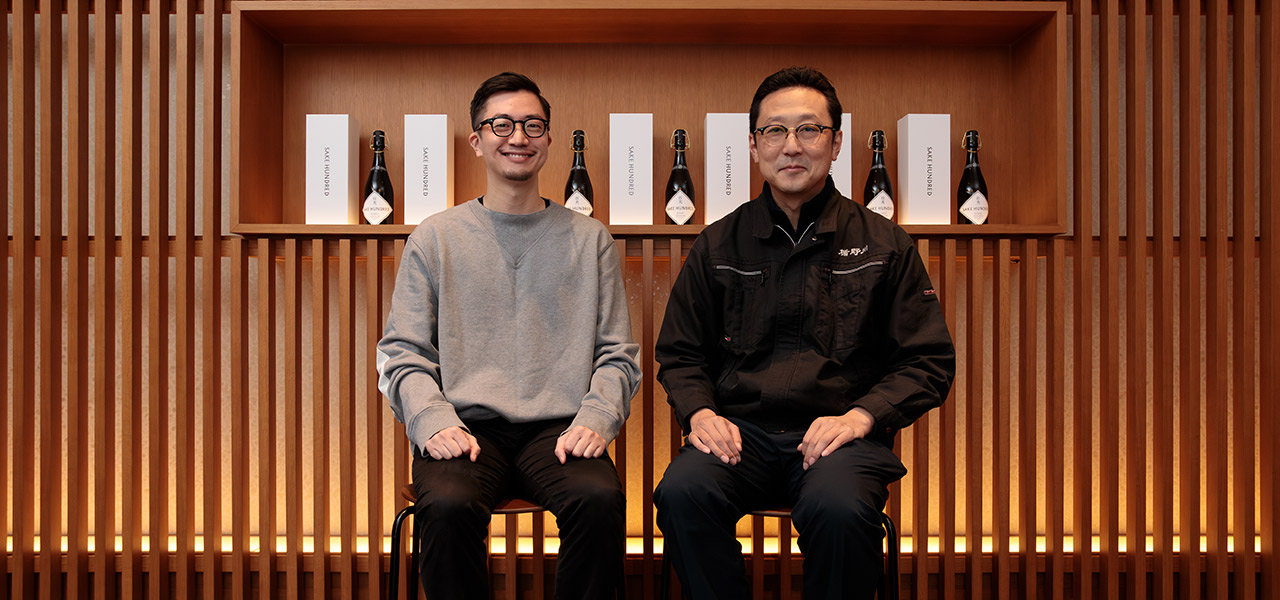
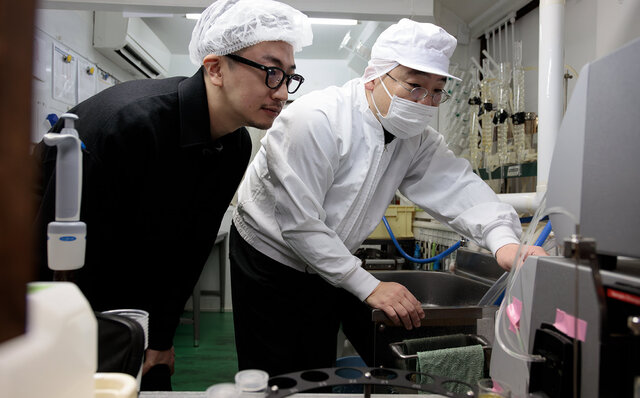
On the left is Ryuji Ikoma, Brand Owner of SAKE HUNDRED. On the right is Junpei Sato, President of T
Pioneers of Luxury Sake: The Evolution of Hyakko with SAKE HUNDRED and Tate no Kawa Brewery
Sponsored
SAKE HUNDRED | Hyakko
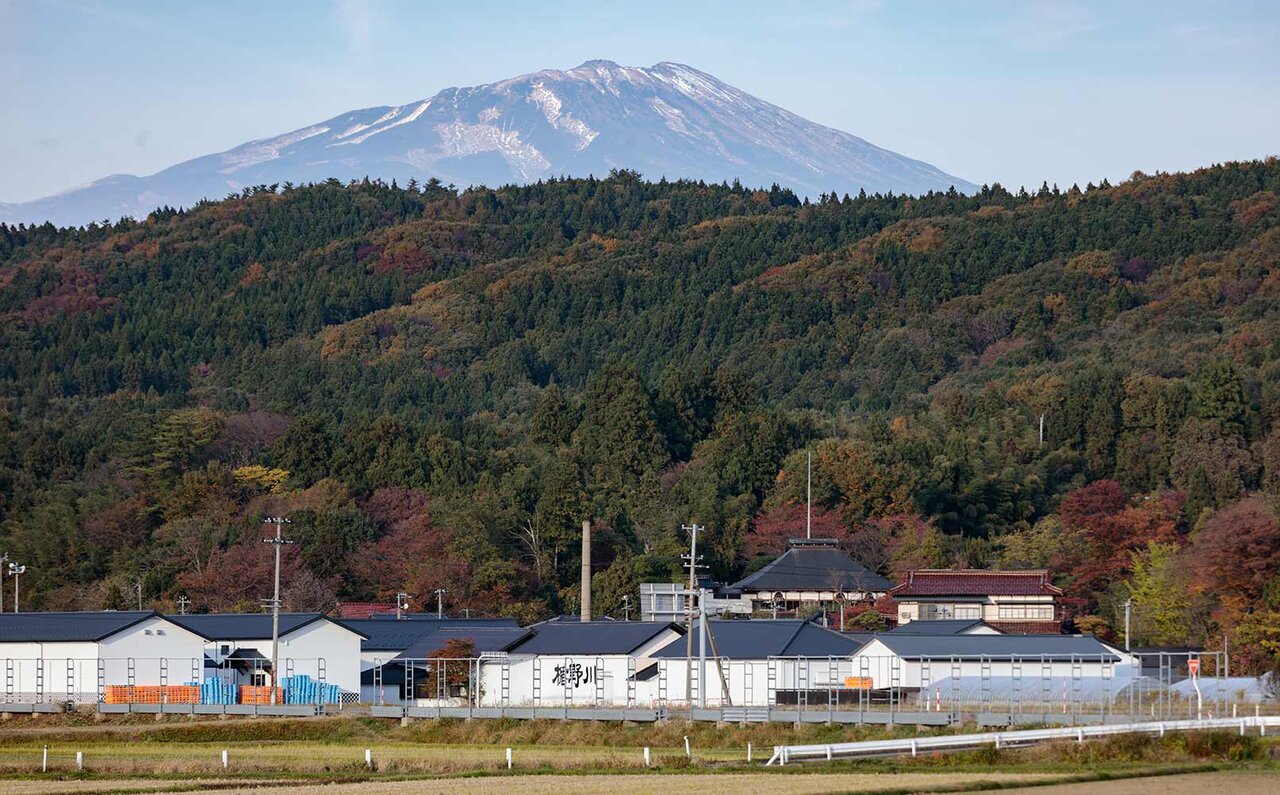
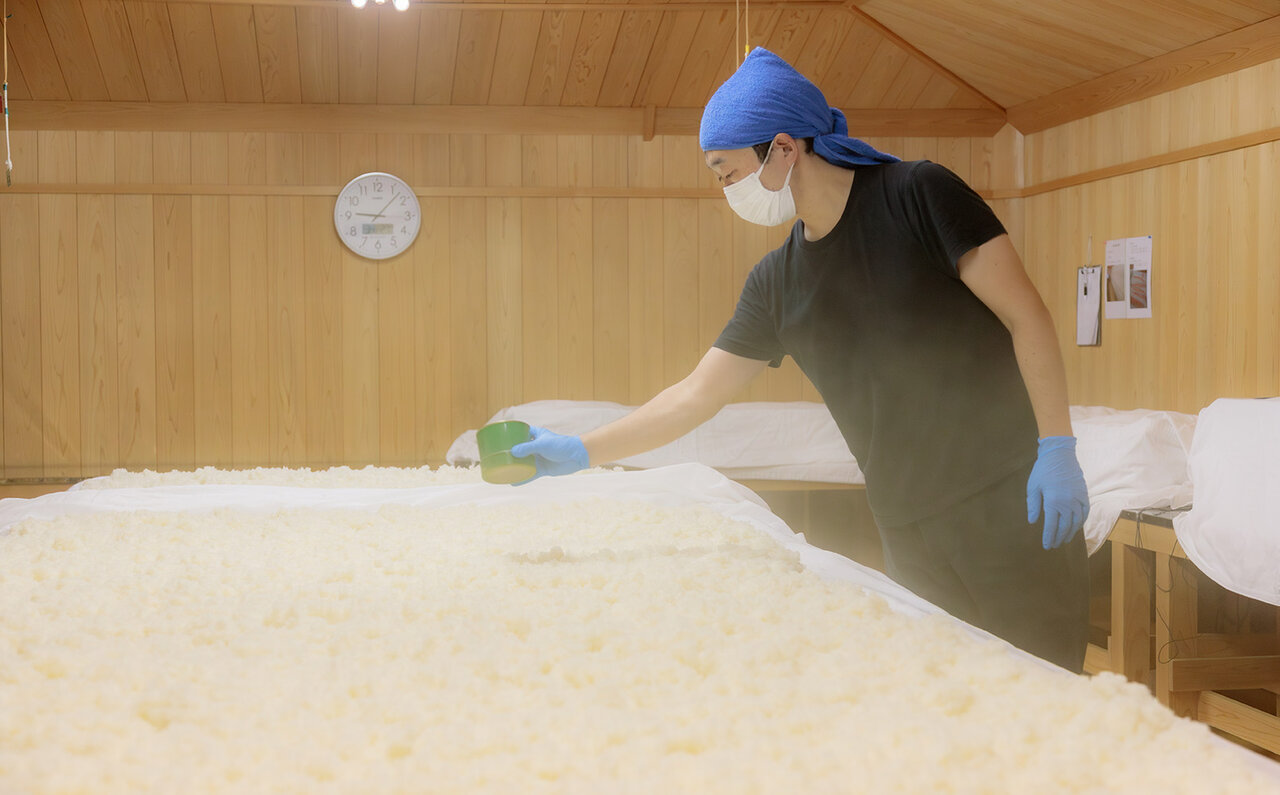
On a late autumn evening, as wintering swans grace the Shonai Plain, we find ourselves at Tate no Kawa Brewery. Ryushi Ikoma, brand owner of SAKE HUNDRED, and Junpei Sato, President of Tate no Kawa Brewery, sit opposite each other in the brewery's tasting room. SAKE HUNDRED currently commissions brewing from eight sake breweries, and its very beginning was with Tate no Kawa Brewery. Now, the two men's challenge is poised to enter a new stage.
Photographs by Kaku Ohtaki | Text by Takashi Tsuchida
An Unconventional Collaboration: Behind the Decision to Embrace a "Challenge Without Precedent"
"Six years ago, when I started SAKE HUNDRED, I was convinced of the potential for luxury sake. To establish a category for high-end sake and deliver it online. President Sato's decision to share this vision is what built our success today," Ikoma began.
President Sato nodded quietly in response.
"Ikoma's vision was compelling. A clear intention to demonstrate new value in sake. It was an idea we were also seeking."
In the autumn of 2017, before SAKE HUNDRED was established, a proposal was brought to Tate no Kawa Brewery. It was a request for brewing commissioned by Ikoma, who was known as the operator of "SAKETIMES," a media outlet specializing in sake that was rare in the industry at the time.
"Frankly, I was surprised at first," Sato recalled. "A media personality suddenly shifting to selling alcohol. I wondered if it was really going to work."
However, the proposal held the potential to fundamentally overturn the conventional sake business. "I made the decision for two reasons," Sato explained. "First, I resonated with the strong will to establish a category for high-end sake. At the time, the value of sake was in a continuous decline. Someone needed to change this trend. I sensed that resolve in Ikoma."
"The other was the challenge of an innovative sales method: direct shipping from the brewery. It was an initiative no one had undertaken before. But I intuitively understood that this was the necessary transformation."
This decision was unusual within the industry. That's because the convention of sake being sold through liquor stores was already firmly established, and no one had dared to challenge it. However, direct shipping from the brewery allowed for sake quality design that pursued ideals. Unlike other fermented or distilled beverages, delicate sake required meticulous control over temperature and vibration.
Furthermore, by possessing customer information, it became possible to provide value through communication with customers, something that had not been done in the sake industry before. While many other breweries hesitated, President Sato had a clear sense of conviction.
"There's no point in doing the same thing as everyone else. It was a time when someone had to take the leap."
Tate no Kawa Brewery is now renowned nationwide, but that wasn't the case when Sato inherited the family business at a young age after his predecessor's passing. He has a track record of reviving it to this extent single-handedly. It's likely their mindsets resonated in terms of their entrepreneurial spirit.
Redefining Value: How COVID-19 Accelerated Market Transformation
The first two years were far from smooth sailing. It took about two years to sell the initial 2,000 bottles of "Hyakko," and shortly thereafter, the COVID-19 pandemic struck. However, the unexpected environmental change actually became a tailwind.
"High-end sake began to be consumed at home," Sato analyzed. "The drinking scene completely changed. The style of confronting and enjoying sake became more prominent."
Today, "Hyakko" alone sells out 10,000 bottles annually. Among affluent consumers, high-end sake is not just about drinking it deliciously; it's about "knowing," "savoring," and "enjoying" it. A culture of "engagement" has been fostered. SAKE HUNDRED's activities have played a significant role in this background.
Keisuke Kawana, head brewer at Tate no Kawa Brewery, shared, "They are doing what we couldn't. The presentation, the branding – those are things our brewery lacked. Ikoma was the first to achieve this."
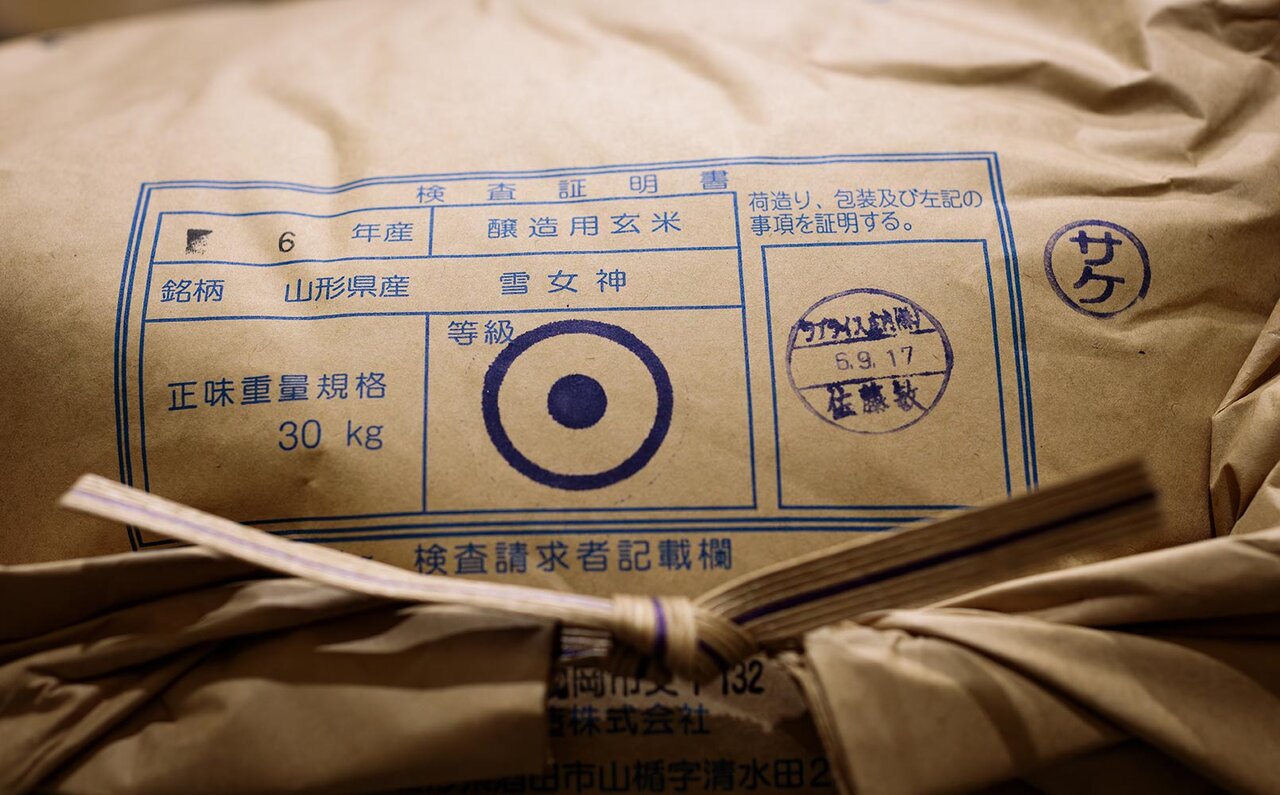
And in 2024, "Hyakko" reached a moment of significant evolution. The decision was made to change the raw rice from organically grown "Dewasansan" to specially cultivated "Yukiname" (※). This decision embodied the deep contemplation of the brewers pursuing unwavering quality as high-end sake.
※ Dewasansan is a sake rice variety registered in 1997 in Yamagata Prefecture. Yukiname was registered in 2017, also in Yamagata Prefecture. Organic cultivation is a method that uses no pesticides at all, whereas special cultivation involves reduced pesticide use. Organic cultivation places a significant burden on farmers, and since production volume cannot be increased further, it created a problem in meeting the rising demand for "Hyakko." Incidentally, specially cultivated rice is often mistakenly thought to be of lower quality than organic rice, but the price of both rice varieties is the same.
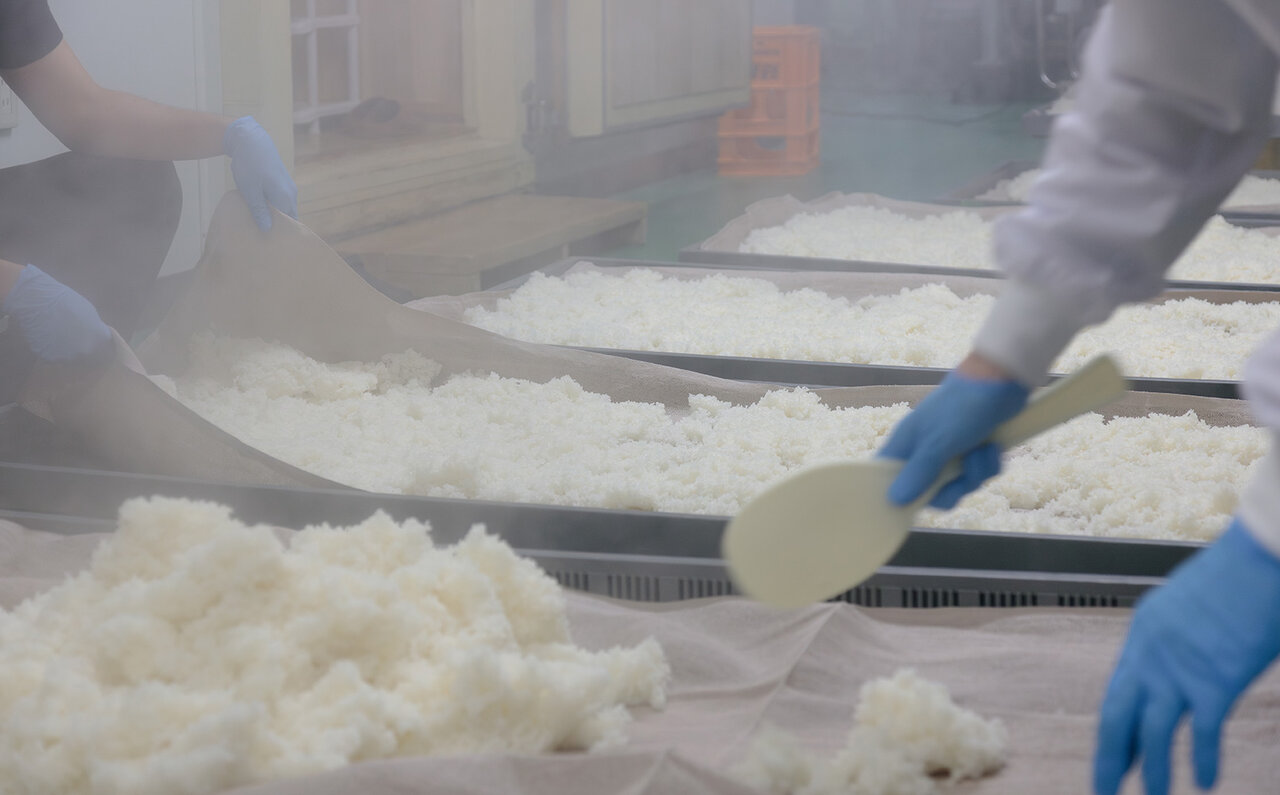
"Yukiname is a new variety developed for Junmai Daiginjo," Kawana began his explanation. His eyes held the confidence born of over a decade of brewing experience. "Compared to conventional sake rice varieties, it has a remarkable characteristic: it can maintain a crisp sake quality for three to five years."
In fact, the "aging" of sake has been a significant challenge in the luxury sake market. "With rice varieties like Dewasansan, which dissolve easily, the flavor tends to become heavier over time. But Yukiname is different. It has properties that make it resistant to dissolving."
This is not merely a matter of preservation. Kawana continued, "Brewing rice that dissolves easily to be resistant to dissolving is extremely difficult. But the reverse is possible. Yukiname allows us brewers to achieve more delicate control, making it truly ideal raw rice for us."
In Pursuit of the Ultimate Drop: The Perfect Balance Brewers Strive For
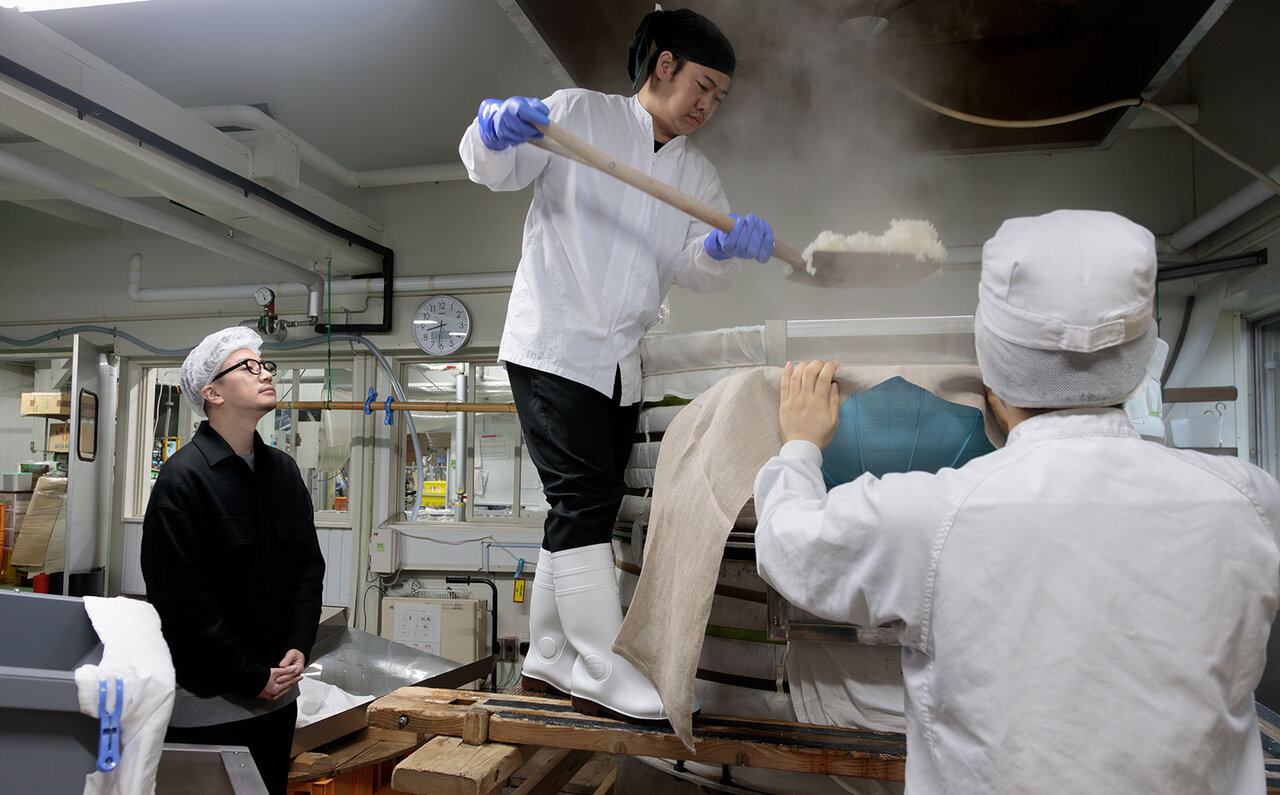
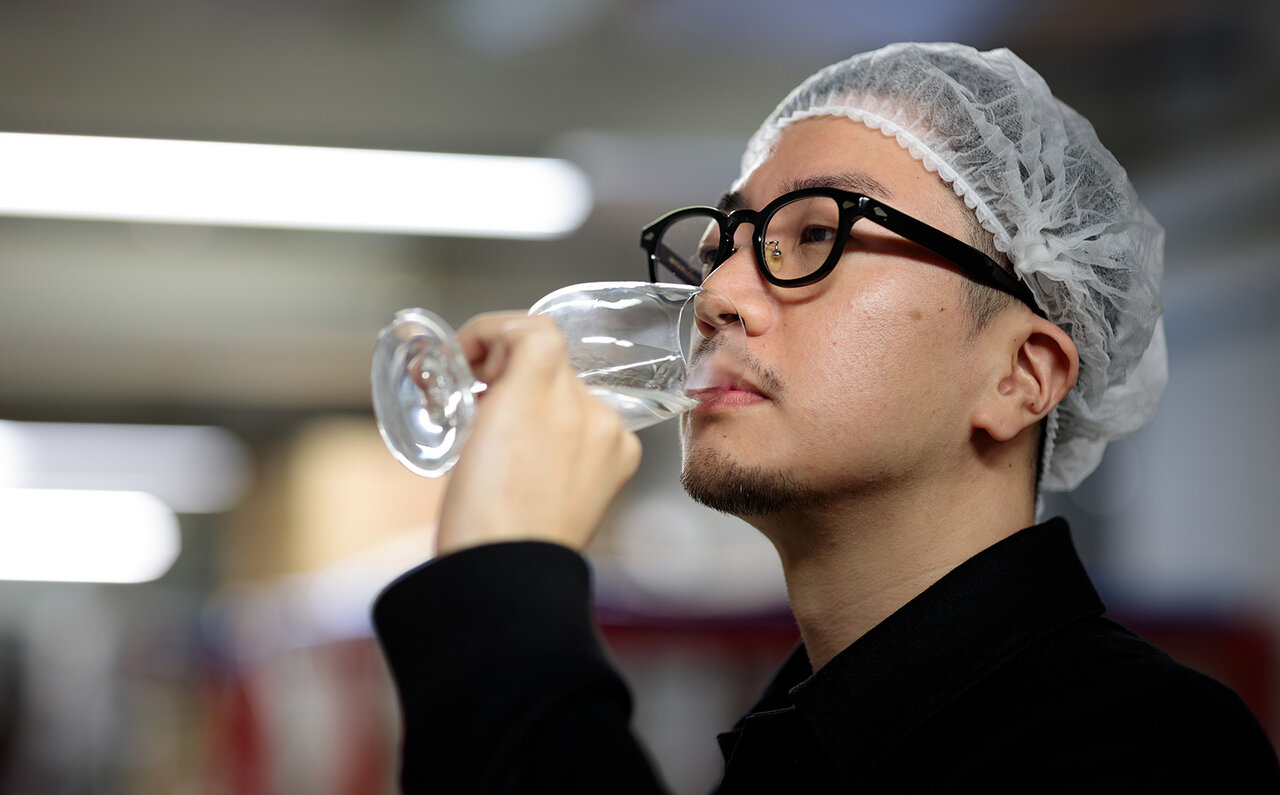
During the tasting immediately after pressing, Ikoma's usually taut expression softened for a moment.
"Mmm, delicious." The single phrase was simple, yet filled with conviction.
"The sparkling sweetness is as I imagined, but the clarity the moment it touches the palate has increased even further. This is exactly what we aimed for," he continued, tilting the glass. "It's incredibly clean, with a superb finish. And the aroma is exquisite. It doesn't overwhelm with its scent, maintaining a perfect distance. Like a high-quality perfume, it asserts its presence without being too assertive."
Furthermore, the change in the quality of sweetness was noteworthy. "It's not too heavy, not cloying. With typical Daiginjo sake, you feel a heavy sweetness along with the flavor, but this is different. There's a pleasant acidity, and even the sweetness is clean and elegant."
Beside him, Kawana nodded in deep agreement. "The glucose level is slightly lower than planned, around 1.7. But that has worked out for the better. There's still some bitterness from its youth, but with another one to two months of aging before release, it should evolve into an even more complete flavor."
The design of that timeline is also a point of pride for the brewers. The potential of Yukiname fully responds to the desired sake quality.
A Strong Bond Forging the Future: The Potential of Sake Shown by Two Innovators
"It's the fate of venture companies to often have to consider the feelings of venture capitalists. But we take pride in the significant risk-taking we undertake as manufacturing partners," Sato stated frankly.
"Therefore, we say what needs to be said clearly. We want to work together with that level of commitment."
These words reveal a commitment to a strong cooperative relationship that goes beyond mere contract manufacturing. For Tate no Kawa Brewery, the collaboration with SAKE HUNDRED is a major project to pioneer new possibilities for sake.
"As a brewery specializing exclusively in Junmai Daiginjo sake, we have been pursuing high-end sake in recent years. In that context, approaching the customer base and branding have been major challenges," Sato explained. He continued, "This is a challenge not only for us but for the entire industry. Within that landscape, SAKE HUNDRED has entered the realm of sake branding. We see great potential there."
In early December, the first lot of the long-awaited new "Hyakko" was finally released. Two weeks after pressing, it has likely reached its ideal drinking window. After the early morning tasting, on his way back to Tokyo, Ikoma spoke with a look of conviction.
"Without a doubt, this is the best batch we've ever made. I am confident that with this quality, we can demonstrate a new value of sake to the world."
That new value encompasses not only the tangible value of exceptional sake quality but also the creative value that lies beyond it. The sincere dedication of the brewers aiming for the summit, the innovative sales style, and above all, the unwavering collaborative relationship between the two – all of these culminate in a single bottle of sake.
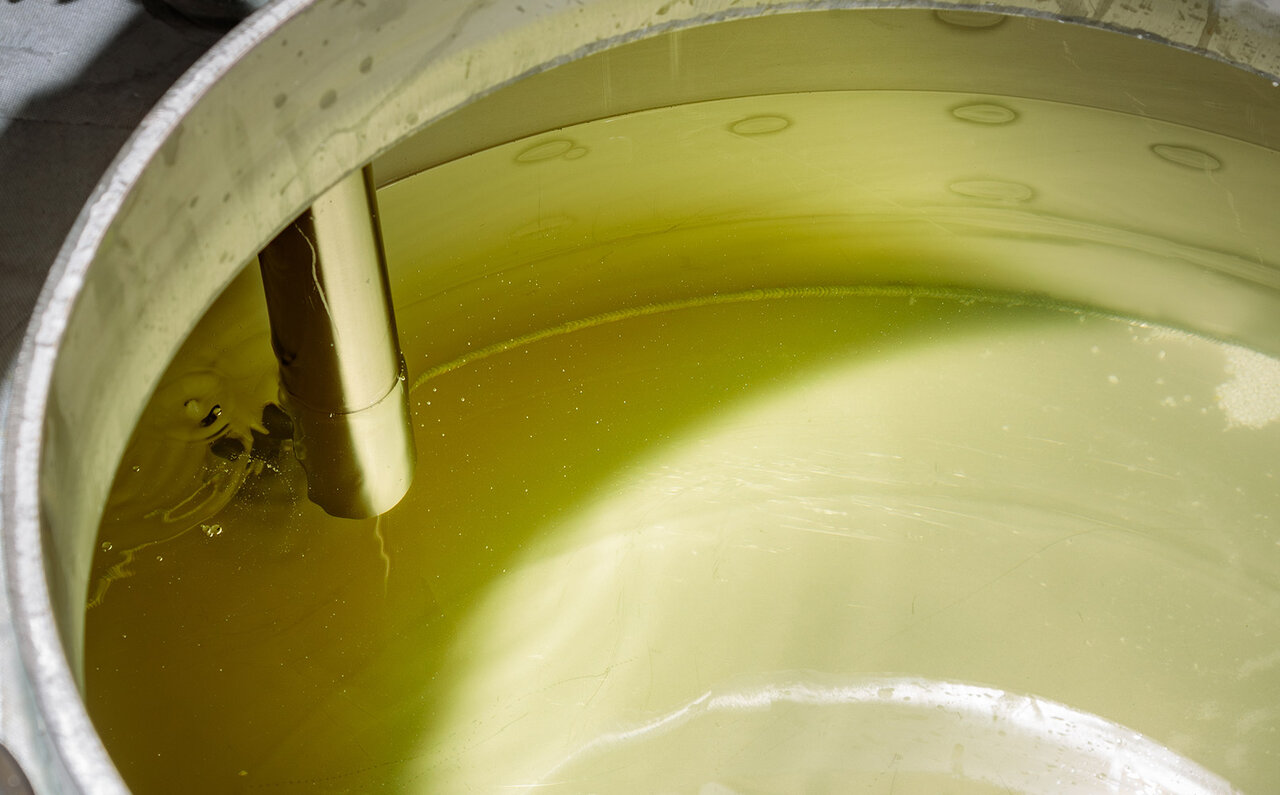
The new "Hyakko," poured into a glass. Its clear, lustrous sheen heralded the dawn of a new era for sake, where tradition and innovation intersect.
Product Name | Hyakko BYAKKO
Manufacturer | Tate no Kawa Brewery (Yamagata Prefecture)
Volume | 720ml
Price | ¥38,500 (incl. tax, excl. shipping)
Product Details |
https://jp.sake100.com/products/byakkoGeneral Lottery Application Period | November 6, 2024 - December 16, 2024
Application Page for the New Hyakko Lottery |
https://jp.sake100.com/pages/byakko-2024-25-winter-fortune-form