Understanding the Current State of Plastics Today. #4: "Doing What We Can Now, Rather Than All or Nothing"
In our last conversation, when I asked about the benefits of biomass plastics, you mentioned that the ability to visualize the process from raw materials to retail allows for third-party certification audits. Undergoing these audits enhances the credibility of biomass plastics, which is crucial for their widespread adoption. The key system enabling this is a term unfamiliar to many: the "mass balance approach." We asked Takuya Kobayashi, who is in charge of biomass plastics at Itochu Corporation, to elaborate on this "mass balance approach."
Flowers in a florist's shop are kept at a slightly lower temperature. When brought home, they might suddenly bloom due to the warmer indoor temperature. While it's lovely to see them bloom, flowers that open suddenly seem to wilt just as quickly. The situation surrounding bioplastics is similar; transitioning to environmentally friendly plastics is an urgent necessity. However, insisting on changing everything immediately can often stall progress. Today, we want to learn about the mass balance approach, which is essential for the widespread adoption of biomass plastics.
EQUALLY BEAUTIFUL (hereinafter "EB")Mr. Kobayashi, you've been giving us quite the lecture. Shall we take a brief break? What do you say?
KobayashiHaha. Have I been talking for too long? Was it too difficult?
EBI did some preliminary reading, so I don't think it's beyond my comprehension. However, seeing how passionately you speak, I'd like to take this opportunity to ask about your personal approach to environmental issues.
KobayashiWhether I'm personally taking action... that's a good question. I always carry a reusable water bottle. The primary reason is that I can put my favorite drink in it, but I also believe it's good for the environment.
EBIt really seems like more people are carrying reusable bottles these days. I believe actions like these are the first step toward improving the global environment. Are there any other things you do?
KobayashiI often go to the ocean—not just because I like it, but because I feel good looking at the sea. When I'm there, I do think about things. Simply put, if we're talking about a plus or minus, I want to leave with a minus.
EBA plus or minus when you go to the ocean?
KobayashiWhen I go to the ocean, I always pick up trash and take it home with me. My simple thought is that if the amount of trash in the ocean can be reduced, even slightly, it's better than doing nothing, isn't it?
EBI agree. Even small actions add up over time. Now, shall we get to the main topic? Today, we'll be discussing the mass balance approach, a strong supporter of biomass plastics.
KobayashiIt might be a bit difficult to understand, but please try to explain it as clearly as possible (laughs).
EBI'll do my best (sweat).
Let me provide a brief explanation of the mass balance approach. Environmental pollution from sources like marine plastics has become a global issue. In response, the Japanese government has formulated a "Plastic Resource Circulation Strategy." This strategy sets goals such as doubling plastic recycling by 2030 and introducing approximately 2 million tons of biomass plastics. The introduction of biomass plastics and recycled materials derived from waste plastics, applying the mass balance approach, is considered a promising means to achieve these goals.
KobayashiThe term "de-plasticization" might lead many to imagine eliminating all plastics. However, no country in the world is without plastics, and it's hard to imagine daily life without them. The ban on plastic straws is a good example, but it became an issue of either 100% or 0%. But is 100% or 0% truly realistic? I believe we need to consider this. Plastics are ubiquitous due to their various advantages; for instance, clothes made of nylon, polyester, or acrylic are also plastics. Would we have to live without wearing any of these? I think that's the question. It's not that simple, is it? We're talking about the same plastic, but we want you to consider that this particular one is derived from waste cooking oil, for example. First, we need to be able to achieve environmental considerations while still using plastics.
EBThat's true. When something negative emerges, there's a tendency to react hysterically and push for an all-or-nothing approach. I always felt it wasn't necessary to get so worked up.
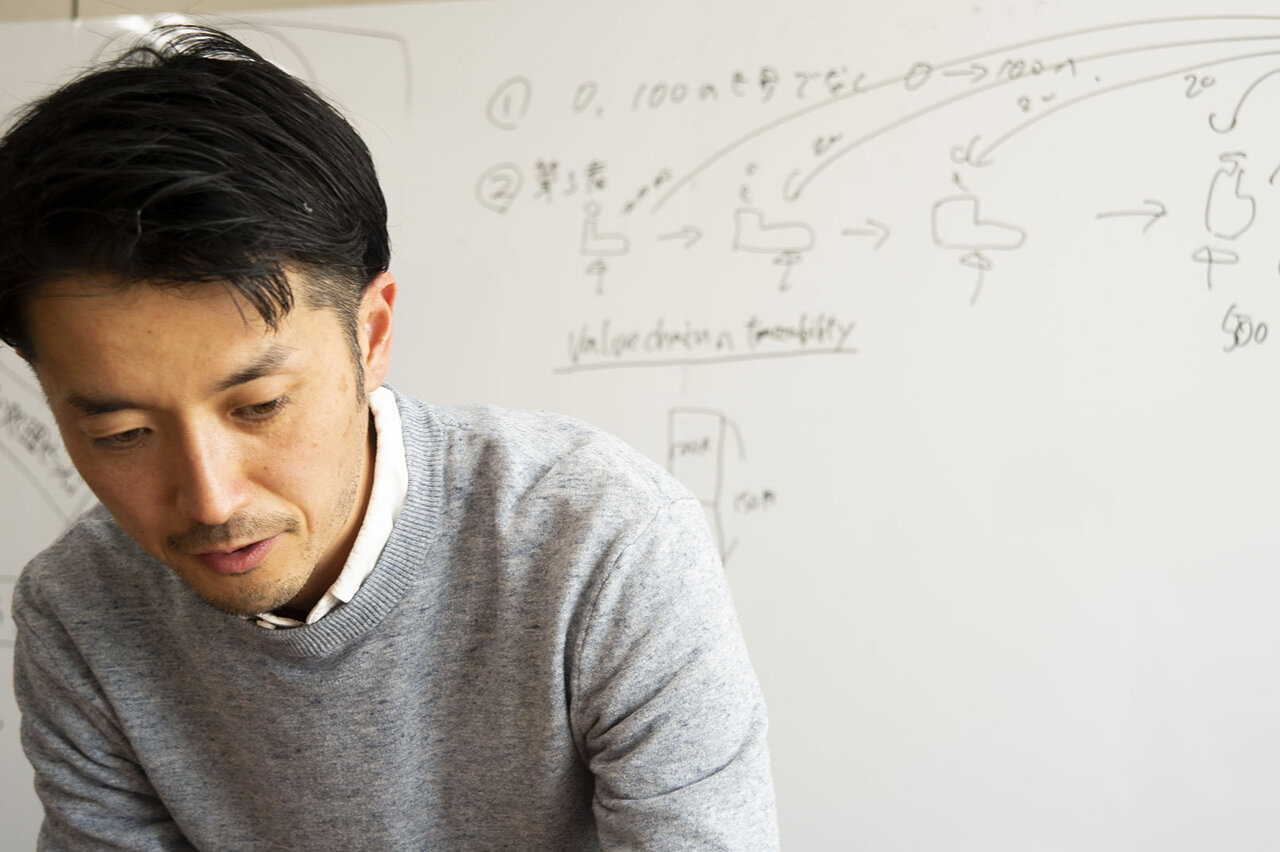
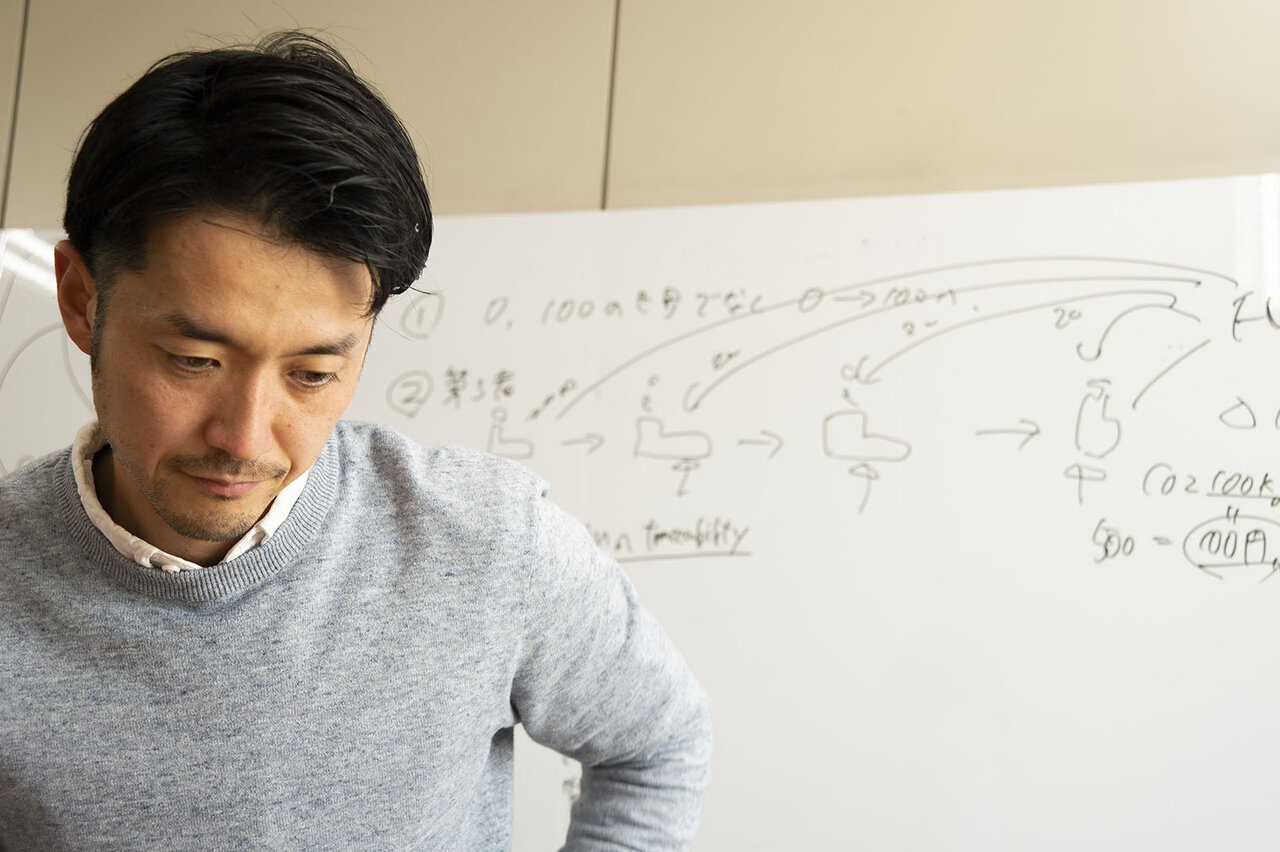
KobayashiIf reaching 100% immediately is difficult, I believe it's necessary to take even small steps forward, turning what was originally 0 into 1, then 2, then 3, and so on.
EBI agree. Taking it step by step, starting with what we can do! There are many benefits to making gradual progress rather than doing nothing at all.
KobayashiBiomass plastics are in a similar situation. Given the current state of plastics, completely replacing all petroleum-derived plastics with biomass plastics, meaning 100%, is extremely difficult, including securing the raw materials. However, it's possible to start with just 1% and set a goal of 100%. As I mentioned previously, Japan consumes 5 million tons of PP (polypropylene) and PE (polyethylene) annually. The idea is to convert a portion of this to biomass plastics. Gradually increasing this amount is important, and this can be done without building new factories for that portion.
EBSo, it's about how to take that first step.
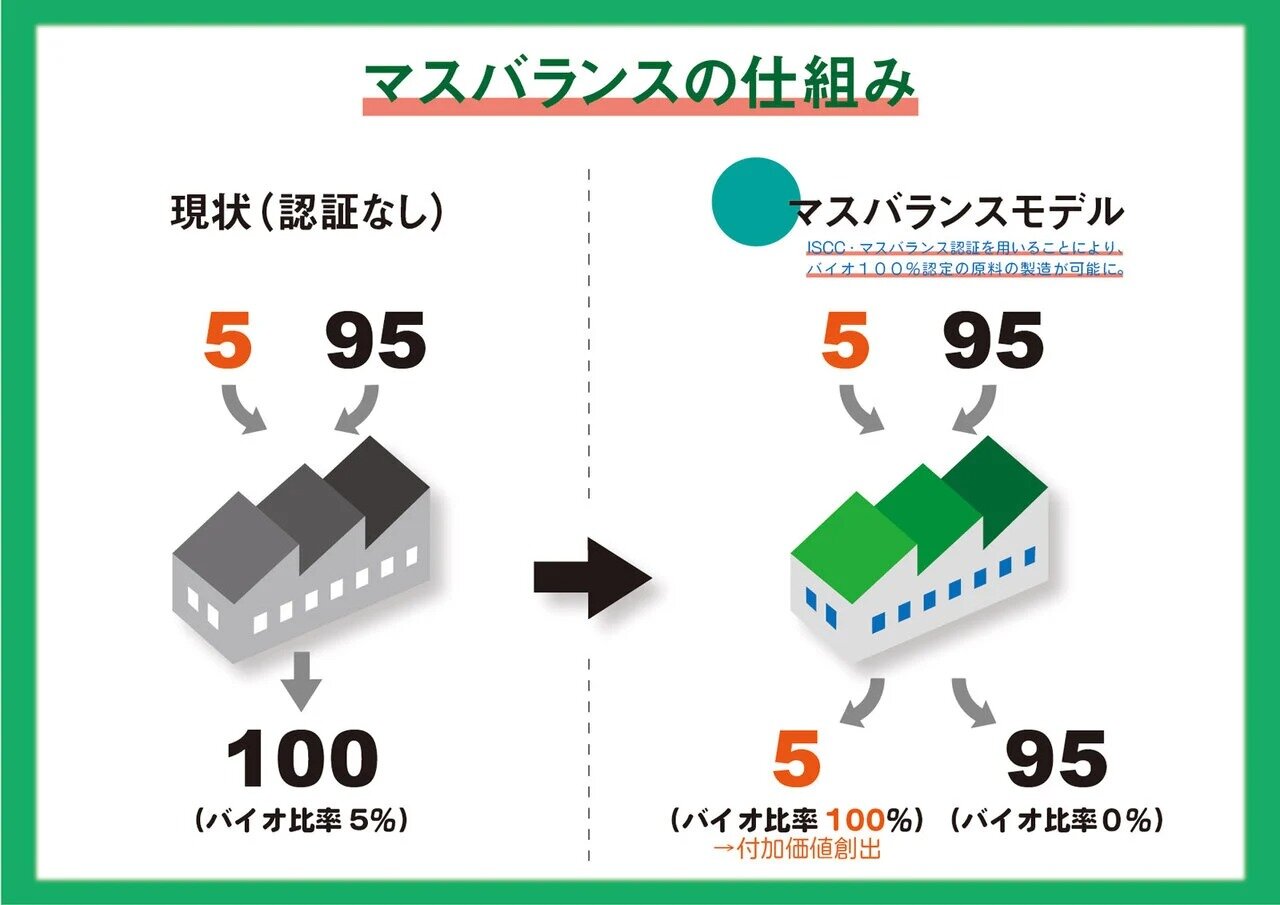
KobayashiNothing begins without taking that first step. However, the crucial point here is, "Is it truly becoming biomass plastic?" In other words, is it being made from environmentally friendly raw materials like plant-based sources or waste cooking oil? This is where traceability and third-party certification, which we discussed last time, become meaningful. Because the process from raw materials to molding and commercialization can be visualized, third-party certification audits can be conducted. This system allows us to certify that if 5 out of 100 units of raw material are biomass-derived, those 5 units are 100% biomass plastic. Simply put, this is the mass balance approach.
EBThe term "mass balance approach" itself might be difficult to grasp, but it becomes very clear when you hear it in the context of what you mentioned earlier, Mr. Kobayashi: not 100 or 0, but building up from 0, 1, 2, 3, 4, 5. Biomass plastics look the same as petroleum-based plastics, and they are produced in the same factories. This makes it unclear whether they are made from environmentally friendly raw materials. Consumers who purchase products made with biomass plastics also can't be sure if they are truly contributing to the global environment. However, if we can state that for the amount of raw materials procured, an equivalent amount of product is 100% biomass plastic, then consumers can feel that their purchase is an action for the planet.
KobayashiThe mass balance approach is already used for paper (FSC certification), electricity (green electricity certificates), and other areas, proving very useful for their widespread adoption. To promote adoption, it might start at 5%, but if we can assign value to that, we can eventually increase it to 10%, then 20%, 30%, and perhaps one day reach 100%. Furthermore, even a slight increase in volume allows for an increase in production lots, which can ultimately lower the unit cost. When prices decrease, it leads to further adoption, creating a virtuous cycle. It's about gradually raising the bar.
EBIt sounds like it could be rephrased as a "step-by-step approach" (laughs). The mass balance approach makes it possible to steadily step up from 0 to 1, and from 1 to 5, doesn't it?
KobayashiI hope so. I believe the important thing is to achieve carbon neutrality without drastically changing our current lifestyles. The mass balance approach supports this concept. There's also a tailwind right now: the idea of carbon credits. This involves imposing penalties or taxes on CO2 emissions. Europe, for instance, has a border carbon tax. Conversely, in Europe, they've started offering tax reductions for biomass-derived materials that can reduce CO2 emissions, based on their proportion. The result is that we can have cheaper, environmentally friendly products. This again highlights the importance of traceability and visualization, as I mentioned earlier. Because it's visible, it can become profitable.
EBI see! "Monetizing CO2" is a fascinating topic that EB would love to feature. Please teach me more about it another time.
KobayashiThere are experts available, so I'd be happy to have another opportunity like this.
EBIt's clear how important taking that first step is, even for creating a positive cycle. Thank you for the very informative discussion over these past four installments. I believe EB's readers now understand the significance of environmentally friendly biomass plastics. Thank you!
KobayashiThank you as well!