He's a Strong Candidate to Be the Game Changer in Japan's Turbulent Sake Industry, Currently in a Sengoku Period | TAKANOME
TAKANOME
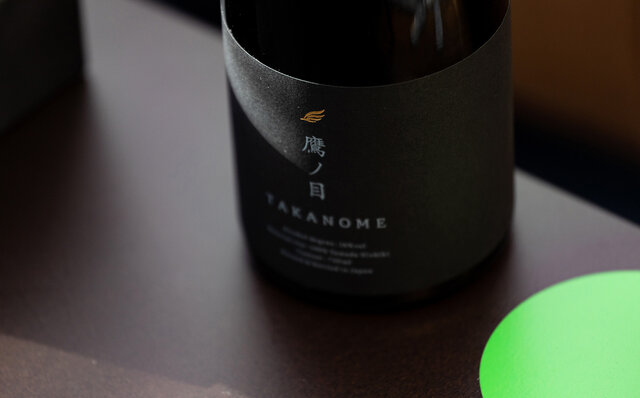
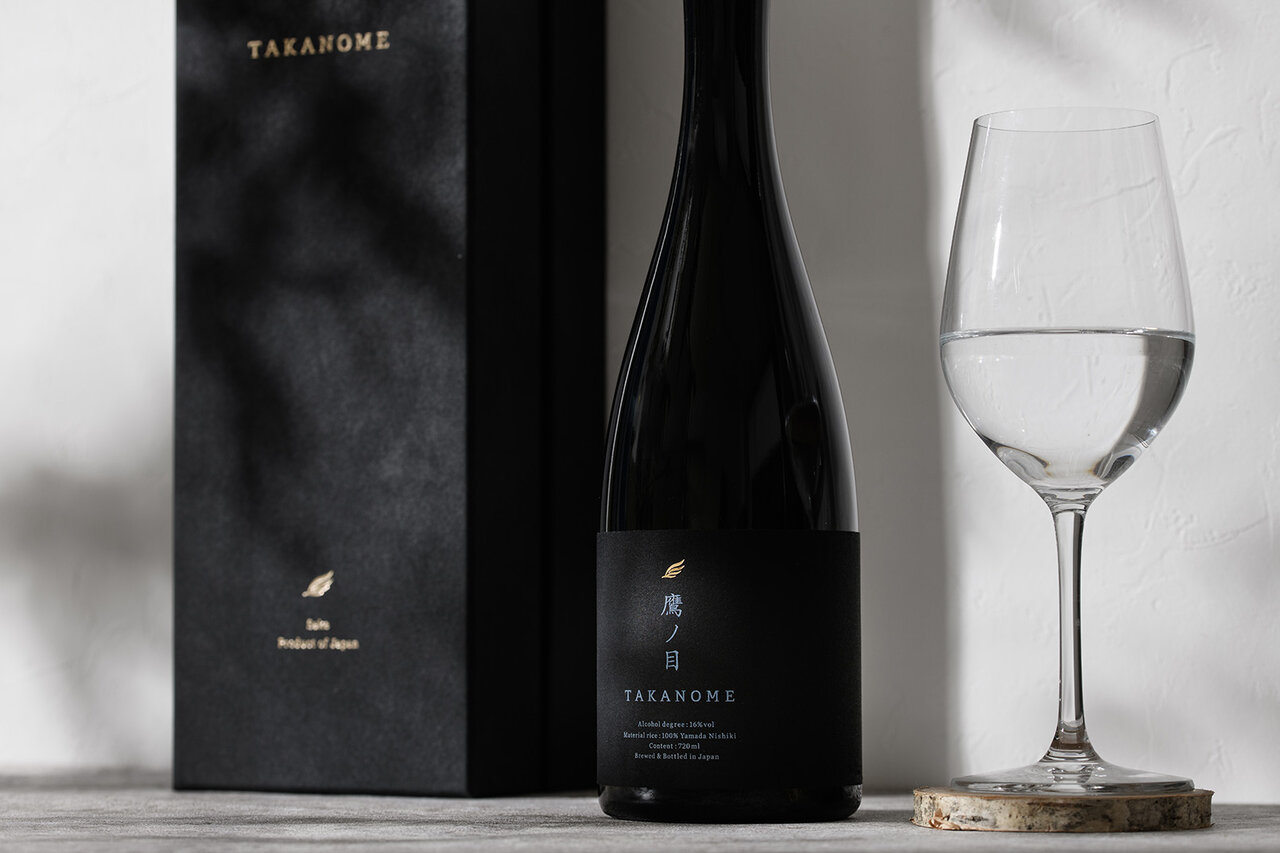
Black bottle, black label. A stoic Japanese aesthetic and palate, unlike any wine, will soon grace tables worldwide.
Amidst the fiercely competitive high-end Japanese sake industry, "TAKANOME" is gaining attention as a "phantom sake." It's released in limited quantities on their own e-commerce site every Wednesday at 9 PM, and despite its high price of 15,400 yen, it consistently sells out within about five minutes of release. The reason for the "once a week" and "limited quantity" sales method is that almost every step, from brewing to labeling, packing, and shipping, is done by hand. While it's a battle to get your hands on it, the chance to purchase it once a week is a welcome one.
Photographs by OHTAKI Kaku | Text by HASEGAWA Aya | Edit by TSUCHIDA Takashi
An expression of the wonder that rice, koji, and water alone can create such a fruity beverage!
The Japanese sake industry is currently experiencing an exciting period, with a particular focus on "premium" sake.
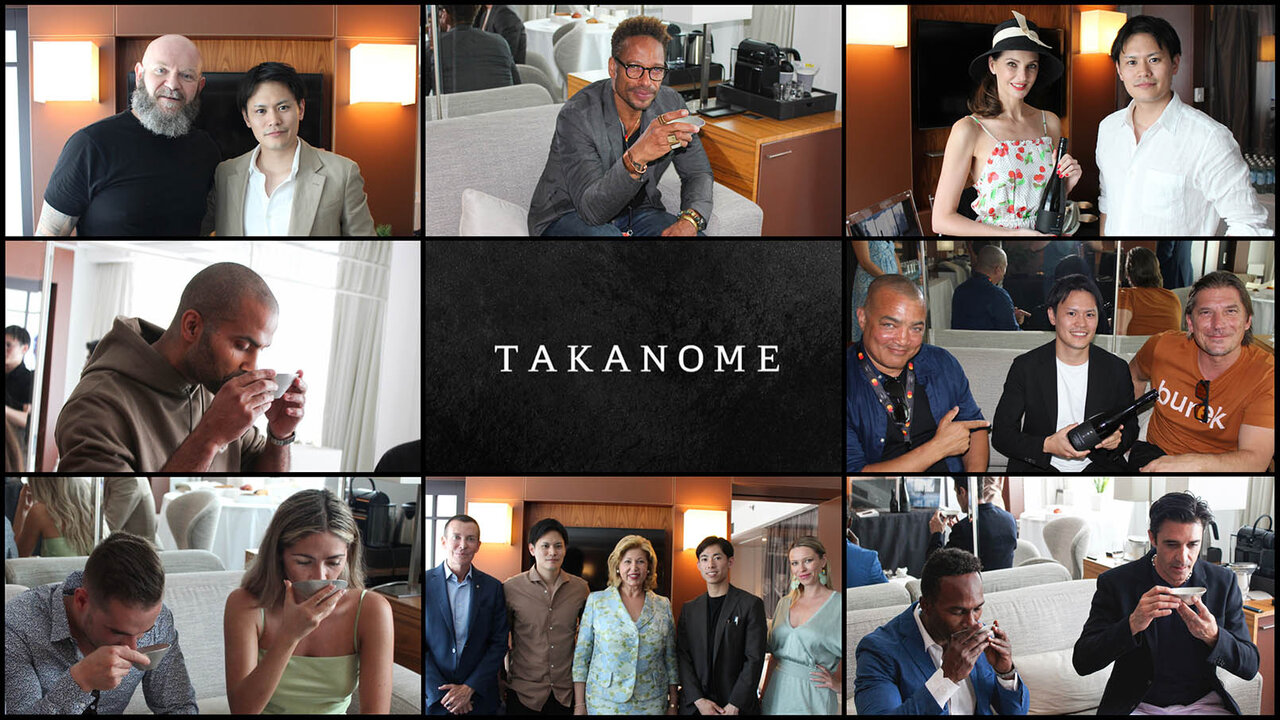
SAKE HUNDRED, a sake venture, announced the opening of its flagship store on Namiki-dori in Ginza in the fall of 2022. Yaegaki Shuzo, founded in 1666 in Himeji City, Hyogo Prefecture, opened an antenna shop in a prime location in Roppongi, named after its premium brand "Hasegawa Eiga," which bears the name of its first founder. The shop offers sake pairings with seasonal appetizers (seven types) in a space reminiscent of a tea room. Yoshinotomo Shuzo in Toyama City, Toyama Prefecture, has begun storing and aging sake 1,000 meters underground in the former Kamioka mine (Hida City, Gifu Prefecture). "suginomori brewery" is also gaining popularity for its carefully crafted sake "narai," inheriting the name of "Sugino Mori Shuzo," which was founded in 1793 and closed in 2012. Furthermore, at the Cannes Film Festival held in May 2022, the sake brand "TAKANOME," born in 2019, was served to over 200 celebrities, film industry professionals, and media representatives.
Indeed, the premium sake category is buzzing with intriguing news daily. While domestic consumption of sake overall (including one-cup varieties) is on a downward trend, Junmai and Junmai Ginjo sake are steadily, albeit slowly, growing. Overseas shipments of sake are also increasing, with total export value exceeding 40.1 billion yen in fiscal year 2021, marking the 12th consecutive year of year-on-year growth (Source: National Tax Agency, 2022 Sake Report).
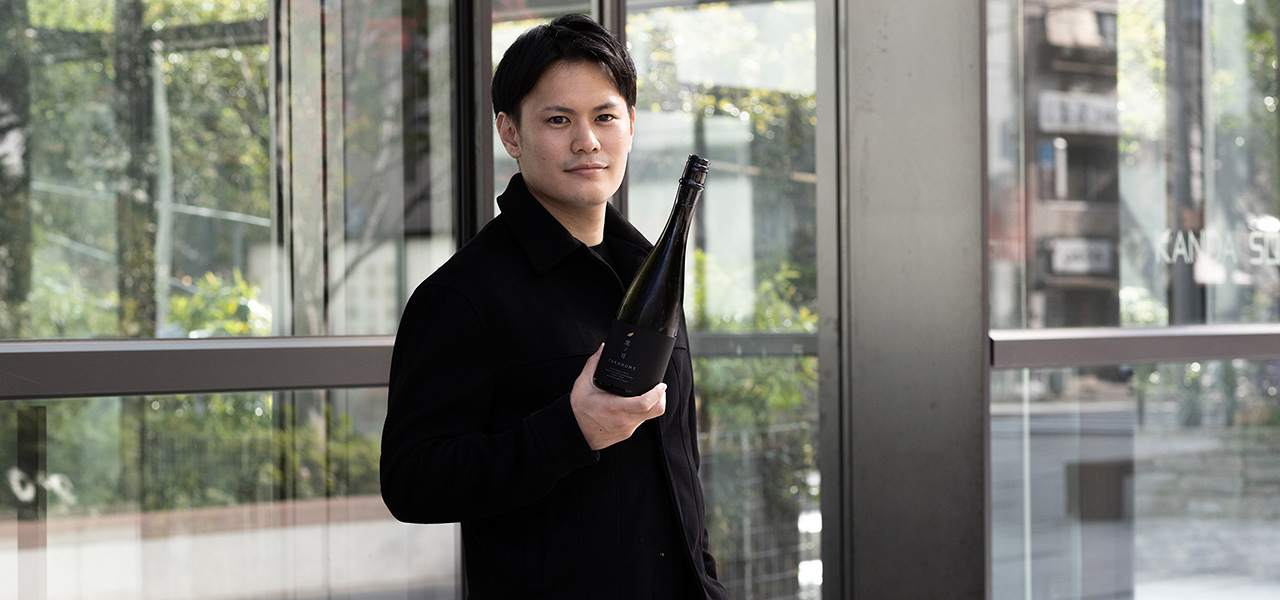
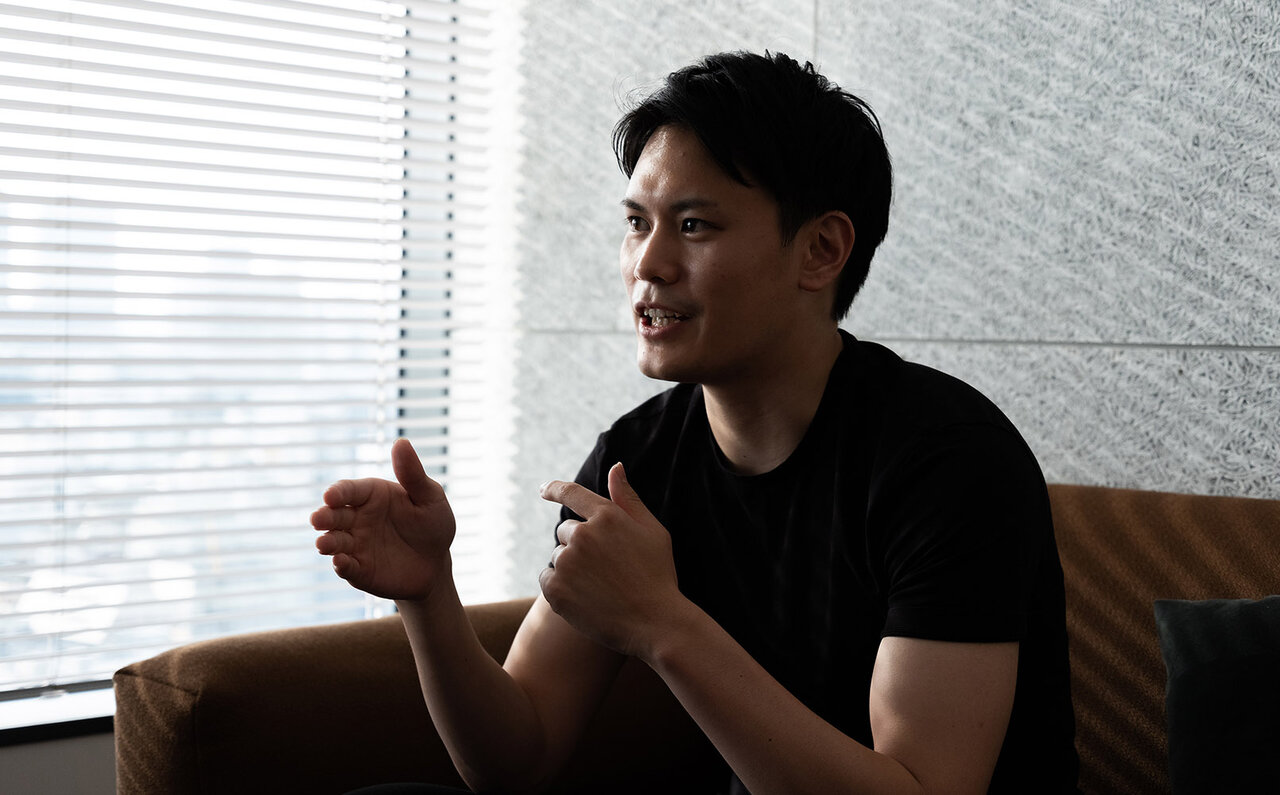
So, what kind of sake is "TAKANOME"? Is it Junmai Daiginjo? Many of you might be thinking so, but it's different! "TAKANOME" does not disclose its rice polishing ratio, which is a key factor in determining sake prices (how much the rice is milled to brew the sake). Therefore, it does not claim any specific designation based on the rice polishing ratio. This brand, a treasure trove of talking points the more you delve into it (starting with its name!), is soaring to new heights. How did "TAKANOME" come to be? We spoke with its founder, Seiya Hirano.
When we exchanged business cards, I found myself staring intently at Mr. Hirano's face. I'm sure my unspoken thought, "Oh, he's so young!" must have been evident (laughs).
Born in 1995, Hirano is a vibrant young man in his twenties. The fact that such a young generation is creating sake that captivates so many hearts suggests that Japan's future may not be so bleak, even if it sounds a bit exaggerated.
He hails from Tochigi Prefecture. "It was when I was studying abroad in America that I was able to see Japan objectively for the first time, away from home. I keenly felt the high potential of Japanese cuisine and became determined to share Japan's unique culture with the world," says Hirano.
After returning to Japan, he worked as an intern at several companies while exploring what he could do. It was during this time, at a sake izakaya with a senior colleague, that he had a fateful encounter with Japanese sake. The deliciousness of "Hououbiden," a sake from his home prefecture of Tochigi, which he drank at his colleague's recommendation, left him stunned. "I was shocked. I never knew sake could have such a fruity aroma and taste. What was the sake I had been drinking until then? It felt like my entire concept of sake had changed."
As Hirano delved deeper into sake, he learned about the growing exports and was simultaneously struck by the industry's outdated systems.
"Sake has traditionally been a low-margin, high-volume business. Most sake is priced between 1,000-2,000 yen for a 720ml bottle and around 3,000 yen for a 1.8L bottle. Even if a brewery produces 100,000 bottles of 720ml sake annually, many barely make a profit. In reality, many long-established breweries generate income not from sake production but from other businesses like real estate."
After his encounter with Hououbiden and his desire to promote sake globally, Hirano deepened his knowledge by visiting breweries across Japan. He also obtained the qualification of "International Kikizakeshi," a sommelier for sake. Eventually, he resolved, "I want to revitalize the sake industry by creating sake that pursues only deliciousness, free from conventional ideas. By increasing the variety of sake with different price points and characteristics, the culture of sake will surely deepen."
However, with his passionate aspirations, he began searching for breweries willing to collaborate, but he was often turned away. He even faced angry shouts at times.
"There were many times I felt like giving up. In fact, I did give up (laughs). But my strong desire to make sake a drink enjoyed worldwide wouldn't let me quit."
It was then that he met Mr. Yasuhiro Harada, president of "Hatsumomiji," a brewery in Yamaguchi Prefecture with over 200 years of history. Mr. Harada listened intently to Hirano's desire to "create the best sake that would change lives and convey the wonderfulness of sake to more people," and their collaboration was decided.
Hirano focused on several points in creating "the ultimate sake." Naturally, he paid close attention to raw materials like water and rice. As mentioned earlier, Hirano made the decision not to disclose the rice polishing ratio. Recently, the sake industry has increasingly judged value based on how much the rice is milled, with some sakes now boasting a 1% polishing ratio (meaning 99% of the rice is milled away). Not disclosing the rice polishing ratio, which should be a selling point for sake, seems like a bold decision, but there's a clear reason behind it.
"I questioned the situation where sake's value is determined by its rice polishing ratio. Certainly, the more you polish rice, the cleaner it becomes. However, this can lead to overly crisp flavors or a homogenization of taste."
"Fundamentally, milling rice means discarding its inherent qualities. Most importantly, it deviates from the belief of creating sake that pursues umami. I want people to savor sake with their own sensibilities, uninfluenced by information."
So, what is the true meaning behind the 15,400 yen price tag?!
"TAKANOME" uses the shiki-jozo (four seasons brewing) method, where sake is brewed year-round in extremely small tanks, and is sold fresh immediately after completion. However, sake is like a living thing. There are limits to consistently producing the same quality, and "TAKANOME" does not sell sake that does not meet a certain standard."
I see, so the cost of production increases. However, this is something that is taken for granted in the world of wine, where taste and price vary depending on the quality of the grapes each year. Some top domaines even refrain from releasing their wines in certain years.
"Considering the effort involved in production, the price of sake is too low! The sake industry has traditionally focused on creating good sake within a certain price range. As I mentioned, our company's concept is to 'not be bound by industry conventions.' To be recognized for its value, all sorts of reforms are necessary, and that requires appropriate costs, which is the true meaning behind the pricing."
I understand now. Well then, let's try this sake, priced at over 15,000 yen for a 720ml bottle (laughs). The product description on the website reads, "Its aroma, reminiscent of faint tropical fruits like pineapple, hints at the感動 to come even before drinking"... and that's exactly it (laughs). To have Mr. Hirano explain it again: "The wonder that such a fruity beverage can be made from just sake and water is the origin of my involvement with sake. I asked Hatsumomiji to pursue that one point relentlessly."
Yes, what Hirano and the producer, Hatsumomiji, pursued was sake with a strong fruity aroma. Indeed, when you bring your nose close to the glass, a sweet, fresh fruity scent wafts up. Oh, and in my personal opinion, I recommend serving "TAKANOME" in a wine glass. This allows you to fully enjoy its fruity aroma.
Then, I pour "TAKANOME" into my mouth. The taste is as fruity as the aroma suggested. Even those who say, "I'm not really a fan of sake," might be able to enjoy this. Of course, no fruit is used. However, there are other sakes that pursue fruity aromas, such as Dassai, Kid, and Senkin. Among them, what makes "TAKANOME" stand out is,
that it can be sipped slowly, like whiskey,
and that it pairs well with various types of cuisine.
While it's good chilled, it's also enjoyable at room temperature, straight from the refrigerator. A soft, mellow texture, and a gentle umami begin to emerge. Despite being fruity, it also has a rice-like quality that makes you realize, "Ah, sake is indeed a beverage made from rice." However, this is just my personal impression.
Incidentally, throughout Mr. Hirano's words, the desire to "always do something interesting" subtly emerges.
"The sake industry is currently in a Sengoku period. There is no overwhelming number one player."
Under the current Liquor Tax Law, the issuance of new "Seishu Manufacturing Licenses," required for sake production, is generally not permitted. This is intended to protect existing breweries, making it difficult to establish a new brewery without acquiring or inheriting a license. However, in response to the global boom in Japanese sake, the "Export Seishu Manufacturing License System" was established in the tax reform of fiscal year 2020, allowing sake production solely for export. As Hirano says, the sake industry is indeed at a turning point.
"It's not just the sake industry; isn't any world more interesting with diversity? I believe the next big thing will be 'aging.' Both wine and whiskey gain depth and value through aging. There are several funds overseas that invest in wine. In the future, to expand the sake market, we want to continue producing high-potential sake that wealthy individuals can invest in."
We don't yet know when or how Oda Nobunaga or Toyotomi Hideyoshi will emerge to end the Sengoku period of sake, but "TAKANOME," which overturns existing concepts one after another and defines new values, will undoubtedly make the fiercely competitive sake industry even more interesting. In five or ten years, the atmosphere is palpable that things will become more exciting than we can imagine today.
TAKANOME
- Alcohol Content | 16%
- Brewery | Hatsumomiji
- Volume | 720ml
- Price | 15,400 yen