Understanding the Current State of Plastics Today: Part 2 – "Which Plastics Are Truly Eco-Friendly?!"
The terms "environment" and "plastics" may seem contradictory, but in practice, they present a continuous challenge. Finding ways to connect plastics with environmental sustainability is now a pressing issue. From the perspective of daily life, plastics are indispensable. Isn't it precisely for this reason that we need to re-examine the "present state" of plastics? Following up on our previous discussion, we're excited to share more insights from Takuya Kobayashi, who handles biomass plastics at ITOCHU Corporation.
It's still fresh in our memory how, a few years ago, the introduction of plastic-free straws suddenly erupted. At that time, it seemed like the problem was solved by a swift transition to paper straws. However, when we calmly consider it, did switching to paper truly resolve the fundamental issue? Making paper straws still uses pulp, water, and heat, placing a similar burden on the environment. Instead of demonizing plastics, shouldn't we first consider how to coexist with them, and then think about plastics that have a lesser environmental impact? That's what EQUALLY BEAUTIFUL believes. Today, we'll ask Mr. Kobayashi about the current situation surrounding plastics in Japan.
EQUALLY BEAUTIFUL (hereinafter "EB")Last time, we discussed environmental business and ITOCHU Corporation. We understood that you are involved in environmental issues quite comprehensively, but may we ask about plastics that surround our lives today?
Takuya Kobayashi (hereinafter "Kobayashi")Last time, I mentioned how plastics significantly contribute to infection prevention. Now, let's consider something more familiar, like "food loss." In fact, plastics help reduce food loss. Plastic bags and containers can extend the shelf life of food. For transportation, plastics are essential for producing and selling in large quantities. Take potato chips, for example; without plastic, they would quickly become stale and impossible to transport. In other words, supermarkets and other retailers couldn't handle such a large volume of goods. If we transported them in bottles, the increased weight would lead to higher CO2 emissions from exhaust gases during transport. Instead of completely eliminating plastics, isn't it more realistic to leverage the advantages of plastics while addressing environmental issues? This is our perspective.
EBPlastic packaging allows for transport without exposure to the outside air and prevents food from spoiling, doesn't it? This is a bit of a tangent, but the other day, I was watching TV, and they mentioned that plastic bags are good for containing odors. Apparently, this is because bread bags are made of PP (polypropylene), which is resistant to odor penetration. They also suggested they're good for parents with babies to use as diaper bags when going out. If they can seal in odors so effectively, I imagine they're also suitable for protecting food.
KobayashiPlastics are active in many familiar ways, and it's important to acknowledge these positive aspects. This is where bioplastics are gaining attention. In Japan, approximately 12 million tons of plastics are circulated annually. Of this, 5 million tons are PP and PE (polyethylene), which we just discussed. Our goal is to convert at least some of this 5 million tons into more environmentally friendly plastics.
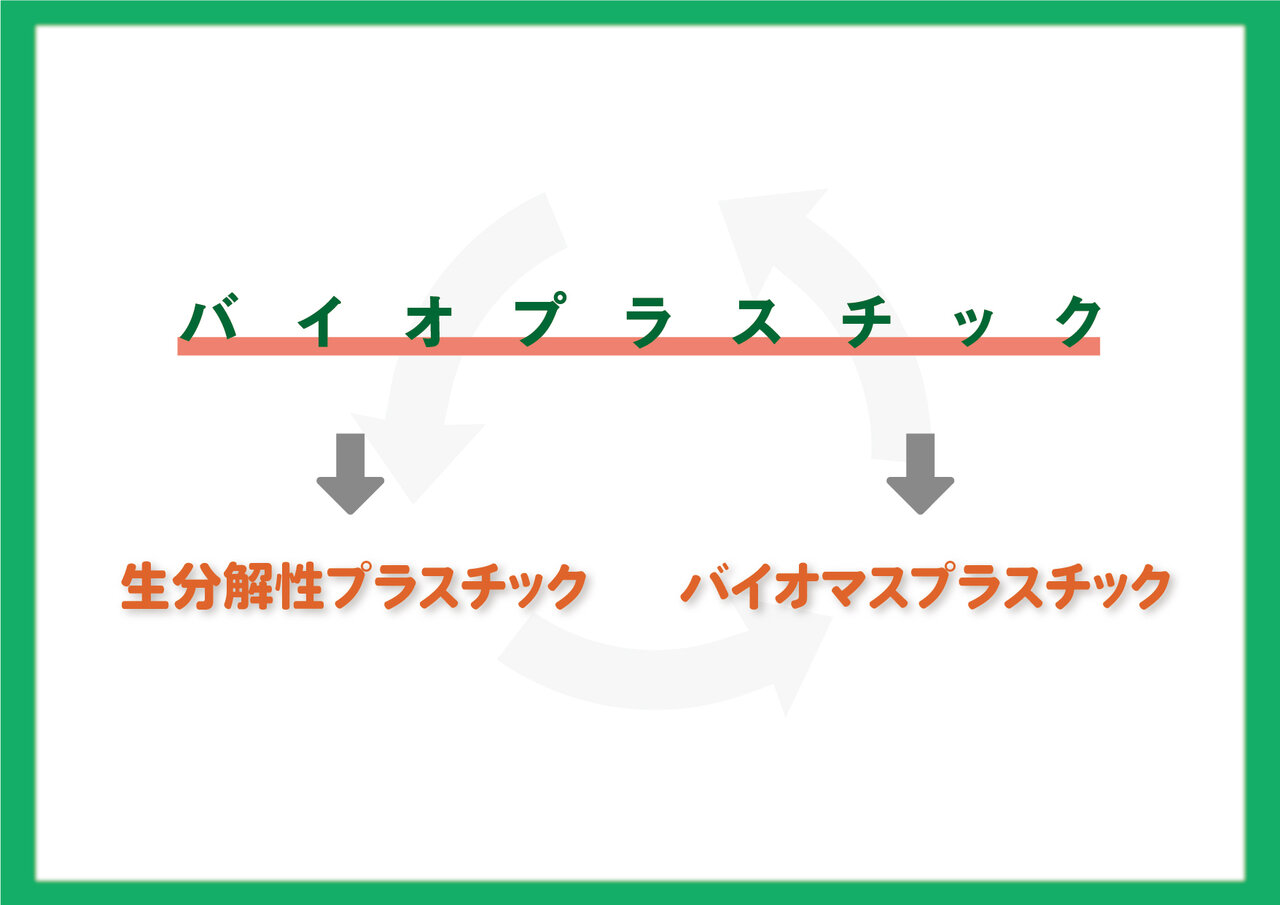
EBWe learned that bioplastics are broadly divided into two types: biodegradable plastics and biomass plastics!
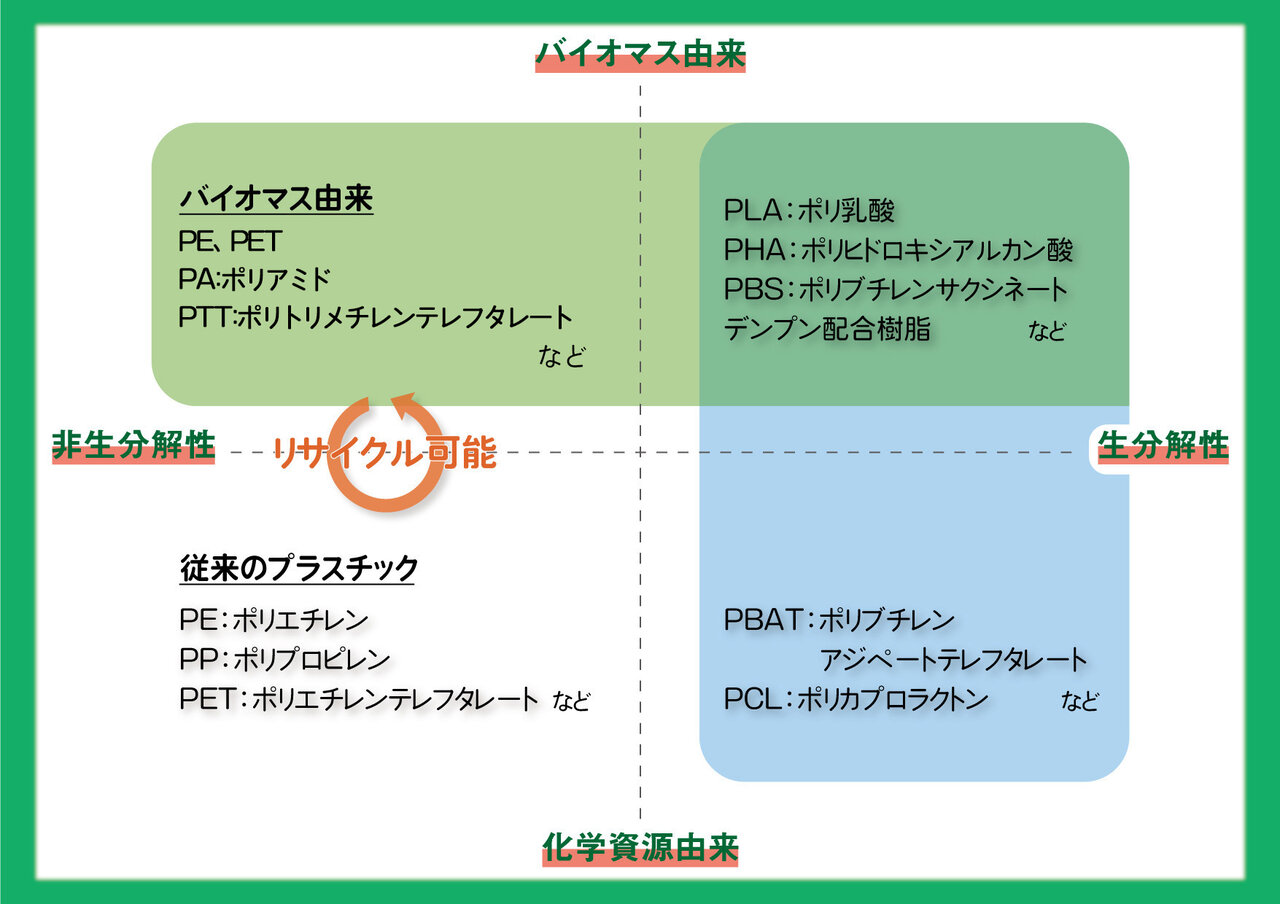
KobayashiBiodegradability is a function, while bioplastics refer to plastics made from bio-based materials. There are also petroleum-derived biodegradable plastics. Some bio-based plastics are biodegradable, while others are not.
EBSo, petroleum-derived plastics can be biodegradable. Still, looking at this chart is astonishing. Even within the single term "plastic," there are so many types!
KobayashiIt's crucial to use plastics appropriately according to their intended application.
EBThis looks like exam material (laughs).
KobayashiIt might be (laughs). If we look closely, biodegradable plastics can be petroleum-derived, and in reality, many require collection, processing in industrial composting facilities, and time to decompose. However, some countries do not have waste collection systems. In such areas, biodegradable plastics might be effective. On the other hand, biomass plastics use plant-derived biomass as raw material. Notably, second-generation biomass plastics are emerging, using non-edible waste oils or tall oil, a byproduct of pulp production, as raw materials. A key characteristic is that their appearance and quality are indistinguishable from petroleum-derived plastics. Furthermore, they can be recycled together with petroleum-derived plastics without separation. This is a crucial aspect from a business perspective.
EBThe fact that they can be recycled within existing systems is very appealing. Non-biodegradable plastics are also easier to recycle, meaning they can be melted down and remanufactured into products, much like glass. I think this gives biomass plastics an edge.
KobayashiThe type of material that is preferred depends on the region and its specific circumstances. For example, China is pushing for biodegradability, while most developed countries are focusing on recycling non-biodegradable plastics.
EBThe conversation is getting very interesting, but we'll have to ask about this broader trend next time.