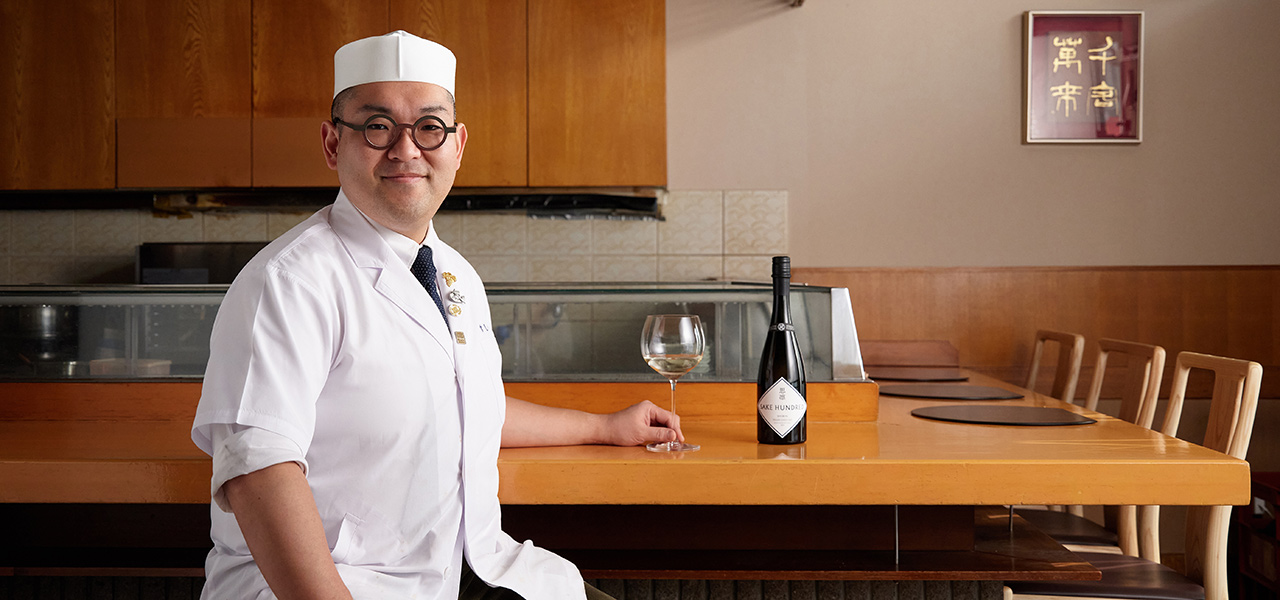
Applying the success formula of Japanese whisky to sake. This aroma is otherworldly! | FEATURE
Tell me, Professor Yamauchi! Vol. 2: Japanese Sake "Shirin" (SAKE HUNDRED)
Yes. After opening the bottle and letting it sit for a few days, the aroma and flavor have gradually opened up. It's in a wonderful state right now. It has a remarkable softness, and the barrel-derived notes in the latter half expand like the skin of a pear. These flavors tighten the whole, and it's accompanied by a deep, lingering finish. (Y.Y.)
Photographs by OHTAKI Kaku | Edit & Text by TSUCHIDA Takashi
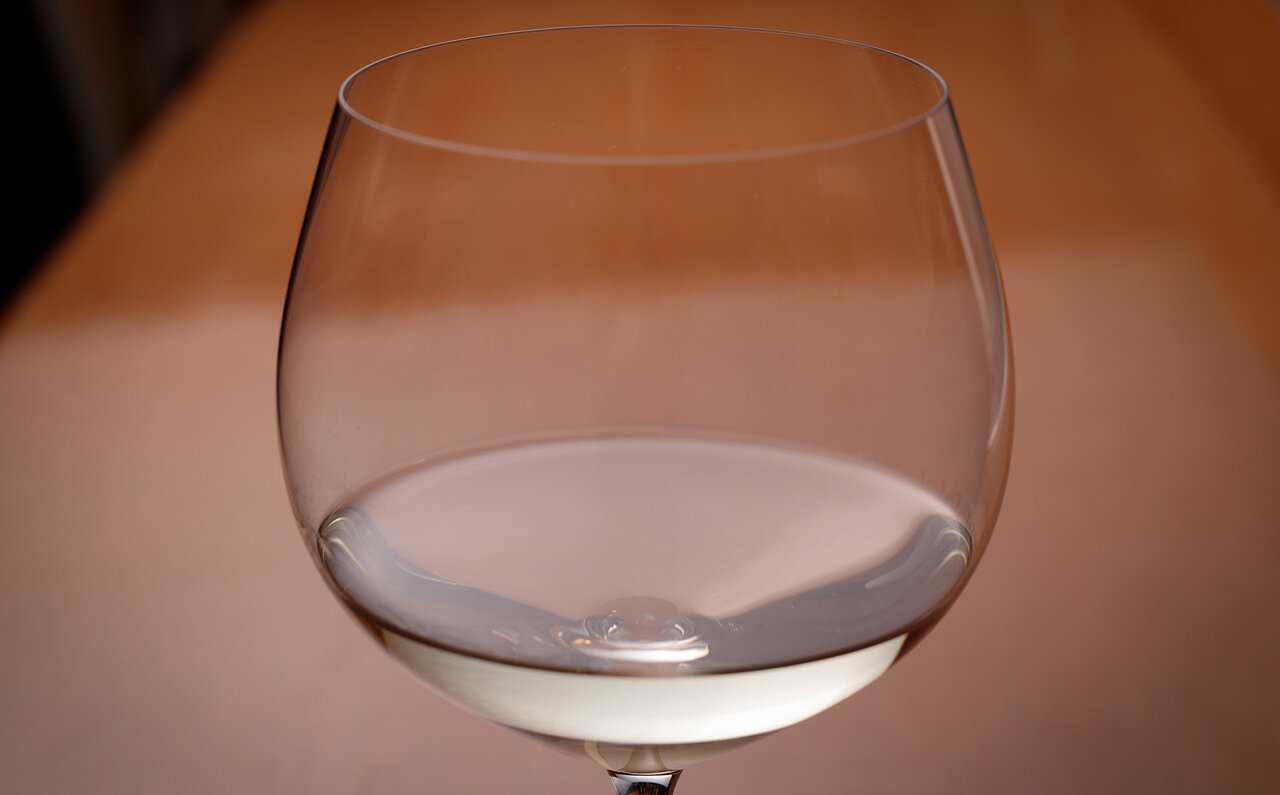
Like a Chardonnay white wine, what if we infused it with barrel aromas...
—Actually, when I first tasted "Shirin," I had a much more intense impression.
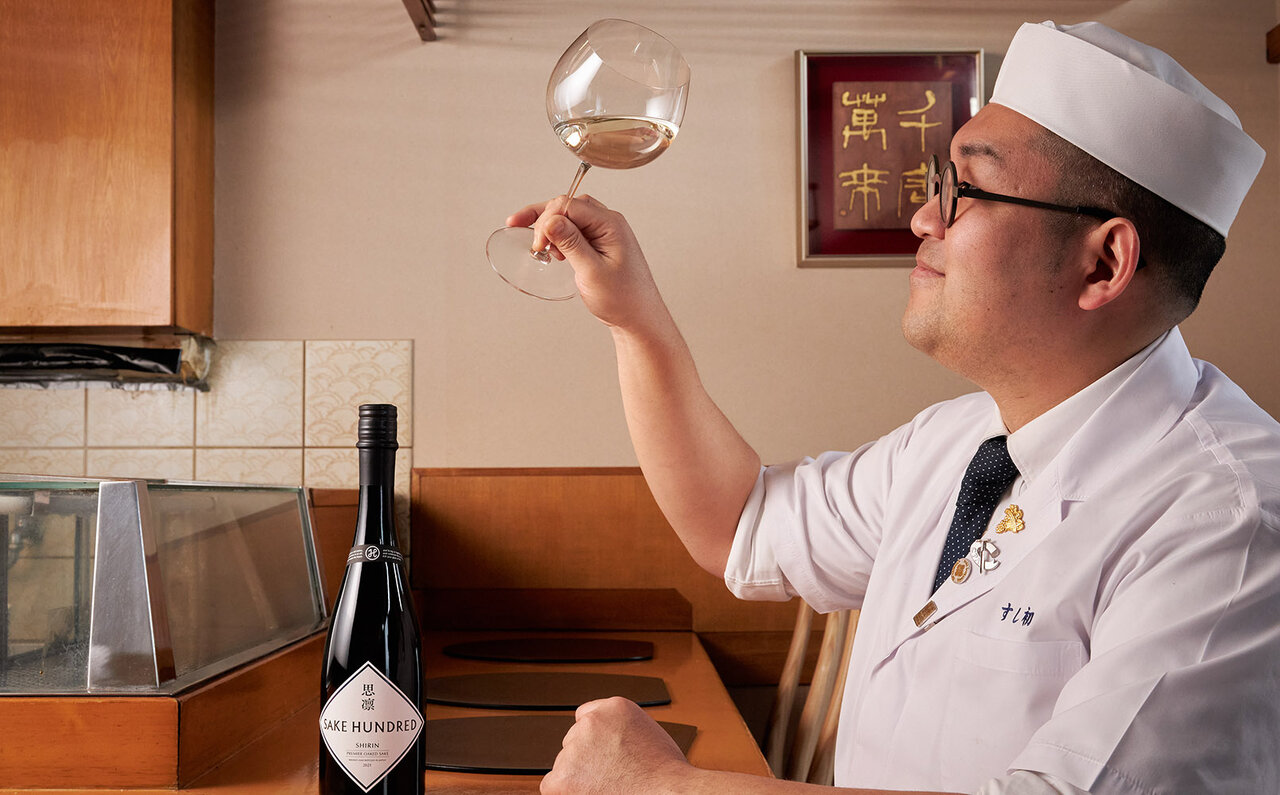
Professor YamauchiIt's characteristic of the partner brewery (\*1) that produces "Shirin," but it truly opens up more and more after uncorking. It's a rare sake that allows you to fully enjoy the gradual unfolding of its flavors, much like a bud blooming, through a process akin to aeration (\*2).
(\*1) Ou-Jiman (Yamagata Prefecture).
(\*2) A term from wine. It refers to exposing to air to induce oxidation and evaporation. While sake oxidizes more slowly than wine, its flavor can still change dramatically over several days.
—So, it's a sake that should be enjoyed for how it changes after opening!
Professor YamauchiThat's right. This sake is meant to be savored slowly over time, rather than consumed all at once. I recommend sharing the experience of its evolving character with two or three people over several days. That journey will undoubtedly deepen your appreciation.
—"Shirin" used to offer a proposal for flavor change using Mizunara sticks until the end of January 2023 (\*), but it seems it develops sufficiently even with just aeration, without them.
*Product name: "Shirin with the aroma of deep forest wood" (already discontinued).
Professor YamauchiPrecisely. While deriving maximum value in a short time is wonderful, a flower that blooms quickly also fades quickly. However, something that opens up over time will also close down over time. And, perhaps a bit esoteric, but you can even enjoy the process of its decline...
It's like the "beauty of decay," wouldn't you say? The melancholy after the festival has its own unique charm. I believe this is a sake that allows you to savor even that sentiment.
—Honestly, compared to when it was first opened, both the aroma and the umami feel significantly enhanced.
Professor YamauchiThat's exactly it. In the world of beverages, some products require a period of settling after they are commercialized. I believe "Shirin" also develops further value through this settling process.
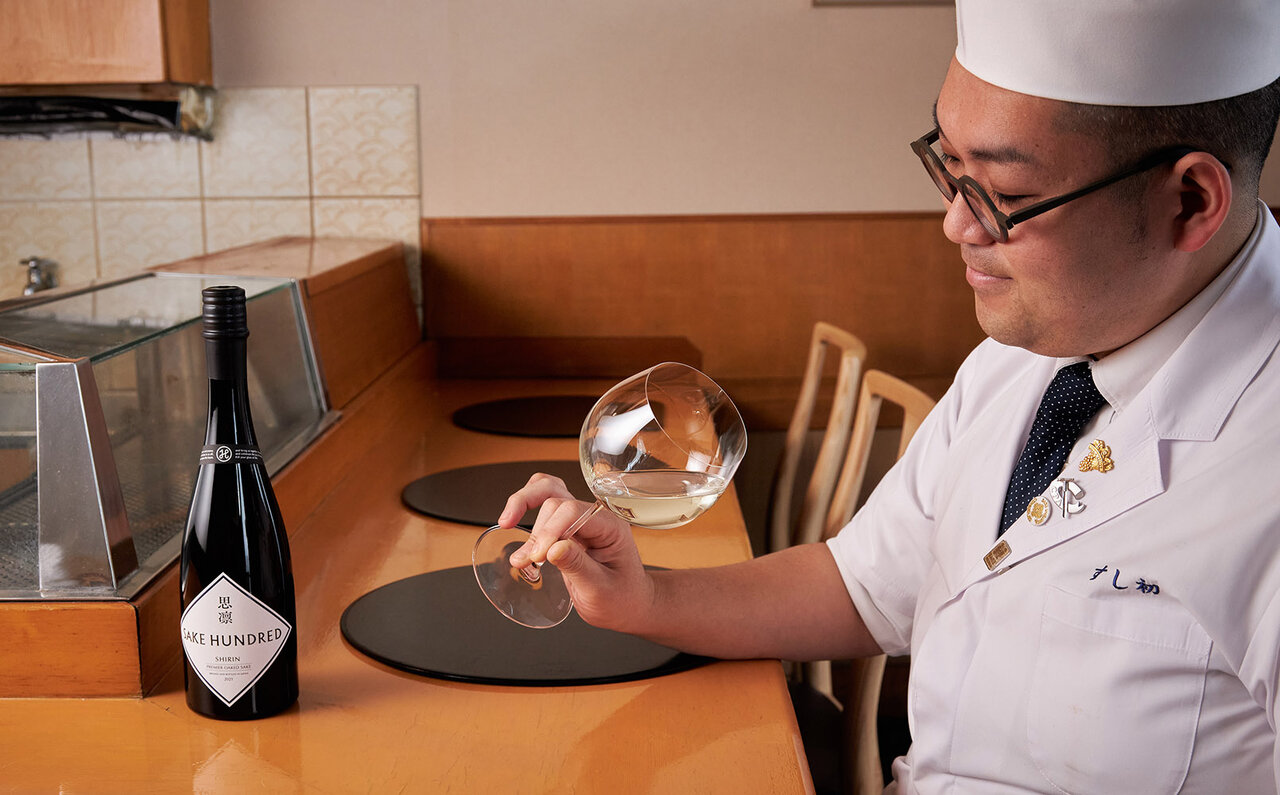
Professor YamauchiAnd temperature is also crucial. Sake is usually stored in the refrigerator, isn't it? But how much you let that cold liquid warm up to room temperature also affects the taste.
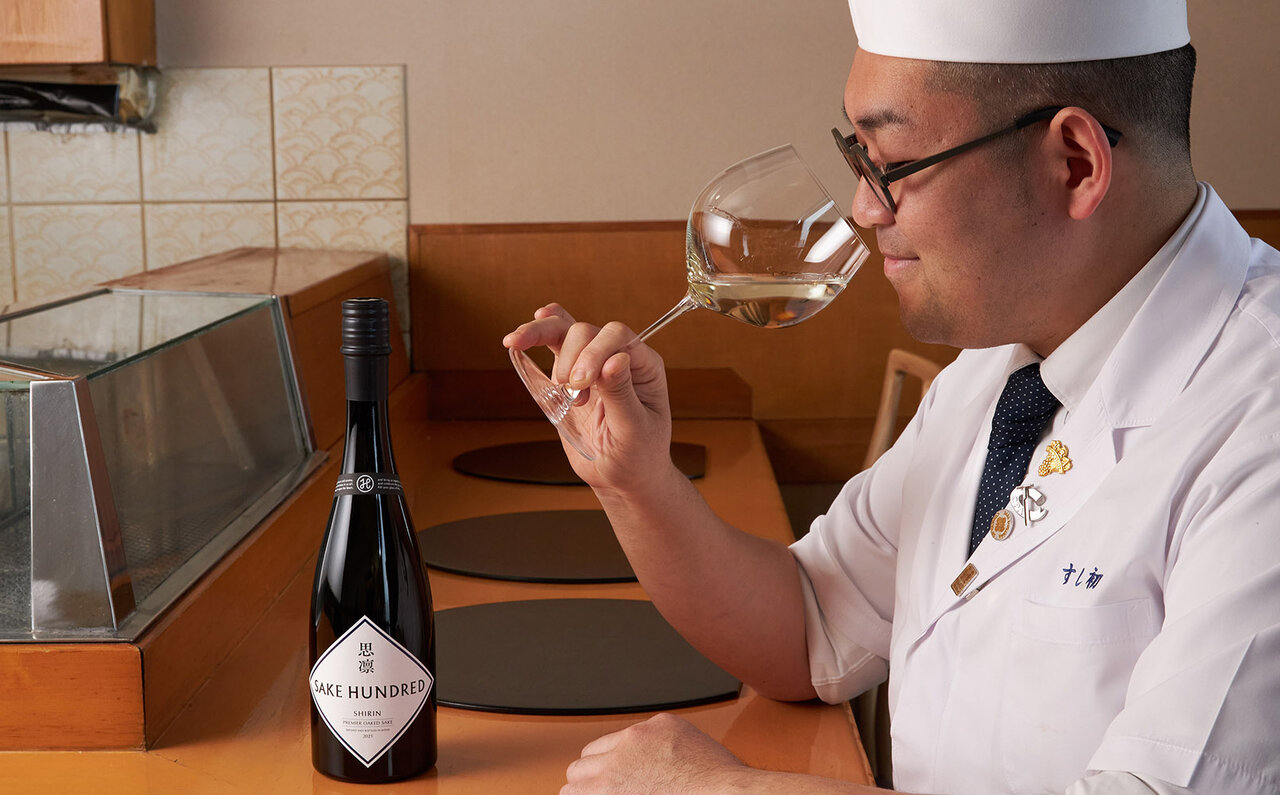
Especially since "Shirin" is aged in barrels. The aroma molecules imparted by barrel aging are often large and heavy. Such heavy aromas have limited molecular movement and don't readily emerge when the liquid is cold. It's similar to the melancholy you feel when drinking red wine that's been chilled too much in the refrigerator.
—I was so focused on the idea of drinking freshly shipped, crisp nama-zake (\*), chilled to the extreme in the refrigerator and consumed immediately after opening, that I initially misjudged its wonderful potential.
(\*2) Sake that is consumed without pasteurization, leaving the yeast alive.
Professor YamauchiThat's a common mistake. For example, how many days does it take for the flavor to open up after uncorking? At what temperature is it most delicious? How high can you elevate its potential—that's where the drinker's skill comes into play.
—This is very educational. Speaking of aging in barrels, that's a technique I associate with whisky and wine...
Professor YamauchiBarrel aging is indeed a significant practice in sake production as well. Bottling became common around the 1920s. Before that, sake was distributed in tokkuri (sake flasks) or barrels.
However, most sake barrels were made of cedar wood. To get a bit technical, cedar wood releases sesquiterpenes, which create a refreshing aroma similar to a hinoki cypress bath. Cedar was also used for its insect-repellent and mold-inhibiting properties.
In contrast, "Shirin" uses Mizunara oak barrels. This approach directly reflects the trend in Japanese whisky. It aligns with the traditional sake practice of barrel aging while introducing a variation inspired by the whisky world—a cultural crossover. However, since barrel aging is a technique that has always existed in sake, "Shirin" has come together beautifully and seamlessly.
—So, it's not about adopting new techniques from whisky production.
Professor YamauchiCorrect. And Mizunara oak wood has an aroma reminiscent of jinko (agarwood). It's natural that sake aged in Mizunara barrels would exhibit hints of this agarwood scent. And since it's made in Japan, it's likely that Japanese barrel makers are involved. Many people would likely reason this way, assuming a certain level of technical assurance...
The only barrel maker in Japan is
Ariake Sangyo. The barrels used in the production of "Shirin" were likely manufactured by "Ariake Sangyo." However, as it's the sole manufacturer in Japan, the number of barrels they can produce is limited. Overseas whisky enthusiasts often research details like which barrel maker was used. Of course, many are also aware that there's only one barrel maker in Japan.
—And that one company produces high-quality barrels!?
Professor YamauchiExactly. It is thanks to "Ariake Sangyo" that the combination of Japanese whisky and Mizunara oak creates such value. Therefore, it should be smooth to apply the same scheme to sake.
—For example, do "Yamazaki," "Hakushu," or "Yoichi" use barrels from "Ariake Sangyo"?
Professor YamauchiNo. Major distillers have their own barrel-making departments. They essentially make their own barrels or repair barrels from other contexts, such as sherry casks.
—I see... but this single company is precisely why Japanese whisky ventures outside the major players have such high expectations. And the ripple effect is now appearing in sake, isn't it?
Professor YamauchiThat's correct.
The growing attention on aged sake was also mentioned in the previous article on
"Gengai."We also noted that the focus will increasingly be on "who," "under what conditions," and "for how many years" the aging takes place. "Shirin" takes a cue from the Japanese whisky context, using Mizunara oak barrels for its aging process. This approach to product development is noteworthy.
Ou-Jiman excels at crafting sake that builds upon a foundation of acidity, gradually layering in sweetness. This contrasts with the refined, minimalist style of their parent brand, Tatenokawa. However, the slightly richer nuance of acidity and sweetness characteristic of Ou-Jiman harmonizes beautifully with the depth of astringency and bitterness derived from the jinko-like aroma of the Mizunara oak barrels. I believe this is precisely what SAKE HUNDRED aimed for when commissioning Ou-Jiman.
[Summary]
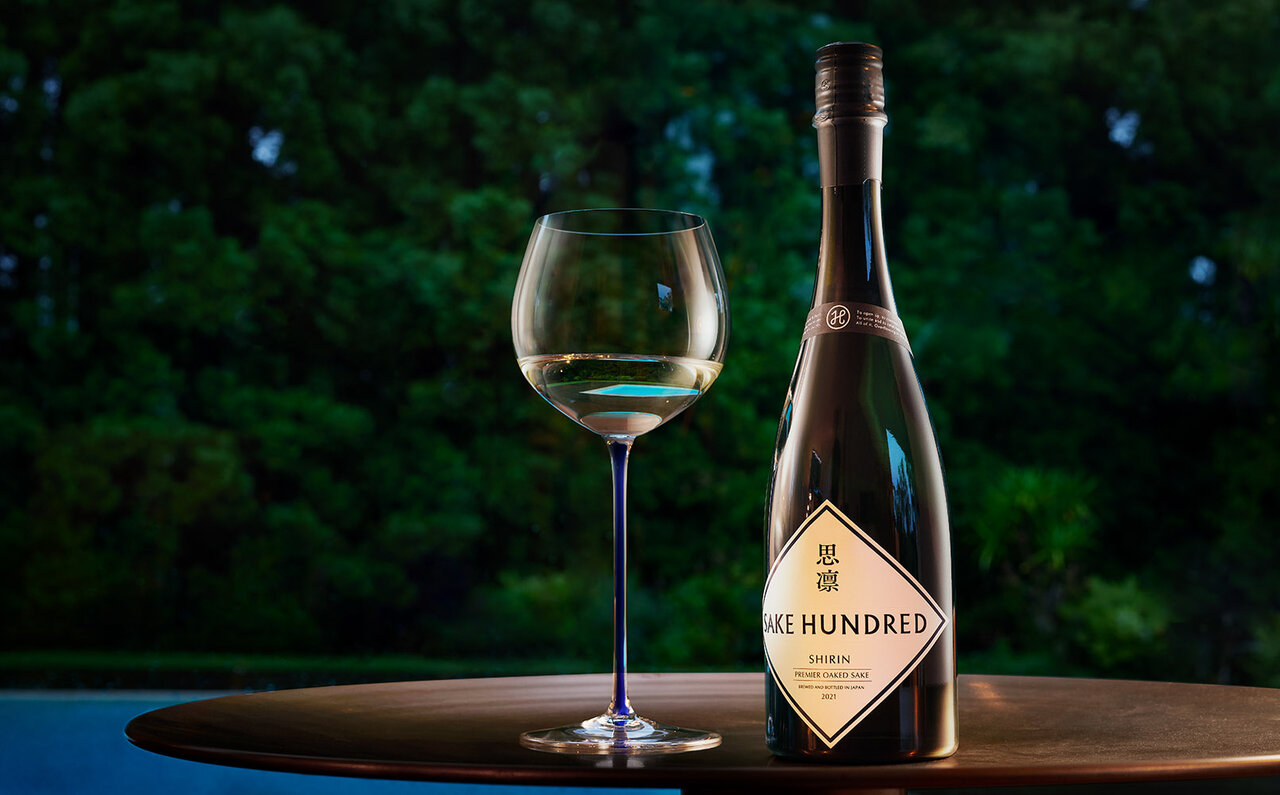
Shirin
Contents | 720ml
Manufacturer | Ou-Jiman
Distributor | SAKE HUNDRED
Price | ¥41,800
When we think of sipping spirits, we often picture high-proof hard liquors like whisky or brandy. But sake, too, can be savored slowly. This product is a testament to that. Above all, its aroma is profound. Just as Chardonnay grapes are beautifully enhanced through barrel aging, the flavors added to "Shirin" through barrel storage are best appreciated when sipped slowly. Moreover, it would be a shame not to enjoy how it changes daily upon contact with air after opening! And with such a drinking style, pairing snacks are unnecessary. Confront "Shirin" directly and spend a sublime time.
*This article is not sponsored.
*This article introduces sake enthusiastically recommended by Professor Yamauchi and OPENERS editor Takashi Tsuchida.