"Gengai": A "rare gem" of aged sake, existing only now as a miracle, the prequel to its own legend | FEATURE
FEATURE | SAKE HUNDRED
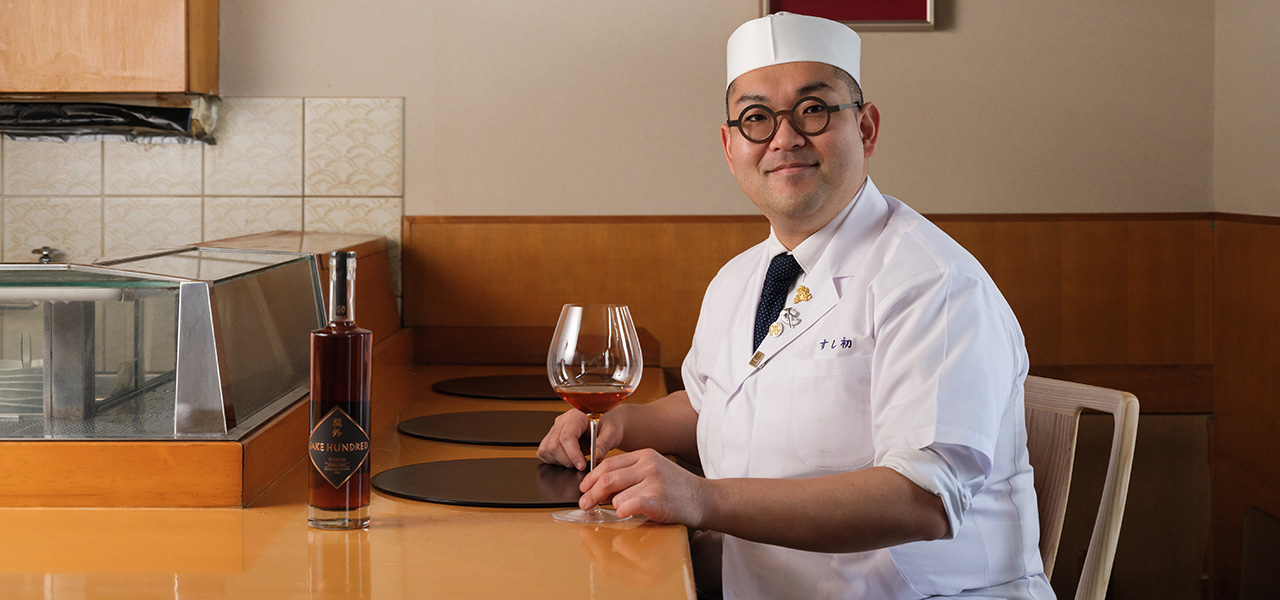
New Series: Tell me, Professor Yamauchi! Vol. 1: The Japanese Sake "Gengai" (SAKE HUNDRED)
This sake is made with a very rare "motodate"(*)which means it has an exceptionally rich extract content. It's inherently rich in components. When such a very rich sake is further aged, its flavor profile typically becomes even more grounded... (Professor Yamauchi)
*Moto: Shubo. A special method of making sake using only the starter mash for fermentation.
Photographs by OHTAKI Kaku | Edit & Text by TSUCHIDA Takashi
"Gengai": Aged yet light and uplifting!
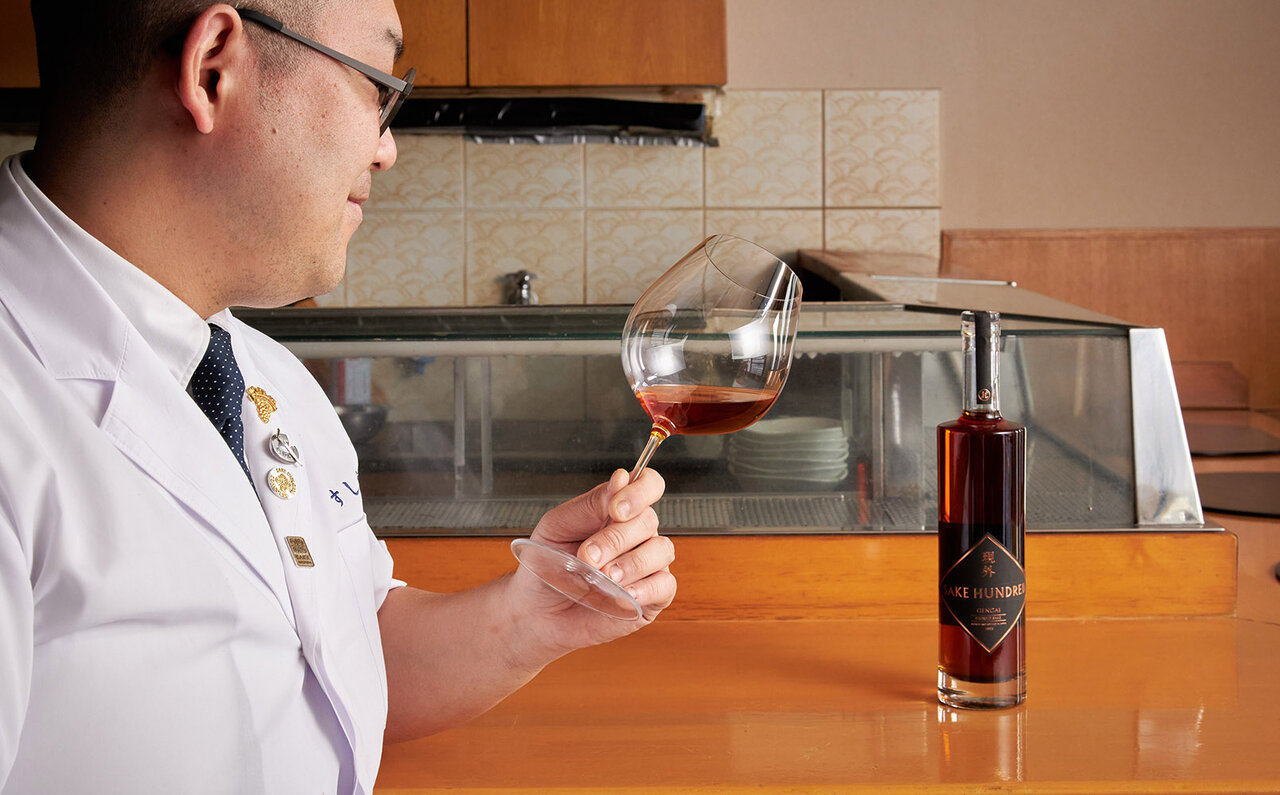
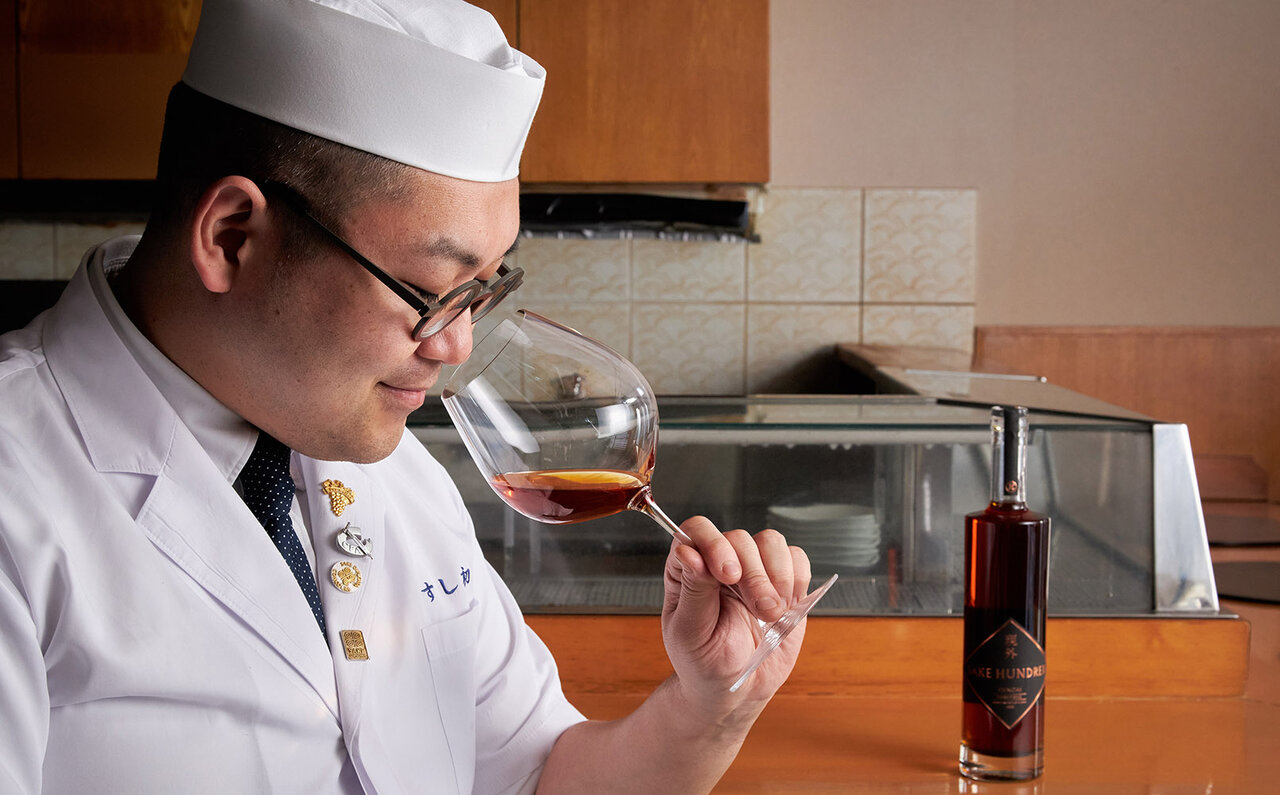
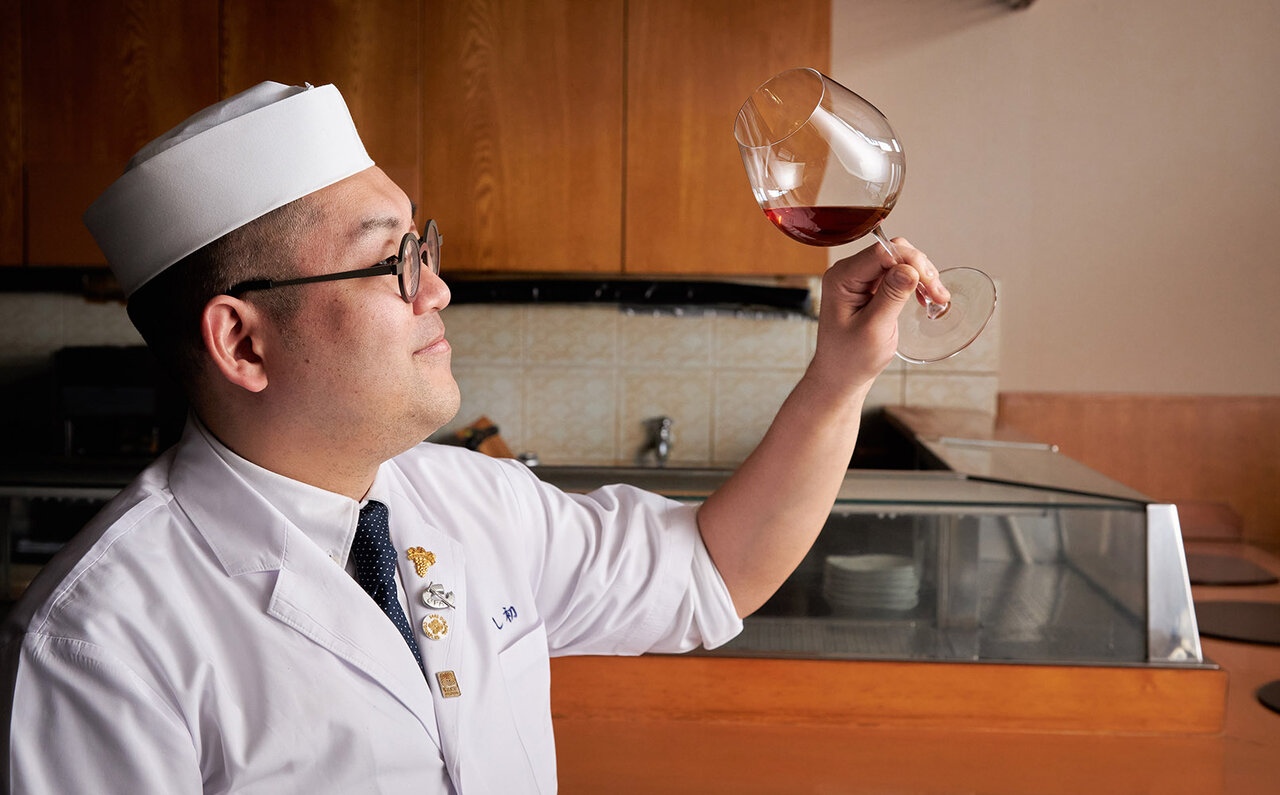
Professor YamauchiBefore tasting, I was concerned it might be too heavy from aging, but it's almost as if it has transcended that... After aging, its weight has paradoxically lifted, creating a refined, elegant flavor. Frankly, I was very surprised.
—So, as sake ages, it typically gains depth and becomes heavier in flavor?
Professor YamauchiYes. It gains depth. While that's a good thing, sometimes it can become too heavy.
For example, with rich traditional French sauces, you can't eat much of them. The first or second bite might be interesting, but it's hard to continue beyond that.
—I see! You mentioned "motodate" earlier, which might be an unfamiliar term.
Professor YamauchiTo put it without fear of misunderstanding, you could say it's an "intermediate stage" in sake brewing. In the sake brewing process, we use koji rice and yeast to create a starter mash for fermentation. This starter is called "shubo" (fermentation starter).
Ideally, it's a preparatory stage to ensure a healthy fermentation start, disregarding flavor balance. This is gradually increased to adjust the final taste and shape it into Japanese sake, but since it's an intermediate stage, it has the energy of a start, but regarding flavor balance...
—So it's not meant for drinking, but rather to promote vigorous fermentation?
Professor YamauchiExactly. Therefore, the question is how balanced the flavor is. Or rather, the background that necessitated this (※). Although it was originally a stage that only reached the starting point of brewing, I had concerns about whether it could be viable as a product, but those concerns were completely and wonderfully dispelled.
(*) The Great Hanshin-Awaji Earthquake that occurred on January 17, 1995. The "Sawanotsuru" brewery in Hyogo Prefecture also suffered extensive damage, with all seven wooden storehouses collapsing. Amidst this, a tank miraculously survived. Inside was "shubo," which was in the middle of the brewing process. Due to damage to the brewing equipment, it was impossible to proceed to the next stage, so it was pressed and became sake at the shubo stage. However, the resulting product lacked flavor balance and could not be commercialized. Thus, they placed their hopes on the changes in flavor through aging and left it to rest in the aging cellar for 28 years. And now, a flavor has emerged that even the brewers could not have imagined.
—I understand that, against the backdrop of the Great Hanshin-Awaji Earthquake, someone made the decision to miraculously preserve and store the sake that was in the process of being made at that time...
Professor YamauchiI can only express my gratitude for that courageous decision. People in the Kanto region can hardly fathom the extent of the devastation, but in a situation where preserving life was the absolute priority, the fact that someone took the care to connect and preserve these items for the world is something for which I am truly grateful.
Conversely, perhaps this miracle wouldn't have happened if it had already been brought to a finished product. Because it was in a raw, unrefined state before being finished, it was polished by the very long time of 28 years. It's just like a jewel. The wind and snow have polished it, revealing the potential of this sake.
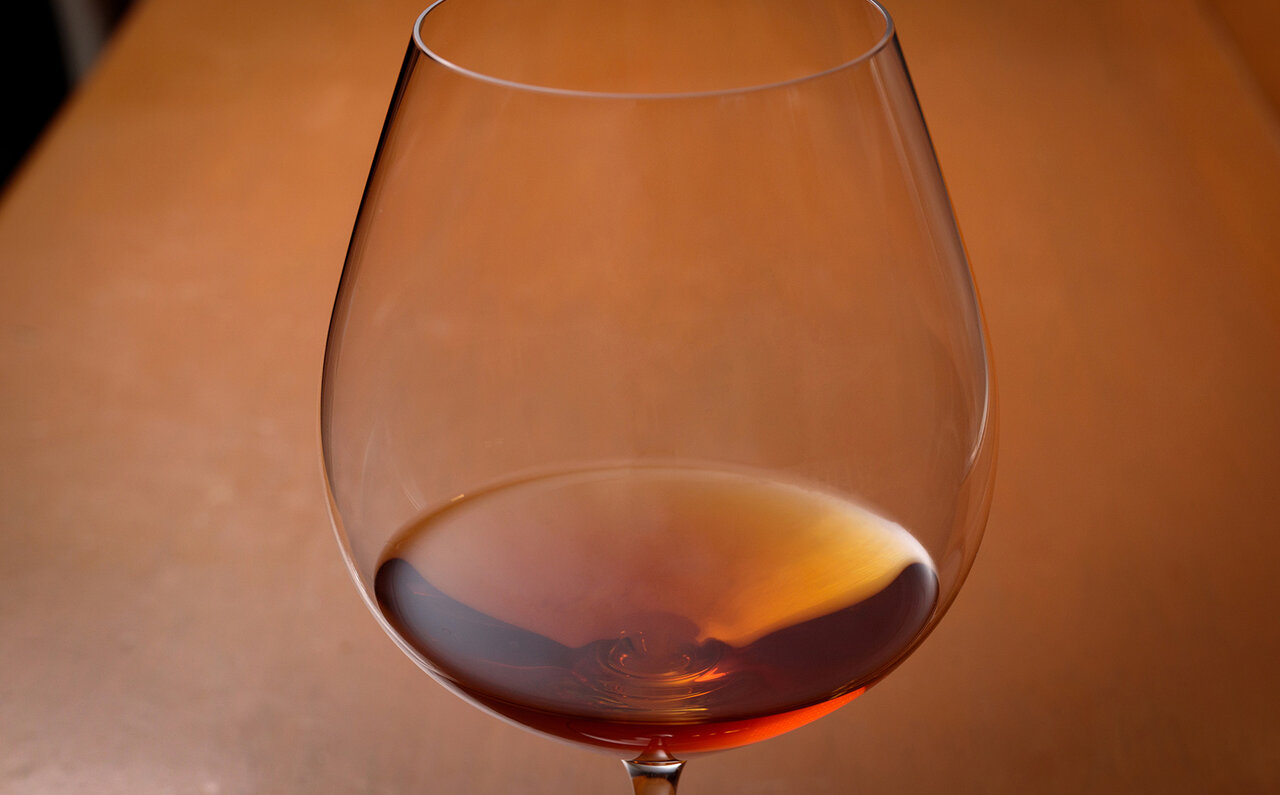
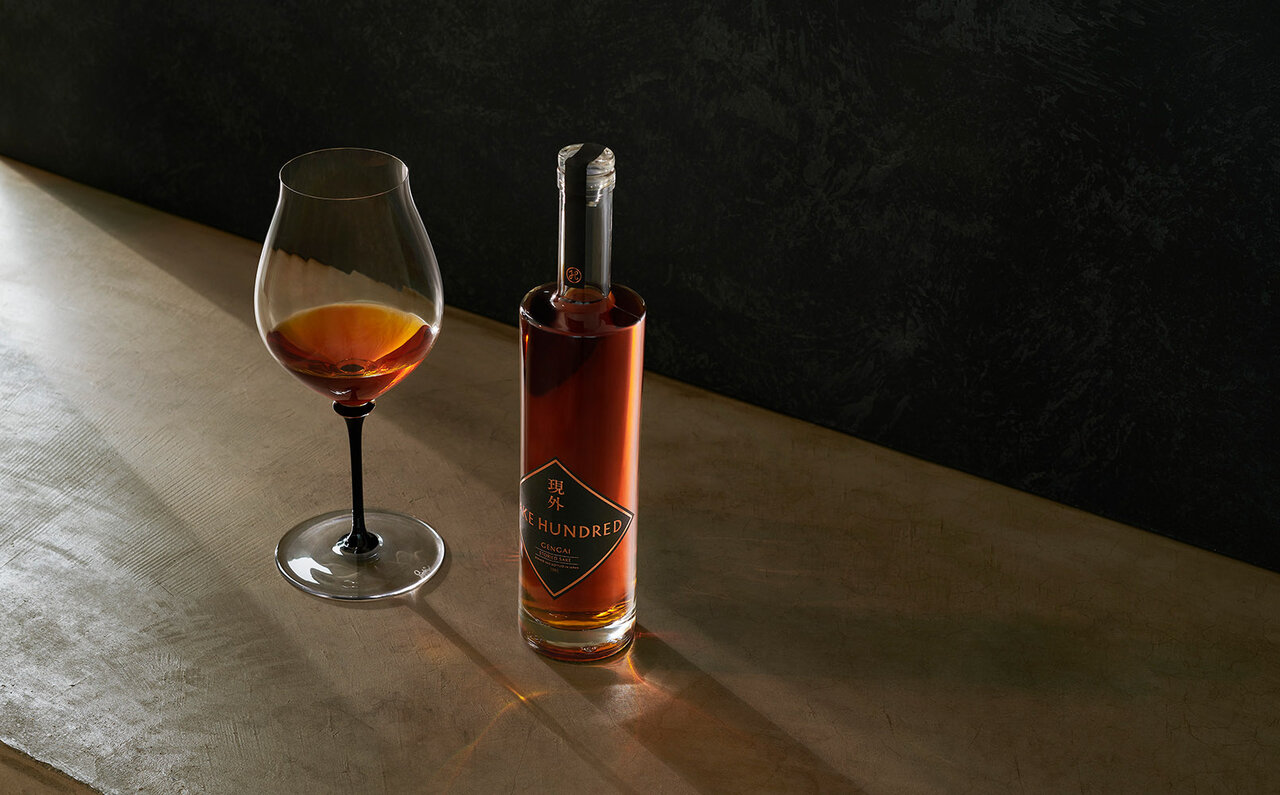
—And most people have probably never seen Japanese sake with such a deep color.
Professor YamauchiIndeed, it's surprising at first, isn't it? You might think, "Is this whiskey?"
However, freshly distilled whiskey is almost colorless. Japanese sake, too, becomes a nearly colorless liquid once the sediment from the sake lees is removed. From that state, developing such a color can be thought of as following a similar color change to that of whiskey aging.
While whiskey can take on color from the barrel, in the case of Japanese sake, the color develops from changes in the internal extract. Nevertheless, this level of depth is something I rarely experience myself.
Professor YamauchiSurprisingly, despite its depth, it is clear and free of turbidity. This is not easily achieved. It's likely the result of carefully separating the lees, allowing for such a clear liquid to be drawn.
—The lees are allowed to settle, and only the supernatant is skimmed off. How much longer can it be drawn... For the past few years, "Gengai" has been released in small, limited quantities each year on the anniversary of the Great Hanshin-Awaji Earthquake, and its price has been rising year by year.
Professor YamauchiAs the countdown to selling out progresses, the product's value increases, and that countdown eventually ends. Then, further value is added, and the product price typically rises. Even though the number of bottles decreases, the value of its existence is constantly increasing.
Naturally, it's intended for drinking, but presumably, those who purchase it are able to store it properly, choose the right moment to open it, and enjoy it with others.
—I heard that this sake was stored at a maximum temperature of 15 degrees Celsius. How do you evaluate that temperature?
Professor YamauchiWell, with conventional brewing, that temperature could be borderline, potentially disrupting the balance. On the other hand, it offers interesting possibilities for aging changes. Chemically speaking, above 10 degrees Celsius, savory notes like soy sauce or miso begin to develop.
However, in this sake, while those savory elements are present, the solid extract from its time as shubo provides a structural strength that beautifully supports that savoriness. In that sense, it's a liquid with a miraculous balance.
—By the way, Professor Yamauchi, how many years do you think this sake will remain at its peak drinking window?
Professor YamauchiThe acidity still has vibrancy, and the balance of sweetness and savoriness is maintained beautifully. Even as we speak, the aftertaste lingers in my mouth. This aftertaste eventually fades and can turn bitter, but the acidity is still taut, like a stretched string, so it should be fine until this acidity mellows.
It's difficult to give a specific number of years, but with proper storage conditions, I believe it can be enjoyed for over 10 years from now.
—The fact that it can still be enjoyed for over 10 years, and has that potential for further development, is something I think readers would want to know. Speaking of which, aged Japanese sake is now gaining attention. Could you explain the background behind this trend?
Professor YamauchiYes, certainly. Regarding Japanese sake, you might think that the newer, the better, and that sake fresh from the brewery is most precious. For the past few years, the boom has been for fresh, unpasteurized, and fruity, crisp sake.
As a counterpoint to that, there's the practice of aging Japanese sake. In fact, it has long been said that aging Japanese sake can make it taste better.
Recently, as a response to this, an association called the General Incorporated Association TOKI SAKE ASSOCIATION (Toki SAKE Association) was formed to establish a proper valuation for aging Japanese sake.
https://tokisake.or.jpIn the future, I believe that the aging of Japanese sake will be certified by incorporating time logs and place logs, considering "where, by whom, and under what conditions (temperature)" it was aged.
—Does this mean that there hasn't been a unified approach to aging Japanese sake, and breweries are still in the process of accumulating know-how?
Professor YamauchiThat's correct. Previously, sake labeled as "aged" was, to put it bluntly, sometimes just unsold stock. Furthermore, aged sake wasn't categorized by type. For example, was it an aged sake with a robust umami, or one with a relatively clean and mild umami?
On the other hand, there are apparently several breweries that, after winning gold medals at competitions, were unsure how to commercialize them and ended up storing them in large vats in refrigerators for the time being. So, while it might sound strange to call it a treasure hunt, there's a high possibility that sake that won awards back then, and has been stored in such breweries, will be revived and sold after aging.
And some breweries have already begun this process, aging Daiginjo and Junmai Daiginjo under appropriate conditions. These products will likely be valued highly.
However, breweries that can undertake this initiative need a certain level of financial strength. They need to be able to cover cash flow for 5 to 10 years until the sake can be produced and commercialized. Furthermore, they must possess expertise in aging. Conversely, it's not unreasonable to assume that such breweries are the ones registering with the TOKI SAKE ASSOCIATION. I believe that the world of aged Japanese sake will only expand, and its value will never diminish.
Professor YamauchiFundamentally, Japanese people have a deep love for fermented foods and have always understood the benefits of aging. However, in the case of Japanese sake, along with the excellence of its distribution infrastructure, only its freshness has been emphasized. The crispness of nama genshu, made possible by refrigerated storage and transport, will of course continue to hold value.
On the other hand, aged sake is emerging as a counterculture. Moreover, I believe this counterculture actually fits better with the traditional context of Japanese sake. What do you think?
[Summary]
Gengai | GENGAI
Contents | 500ml
Manufacturer | Sawanotsuru (Hyogo)
Distributor | SAKE HUNDRED
Price | ¥242,000 (tax included, shipping not included)
As the era of aged Japanese sake is about to begin, SAKE HUNDRED's "Gengai" has emerged as its pioneer. This liquid, having undergone an overwhelming 28 years of aging, was not intentionally created but is a precious item miraculously preserved after the brewing process was halted due to the Great Hanshin-Awaji Earthquake. The fact that the brewing process stopped midway, combined with the storage temperature of 15 degrees Celsius, created a miraculous match, resulting in an unparalleled balance. The extreme rarity of replicating this phenomenon significantly boosts "Gengai's" premium status. For reference, the selling price in 2023 was ¥242,000. While very expensive, it is a valuable bottle.
*This article is not sponsored.
*Professor Yamauchi and OPENERS editor Takashi Tsuchida introduce Japanese sake they genuinely recommend.