A brewing philosophy that pursues naturalism. Taste the rare "sourness" of Tsuchida Shuzo, created serendipitously in its extension! | FEATURE
FEATURE | Tsuchida Brewery
Tell me, Professor Yamauchi! Vol. 4: Japanese Sake "Tsuchida F" (Tsuchida Brewery)
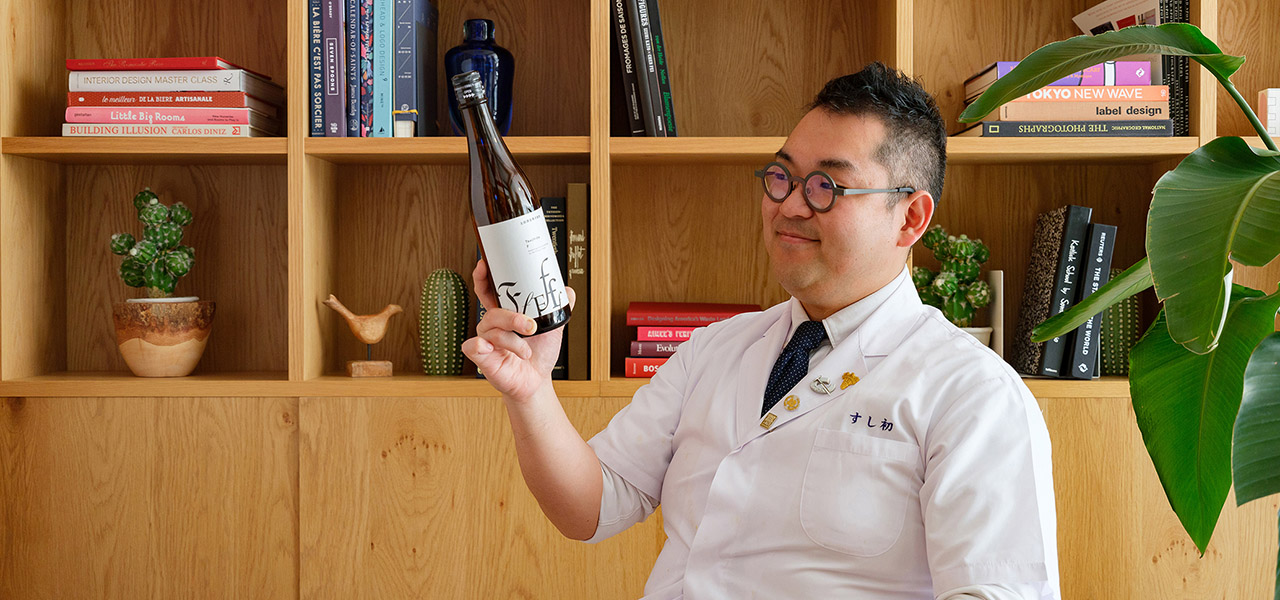
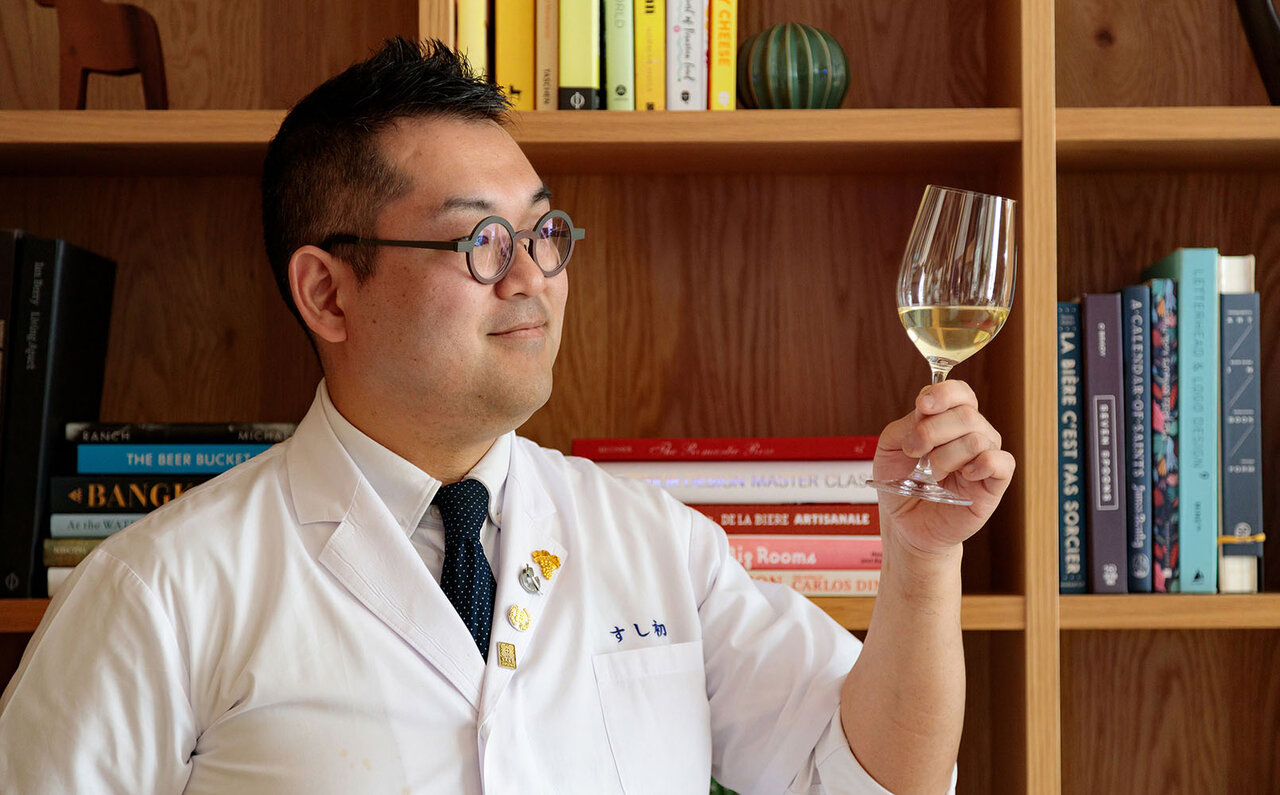
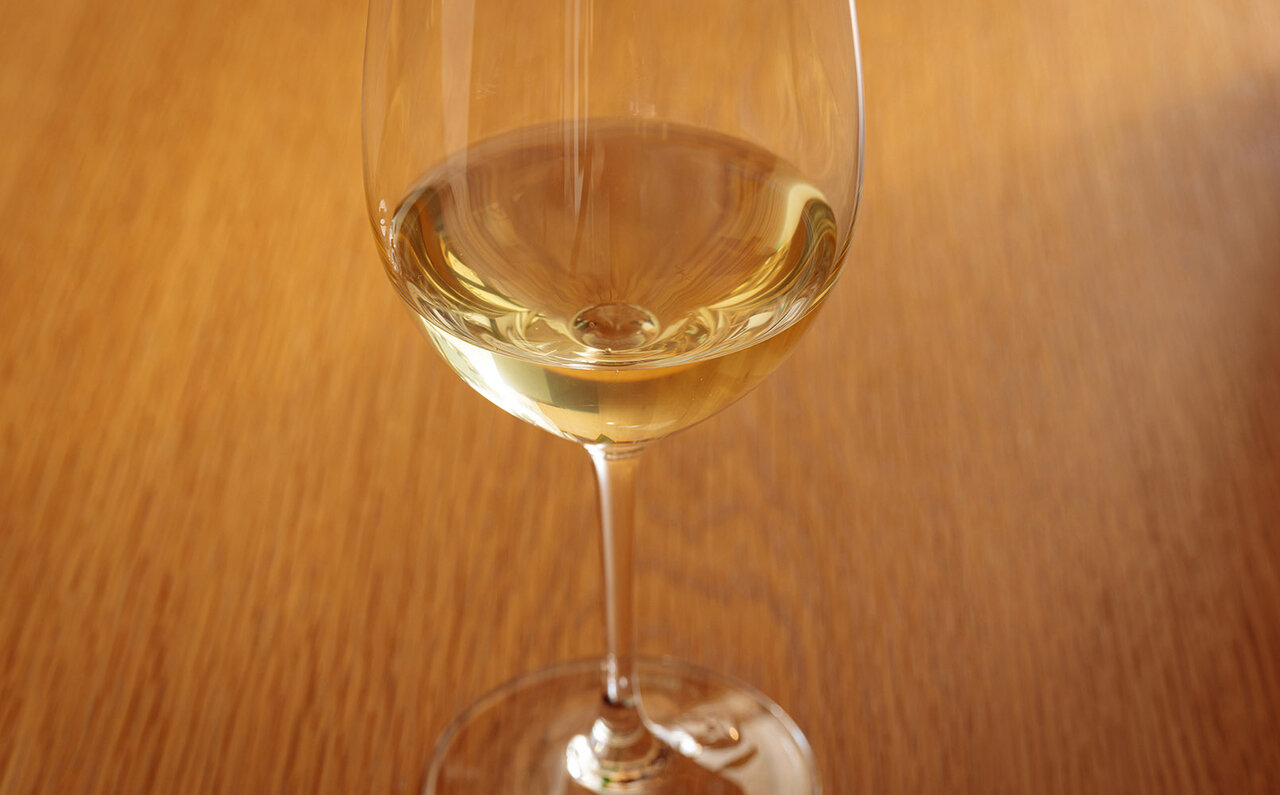
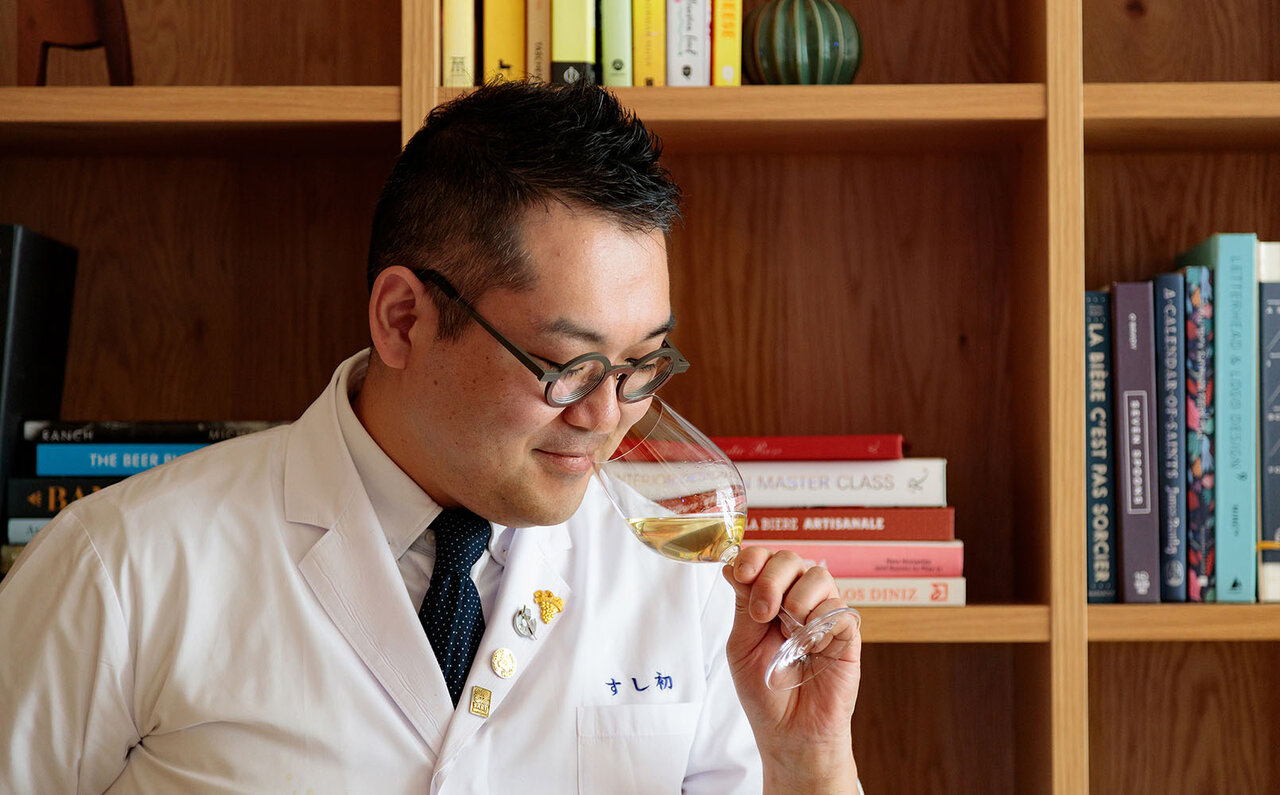
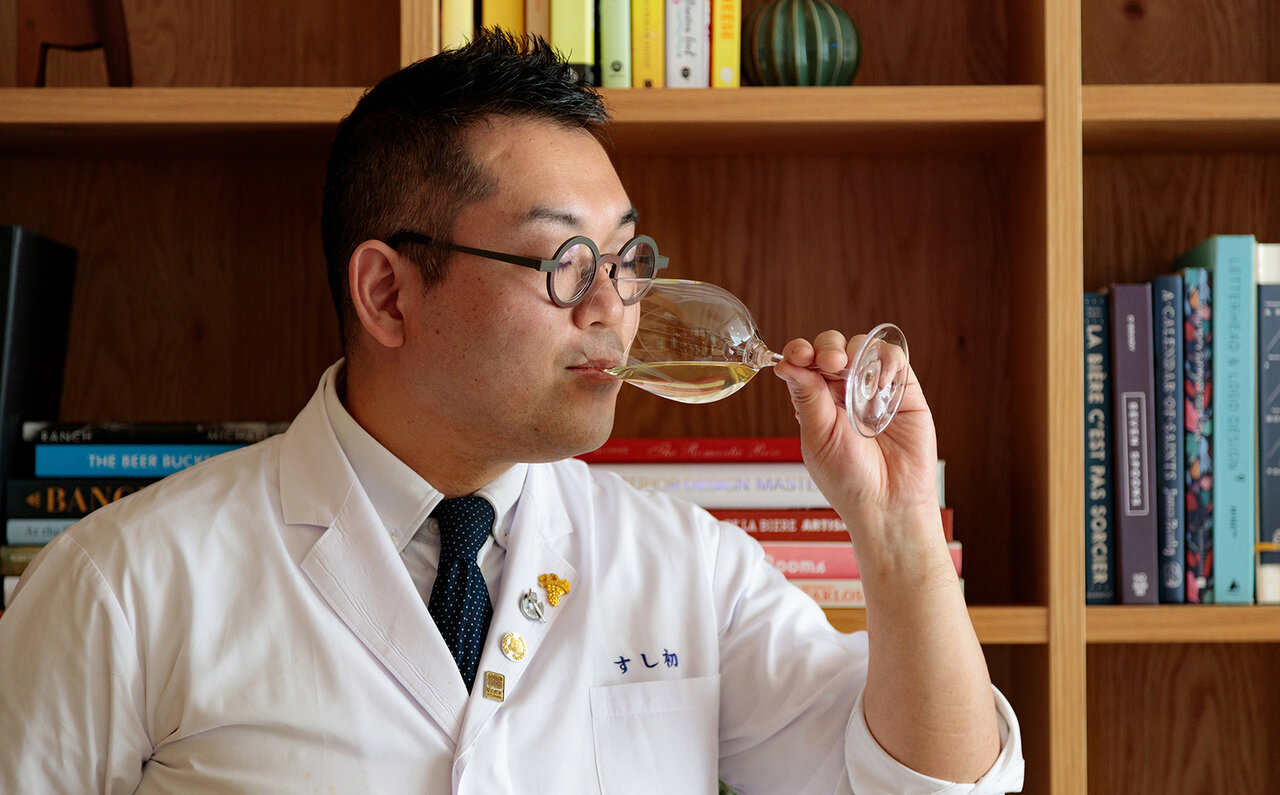
Characterized by a yogurt-like sourness and a deep, rich sweetness. The sweetness firmly supports the palate from the mid-palate to the finish, maintaining a perfect balance throughout. In the latter half, a subtle toastiness emerges, harmonizing with the acidity to create a delicate, lingering finish. (Professor Yamauchi)
Photographs by OHTAKI Kaku | Edit & Text by TSUCHIDA Takashi
An outlier among avant-garde Japanese sake brands. Buy it the moment you find it.
—Recently, the name Tsuchida Brewery seems to be appearing everywhere. What's behind its growing reputation?
Professor YamauchiWell, first and foremost, the brewer and the master brewer (toji) share a strong, unified vision, which leads to acrobatic innovation. Historically, Japanese sake has often prioritized rice polishing ratios, with daiginjo and junmai daiginjo being the trend. This meant clean acidity and soft sweetness. That pure nuance has been the flow of Japanese sake for the past few years.
As a counterculture to this, a new movement emerged, focusing on 'terroir'—bringing out the flavors of the land. Within this, Tsuchida Brewery has taken it a step further with a design philosophy that combines 'land × brewer's intent,' layered with advanced brewing techniques.
This multiplicative approach is why Tsuchida Brewery is so highly regarded. Such a 'revolution' simply cannot happen without the brewer and master brewer working in perfect sync.
—I see! So the brewer is the producer, bearing the financial responsibility, and the master brewer directs the sake-making process?
Professor YamauchiPrecisely. Their shared vision aligns perfectly, deviating significantly from established norms.
—And when you say "deviating from established norms," what specifically do you mean...?
Professor YamauchiFirst, Tsuchida Brewery doesn't polish its rice much. In terms of flavor balance, I'd say the difference is like that between a "clear dashi broth" and a "tonkotsu ramen broth." The refined ichiban dashi, extracting only the essential elements, represents the current trend of ginjo sake. On the other hand, Tsuchida Brewery's sake is like a rich tonkotsu broth, drawing out all the umami components to create a cloudy, powerful flavor. That's the magnitude of the difference, I believe.
Of course, there are various technical innovations. They essentially don't perform limited water absorption (※). The rice is soaked in water for over two hours until it becomes saturated. This is completely different from textbook sake brewing. Behind this lies the mechanics of koji, where the outer layer of the rice, being less polished, is harder and absorbs water less readily.
※ A first step in sake brewing where the rice's moisture content is set low to facilitate subsequent brewing processes.
—So, it's not just about being contrarian for the sake of image, but there's a well-thought-out logic behind each step.
Professor YamauchiThat's right. Mr. Hoshino, the master brewer, trained at "Niuemon." Mr. Sato of Niuemon has a profound understanding of koji and brewing mechanics. Having trained under him, Mr. Hoshino likely has a deep grasp of 'why this process is done' and 'what variables exist at this stage.'
Another noteworthy aspect is the koji making. They actually use yellow koji, typically used for shochu.
—Wait? Isn't yellow koji for shochu, and white or black for sake?
Professor YamauchiNo, there is yellow koji for shochu as well. However, it became less commonly used because it's difficult to cultivate. But it aligns perfectly with Tsuchida Brewery's intentions. The use of koji that other breweries wouldn't consider is what most distinguishes them.
What they aim to achieve through such efforts is to create natural sake. For instance, they prefer not to use additives like enzyme preparations.
—So, instead of using convenient brewing "tools," they compensate with effort and skill?
Professor YamauchiYes. They question whether adding brewing lactic acid aligns with natural sake production methods and, as if going against the times, they lean towards kimoto brewing (※).
※ A method developed in the Edo period that cultivates lactic acid bacteria, essential for sake brewing, naturally. It is extremely labor-intensive and rarely used today.
—Given their strong koji, kimoto brewing seems quite logical.
Professor YamauchiExactly. Kimoto brewing involves more steps, meaning more variables. This also led to their ability to create the sake they desired. They chose kimoto brewing precisely because they wanted to explore technical challenges.
An accidental explosion of acidity from naturally derived lactic acid. It transforms into umami.
—By the way, this particular sake has "failure" written on it...
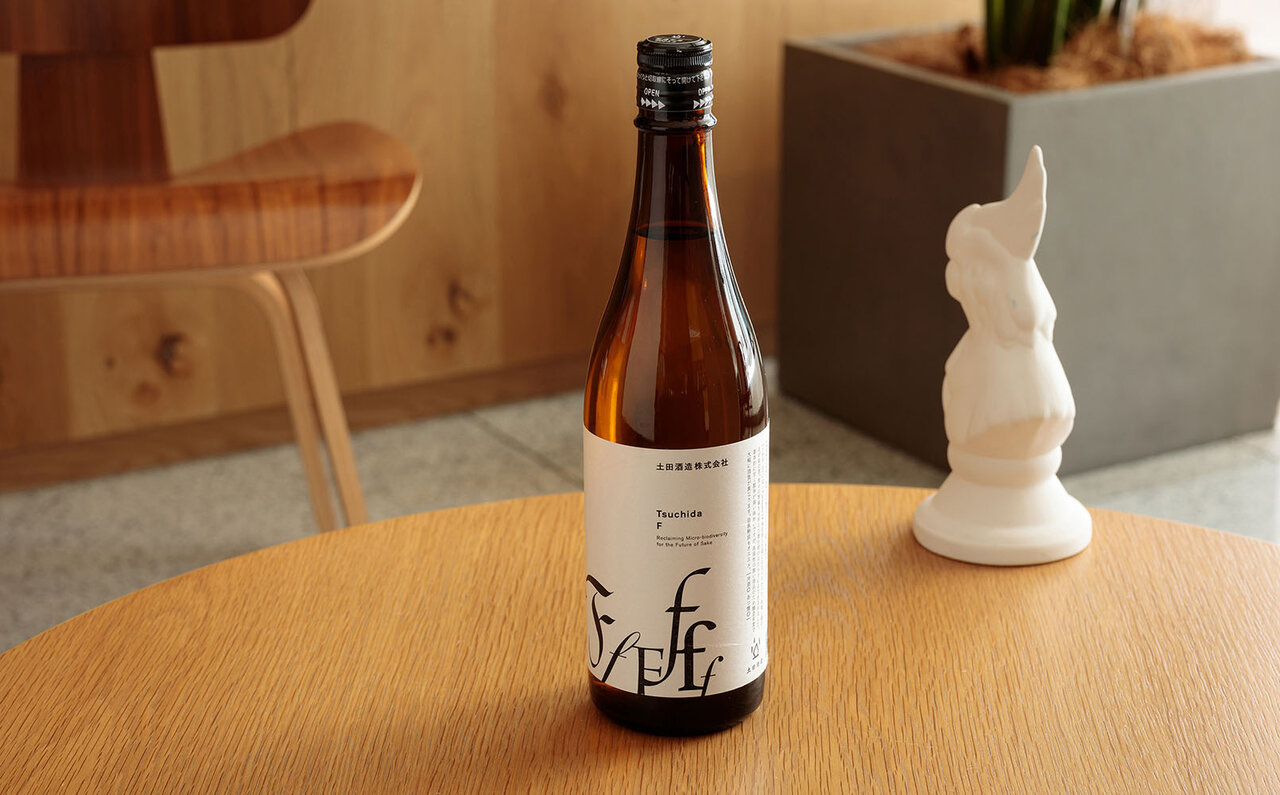
Professor YamauchiYes, this "Tsuchida F" can be simply described as a case of "lactic acid contamination."
Professor YamauchiIt's sake where lactic acid bacteria—which are detrimental to Japanese sake—have entered. During the moromi stage, a type of lactic acid bacteria (different from the ones used in kimoto brewing) that they didn't want entered, leading to a massive production of lactic acid. That's why this sake is sour.
Essentially, lactic acid bacteria consumed the sugars that the yeast should have consumed, and the yeast lost the battle for resources. The lactic acid bacteria ate the sugar and turned it into acid instead of alcohol. However, the master brewer intervened. They re-established conditions favorable for yeast survival and managed to restart alcoholic fermentation to make it a viable sake.
—While the flavor profile is "unusual" for Japanese sake, it's quite addictive once you start drinking it.
Professor YamauchiExactly. From the brewers' perspective, this might be considered an undesirable direction... but if it's delicious and there's demand for it, then it's essentially "justice."
This sourness comes from lactic acid produced by lactic acid bacteria, and it has a mellowness that transforms into umami when warmed. Unlike other acids naturally present in sake, such as succinic or malic acid, which can develop astringency and bitterness when heated, lactic acid creates roundness. In fact, when this sake is warmed, the round acidity becomes more pronounced, and the flavor remains perfectly harmonious.
Tsuchida Brewery might have complex feelings about this sake being praised, but I prefer to view this "failure" positively as a sake born from "intent." If they had used a faster brewing method, they might not have been able to create this. I'll spare the technical details, but their approach has a deeper background, aiming for even greater naturalism. The difficulty involved, and the fact that they are pushing the boundaries, occasionally leads to these serendipitous occurrences in nature. That's the origin of this sake.
—I see. The more I learn, the more fascinating it becomes.
Professor YamauchiWhen you understand the behind-the-scenes story, it becomes an even more intriguing bottle. Their challenges, their drive to create new products, and their philosophy have merged, resulting in this unique creation.
However, because it deviates from the original intention, it lacks reproducibility. Yet, we have reached a point of cultural affluence where we can enjoy such items. In that sense, I believe this product has significance in the market. Being able to say, 'Oops, we kind of messed this up a bit,' and then respond with, 'That's fine, it's interesting, it's unique,' is quite remarkable.
—The definition of deliciousness in Japanese sake has become much broader than it used to be, hasn't it? Isn't it true that the concept of "delicious" in Japanese sake is now exploding in multiple directions?
Professor YamauchiYes. In the past, the "strike zone" for deliciousness was narrow. Today, I believe there's a cultural maturation that allows us to apply the word "delicious" to areas that aren't strictly defined. Perhaps it's because people beyond the traditional sake enthusiasts are beginning to discover the appeal of Japanese sake.
Moving beyond the notion of how Japanese sake "should be," it now manifests in a wide variety of forms. Craft sake, in particular, exists a step beyond even the rules set by the National Tax Agency for seishu. I believe "Tsuchida F" serves as a bridge in this evolution.
When you look at the fascinating products available in the world of Japanese sake today, Tsuchida Brewery is definitely worth paying attention to. And among their offerings, this particular sake, as an outlier even within Tsuchida Brewery, is something I highly recommend seeking out and trying.
[Summary]
Tsuchida F | Initial F
Contents | 720ml
Brewery | Tsuchida Brewery
Price | ¥1,850 (incl. tax)
What? This is sake!? Prepare to be astonished (laughs). Its mellow acidity, unlike anything in white wine, is uniquely special. While the brewers are doing something incredibly acrobatic, it doesn't feel difficult at all and is incredibly easy to drink. Perfect for home enjoyment! Highly recommended as a way to experience the forefront of diversifying Japanese sake. For a more adventurous approach, try mixing it with milk. Yes, I recommend drinking sake mixed with milk. For an even higher level, try mixing this sake with gin. It creates an unbeatable cocktail, much like a Martini. Just as a stylist can freely coordinate across brands, drinks should also be twisted more freely!
*This article is not sponsored.
*This article features Japanese sake genuinely recommended by Professor Yamauchi and OPENERS editor Takashi Tsuchida.