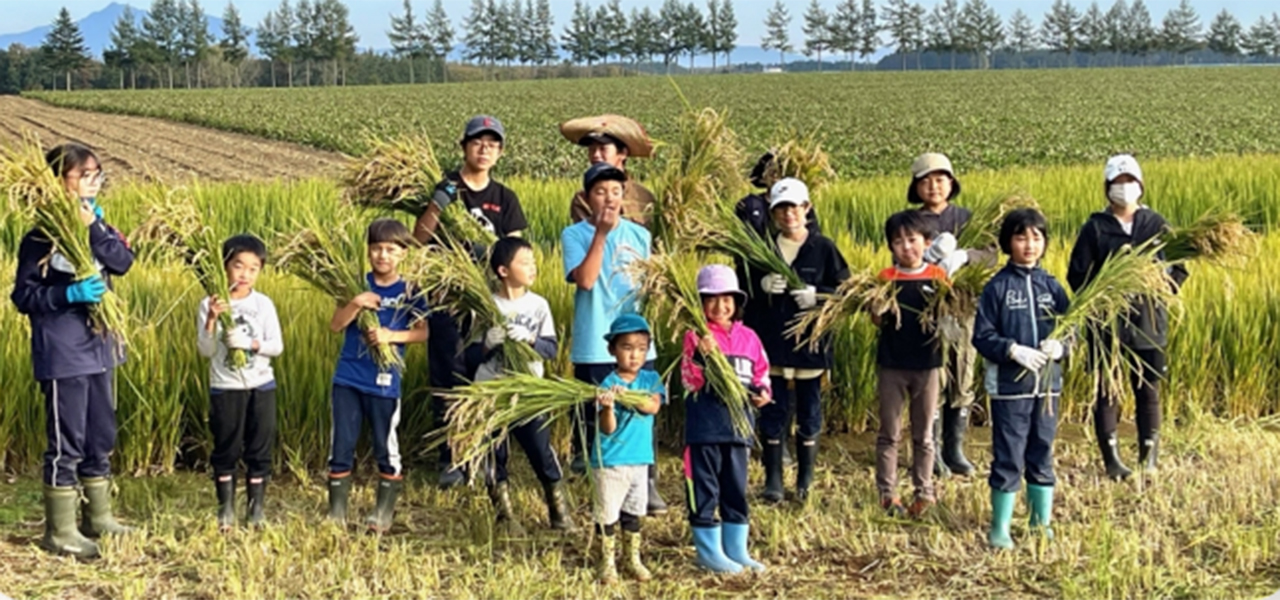
Could this be an effective solution to rice and labor shortages? Asahi Group's yeast technology to save the planet!?
LOUNGE FEATURES|Asahi Biocycle
Facing rice shortages and labor scarcity in agriculture, Japan is turning its attention to an innovative rice cultivation method utilizing "agricultural materials derived from beer yeast cell walls" by Asahi Biocycle. This technique, which has successfully cultivated rice in Abashiri, Hokkaido—a region previously considered unsuitable for rice farming—introduces a fresh perspective to the agricultural sector through "water-saving dry direct seeding cultivation" (※) that does not rely on flooded paddies. Achieving a 55% reduction in costs and a 65% decrease in greenhouse gas emissions while maintaining traditional quality, could this technology, also noted by the Ministry of Agriculture, Forestry and Fisheries, become a savior for domestic agriculture?
※ Water-saving dry direct seeding cultivation... is a method where seeds are sown directly onto cultivated land without raising seedlings, and rice is grown using rainwater and supplemental watering, rather than flooding the field.
※ Water-saving dry direct seeding cultivation... is a method where seeds are sown directly onto cultivated land without raising seedlings, and rice is grown using rainwater and supplemental watering, rather than flooding the field.
Text by TSUCHIDA Takashi
The Deepening Rice Shortage and Agricultural Crisis
In 2024, a significant change occurred on Japanese dinner tables. Due to record-breaking heat and water shortages, crop failures became widespread in rice-producing regions like Niigata and Akita. Rice prices soared in supermarkets, and some areas experienced stockouts. For Japan, with a food self-sufficiency rate of 38% (on a calorie basis), the supply of rice, the only staple with a 100% self-sufficiency rate, began to flash a warning signal.
Underlying this situation is the severe aging of the agricultural workforce. Over 70% of individual farmers are aged 65 or older, and their numbers have decreased by approximately 35% in the last eight years. With concerns that "the number of producers will halve in just a few more years," maintaining the current level of production, let alone increasing it, is becoming difficult with traditional, labor-intensive rice farming methods.
To confront these challenges, the Ministry of Agriculture, Forestry and Fisheries has announced a policy shift towards increasing rice production. However, with an aging population and ongoing labor shortages, how can this increase be achieved? One answer was emerging from an unexpected source.
The Abashiri Miracle: Technology That Made the Impossible Possible
Abashiri City, Hokkaido. Due to its cool climate, it has long been considered unsuitable for rice cultivation, and rice farming has been virtually non-existent there since the early Showa period. The region primarily cultivates sugar beets, potatoes for starch, and wheat, crops that Fukuda Farm has also traditionally handled.
However, Minoru Fukuda of Fukuda Farm harbored a dream: "I want the local children to be able to eat rice grown in their hometown at school lunches." He felt that by only producing raw materials for factory processing, the distance between producers and consumers would not shrink, and motivation for agriculture would wane. With this sentiment, Mr. Fukuda began his challenge in rice cultivation in 2018.
In Abashiri, lacking paddy facilities, he chose to cultivate "upland rice" (rikuto). This method involves sowing seeds directly in fields. However, the first two years ended in failure, with the rice stalks failing to produce grains. A turning point came in 2020. After changing the variety to "Nanatsuboshi" and using agricultural materials derived from Asahi Biocycle's beer yeast cell walls, the rice stalks finally bore fruit for the first time.
"The harvest that first year was only enough for about two bowls of rice, but when my family and associates tasted it, they said it was 'very delicious rice,'" Mr. Fukuda recalls. Since then, he has steadily expanded the cultivation area, reaching 1.2 hectares in 2024 and harvesting approximately 5 tons of polished rice. Currently, the rice is served year-round at restaurants in Abashiri City, and some local schools have also begun serving it in their lunches.
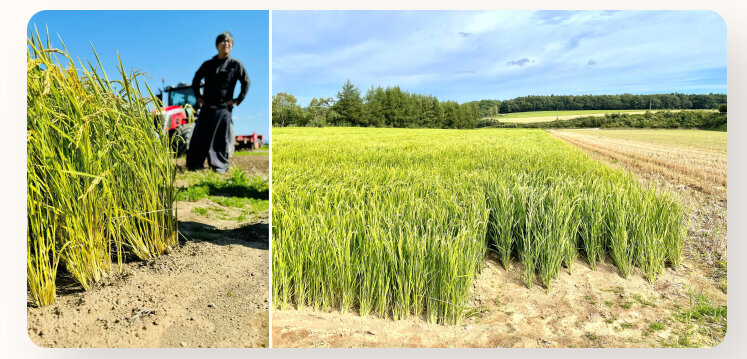
Fukuda Farm in Abashiri City, Hokkaido. The field is not flooded, as it is used for "upland rice" cultivation.
The Scientific Mechanism of Beer Yeast Cell Walls
Asahi Biocycle's beer yeast material is the result of over 90 years of yeast research by the Asahi Group. It utilizes the "cell wall" portion remaining after extracting yeast extract from beer yeast, a byproduct generated during the beer manufacturing process, through a proprietary hydrothermal reaction treatment technology.
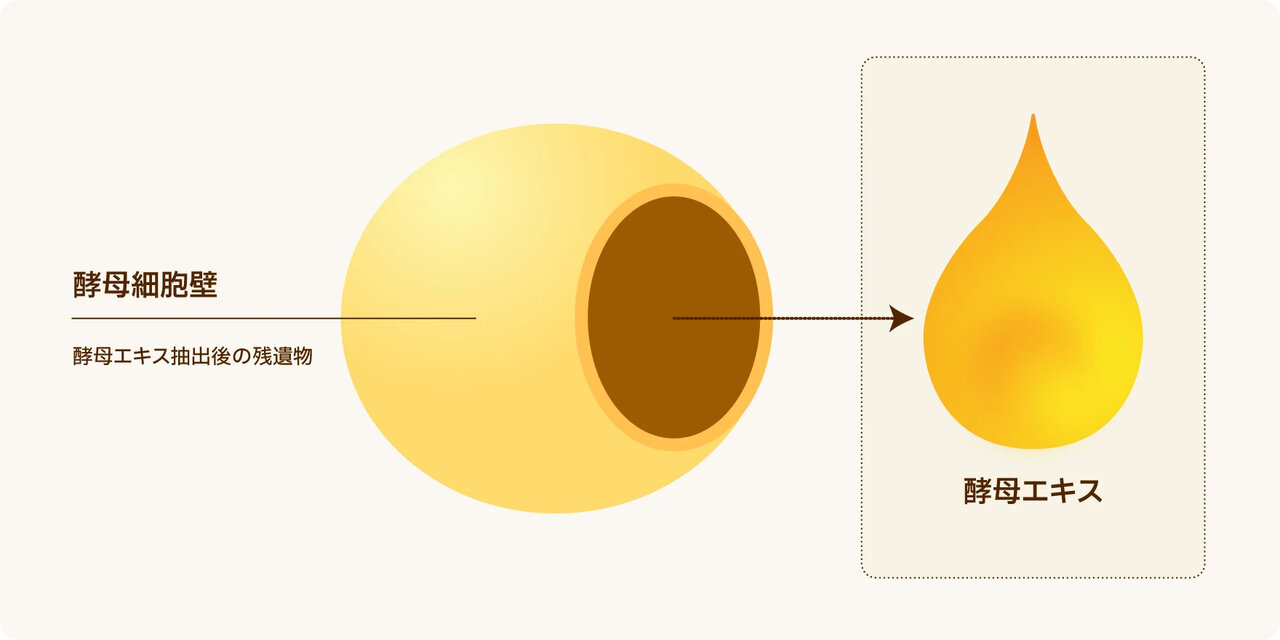
Yeast cell walls are a byproduct remaining after yeast extract is produced.
"We have been continuously researching how to transform byproducts from the beer business, which were previously difficult to utilize with high added value, into something valuable," says Hiroshi Ueyabu, General Manager of the Agri-Business Department at Asahi Biocycle.
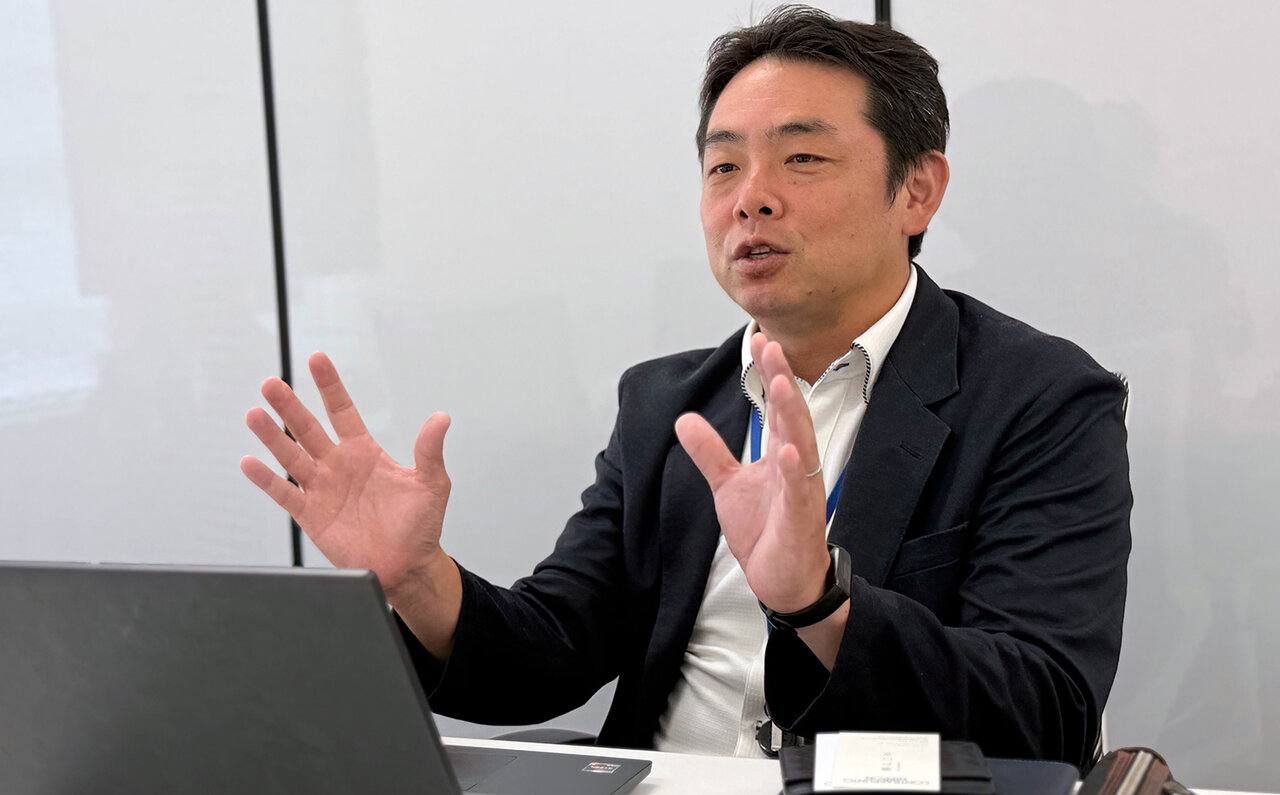
Hiroshi Ueyabu, General Manager of the Agri-Business Department, Sustainability Business Division at Asahi Biocycle.
The effects of the new material operate through two mechanisms. The first is "plant activation by beta-glucan." Beta-glucan, contained in beer yeast, has a structure similar to plant pathogens, causing plants to mistakenly believe they are infected. This stimulates the roots, leading to more efficient nutrient absorption.
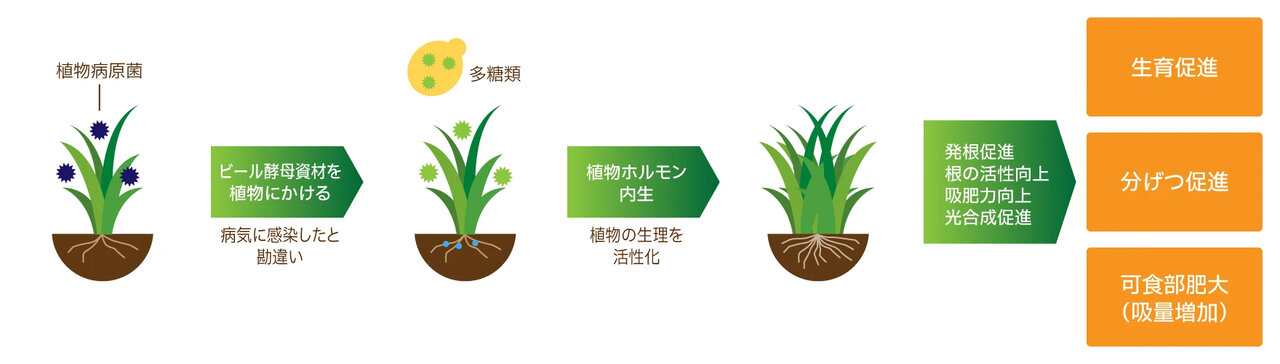
The second is an even more groundbreaking discovery: plant activation by "RCS (Reactive Carbon Species)," generated through a proprietary hydrothermal reaction treatment. RCS, also known as "carbon-centered radicals," are unstable substances that normally disappear within seconds. However, it has been revealed that they can exist in large quantities for extended periods in liquid yeast.
When RCS come into contact with plant cells, reactive oxygen species are generated. This moderate stress enhances tolerance to environmental stress, promotes root and stem expansion, and improves yield and quality by aiding early growth.
The Power of Water-Saving Dry Direct Seeding Cultivation and Solutions to Three Challenges
The "water-saving dry direct seeding cultivation" utilizing this technology holds the potential to fundamentally solve the challenges of traditional flooded paddy rice cultivation. While conventional transplanting methods require steps such as plowing, harrowing, seedling preparation, transplanting, flooding, mid-season drying, pest control, and harvesting, water-saving dry direct seeding cultivation significantly simplifies this process to plowing, seeding, pest control, and harvesting.
"Compared to the traditional method of harrowing, seedling preparation, and transplanting, this method simply involves sowing the seeds (in their husks) directly. In some cases, seeds can even be dropped using drones," says Mr. Ueyabu.
The reduction in workload and capital investment achieved by this cultivation method is remarkable. According to data from producers in Saitama Prefecture in 2024, it resulted in a 70% reduction in labor costs, a 65% decrease in equipment and machinery costs from April to June, and a 90% reduction in water usage. By eliminating the need for rice transplanters and seedling nurseries, cultivation costs can be reduced by approximately 55%.
Furthermore, a significant reduction in environmental impact is noteworthy. Methane gas emitted from rice paddies accounts for about 47% of greenhouse gas emissions from Japan's agriculture, forestry, and fisheries sector, with rice cultivation contributing over half of that. Water-saving cultivation, by avoiding flooding, suppresses the activity of methanogenic bacteria, and has been proven to reduce greenhouse gas emissions per product by approximately 65% in CO2 equivalent.
MAFF Project and Tailwinds of Policy Change
In February 2024, the Ministry of Agriculture, Forestry and Fisheries launched the "Project for Manualization of Cultivation Techniques for Domestic and Export Rice and Examination/Survey of Export Potential." Initiated as an export promotion project led by the International Trade and Food Industry Bureau, efforts were underway to establish cultivation techniques and conduct export trials. Amidst this, the domestic rice shortage situation prompted a policy change aimed at increasing rice production, drawing even greater attention to this water-saving dry direct seeding technology.
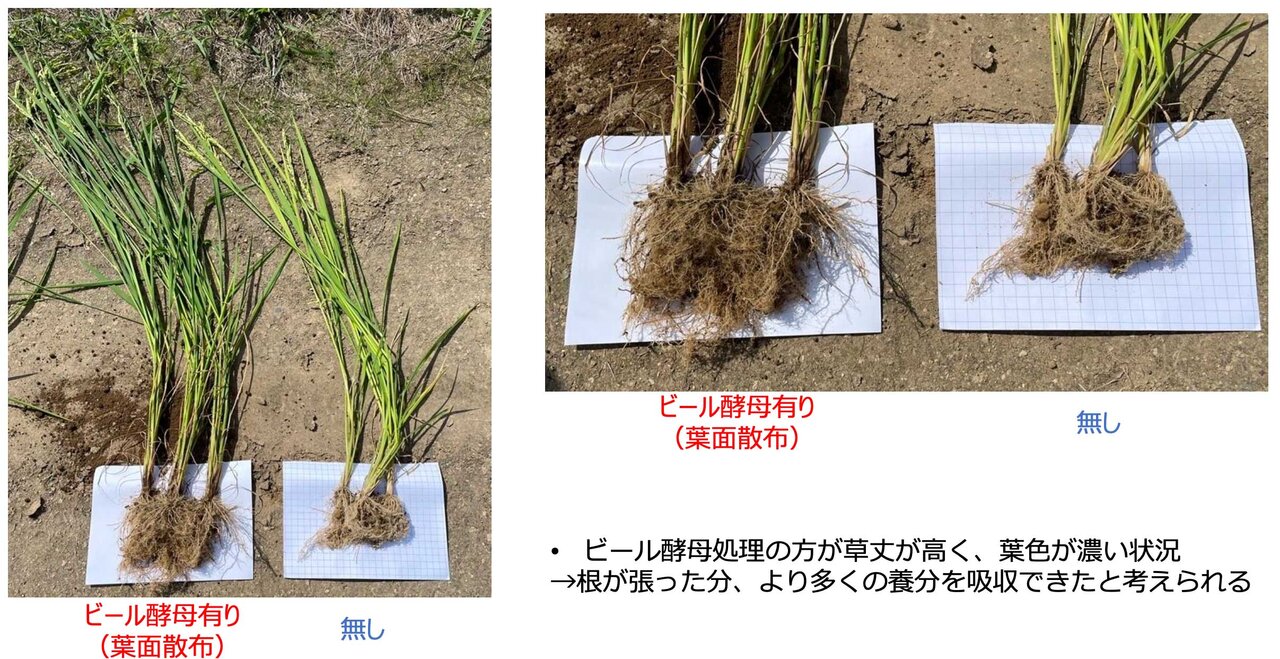
An example from Fukuda Farm in Abashiri City, Hokkaido. It is evident that rice grows better when the beer yeast material is used.
No Impact on Crop Quality: The Power of Yeast to Save the Planet
One of the most crucial questions is the impact on taste. Regarding this point, Mr. Ueyabu responds as follows:
"We have participated in comparative tastings of rice grown with water-saving methods and rice grown with traditional flooding in various settings, and in most cases, respondents couldn't tell which was which."
He further emphasizes, "However, our material is not exclusively for water-saving cultivation. It can also be used in conventional flooded paddy rice cultivation. Our aim is simply to broaden the options within the framework of appropriate techniques for appropriate locations."
This statement is made with the understanding that the goal is not to replace existing flooded paddy rice cultivation, but rather to supplement areas requiring increased production with more efficient methods. The sustainable development achieved through the differentiation of labor-intensive premium rice and efficiently produced everyday rice may represent the future direction for Japanese rice cultivation.
Indeed, expectations for this technology are steadily growing. "Since last autumn, inquiries have surged along with media coverage, and actual sales have increased 14-fold compared to the previous year," says Mr. Ueyabu.
Conclusion
The fruits of the Asahi Group's long-standing yeast research are now contributing to solving global challenges. Practical, scientifically-grounded solutions are being concretely presented for the complex issues facing modern society, including rice shortages, labor scarcity, and climate change.
The "Asahi Yeast Science Project," which aims to "solve global health and social issues through the power of yeast," has seen its agricultural technology, born as part of this initiative, emerge as a potential innovation from Japan with the possibility of spreading worldwide.
The small seeds sown by Mr. Fukuda in Abashiri may eventually yield a great harvest that saves the planet. The challenge of pioneering the future of agriculture has only just begun.