Touch, taste, and deepen your understanding. An educational food class to experience Australia's nut industry firsthand | EAT
EAT | Australian Trade and Investment Commission
Learn about the appeal of the nut industry, which supports both the environment and health.
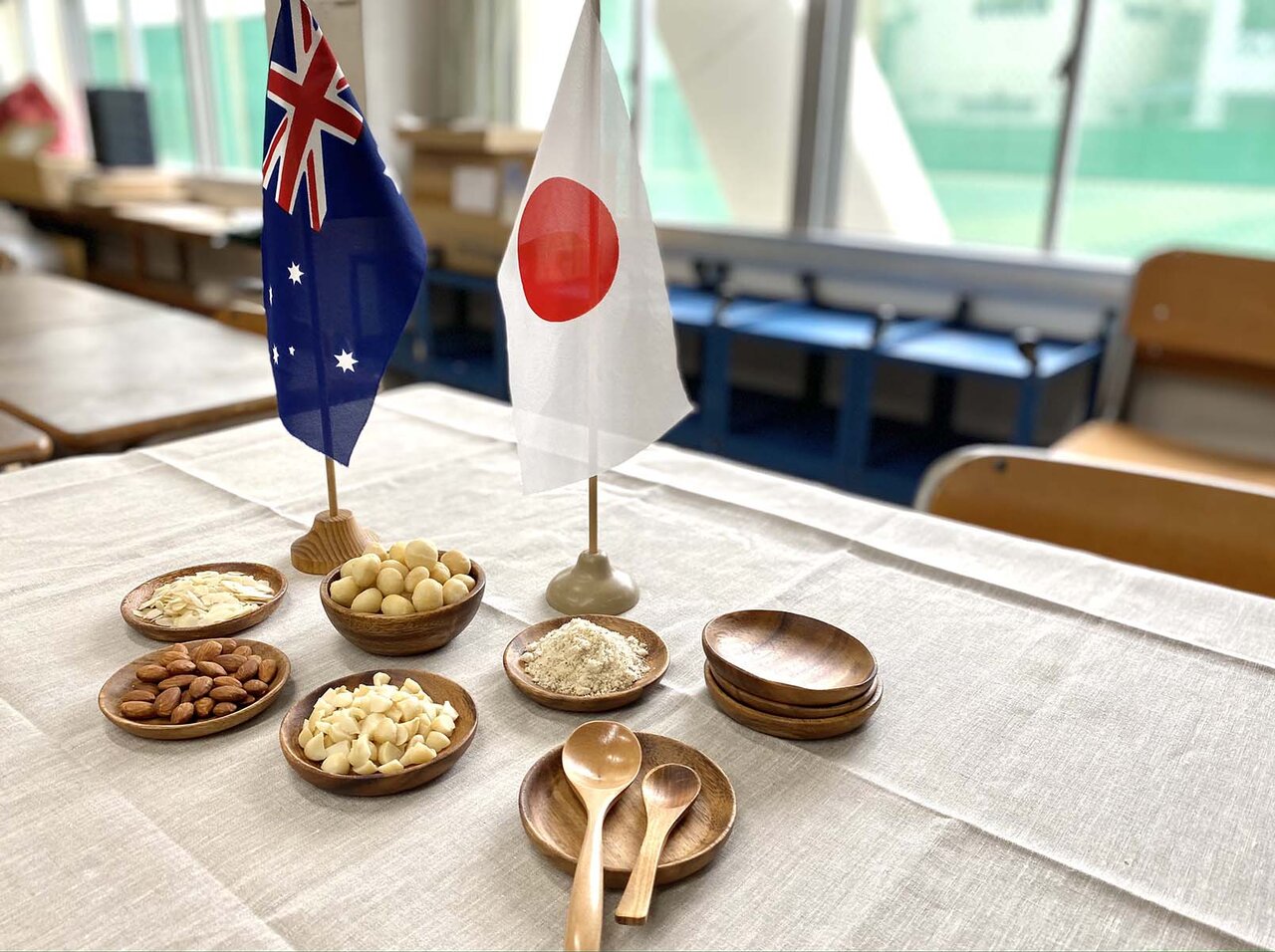
On June 21, 2022, a food education class about nuts for elementary school students was held at Kunimoto Elementary School, part of the Kunimoto Gakuen educational foundation in Setagaya, Tokyo, organized by the Australian Trade and Investment Commission. Students learned about the production status of Australia's nut industry, which ranks second in almond production and first in macadamia nut production worldwide, and its initiatives for the SDGs. Sara Otonaka, a "Nut Cuisine Researcher," also participated as an instructor. Through the experience of cracking shells, and actually seeing, touching, and tasting, we interviewed students who deepened their understanding and interest in nuts.
For a better planet. The nut industry excels in its SDG initiatives.
Australia is the world's second-largest almond producer and boasts the world's largest production of macadamia nut kernels. Approximately 30% of the world's macadamia nuts are produced in Australia and exported to 40 countries. Japan is no exception, and many of the almonds and macadamia nuts we casually consume are likely from Australia.
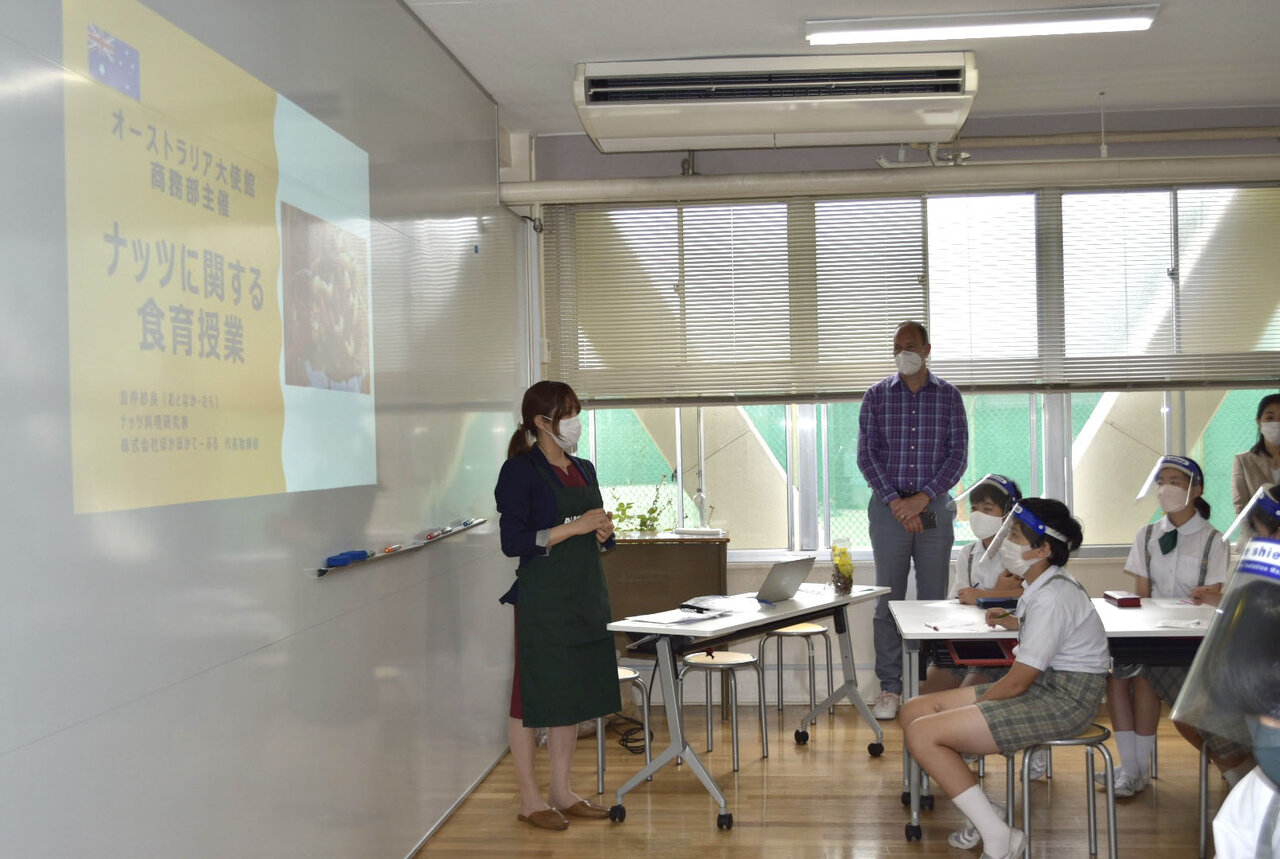
This time, the Australian Trade and Investment Commission organized a food education class where elementary school students learned about Australia's nut production and the nutrients contained in nuts using their five senses.
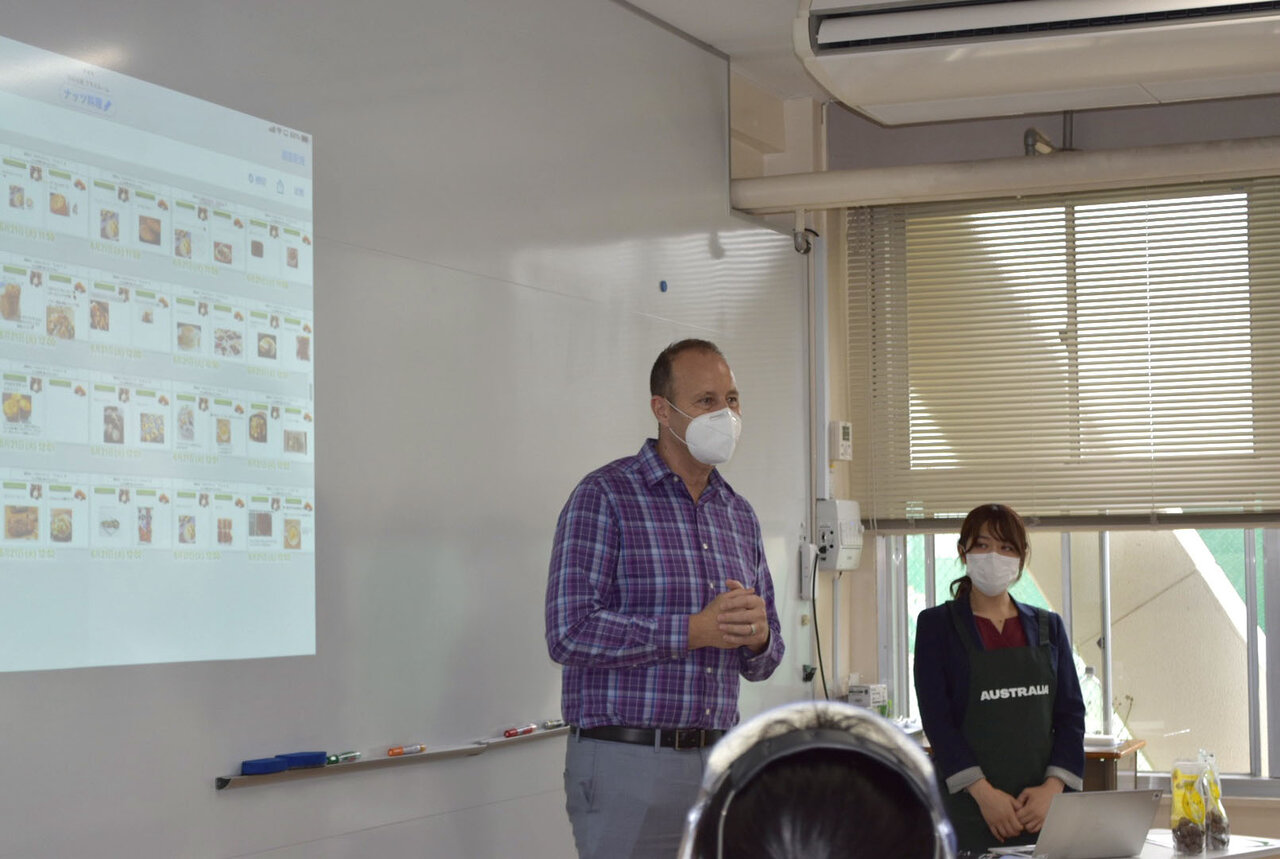
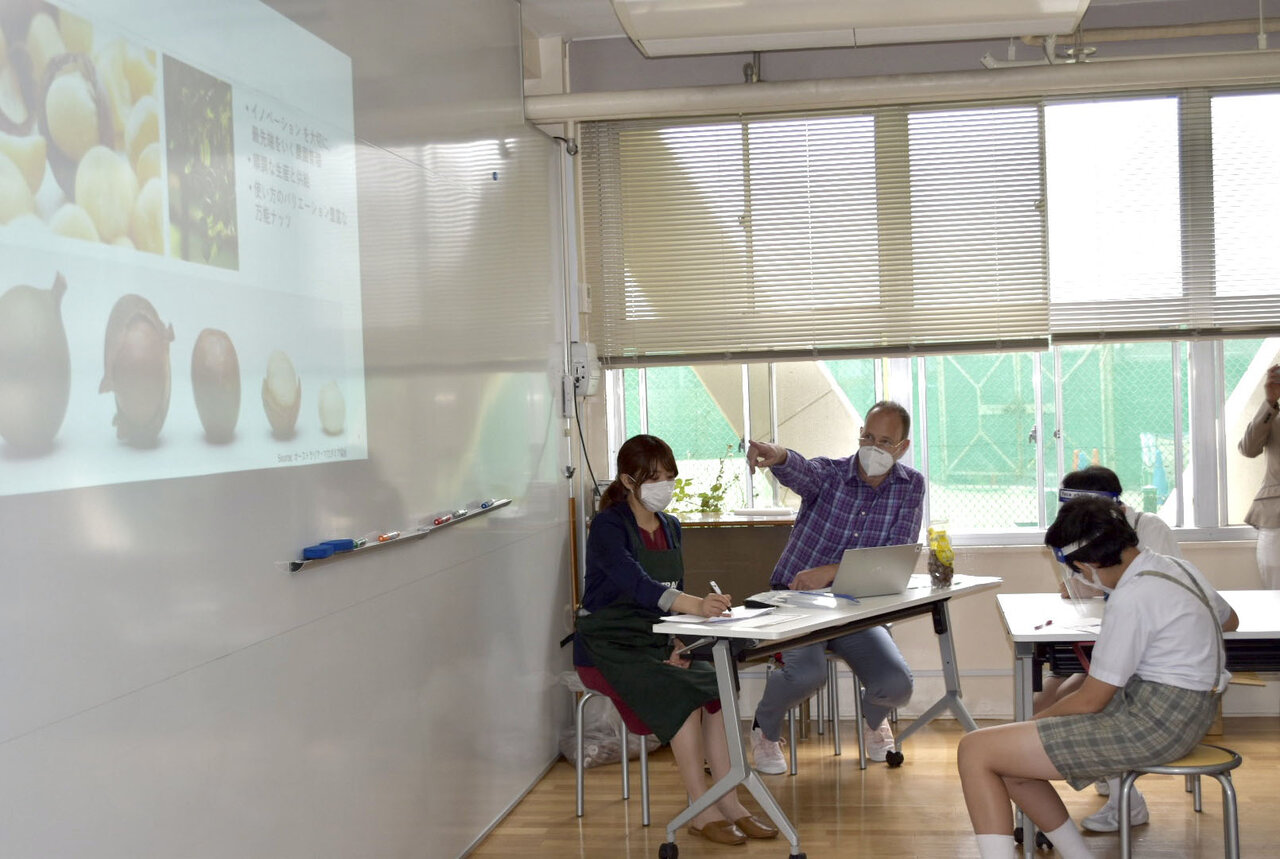
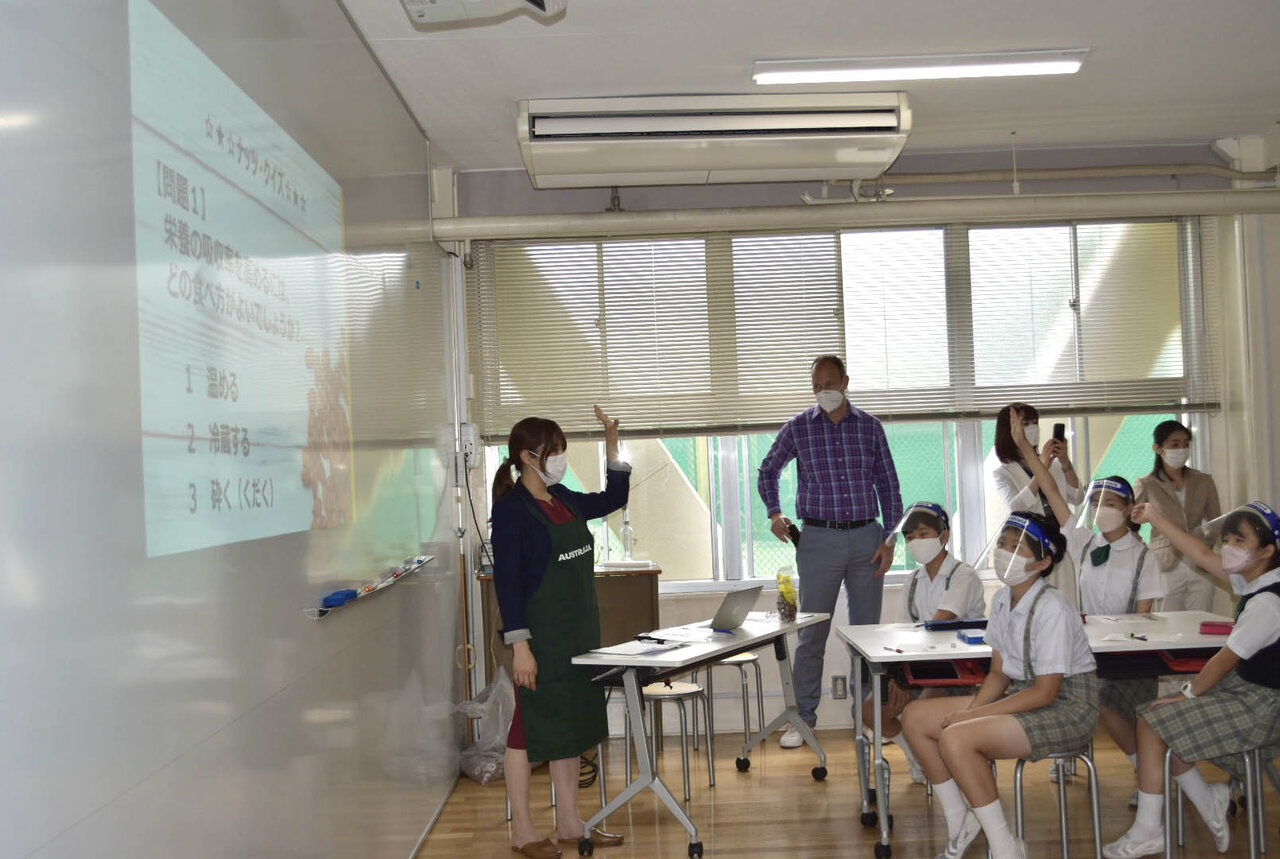
The class began with a brief quiz about Australia by Mr. Murray Spence, Counsellor at the Australian Trade and Investment Commission, followed by an explanation of the production status of Australia's nut industry and its relationship with the SDGs.
In fact, Australia's nut industry also contributes significantly to SDG initiatives.
Almonds are a familiar food in Australia. The almond section in supermarkets is quite large, offering them whole, crushed, or mixed with other nuts in various forms. They are sold by weight, allowing customers to buy only the amount they need, and excessive packaging is avoided.
Furthermore, almond shells can be recycled as compost or as a renewable energy source for power generation. The nutrient-rich outer skin also serves as feed for livestock, providing a crucial source of nutrition during droughts. Additionally, new uses for the shells and husks as biomass are currently being researched.
The macadamia nut industry also makes significant contributions to SDG initiatives.
To combat pests that bore holes in nuts, the eggs of parasitic wasps are utilized. The adult wasps act as natural enemies of the pests, reducing damage. Currently, about 70% of farmers adopt this method, leading to a significant decrease in chemical pesticide use over the past decade. The trees and shells are reused for power generation and as fertilizer for livestock, while organic matter such as branches and leaves are returned to the soil.
Macadamia trees are also known as "giants of sustainability" because they help regulate water usage and prevent CO2 emissions into the atmosphere.
In addition, the almond industry utilizes the latest technology for efficient water use and partners with honeybees. The macadamia nut industry also encourages the exploration of organic alternative solutions. These numerous activities aimed at achieving the Sustainable Development Goals make it a vital industry not only for the economy but also for building a sustainable society.
A food education class to enjoy nutrient-rich nuts with all five senses.
After deepening their understanding of Australia's nut production, students learned about the nutrients in almonds and macadamia nuts, and recommended ways to eat them, from a food education perspective.
The instructor for this class was Sara Otonaka, who is active in the media as a "Nut Cuisine Researcher."
The class proceeded in a quiz format about the causes and symptoms of summer fatigue, which one should be mindful of during this season. Students learned about the nutrients in nuts that are beneficial for preventing summer fatigue, cooking methods that enhance nutrient absorption, and other foods that pair well with nuts.
While taking notes and listening intently, the students actively raised their hands to participate and seemed to be enjoying the class.
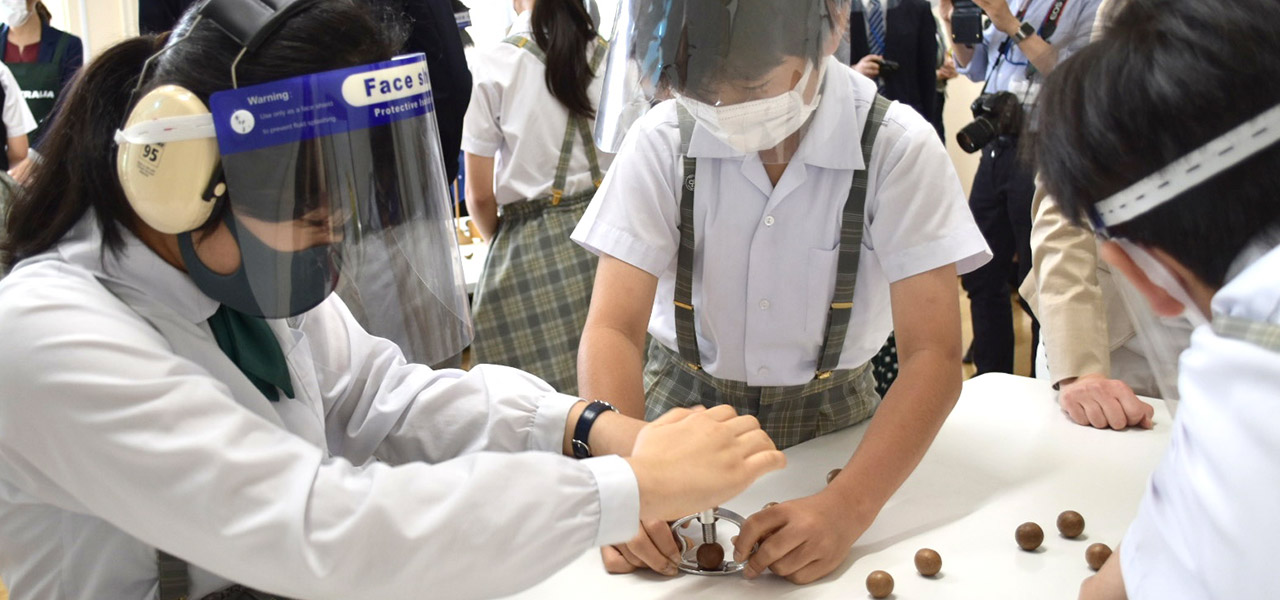
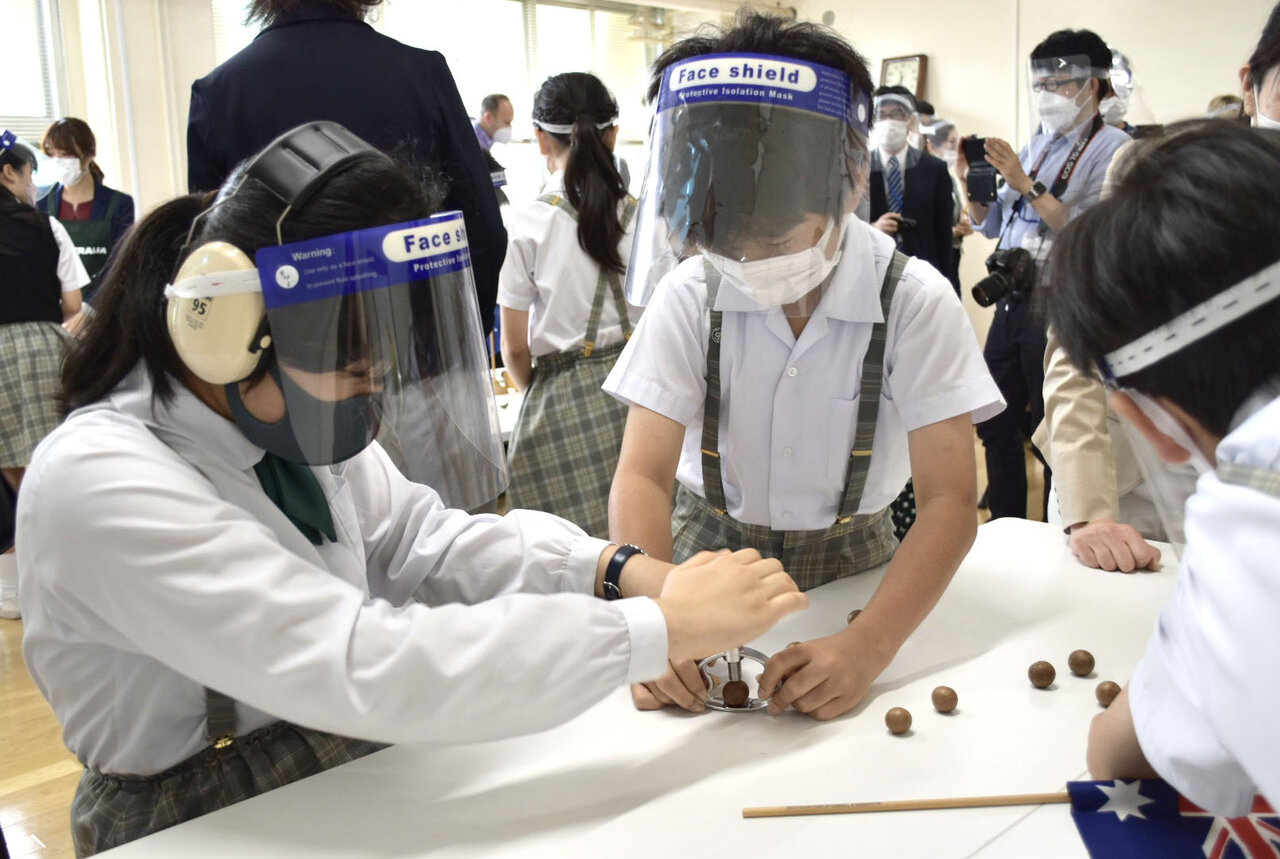
After learning about the nutritional power of nuts, it was time for a macadamia nut shell-cracking experience. Macadamia nuts, known as the "king of nuts," have the hardest shells among all nuts. Each group received whole nuts and used two types of shell-cracking machines, similar to those used in Australia, to crack them open.
The students were fascinated by the macadamia nuts, which they were touching for the first time. Some were surprised by the feel and hardness of the shell, while others brought the nuts close to their noses and exclaimed, "It smells like milk!" their faces lighting up with new discoveries.
Cracking nut shells requires a surprising amount of force. The students struggled with the shell-cracking machines, trying to crack only the shell without breaking the kernel inside. The students, who had listened quietly and attentively during the lecture, were now cooperating cheerfully, showing off their perfectly cracked shells with pride.
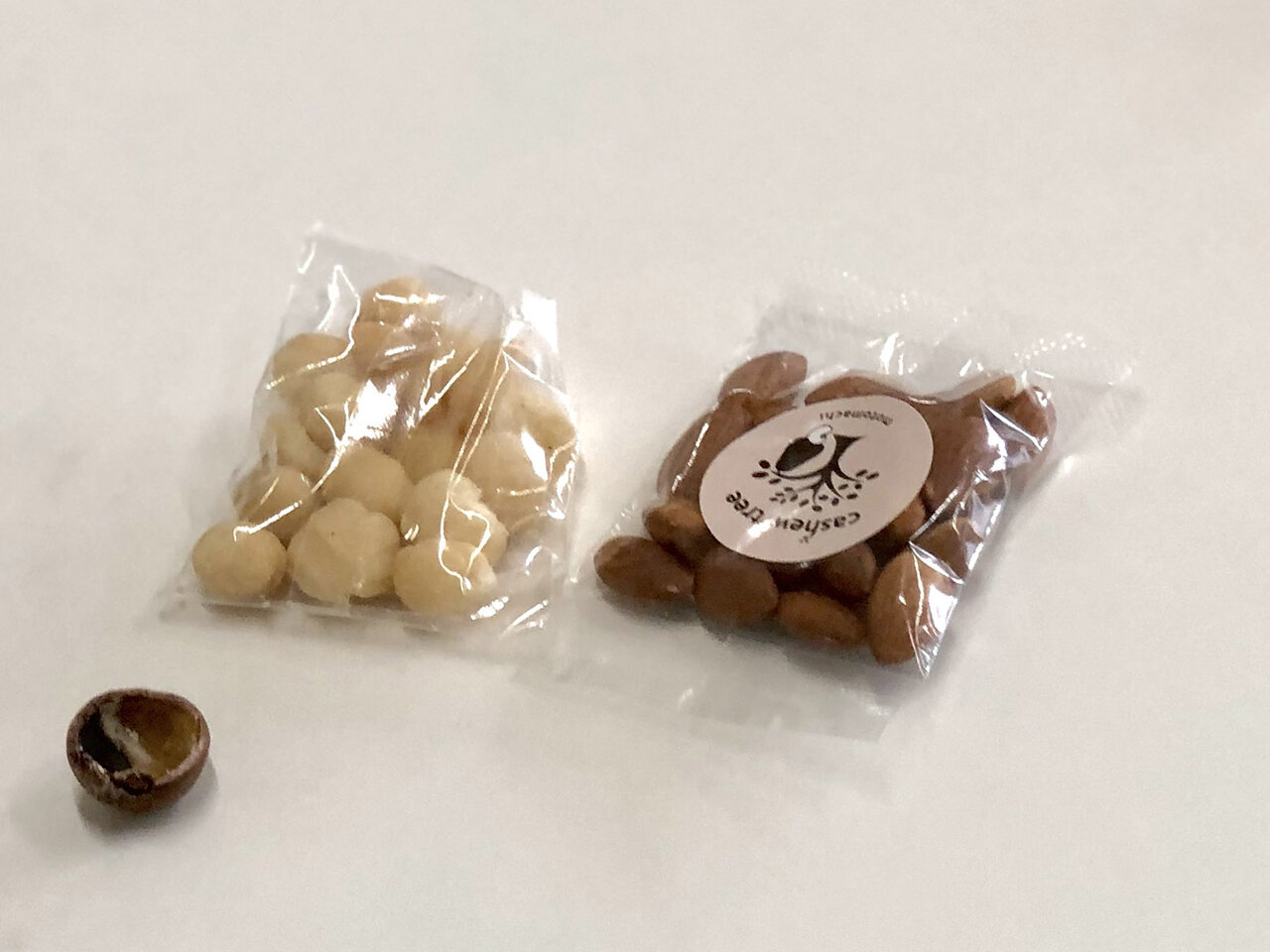
After the shell-cracking experience, samples of almonds and macadamia nuts were distributed for a tasting session.
The students shared their preferences and taste impressions, saying things like, "Almonds are delicious, and the flavor intensifies the more you chew," and "Macadamia nuts are less salty, soft, and easy to eat."
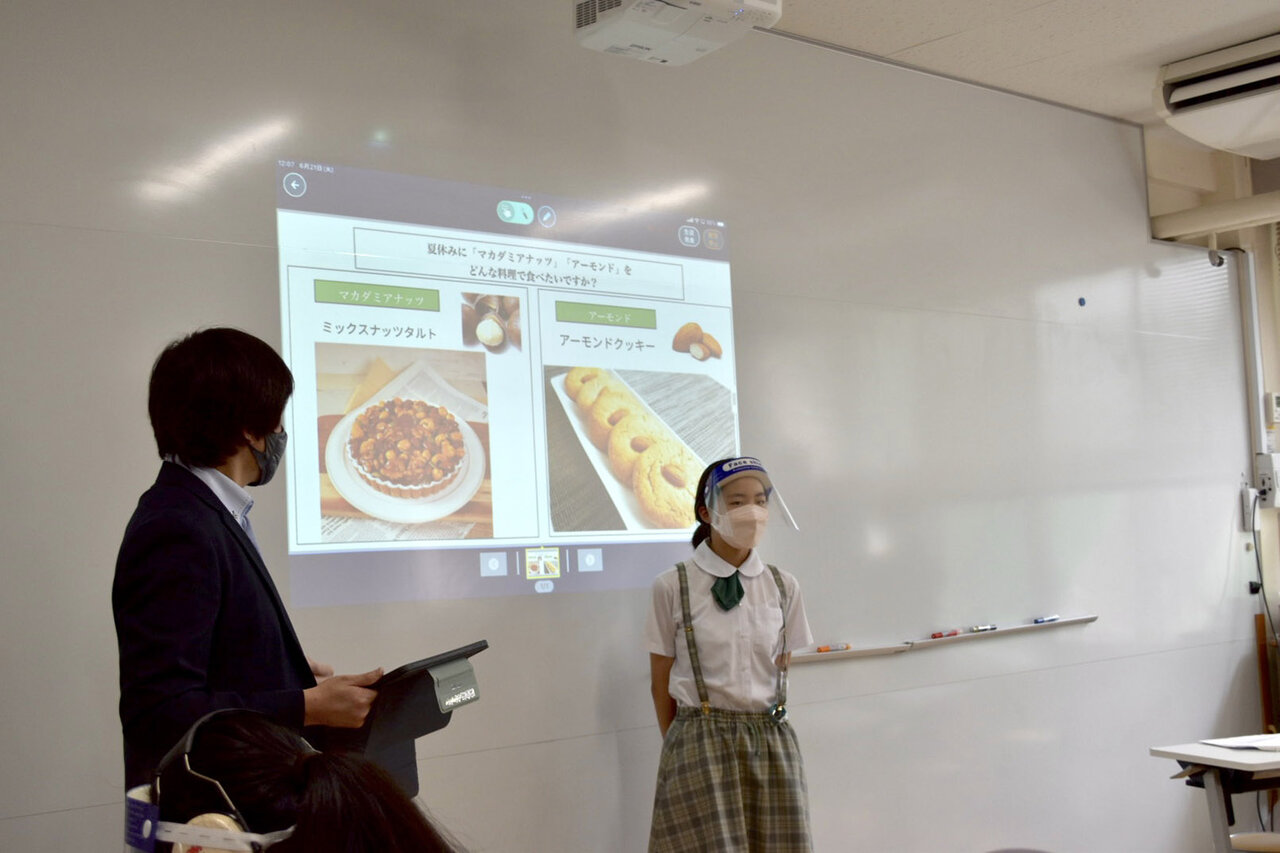
Following the tasting, each student presented dishes they had conceived using almonds and macadamia nuts. They shared ideas for how to enjoy these creations, such as a miso-dressed macadamia nut dish that highlights its texture, a tart, and a salad with almonds, showcasing their rich imagination and when they would like to eat them. Having just tasted the nuts, they spoke enthusiastically, capturing the unique characteristics of each.
Ms. Otonaka commented, "I was delighted to see so many different types of dishes, and some of them gave me new ideas that I'd like to try myself. As a nut specialist, I'm happy that everyone in this class has come to appreciate the unique flavors of nuts."
Students who participated shared their thoughts, such as, "I didn't know much about Australia or other countries before, but this class taught me that nuts are enjoyed worldwide and are highly nutritious, making them feel more familiar," and "I want to recommend them to many people." Their comments indicated that they had become interested in Australia and enjoyed the experience through nuts during this class.
At the end of the class, Mr. Murray Spence said, "This was a truly enjoyable time. I'm glad you learned that almonds and macadamia nuts can be eaten at any time of day, morning, noon, or night."
He concluded with a smile, "For those interested in Australia, I truly hope you will visit someday. You can have experiences beyond your imagination, so I believe it would be a wonderful opportunity. Let's meet again in Australia."
Nuts are an ideal food not only for children but also for students who often skip meals, working adults, and many people leading busy lives.
Australian almonds and macadamia nuts, which are highly nutritious and cultivated in an environmentally friendly manner, are a strong ally in preventing summer fatigue, a concern during the upcoming season. Let's actively incorporate nuts into our diet.