Feature: An Idyllic Paradise in the Indian Ocean: Chapter 1, A Unique Resort Experience Called the Maldives
Feature: Ready to Enjoy Resorts Again?
An Idyllic Paradise on the Ocean That Fulfills Every Wish
Chapter 1: The Unrivaled Resort Experience Called the Maldives
People head to beach resorts for various reasons. Some are active types who want to enjoy marine sports to their heart's content, while others simply want to relax and heal from their daily fatigue. The place we visited this time was an idyllic paradise on the ocean that satisfied both of these desires.
Photographs by JAMANDFIXText by JUNKO TANAKA (OPENERS)
Choosing Your Hotel is Key to Everything
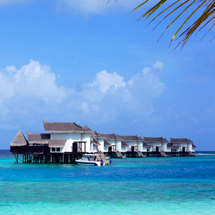
The Maldives, an island floating in the Indian Ocean. This is a republic located southwest of India and Sri Lanka, comprising 1,190 islands, and is a place visited privately by celebrities from all over the world. Viewed from above, you can clearly see islands covered in lush vegetation, fringed by pale blue shallows, dotted across the deep blue sea.
However, rather than being scattered, the islands are characterized by their gentle, connected formation into groups. Within its vast territory of 90,000 square kilometers, 26 such atolls (ring-shaped coral reefs) are scattered from north to south. This is why it is called the "Necklace of the Indian Ocean." Yet, only 1% of the territory is land. In total, it is 298 square kilometers, about one-seventh the size of Tokyo.
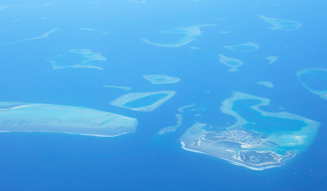
Most of these islands are so small that they can be circled in about 30 minutes on foot. Each island has its own role, such as fishing islands, agricultural islands, or airport islands. Of these, over 100 are currently used as resorts. Furthermore, they adopt a luxurious "one island, one hotel" style, where an entire island is dedicated to a single hotel.
Unlike resorts where daily life unfolds just outside the gate, here, only hotel guests and staff are present. In other words, it's a "remote island" situation. You can enjoy the white sand, blue sky, emerald green sea, and the hospitality of the staff in complete privacy.
Since the entire island can be freely designed, it's easy for operators to express their own unique style. There are opulent luxury hotels, as well as hotels with minimal facilities where nature takes center stage. Moreover, a variety of types coexist, from hotels for couples creating romantic moments to hotels for families equipped with childcare facilities.
This might make you want to experience multiple hotels at once, but since there are no public transportation links between islands, the basic practice is to stay at one hotel even during a long stay (excluding overnight stays in Malé). In other words, in the Maldives, the destination becomes the hotel. It's no exaggeration to say that the quality of your stay hinges on your hotel choice.
However, viewed from another perspective, if your desires perfectly match the hotel's unique offerings, a comfortable and stress-free stay is guaranteed. We recommend taking your time and choosing carefully.
Hospitality Begins at the Airport
Belonging to a tropical climate with high temperatures and humidity, the Maldives enjoys a warm climate year-round, with average temperatures ranging from 23 to 31 degrees Celsius. The seasons are broadly divided into two: the dry season from December to April, and the rainy season from May to November. As the names suggest, during the dry season, sunlight constantly shines, and apart from occasional brief showers, there is no rain at all. On the other hand, during the rainy season, it doesn't necessarily rain continuously. Pleasant sunshine, like that seen on clear days in the dry season, can also be experienced during the rainy season.
In fact, although July, when we visited for our coverage, was right in the middle of the rainy season, we were blessed with clear skies for the most part, and even at its worst, only a few squalls occurred per day. This rainy season is actually a prime time for those in the know. You can stay at hotels that are fully booked during peak season, and the rising sea levels and active wave movements make it ideal for surfing. However, since weather is unpredictable, it's important to keep in mind that heavy downpours can also occur... so plan accordingly.
The gateway to the Maldives is Velana International Airport, located on Hulhulé Island, an island near the capital city of Malé. Since there are no direct flights from Japan, you will enter the country via a region in Asia. In addition to the two main routes via Colombo on SriLankan Airlines (4 flights per week) and via Singapore on Singapore Airlines (daily), there are also options like Cathay Pacific via Hong Kong (4 flights per week), Malaysia Airlines via Kuala Lumpur (daily), Korean Air (3 flights per week), Etihad Airways (daily), and Emirates (daily). The number of connecting flights is increasing year by year. The smoothest way to reach the destination among these is via SriLankan Airlines, taking approximately 11 hours from Narita to Colombo and about 1.5 hours from Colombo to Malé, for a total of 12.5 hours.
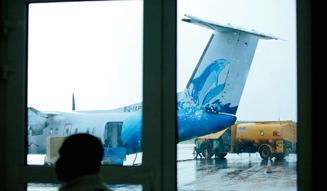
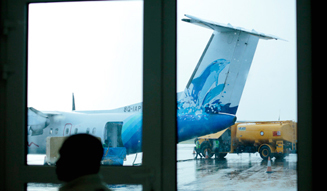
The mode of transportation after arrival varies depending on the location and distance of your hotel. For hotels in the North Malé Atoll or South Malé Atoll, which are close to the airport, you will travel by boat. For hotels in more distant atolls, you will travel by seaplane or domestic flight. SriLankan Airlines, Cathay Pacific, and Malaysia Airlines flights from Japan arrive at night, so you will need to stay overnight in Malé before transferring the next morning.
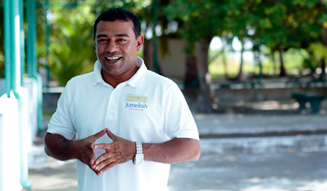
In any case, rest assured that upon exiting the airport gate, local staff from your hotel will be waiting for you. They will arrange all the procedures until you reach your hotel. The Maldivian way of hospitality begins at the airport.
Have you begun to imagine the unique resort experience called the Maldives? In Chapter 2, we will take a closer look at this Maldivian style of hospitality, using "Jumeirah Dhevanafushi," where we stayed this time, as an example.