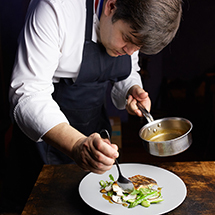
Feature | How to Create "Pirouette" | Chapter 2: From Production Site to Kitchen, from Kitchen to Table.
Feature: How to Create Pirouette
Crafting a New Tokyo Future Through Food
Chapter 2: From Producer to Kitchen, Kitchen to Table. Traveling Ingredients Connect People.
Pirouette, a multifaceted culinary space, aims to foster a rich food culture where everyone can experience authenticity daily. In Chapter 2, we hear from Chef Eric Trochon and Chef Naoya Kobayashi, who express this vision through their cuisine. We hope you'll feel the pulse of this place, on the cusp of opening, through the spirit they strive to convey on the Pirouette stage.
Text by MONZEN NaokoPhotographs by CONTRAIL
“We want to deliver the energy of freshly harvested ingredients as they are.”
CONTRAIL, a collective of like-minded adults transcending industry boundaries, aims to propose new places and experiences. Kenichi Mori, the representative, and Hiroshi Ito, who handles art direction, witnessed a food culture in Paris that was "present there and absent in Japan today." Among the many places that offered them inspiration and insight, the restaurant "Semilla" stood out as particularly close to their ideal.
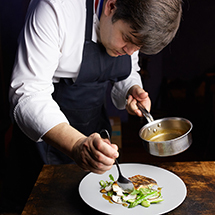
Eric Trochon, Advisory Chef at Pirouette
A popular bistro offering authentic cuisine in a very casual and friendly atmosphere. It emphasizes ingredient quality, listing the origin and producers on its menu. Producing the cuisine at Semilla is Eric Trochon, a recipient of France's M.O.F. (Meilleur Ouvrier de France) award.
"Despite being involved with an M.O.F. award-winning chef, it has no signage, is relaxed, and reasonably priced. I was deeply impressed by this casually chic establishment," says Mori. The two, who connected through Mori's company, Grove Dish, are said by those around them to "understand each other at a fundamental level without needing many words." To infuse Trochon's technique and Parisian esprit into Pirouette, Mori invited him to serve as advisory chef.
Let's ask Chef Trochon about Pirouette's cuisine. "I want to focus on 'how to best utilize the ingredients that arrived today.' While many restaurants claim to use fresh ingredients, it's not actually that simple to build a menu based solely on what arrives each day. However, here, prioritizing the quality and freshness of ingredients, we decided not to fix the menu in advance.
I find the true joy of cooking in delivering the energy of freshly harvested ingredients as purely as possible. The producer, the cook, the diner—the essence of culinary delight is packed into the interactions among them. A restaurant where new dishes are born daily using ingredients that arrived that very day, with a constantly changing menu. While it may be challenging operationally, I want to take on this challenge with the same spirit that animates Semilla," says Trochon.
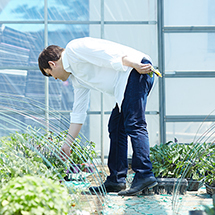
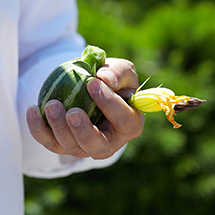
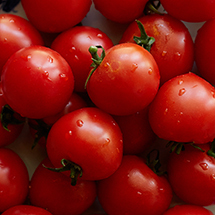
Vegetables arrive daily at Pirouette from Sunaga Farm in Saitama. Trochon, during his visit, praised the quality of the produce and the producer's dedication.
The Importance of Ingredients, Taught by France
Chef Naoya Kobayashi, who helms Pirouette's kitchen, is someone whose talent Trochon recognizes. What Paris has that Japan currently lacks—it wasn't just the CONTRAIL members who felt this. Chef Kobayashi, after working in several French restaurants in Japan, also moved to France. After a year's stay, his values had completely shifted by the time he returned to Japan.
Just as Mori and Ito witnessed people genuinely enjoying their meals in France, Chef Kobayashi, from a chef's perspective, felt that the French people were "truly enjoying life." Regardless of nationality or age, talent is recognized. They converse sincerely without hierarchy, aiming for the same goals. In a restaurant, a place where people connect, this simple and clear environment allows chefs to perform well without unnecessary stress.
Like Trochon, Chef Kobayashi also emphasizes ingredients. The produce of the South of France, which he encountered first, quickly captivated him. While he had begun visiting producers in Japan and becoming drawn to the appeal of ingredients, it was facing world-class quality and freshness at the border with Italy that made him realize ingredients were the most crucial element of his cooking.
My time in France defined my cooking. Some dishes rely on technique, but those can be completed by oneself. Ingredients, however, are brought about through human connection. As producers, I feel a commonality with them, and listening to their stories is incredibly educational.
I want to engage deeply with people and connect with ingredients. Perhaps what I prioritize is people, rather than just ingredients. Even now during recipe testing, the vegetables primarily come from Sunaga Farm in Saitama. For meat and fish, I aim to further strengthen my connections with producers and fishermen," says Kobayashi.
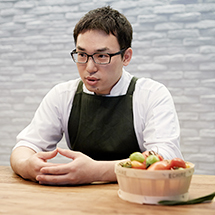
Naoya Kobayashi, who oversees Pirouette's kitchen
Feature: How to Create Pirouette
Crafting a New Tokyo Future Through Food
Chapter 2: From Producer to Kitchen, Kitchen to Table. Traveling Ingredients Connect People.
A Kitchen of Daily Change and Innovation, Without Signature Dishes
We also inquired about the specific menu. The bistro plans to offer a prix fixe course consisting of cold appetizers, hot appetizers, main course, coffee, and petit fours. The price is ¥5,000 (excluding tax). Desserts and cheese will be extra. To offer high-quality, fresh ingredients as affordably as possible under the concept of "casual dining," collaboration with producers is essential.
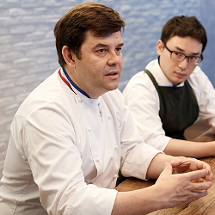
Trochon enthusiastically states, "I want to visit Japan about once every two months."
As Kobayashi mentioned, Pirouette is striving to create a system where they find ingredients themselves, visit producers, gather them, and deliver them to the recipients.
"To widely convey good things, a place to sell ingredients is also necessary. The épicerie will sell ingredients used in the bistro and café, and customers can also request specific ingredients for their dishes. When I visited Sunaga Farm, I was amazed by the high quality of the vegetables and how the producers, while holding strong convictions, remained natural. For example, they practice organic farming as a matter of course, without making a fuss about it.
Both chefs and producers should naturally respect nature, and the irreplaceable relationship built on mutual understanding and trust. Through the bistro, café, and épicerie, we want customers to clearly see which producers grew the ingredients and how they were made," says Trochon.
Their restaurant, where they face the challenge of ingredients seriously every day, has no signature dishes. "I have no intention of imposing my own cooking on customers. On the contrary, I want each customer to create their own unique signature dish," says Kobayashi. "Isn't it more enjoyable for both the chef and the customer to have variety rather than sticking to fixed dishes? Continuous change is my principle. Especially for young chefs, it's important to take various actions and innovate. Technique is important, but based on that, I want them to constantly pursue new challenges and discoveries. This project is not just a job for me; it's a human business. I want to grow together with everyone, not just by teaching techniques, but by being part of the team," says Trochon.
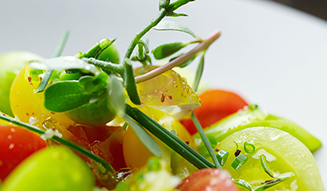
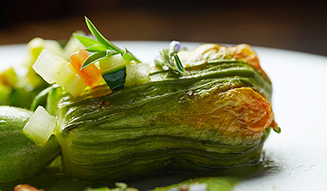
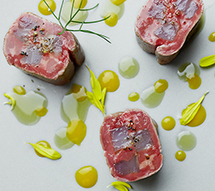
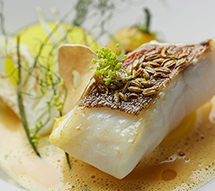
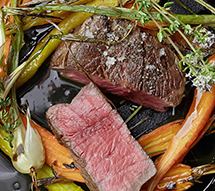
The vegetables, such as tomatoes prepared as ceviche (top left) and zucchini blossoms (top right), are all freshly harvested from Sunaga Farm. The roulade of Iwate short-horn beef and sea bass from the Goto Islands (bottom left), and the sea bass prepared bouillabaisse-style from the Goto Islands (bottom center), as well as seafood, are primarily sourced from a trusted supplier in Nagasaki. The roast of Iwate short-horn beef with vegetables from Sunaga Farm (bottom right) seems to encapsulate the passionate producers' dedication in a single dish.
While the bistro offers course menus, the café will provide smaller portions, with options that can be enjoyed quickly even by a single diner. Plans are also underway for cooking classes and weekend events where guests can share dishes prepared with generous portions of vegetables and large cuts of meat.
Whether dining alone, with a group, enjoying a drink, or simply purchasing vegetables, all are welcome. Like its menu, Pirouette offers a wide range of free choices for visiting purposes. It's a proposal for a place where new discoveries and enjoyment can be found, centered around rich food culture. The ingredients will undoubtedly connect people one after another on this stage—producers and chefs, chefs and guests, and even guests with each other.
What Paris has that Tokyo lacks, a rich food culture where authenticity exists in daily life, connections between people... The keywords that emerged from the interviews for Chapter 1 (Mori and Ito) and Chapter 2 (Trochon and Kobayashi), conducted on completely different days, were coincidentally the same.Interview for Chapter 1 (Mori, Ito)Of course, neither party had coordinated beforehand. Friends, places, and timing—a strong will and power from people attract these elements. The resonant underlying theme, shared by both the creators and the chefs, continues to grow in magnitude and scope as the opening approaches.
In the final installment, Chapter 3, we will focus on the recipients of Pirouette's offerings. How will this place, which envisions a new future for food, resonate with its guests? Let's experience the world of Pirouette through the guidance of adults who know authenticity.
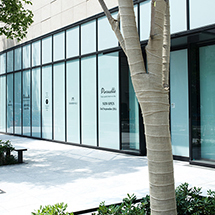
Pirouette
Address: 1F, Garden House, Toranomon Hills, 1-23-3 Toranomon, Minato-ku, Tokyo
Tel. 03-6206-6927
Hours: [Bistro] Lunch 11:30–14:30 (LO), Dinner 18:00–21:30 (LO) *Sat, Sun, Holidays 17:30–21:00 (LO)
[Café] Lunch 11:00–15:00, Tea 15:00–17:00, Dinner 17:30–22:00 (LO) *Sat, Sun, Holidays until 21:00 (LO)
[Épicerie] 11:00–23:00 *Sat, Sun, Holidays until 22:00
Opening Date: September 3 (Wed)
http://www.pirouette.jp
http://contrail.cc/
https://www.facebook.com/contrail.cc