The Optimal Mix of Natural Gas and Renewable Energy
The Frontrunner for Next-Generation Energy──
The Best Mix of Natural Gas and Renewable Energy
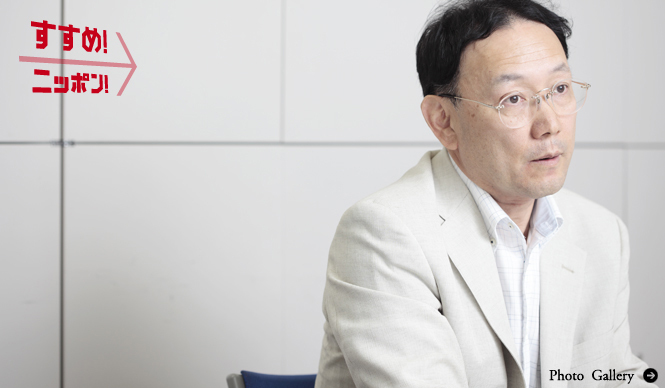
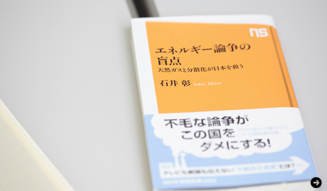
What will be at the center of next-generation energy? Akira Ishii argues that natural gas is the most promising answer. Let's explore the importance of natural gas through an interview with Ishii, whose book "The Blind Spot in the Energy Debate" (NHK Publishing) has become a topic of conversation.
Text by Fumio Ogawa
Photos by JAMANDFIX
Renewable Energy, Taken Too Far, Leads to Environmental Destruction
──I found your book, "The Blind Spot in the Energy Debate," published in July 2011, to be very interesting. The subtitle reads, "Natural Gas and Decentralization Will Save Japan."
Decentralization of energy is the keyword. In the wake of the Fukushima Daiichi nuclear power plant accident and subsequent radiation leak in March 2011, there's a growing argument that nuclear power should be abolished entirely and we should switch to power generation using renewable energy sources like wind and solar. However, just as relying on nuclear power led to forced blackouts, relying solely on solar power, for example, will present its own problems.
──Are there problems with solar power generation?
Because, if we were to cover Japan's current electricity consumption solely with solar power, estimates suggest it would require an area four to five times the size of the Japanese archipelago. While that might be an extreme example, installing large-scale, concentrated solar panels like in mega-solar power plants would block sunlight from reaching the ground beneath, preventing plant growth and causing environmental destruction.

──So, we need to be careful not to confuse ecology with environmental destruction?
Renewable energy also ceases to be ecological when it exceeds a certain amount. In the past, forests were cleared worldwide for charcoal and firewood, leading to environmental destruction. Pre-industrial Britain, on the verge of desertification, is a prime example. Covering the majority of nuclear power generation with solar and wind power is impractical from this perspective. However, I don't intend to dismiss them entirely. Solar panels can be installed on rooftops of buildings and used for supplementary power generation without causing environmental damage. Therefore, it's beneficial to consider an energy mix that complements the shortcomings of each energy source.
──So, by combining power generation from various energy sources, we aim to reach 100 percent?
Any energy source, if relied upon exclusively, will present some kind of problem. Nuclear power, while not emitting CO2 during operation, can pose an existential threat to humanity in the event of an accident like the one we saw. On the other hand, coal-fired power generation releases a significant amount of CO2.
──Japan has always faced challenges in securing energy. This anxiety also played a role in the acceptance of nuclear power.
Exactly. The oil shocks of the 1970s are still vividly remembered. The panic that oil would run out and disrupt daily life became a widespread social phenomenon. However, in reality, it wasn't a shortage of oil supply but rather a price hike. Japan, heavily reliant on imports for its resources, constantly experiences this sense of unease. That's why I'm focusing on natural gas, a fuel abundant in various parts of the world.
──There are primary and secondary energy sources. Electricity, for example, is generated from primary energy sources like nuclear, thermal, and hydropower. Electricity itself is a secondary energy source that powers lighting, home appliances, and electric vehicles. Natural gas is a primary energy source, similar to nuclear and thermal power. Is it in the same category as oil and coal as a fossil fuel?
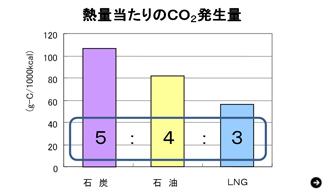
Yes. Its advantages include abundant reserves and lower emissions of CO2 and other harmful gases compared to other fossil fuels when burned. For the same amount of heat, CO2 emissions are about 30% less than oil and 50% less than coal. Furthermore, since it flows readily from gas wells, the equipment is as simple as that for oil, keeping costs down. This is also a significant advantage.
──Investments in power generation facilities like solar panels also lead to future anxieties. If substantial tax revenues are poured in, it could become a burden on taxpayers. In an aging society like Japan's future, I imagine these concerns are significant. Low cost is also a very important theme. By the way, is natural gas imported?
It's imported in the form of Liquefied Natural Gas (LNG). Liquefaction involves cooling natural gas, primarily methane, to -162°C, making it easier to transport. It's transported using specialized ships and stored at portside terminals. It's produced in various locations worldwide, such as Sakhalin, Australia, and the west coast of Canada, relatively close to Japan, so we don't have to rely on the Middle East like with oil. This also diversifies risk.
──What is the estimated amount of natural gas reserves?
Recent global assessments estimate reserves to last over 400 years. Of course, oil reserves are also estimated to last for over 100 years. The reason natural gas is drawing attention as a primary energy source is, as I mentioned, its significantly lower CO2 emissions compared to oil and coal. Another reason is its high power generation efficiency. In a process called combined cycle, gas turbines generate electricity, and then the exhaust heat is used to create steam to generate electricity again. This is 1.5 times more efficient than coal-fired power generation, resulting in one-third the CO2 emissions. This high-efficiency power generation method, combined cycle, is a crucial keyword.
The Frontrunner for Next-Generation Energy──
The Best Mix of Natural Gas and Renewable Energy
Natural Gas and Cogeneration
──If Japan increases its share of natural gas in its primary energy mix, how will supply be managed?
In the future, similar to how natural gas is transported from Russia to Europe, we could consider importing it not only as LNG via tankers but also through pipelines from the continent. While some may worry about the risk of damage from earthquakes with pipelines, they are designed to move with the ground, similar to subways, minimizing stress and thus the risk of damage is very low. Alternatively, we could consider overland pipelines, perhaps alongside highways. The advantage here is that repairs are easier if damage occurs on land. Natural gas is very light, so if a leak occurs and it's released into the atmosphere, it rises quickly, reducing the risk of explosion. This is also an advantage.
──Given all these advantages of natural gas, why don't Japanese mass media discuss its future potential positively?
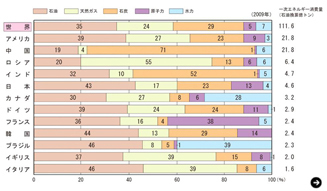
It's likely because they consult environmental activists rather than energy experts. Globally, the share of natural gas in primary energy is steadily increasing. For example, it's about 50% in the Netherlands, and around 40% in the UK and Italy. While we might assume the US is a nuclear power nation, the move away from nuclear is accelerating, and natural gas accounts for about 25%.
──What is the current proportion of natural gas in Japan's primary energy mix?
Compared to other advanced nations, it's remarkably low at about 15%. Russia is around 50%, and China and South Korea are also focusing on natural gas. The reason natural gas has been overlooked in Japan might be due to the intentions of the electric power industry and the government to prioritize nuclear power as the primary energy source. This is similar to France, where nuclear power has a high share, and natural gas accounts for only about 17%. However, in Europe, they can buy electricity from neighboring countries, so if Germany were to phase out nuclear power, they would have the guarantee of surplus electricity from France. This is a significant difference from Japan, which must rely on its own domestic power generation.

──How should natural gas be utilized going forward?
Instead of just using it as fuel for large power plants in a combined cycle, why not aim for smart city development based on natural gas utilization? It's important for society as a whole to use energy efficiently. While experiments with "smart grids," systems that comprehensively manage electricity usage at a regional level, are progressing, we should also consider the efficient use of primary energy, natural gas, not just secondary energy like electricity.
──Indeed, there are already systems in place for efficient gas utilization.
That's cogeneration, which effectively utilizes the waste heat from generators. What we should be considering now is the total energy needs of society. It's not just about what generates electricity, but rather how to efficiently meet overall energy demands. In this regard, gas cogeneration is a very promising candidate. A good example is Roppongi Hills. When the power supply was reduced due to the Fukushima Daiichi nuclear accident on March 11, 2011, it was noted that Roppongi Hills operated entirely on gas cogeneration. Many people will remember this. The background to this was that foreign companies, tenants of the building, demanded a stable power supply, leading them to choose self-generation with higher stability.
──Cogeneration, or "cogeneration," as the word suggests (CO + GENERATE), means generating electricity, heat, and cooling from a single energy source in offices and homes. Is gas cogeneration also effective for general households?
For households with four or more people, cogeneration using fuel cells can lead to significant energy savings. While fuel cells are still expensive, mass production through assembly lines will lower prices and increase the potential for widespread adoption.
──I've seen articles in newspapers stating that natural gas prices are high.
We are paying the highest prices in the world for imported liquefied natural gas. This is because electric power companies have, over many years, prioritized stable supply and accepted high prices. This "negative" track record continues to have repercussions. Since nuclear power is the main focus, they haven't been enthusiastic about negotiating price reductions. We are paying three times the purchase price of the United States. Various organizations are currently exploring ways to obtain natural gas at lower prices, but there seems to be a lack of commitment (laughs).
If electric power companies abandon the "all-inclusive cost system" that passes high costs onto consumers and earnestly work on natural gas power generation and reducing import prices, it would bring significant benefits to us.
──Some view natural gas as a bridge energy, a transitional fuel until lower-impact energy sources become available. Is that the case?
No, given the limitations in introducing renewable energy, I believe we will have to rely on it semi-permanently. Rather than that, it would be a wiser choice to seriously consider everything from costs to infrastructure development, assuming it as a foundation. Even in Germany, which is enthusiastic about solar power, it accounts for only 0.2-0.4% of total energy consumption. While 16% of Germany's power generation comes from so-called renewable energy, they combine various sources, primarily hydropower, along with wind and biomass. Furthermore, regarding the instability of renewable energy, they utilize mutual interdependence with Denmark and Norway (rich in hydropower), and also employ backup from agile natural gas power generation. This helps to stabilize the supply. In Japan, combining natural gas with renewable energy to address crisis management, reduce CO2 emissions, and lower social costs is the most crucial task.
Akira Ishii
Born in 1950. Energy analyst. Representative of the Energy and Environment Research Institute. Part-time lecturer and visiting researcher at Waseda University. After working as a reporter for the Nikkei, he was involved in resource development at the Japan National Oil Corporation. His books include "The Blind Spot in the Energy Debate" (NHK Shinsyo), "Japan's Energy Sources Undergoing a Major Shift: Towards Nuclear-Free Natural Gas Power Generation" (ASCII Shinsyo), and "Oil Strategy Moving the World" (co-authored, Chikuma Shinsyo).