A New Series Begins! Hirotoshi Maruwaka and Guests Share Tales of Travel and Treasured Items | ThreeBond
New Series: "Dōgyō Ippin" – Hiroshi Maruwaka's Travel Tales with Guests
Guest: Kosaku Tsuchida, Managing Director at ThreeBond Inc. (at the time of interview)
Tradition and Innovation: A Discerning Approach to Objects (Part 1)
Hiroshi Maruwaka, representative of Maruwakaya, produces products that blend traditional craftsmanship with cutting-edge technology. In this new series, he hosts guests who bring an item they would take on a journey, and they discuss travel. "Travel has the power to connect people."—This connection can be between fellow travelers or between travelers and local residents. To launch the series, we invited Kosaku Tsuchida, Managing Director at ThreeBond Inc., a manufacturer of industrial sealants and adhesives (at the time of interview), who speaks of the "charm of travel" in this way. Let us begin our "Travel Tales" here.
Photographs by JAMANDFIXText by KASE Tomoshige (OPENERS)
What to Preserve and What to Change
Hiroshi Maruwaka (hereafter, Maruwaka)First, could you please give us a brief introduction to your company?
Kosaku Tsuchida (hereafter, Tsuchida)Simply put, ThreeBond Inc. is a manufacturer of industrial sealants and adhesives. Our products are used in a wide range of fields, including transportation equipment, electronics, construction materials, and general supplies. We operate globally, with a presence in six major regions: Japan, Asia, China, Europe, North and Central America, and South America.
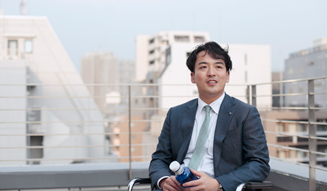
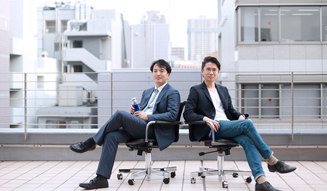
Kosaku Tsuchida, Managing Director at ThreeBond Inc. (at the time of interview)
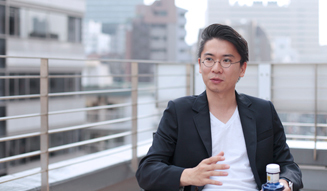
Hiroshi Maruwaka, Representative of Maruwakaya
MaruwakaAre your business trips mainly to urban areas?
TsuchidaYes, they are mostly in urban areas. My primary roles are in human resources and public relations, not sales. In HR, I assess local safety and living conditions. In areas with poor safety or sanitation, we need to provide support from Japan. This includes deciding on staffing levels, whether families will accompany the employee, and checking for nearby hospitals or Japanese-speaking services... We conduct investigations considering various scenarios.
My PR and advertising work focuses on how to "connect" our core business of sealants and adhesives with society. For example, we link the company with motorsports to foster technological advancement and product development. We challenge ourselves on a global scale, participating in events like the Macau Grand Prix and World Championships, signifying Japanese technology's global endeavors. This is something unique to our company. I believe it's best not to alter this tradition, history, or corporate culture too much.
MaruwakaThrough this project, I want to re-examine the current situation where the lines between "what to preserve and what to change" have become blurred, which is precisely what my work involves. I've wondered if, since the Meiji era, we've preserved things as tradition that perhaps didn't need to be.
Is the importance of continuing to do good things without changing them what constitutes "tradition"? Yet, there are also aspects that should change. I wanted to ask various people about this. I hoped to meet them, absorb their insights, and find resonance. Until now, I've focused on conveying "how amazing my work is," perhaps lacking a sufficient learning attitude.
TsuchidaI understand. I feel I've changed considerably since I first took on this role. It's difficult to pinpoint specifics, but when I meet others, I'm moved by their passion, skills, and efforts. The stories of those working on the front lines, regardless of their industry, share common threads.
MaruwakaChoosing items is very important, but I believe "trend" has been a major criterion until now. When asked to show a "special item," I felt the judgment of "is this trendy?" was often involved.
However, travel is a genre where such judgments are less prevalent. Ultimately, what matters is whether it suits you. The moment of choosing an item for travel feels like a more personal decision. In this series, various people will appear. Some will move their bodies to choose items, some will use their minds, and others will use their sensibilities. In their work, especially for those who achieve distinct results, their criteria for selection and judgment must differ from others.
Based on our conversation so far, I believe choosing people is one of your roles, Mr. Tsuchida. What criteria do you set for yourself?
TsuchidaI look for sincerity. More than talent or processing ability, I try to find a certain purity in people. In job interviews, many candidates give proper answers, but they can be so guarded that their true selves remain hidden. Therefore, I try to uncover their genuine nature through questions like, "What did you eat yesterday?" I've been focusing on this lately.
A Car from the Same Era as the Company
TsuchidaTravel is interesting because it reveals a person's true self and values. Some meticulously plan their itineraries, while others are spontaneous. And traveling together fosters connection, doesn't it? You find common ground. You also grow to love the places you visit.
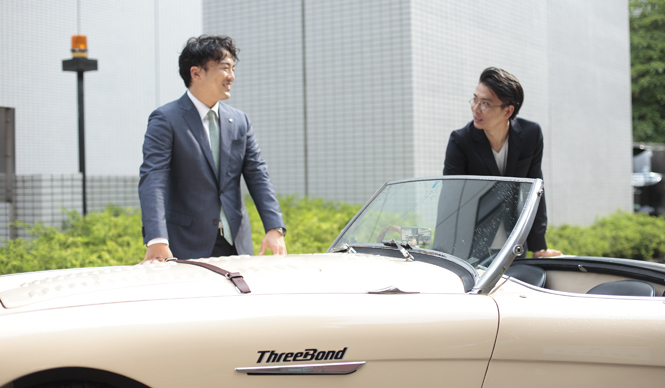
MaruwakaI've always felt that the essential joy of travel is being discussed only superficially these days.—For example, travel shows on TV often follow a script. But travel itself isn't like that. Perhaps you can't find accommodation, or a local recommends a fantastic small restaurant. These "chance encounters" become your experiences, your memories, your recollections. Does the car you gave me a ride in earlier have any connection to this?
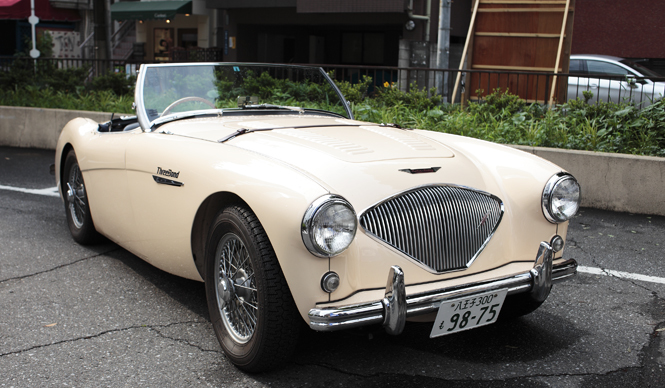
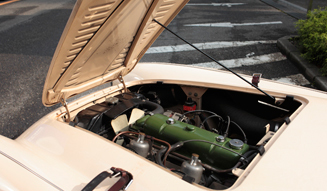
TsuchidaIt's a car manufactured around 1955, the same year our company was founded. Cars from that era were known to leak engine oil. You had to keep adding oil as you drove. Our founder thought, "What a waste of oil." He had been taught during his time returning from the war that "a drop of gasoline is a drop of blood." The company's origin lies in creating an adhesive to prevent that oil leakage.
Now, if you tell young people today that cars used to leak oil, they won't understand. Modern engines don't leak oil, and if they did, most people wouldn't know how to fix them. Modern cars are not something amateurs can tinker with... While discussing this, we learned that our company was sponsoring "La Festa Mille Miglia," a classic car race in Italy, and decided to go beyond sponsorship to actually purchase a car and participate as a company.
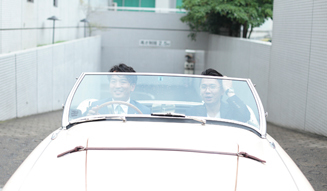
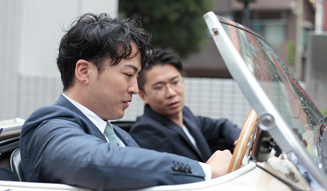
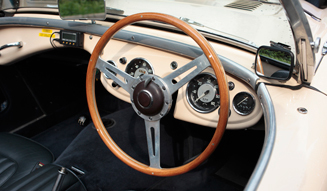
MaruwakaIs it like employee training?
TsuchidaIt serves that purpose. For instance, various issues arise with the engine and other parts. By repairing them ourselves, we develop a sense of respect, reverence, and admiration for the car.
And the encounters and connections we make along the way are fascinating. Recently, we traveled from Nagoya to Wakayama, then to Nanki-Shirahama, Nara, Kyoto, and Osaka. Local governments collaborate with the race organizers, so it's quite festive, with about 100 classic cars. Fellow classic car enthusiasts often face similar challenges, like sourcing parts, which helps us bond closely.
MaruwakaPeople who love classic cars often embody the spirit of "Onko Chishin" (learning from the past to understand the present) and possess a powerful drive. Simply chasing the new can sometimes lead to discovering nothing. The new often feels saturated.
TsuchidaThere are now strategies to increase sales by lowering prices or reducing features. While it's been said for a long time that young people are losing interest in cars, someone recently told me, "It's not that young people are losing interest in cars; it's that cars are drifting away from young people."
MaruwakaI agree. Looking only at the market, I question how much consideration is given to the users themselves. I believe people in the past truly loved their cars, and manufacturers seemed closely connected to their users. The rapid pace of model changes seems to reflect the current state of the automotive industry.

New Series: "Dōgyō Ippin" – Hiroshi Maruwaka's Travel Tales with Guests
Guest: Kosaku Tsuchida, Managing Director at ThreeBond Inc. (at the time of interview)
Tradition and Innovation: A Discerning Approach to Objects (Part 2)
Photographs by JAMANDFIXText by KASE Tomoshige (OPENERS)
Travel and Its Tools Reveal the Person
MaruwakaThrough this series,—I believe that the items we bring on a "journey" and the "desire to know" that lies beyond them ultimately reveal "the person." And the prompt to bring an item for travel, I feel, is a question that allows us to glimpse their true selves. As I conduct interviews with fascinating individuals for this series, is there anything you are particularly curious to know?
TsuchidaIt might sound simple and perhaps a bit mundane (laughs), but I'd like to hear about where they've been and where they recommend. What kind of trips they've taken... although that might delve into personal matters.
MaruwakaSpeaking of personal trips, where have you been recently?
TsuchidaI recently visited a place called Rafraf in Tunisia.
MaruwakaRafraf, Tunisia? Why did you go there?
TsuchidaI went to meet a wonderful person. They are of French descent, born in Tunisia, lived in Japan for a time, and now import Japanese disaster prevention equipment there. They own a villa on a hill in a small rural town, and the view from the room, with its expansive forest and the distant sea, was incredibly beautiful and moving.
MaruwakaThat sounds incredibly luxurious. In a way, personal travel is the ultimate form of "unproductive" time. How one orchestrates that "unproductive" time truly reveals their individuality. But such a trip isn't something you can do in a single day, is it?
TsuchidaIt can't be done in a day. And I wouldn't want to do it in just one day (laughs).
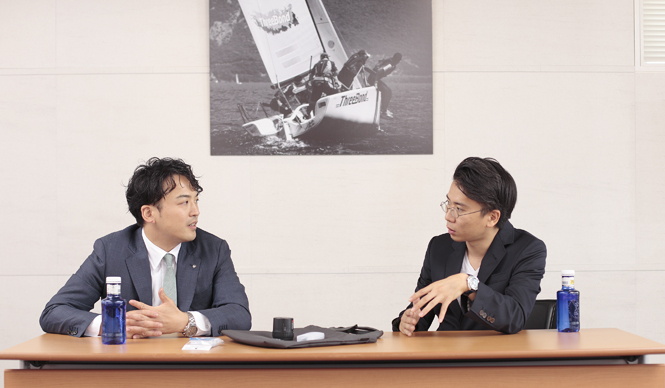
MaruwakaI suspect that many of the people who will appear in this series will also be too busy to take personal trips (laughs). But in the past, people in creative fields, like artists and musicians, would take extended breaks of about a month. In Europe, even ordinary people take proper holidays. Taking time off is, in reality, extremely important.
TsuchidaI believe it's especially crucial for those in creative professions.
MaruwakaUltimately, I hope Japanese people will be able to take proper holidays. However, there's a fear associated with taking time off in Japan; people wonder what they would even do. I would be delighted if people who read this series feel inspired to travel. Personally, I prefer journeys that offer a taste of human connection and encounters, like those of Tora-san, rather than overly stylish or luxurious trips. Though, I must admit, I'm someone who finds it hard to take a break myself (laughs).
TsuchidaJourneys just to meet someone are wonderful. That's truly important.
MaruwakaIn the past, "travel" in Japan was a significant event. I've heard that most people could only experience travel a few times in their lives. Therefore, the experiences and encounters along the way must have been an immense source of imagination, far beyond what we can conceive today.
Simple and Durable
MaruwakaFinally, could you show us your travel essentials? At first glance, I thought, "This is so Mr. Tsuchida" (laughs). Could you tell us about the points you value?
TsuchidaFirst, my toothbrush set is from the Swiss brand Weleda. The toothpaste has a salt flavor, not mint, and it's quite addictive. The toothbrush is also very effective.
MaruwakaThe design is also quite charming. Perhaps it's the Swiss influence? (laughs)
TsuchidaIt's sold at a shop along the nearby Komazawa Dori street (Editor's note: ThreeBond's Tokyo branch is in Ebisu. This interview took place at the Tokyo branch).
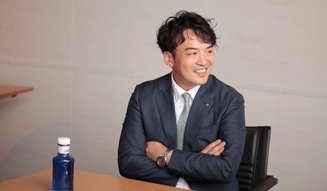
Kosaku Tsuchida, Managing Director at ThreeBond Inc. (at the time of interview)
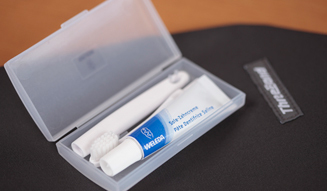
Weleda "Organic Toothpaste Set (Salt)"
MaruwakaI see, ease of acquisition is also a key point for "travel items." Next up... a plug adapter. I also struggle with this item (laughs). What do you like about this one?
TsuchidaIt's larger than my palm... its size makes it harder to lose (laughs). And simply by turning it, you get the plug suitable for the region. I like its subtle presence and the ease of use – just turn it. I also appreciate its surprising stability when plugged into an outlet.
MaruwakaHow long have you been using it?
TsuchidaQuite a long time, about six years.
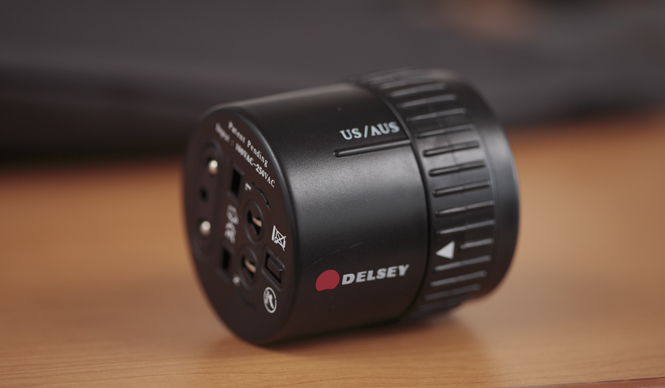
MaruwakaThat's a long time. Indeed, this design is unusual. It feels like something chosen by an experienced traveler. For mechanical items, durability is truly crucial, isn't it? If something breaks overseas, it can be a real problem. Lastly, let's look at your travel sub-bag. It has the ThreeBond logo; is it a promotional item?
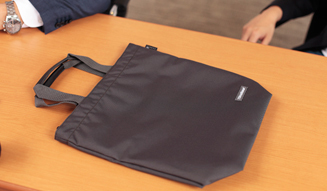
A tote bag created as a promotional item for ThreeBond Inc.
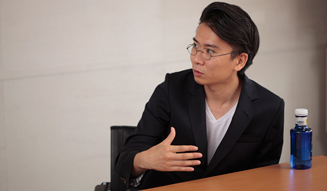
Hiroshi Maruwaka, the series navigator
TsuchidaYes, we had it made. I wanted something sturdy, lightweight, and resistant to dirt. It's made of Cordura nylon, a material often used in outdoor backpacks. It offers excellent durability and water resistance, with a simple design that fits A4 documents. I also added a zipper to prevent contents from spilling when used as carry-on luggage on flights.
MaruwakaYou take it with you on every business trip, don't you?
TsuchidaYes. It fits clear files and documents, so it's very useful.
MaruwakaThis feels like a sub-bag for an advanced traveler.
TsuchidaDoes it? Thank you (laughs).
MaruwakaThrough our discussion about "travel" and "items" today, I've gained insight into your core values, Mr. Tsuchida. Thank you very much.
The new series "Dōgyō Ippin," hosted by Hiroshi Maruwaka, unfolds "Travel Tales" with guests. In the future, we will welcome people from various professions to delve deeply into travel and the items they bring along. Please look forward to it.
Kosaku Tsuchida
Born in 1977. From Tokyo. Managing Director at ThreeBond Inc., a manufacturer of industrial sealants and adhesives (at the time of interview). He conceptualized "Kuttsuku Kizuna Mechanism" (Bonding Mechanism), which investigates and researches the mechanisms that create human connections. Through interviews with individuals active in various fields, he strives to research not only bonding materials but also human connections. His connection with Mr. Maruwaka also stems from this "Kuttsuku Kizuna Mechanism." "ThreeBond presents Kuttsuku Kizuna Mechanism Website"
http://929kizuna.com/
Hiroshi Maruwaka
Born in 1979. From Tokyo. Representative of "Maruwakaya Inc.," which shapes contemporary Japanese culture. By embodying universal "beauty" and the "present moment" in objects and experiences, he derives contemporary value. He engages in "monozukuri" (craftsmanship) with Japan's finest, from traditional crafts to collaborations with cutting-edge industries, such as "Kitajima Shibori Seisakusho." He led projects like "Kutani Ware Flower Pattern Skull Candy Jar" (in the collection of the 21st Century Museum of Contemporary Art, Kanazawa), "Uedachoemon Kiln x Jaime Hayon" (exhibited at Salone del Mobile), and "PUMA AROUND THE BENTO BOX." http://maru-waka.com/

Founded in 1955, ThreeBond is a manufacturer of industrial sealants and adhesives. Operating globally with a regional management system divided into six areas—Japan, Asia, China, Europe, North and Central America, and South America—the company serves various industries, primarily automotive, as well as electronics and infrastructure.
Maruwakaya
http://maru-waka.com/
http://h-maruwaka.blog.openers.jp/