Series | Between London's Memories and Records, Part 4: "No Reply Necessary"
What Artist Saya Kubota Saw and Felt in London
Part 4: "No Reply Necessary" (1)
London, a city where art is deeply rooted in daily life. It is a place of "creation," where new expressions are born every day, but also a place of "resuscitation," where the heritage of the past, buried everywhere, is unearthed and brought back to life. The latter act is, so to speak, a game of telephone from past to present. What artist wouldn't be thrilled by such a grand, timeless "play"? Saya Kubota, who was studying restoration and fine arts there from April to October 2015, was one of those captivated by its charm. She shares the people, things, and events that touched her heart during her days drifting between London's memories and records.
Text by KUBOTA SayaEdited by TANAKA Junko (OPENERS)
A Fateful Encounter with Two Postmasters
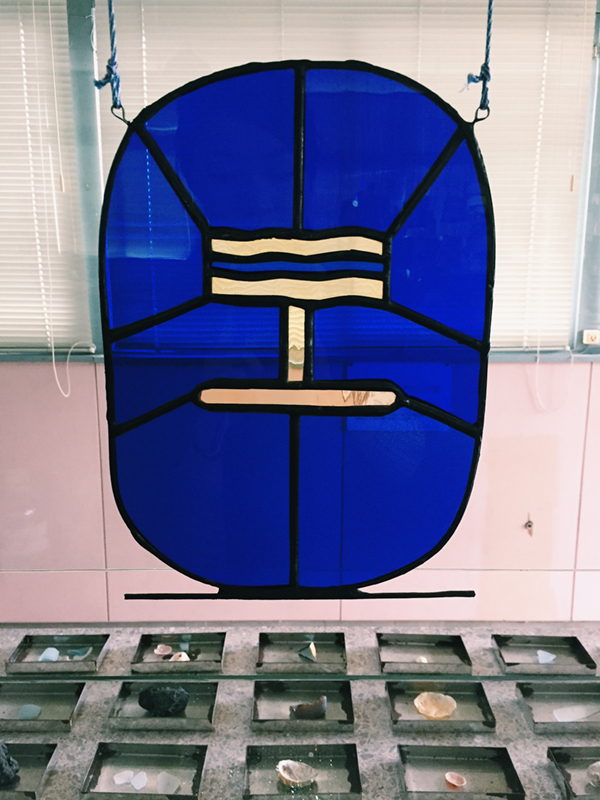
On my way back to Japan from the UK, I returned home with a blue stained-glass piece in my hand luggage. Postmaster Brian of the "UK Missing Post Office" had entrusted me with a handmade gift for Mr. Nakata, the postmaster of Awashima's "Missing Post Office." For the first time, I felt like I was doing a real post office job. Immediately after returning, I headed to Awashima to open the Missing Post Office for the autumn season.
This autumn marks the second year since the Missing Post Office opened. Even during my time in the UK, the space had been constantly evolving, with more chairs, desks, letters, and records kept by the postmaster. Postmaster Nakata and I began talking, as if a dam had broken, about everything that had happened in the past six months. After a long conversation, Postmaster Nakata murmured, "It seems that both the Missing Post Office and we two have been changing little by little."
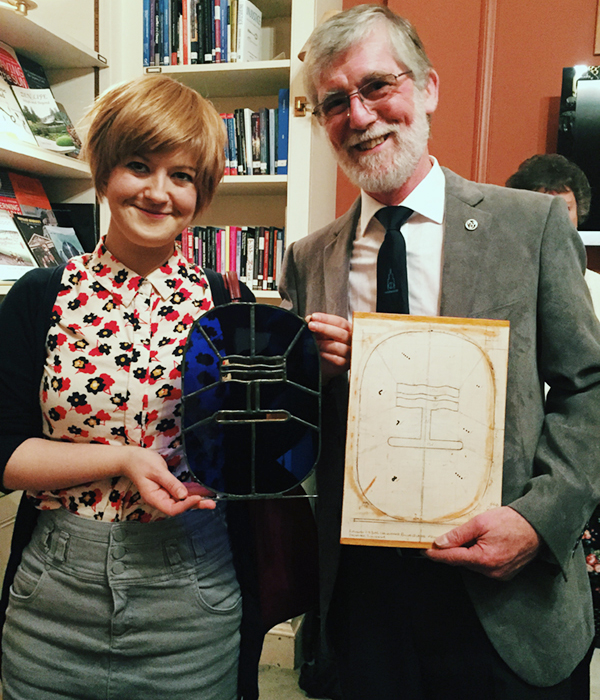
The postmaster and I, who used to argue often when we first opened, have now become like smoothed-out driftwood, undoubtedly due to the unique "flow" of the Missing Post Office itself. I am so happy that we can still watch over the project together two years later, and that we, who were once strangers, can share even the smallest changes through this project. Handing over the gift from Postmaster Brian, we decorated the reception counter with the stained glass together, thinking of England.
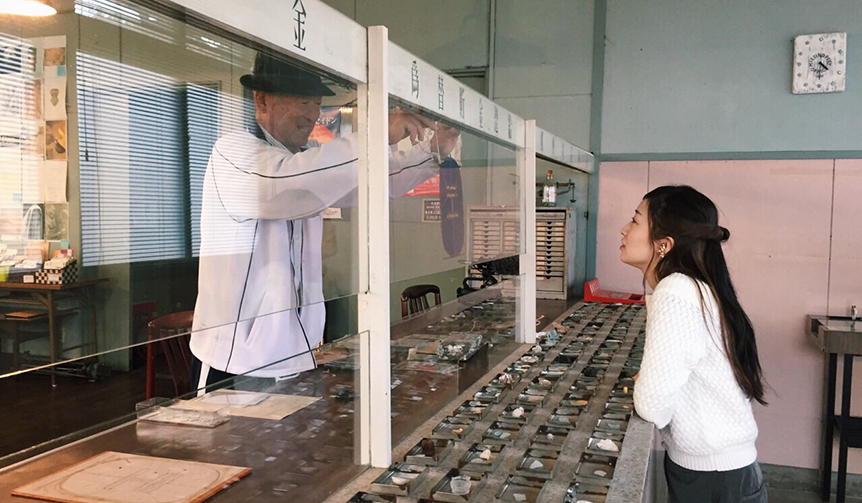
Looking back on my days in London, I can never forget the day I met Brian. I encountered Brian, a former post office employee, by chance while visiting the warehouse of "The British Postal Museum & Archive" for research on the UK's postal system. At that moment, just like with Postmaster Nakata, I felt a unique, deep, and gentle inner flexibility from him, and couldn't help but sense the distinct spirituality of someone who had been involved with the postal service for many years.
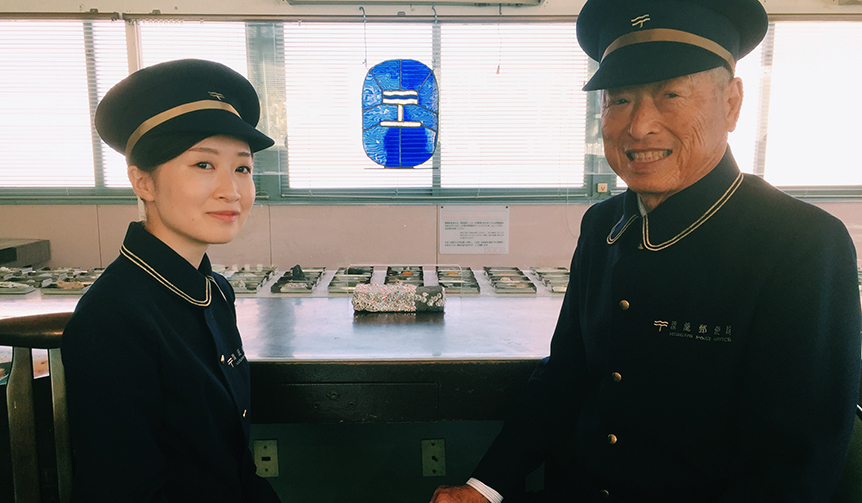
Mr. Katsuhisa Nakata, the postmaster of the Awashima Missing Post Office, was the tenth postmaster of the Awashima Post Office. Awashima in the 1950s to 1990s, when Mr. Nakata was active, prospered through the shipping industry, and many islanders were sailors who were away on long voyages. The telegraph and other facilities at the Awashima Post Office played a crucial role in communicating with the "fathers" who were on ships sailing to distant foreign waters.
Postmaster Nakata retired in 1998 after working at the Awashima Post Office for 45 years. Postmaster Brian Payne, who has taken on the role of UK Missing Post Office postmaster, also worked as a telephone engineer at the GPO (The General Post Office UK) for 31 years, from 1964 to 1995.
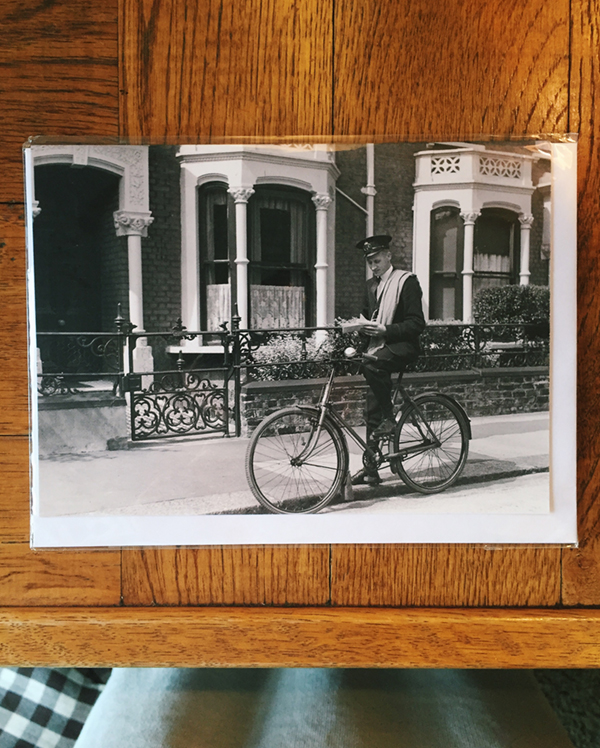
Japan's postal system, promoted by Hisashi Maejima in 1871, was an import of the postal system created by Rowland Hill in the UK. During the Meiji Restoration, "schools," "railways," and "postal services" were considered as vital as the "brain," "blood vessels," and "blood flow" of the human body, and the introduction of the British postal system played a very important role in Japan's modernization.
I wonder what kind of worlds these two men, who worked as the very blood flow of their respective lands, saw in completely different places and cultures, under almost the same postal system created by Rowland Hill? And what will be revealed by bringing those two, and our many memories, together at the UK Missing Post Office?
Page02.Why Do People Write Letters with No Expectation of Reply?
What Artist Saya Kubota Saw and Felt in London
Part 4: "No Reply Necessary" (2)
Why Do People Write Letters with No Expectation of Reply?
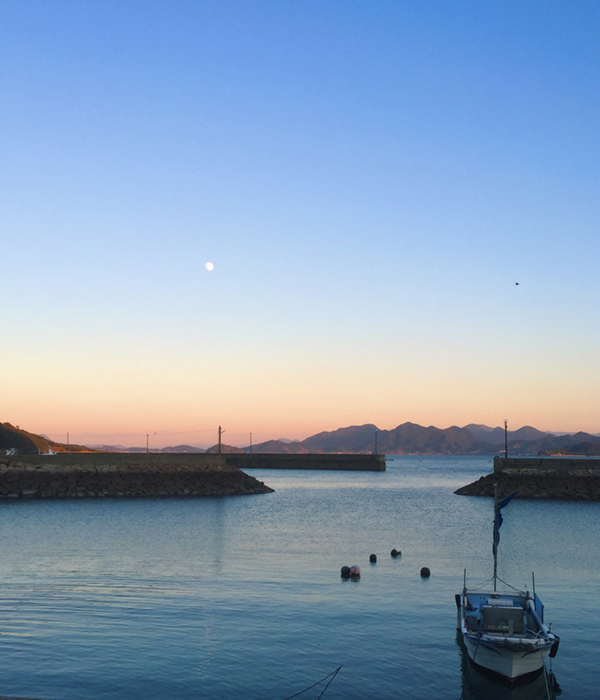
For this autumn opening, we held a concert by the musician Hyogen, who has performed many times on Awashima. Due to its topography, Awashima has calm waves and almost no sound of the sea, making it an island where sounds are absorbed and stand out. It is also surprising that this calmness of the waves shaped Awashima's postal and shipping history and determined the island's fate. This was the second concert by Hyogen at the Missing Post Office, the first being at the opening. Our changes over the past two years intersected and sometimes overlapped, and each note resonated as if confirming the space of the post office, creating a wonderful performance.
The letters we receive at the Awashima Missing Post Office exceeded 10,000 last week.
Now that so many letters are arriving at the Missing Post Office, far beyond my imagination, I sometimes wonder about something peculiar.
There is almost no expectation of a reply for letters sent to the Missing Post Office. And indeed, "message in a bottle" is the epitome of a fruitless letter with no reply. Even if you write it, you just cast it into the sea, so you can hardly expect a reply. Yet, why do people write letters with no expectation of reply, and what is their charm?
The phrase "message in a bottle" evokes scenes from stories where one finds a bottled letter or treasure map on the shore. Since childhood, this scene has been very appealing and a longed-for situation. The secret, adrift on the vast ocean, belonging to no one and yet to everyone. Taking a letter out of a glass bottle, worn smooth by the sea, and tracing the gaze of someone unknown, drawn by someone somewhere in the past, would surely be a special experience.
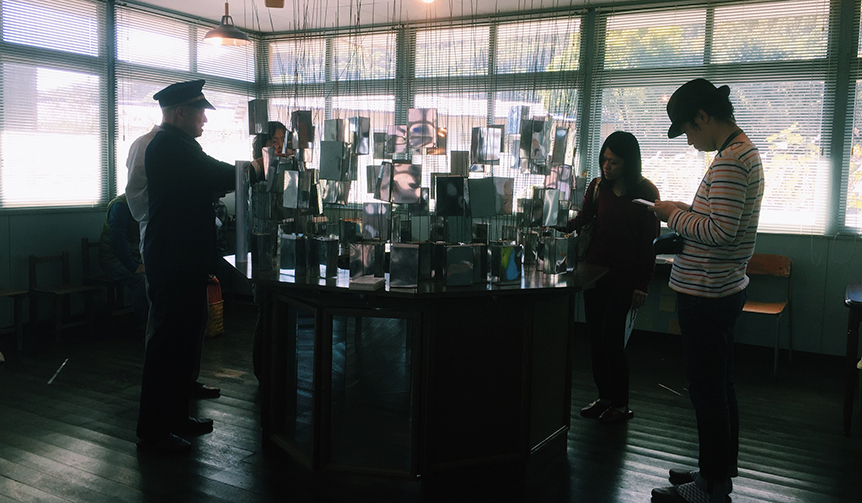
Unfortunately, I have never actually found a message in a bottle, but I have felt a similar sense of special gaze. It was when I read Shuntaro Tanikawa's poem, "Twenty Billion Light-Years of Solitude."
The sun, the starry sky, the Earth, plants, minerals, animals – none of them matter to humans. Yet, in this solitude of twenty billion light-years, we seek friends on other stars and continue to speak, believing that "they on the other side also want to communicate with us." In fact, humans have never stopped trying to communicate for the 5 million years since their emergence.
From mere patterns of light in the night sky, we have continued to create constellations based on motifs of tools and animals, and to create myths. This attempt to "communicate" with things we cannot yet understand is perhaps the most powerful act humans can undertake.
As I have watched the Missing Post Office unfold, I have come to believe that human culture is not solely born from deep communication with visible entities. I now feel that the principle of cultural genesis lies in the relentless trial and error, even with things we cannot communicate with.
Will the insatiable human desire for communication, glimpsed at the Missing Post Office, one day lead us to encounter beings of unknown whereabouts?
Notice Regarding Letter Reception for the UK Missing Post Office
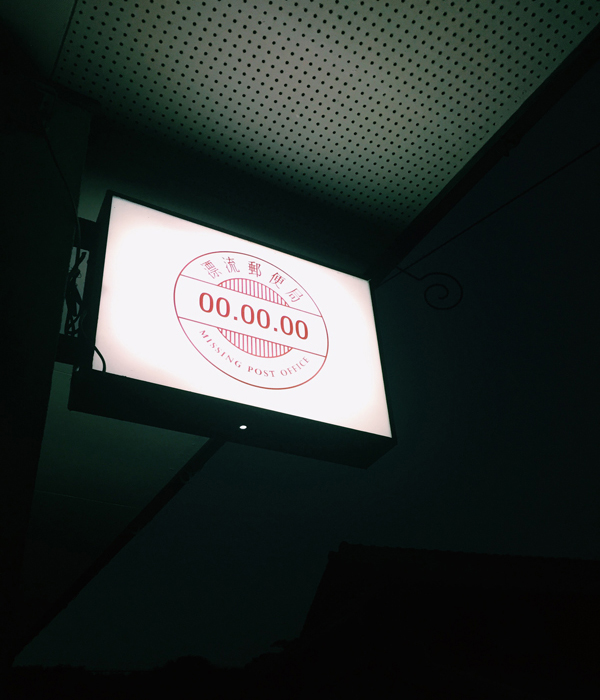
The Missing Post Office is a post office that currently accepts "letters with no known addressee" as an art project. Letters addressed to various destinations such as the universe, the deceased, landscapes, or pets are placed in a "drifting private mailbox" to be held until they eventually reach their unknown destination.
We accept letters addressed to the past, present, future, as well as things, events, and people. The UK Missing Post Office is further proposing a new method of sending: "accepting letters in any language." It will be open in London from January 19 to February 22, 2016. After the period, the letters will eventually return to Awashima. We are still accepting letters by airmail, so why not take this opportunity to send a letter as if sending a part of yourself on a journey?
Address:
Missing Post Office UK c/o
The Daiwa Anglo-Japanese Foundation
Daiwa Foundation Japan House
13/14 Cornwall Terrace (Outer Circle)
London NW1 4QP
We accept letters by airmail. Any language is acceptable.
Missing Post Office
http://missing-post-office.com
UK Missing Post Office
http://missing-post-office.com/missing-post-office-uk/
Hyogen
http://sound.jp/hyogen/index.html
The British Postal Museum & Archive
http://www.postalheritage.org.uk/
Kenichi Aono x Saya Kubota Talk Event "The Blue Room"
Date: November 26 (Thursday)
Time: 7:00 PM - 7:30 PM
Participation Fee: ¥2,500 (includes pie plate, 1 drink, and souvenir)
Performers: Kenichi Aono (BEAMS), Saya Kubota
Venue: Ismy
Palette Building 1F, 1-14-2 Higashi-Kanda, Chiyoda-ku, Tokyo
How to Reserve: Please send an email to mail@ismy.jp with your name, number of reservations, and phone number, using "Blue Room Reservation" as the subject line. Your reservation will be confirmed upon our reply.
Inquiries
Ismy
Tel. 03-5823-4222
http://ismy.jp/news/1184/

Saya KUBOTA
Artist. Born in Ibaraki Prefecture in 1987. Spent her childhood in Hong Kong. Graduated from the University of Tsukuba, School of Art and Design. Currently a doctoral candidate in the Department of Oil Painting, Graduate School of Fine Arts, Tokyo University of the Arts. Her work is characterized by the combination of memories and words, born from everyday scenes and encounters with people, creating new images and forms. She works across various media, including layered planar works made from burnt tracing paper, three-dimensional pieces combining artifacts and ornaments, and installations using unique devices, often interweaving them. She has participated in numerous group exhibitions, including the project "Missing Post Office" (Setouchi Triennale 2013).
http://sayakubota.com