Missing Trace ~ Between London's Memories and Records ~ Part 3 | Serialized Series
What Artist Saya Kubota Saw and Felt in London
Part 3: Pouring Hot Water on Dry Memories
London, a city where art is deeply rooted in daily life. While it is a place of "creation" where new expressions are born every day, it is also a place of "revival" where the heritage of the past, buried everywhere, is unearthed and brought back to life. The latter act is, so to speak, a game of telephone from past to present. What kind of artist would not be thrilled by such a "grand game" that transcends time? Saya Kubota, who was studying restoration and fine art there from April to October 2015, was one of those captivated by its charm. She shares the people, things, and events that touched her heart during her days drifting between London's memories.
Text by KUBOTA SayaEdited by TANAKA Junko (OPENERS)
Enjoying and Utilizing the Relationship Between Objects and People
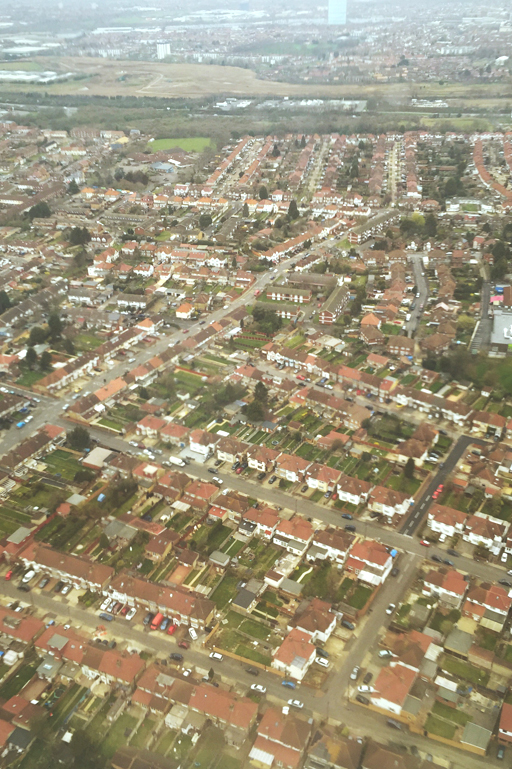
The first thing that surprised me when I came to London was the absence of seasonal scents. Despite the many parks and gardens, I wondered why there was no smell of plants or earth, and then I realized the difference in humidity compared to Japan. Snacks don't go stale, and laundry dries quickly. And there's almost no sense of time passing; the days seem to slip by transparently. Perhaps the weight of seasonal changes and environmental shifts we casually feel in Japan is largely related to humidity.
From an archaeological perspective, the high humidity of the Japanese archipelago means that organic artifacts are difficult to preserve in the soil. This is particularly true for the Paleolithic period, where material evidence is quite limited. For example, portraits, with the exception of those of royalty preserved in excellent condition, are rare. The oldest surviving portrait of a commoner is said to be that of a boy from Al-Fayoum, Egypt, found in a tomb, dating to the Roman period. These are the only paintings from ancient Egypt that have survived due to its dry climate. It is a very clear example of how well objects can be preserved in low humidity.
Even when walking through London's flea markets, one can find many portraits, photographs, diaries, and letters. Some even contain brooches with hair. The cityscape is also made of stone, and I myself am now living in a building that is far older than anything conceivable in Japan's wooden architecture. Of course, it's not that everything has survived solely due to low humidity, but the way the city is overflowing with old objects, as if preserved in a dry state, was quite novel to me. Furthermore, I had many opportunities to observe the distinctive British attitude towards engaging with these surviving objects in daily life.
For instance, my best friend here in London always wears her late grandmother's ring, not a trendy one.
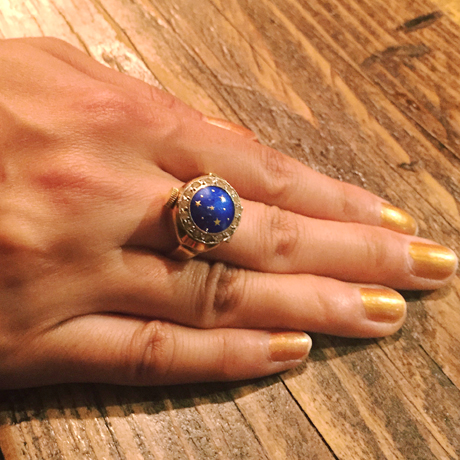
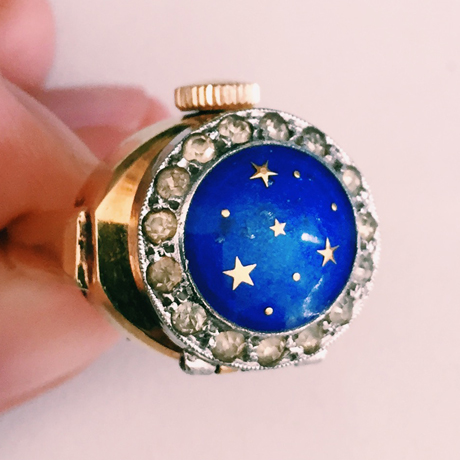
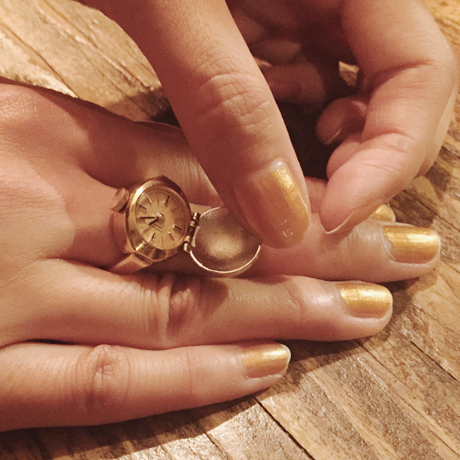
That lovely ring led to conversations about her family, the towns she had lived in, and her thoughts, stories I might not have otherwise heard. In British households, people often use chairs inherited from their grandparents rather than the latest fashionable furniture, or display landscape paintings by relatives instead of prints by famous artists bought at department stores. While having tea, they might chat about the stories these objects carry. I was struck by the British temperament of enjoying and utilizing the relationship between objects and people by paying respect to the context and narratives embedded within surviving items, even if they are deeply personal.
So, what exactly is the sum total of the memories held within these intensely personal objects? When we learn history, we often focus on major events, incidents, and figures. But if we were to look back at the past through the collective records and memories of the countless people who lived in between, how would the past, present, and future appear to us?
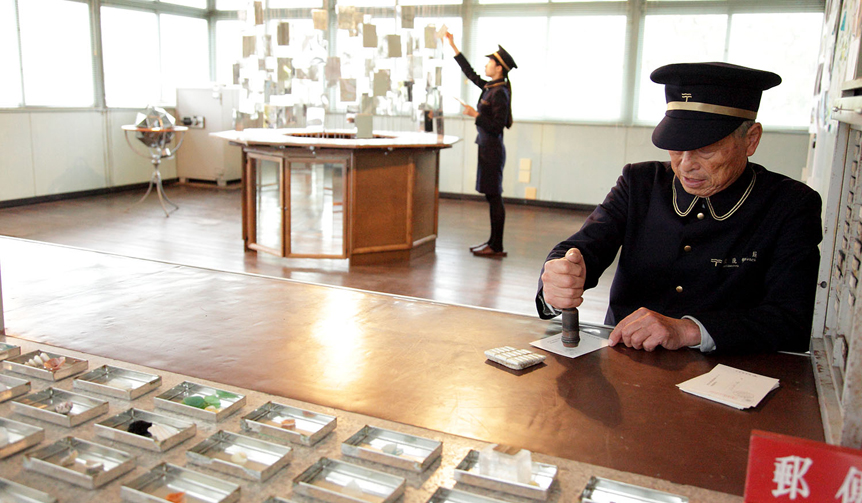
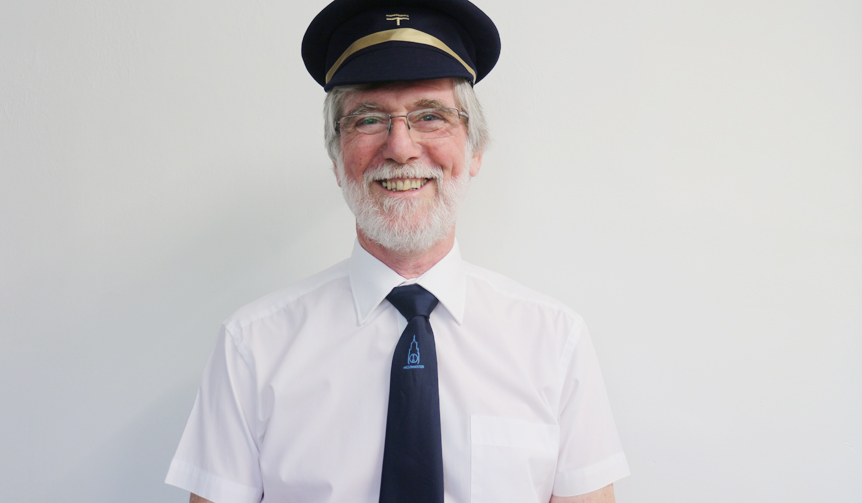
The project "Floating Post Office" (※top photo), which I launched on Awaji Island in Kagawa Prefecture, has entered its second year. It was created during a two-month stay on the island as part of the "Setouchi Triennale 2013." Managed by the postmaster, Katsuhisa Nakata, 81, (※right), it functions as a post office that accepts letters with unknown destinations, and currently displays 7,000 letters. The letters received there are, in a sense, individual revelations of private lives, offering a glimpse into the spirit of the times spun from the depths of the human heart. I am now establishing the "UK Floating Post Office" in London. To what extent do we, raised in different cultures during the same era, differ fundamentally, and where do we find common ground?
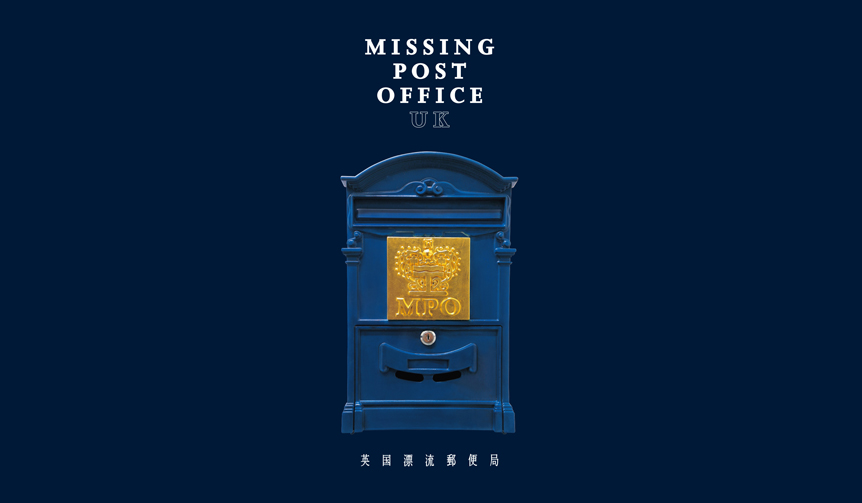
And to me, these intensely personal media of memory seem to share a certain tenderness with the archaeological artifacts of Japan that dissolve and disappear in high humidity, as mentioned earlier.
Objects imbued with such narratives often carry an astonishing amount of information at remarkable speed. This is also true for artworks. As one example of how to engage with such objects, I would like to introduce a room called the "Study Room" within the "Department of Prints and Drawings" at the British Museum.
This is primarily a room for researchers. Approximately 50,000 drawings by masters such as Michelangelo, Raphael, and Goya are preserved, each in its own glass case, like specimens. By making a prior reservation, one can select a specific drawing, have it carefully brought out, placed on an easel for viewing, and examine it with white gloves and a magnifying glass – a truly remarkable facility.
The ceiling is glass, allowing these drawings to be viewed in natural sunlight, something unique to this space. To maintain their condition, the covers must be replaced when not being observed. This almost ritualistic "rendezvous" with the drawings creates a feeling not of one-sided appreciation, but of a quiet dialogue with the drawing itself.
Looking at the drawings through a magnifying glass, one can find minute, faint scratches and traces. Within these delicate textures, the raw and powerful intent of the artist, desperately trying to capture the "object," can be perceived.
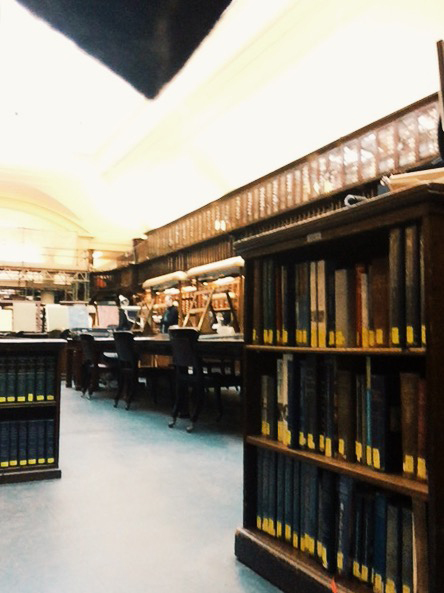
Although these are objects from the past, they seem to be projected far into the future, much more so than the present. Through each thin sheet of paper, I felt a fundamental question about existence.
This place feels less like a part of a museum and more like a research facility. Several elderly researchers were intently gazing at drawings through magnifying glasses, quietly taking notes. Their posture was that of scientists on the verge of an invention, and each drawing encased in glass appeared as if it were an unknown substance placed on a petri dish. Watching their backs, I couldn't help but feel that the future lies in culture.
In any field, interpretations are always diverse, and for something to be proven, the consistency and verifiability of the content are crucial. Furthermore, the objectivity of a claim is easily influenced by factors such as one's upbringing, education, and worldview. Until something is proven, there are debates, and one must write references that withstand the scrutiny of others with one's own data, recognize the deficiencies in one's own thinking and interpretation, accept the opinions of others, and then, after a common consensus and understanding are formed among many researchers, it becomes established theory.
To establish a single theory, there are many elements that must be stripped away, even if one feels something is being hidden. Perhaps one role of us artists is to scoop up the vast possibilities that fall through the cracks of established theory and meticulously refine them as individuals.
Britain is a nation of archives, collections, and research. The various archive rooms scattered across Britain offer numerous hints for earnestly considering the construction of flexible hypotheses, such as "what if it were like this," rather than making definitive conclusions like "the past was absolutely like this." Archiving memories and researching them is precisely the same as considering our present and future actions.
Floating Post Office
http://missing-post-office.com
UK Floating Post Office
http://missing-post-office.com/missing-post-office-uk/
British Museum "Study Room"
http://www.britishmuseum.org/about_us/departments/prints_and_drawings.aspx

Saya KUBOTA
Artist. Born in Ibaraki Prefecture in 1987. Spent her childhood in Hong Kong. Graduated from the University of Tsukuba, School of Art and Design. Currently pursuing a Ph.D. in Fine Arts (Oil Painting) at Tokyo University of the Arts Graduate School. Her work is characterized by memories and words born from everyday scenes and encounters, and the new images and forms created by combining them. She works across various media, sometimes in combination, including two-dimensional works created by layering scorched tracing paper, three-dimensional works that fuse artifacts and ornaments, and installations using unique devices. Participated in numerous group exhibitions, including the project "Floating Post Office" (Setouchi Triennale 2013).
http://sayakubota.com