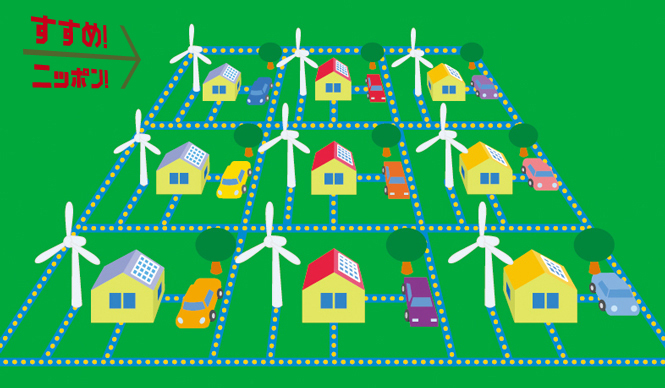
Smart Grid Related Keywords
The Society We Should Aim For Post-3.11
Smart Grid Glossary
OPENERS is currently working on a project called "Onward! Japan" to envision a new era. While it primarily focuses on next-generation energy utilization, a key concept within this is the "smart grid." Many of the terms used in articles on this topic, including "smart grid" itself, may be unfamiliar. Here, we introduce specialized vocabulary essential for understanding the smart grid.
Illustrations by Minoru HamadaText by OPENERS
What is a Smart Grid?
A smart grid is generally translated as "next-generation power grid" or "information-integrated power grid." It involves visualizing electricity usage for each appliance in homes and offices using smart meters, and managing this data with computers. Surplus electricity can be stored in batteries and used when supply is low, or sold to power companies. By visualizing this data in real-time over a network, precious electricity can be used more efficiently. This interactive, visualized electricity network is called a smart grid.
This theory forms the basis of President Obama's Green New Deal policy. In Japan, large-scale smart grid demonstration experiments led by the Ministry of Economy, Trade and Industry are underway in four locations: Yokohama City, Toyota City, the Keihanna Science City in Kyoto Prefecture, and Kitakyushu City. Once widespread, it will enable electricity to be stored when supply is abundant and used when needed, facilitating the adoption of natural energy sources like solar and wind power, which have unstable supply. Regardless of the future of nuclear power, with concerns about electricity shortages, this technology is gaining increasing attention.
A to Z
ENE FARM (Fuel Cell)
A household fuel cell system. It generates electricity by extracting hydrogen from city gas, LPG, or kerosene, and reacting it with oxygen from the air. The process also produces heat as a byproduct, which can be used for hot water supply.
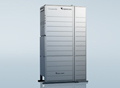
Tokyo Gas Ene Farm
Energy Management System (EMS)
A system that optimizes power supply to individual electrical devices within a limited area, such as a home, building, factory, or community, by connecting them via a network. It acts as the 'brain' of a smart grid. Beyond controlling devices, it enables visualization of their operational status and, based on predicted electricity usage, optimizes power supply within the area.
Feed-in Tariff (FIT)
A subsidy system, established by law as part of securing energy sources and addressing environmental pollution, that sets a fixed price for purchasing electricity generated primarily from renewable energy sources.
Renewable Energy
Energy derived from phenomena that occur semi-eternally in nature, such as solar, hydro, wind, and geothermal power. Unlike conventional energy sources like oil, coal, and nuclear power, which are finite and pose significant environmental risks, renewable energy offers the advantage of a drastically lower environmental impact. As of 2008, the share of renewable energy in electricity generation was 9.8% in Japan, 14.4% in Germany, and 19.5% in Italy. Japan aims to reach 20% in the early 2020s, while Germany targets 35% by 2020.
Smart City
A next-generation urban area that achieves low carbon emissions and energy conservation throughout the city by leveraging smart grid technologies to optimize energy supply. It integrates distributed power generation systems using renewable energy, electric vehicle charging systems, and urban infrastructure such as buildings and residences, creating a low-environmental-impact social infrastructure.
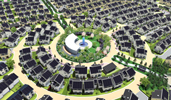
Smart Tap
A real-time power consumption meter with built-in power sensors and communication modules. By plugging this smart tap into a household outlet and connecting an electrical appliance whose power consumption you wish to monitor, the measured data is collected on a computer.
Smart House
A residence equipped with functions to efficiently manage and optimally control energy demand and supply information, by incorporating EMS, solar power generation, energy-saving appliances, and electric vehicles. It can regulate hot water systems to heat only the necessary amount of water, control room lighting on/off based on human movement, or automatically adjust settings according to external weather conditions.
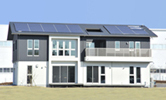
Smart Meter
An electricity meter with communication capabilities. It can exchange data with the power company, control connected appliances, and display electricity charges and usage in real-time. Utilizing the functions of a smart meter makes it significantly easier to adopt unstable renewable energy sources and conserve electricity.
Electric Double-Layer Capacitor
A capacitor, also known as a condenser, is a passive component that stores and releases electrical energy. Electric double-layer capacitors have higher storage capacity than conventional capacitors and can charge and discharge electricity as electricity without chemical reactions, making them theoretically usable semi-eternally.
Peak Shift
Shifting the time of peak electricity demand. This is being discussed as a potential way to avoid electricity crises, especially when power generation capacity is reduced due to reasons like nuclear plant shutdowns.
NAS Battery
Sodium-Sulfur battery. A secondary battery with a particularly high capacity for storing large amounts of electricity, it is also expected to serve as a power storage source for smart grids. Surplus electricity generated when demand exceeds supply can be stored in NAS batteries and then drawn upon during peak demand hours, thereby reducing the load on the grid during those times.
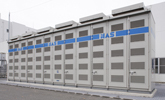
NGK Insulators' NAS Battery.
Lead-Acid Battery
The world's most produced secondary battery due to the low cost of lead and its ability to deliver relatively high voltage. It is stable for both short bursts of high current discharge and prolonged low-current discharge. It is primarily used in automotive batteries for engine starting and in electric vehicles.
Secondary Battery
A rechargeable battery that can be used multiple times after charging. While nickel-cadmium (NiCd) batteries were developed in the early 1960s, cadmium is a toxic substance, leading to the emergence of nickel-metal hydride (NiMH) and lithium-ion batteries as mainstream options in the 1990s. Compared to disposable primary batteries, they require a charger and have a higher initial cost, but can be reused hundreds to a thousand times.
Nickel-Metal Hydride Battery
A type of secondary battery using nickel and a hydrogen-absorbing alloy for its electrodes. It emerged as an improved version of NiCd batteries (which use nickel and cadmium electrodes). While used in hybrid vehicles (HVs) like Toyota's Prius and Honda's Insight, electric vehicles (EVs) and plug-in hybrid vehicles (PHVs) are increasingly equipped with lithium-ion batteries, which offer higher energy density than NiMH batteries.
Power Conditioner
A device that converts the electricity generated by solar power systems or Ene Farm (household fuel cells) into a form usable in homes and other settings. The electricity generated by solar panels is direct current (DC), which is converted to alternating current (AC) for standard use.
Heat Pump
A pump that transfers heat from the surrounding air. It utilizes the principle that gases heat up when compressed and cool down when expanded, to efficiently extract ambient heat and generate significant thermal energy with minimal electricity. It collects heat from sources like the air or water and uses it for cooling or heating.
Microgrid
A system that establishes multiple small-scale power generation facilities in local areas and effectively utilizes the electricity generated within those regions. This approach aims to decentralize power distribution, contrasting with traditional systems that transmit electricity over wide areas from large-scale power plants like nuclear facilities. Also known as a distributed power grid. It utilizes renewable energy sources (solar, wind, biomass, etc.) and includes battery storage. These generation facilities are established within a region and interconnected through a network.
Lithium-ion Battery
A battery in which lithium ions in an electrolyte conduct electricity. It is commonly used as a rechargeable battery. Its characteristics include high voltage and high energy density.Nissan Leafand Toyota'sPriusare examples adopted in EVs and plug-in hybrids (PHVs).
A to Z
BEMS
"Building Energy Management System." A system that utilizes information technology to manage energy in commercial buildings and other structures. It monitors the energy usage of various facilities within a building and controls power supply to promote energy conservation while maintaining a comfortable environment. Also known as a 'Building Energy Management System.'
CEMS
"Cluster Energy Management System." This system links and manages the supply side of grid power, such as wind power and large-scale solar power generation, with demand-side systems like individual homes, office buildings, and electric vehicle charging systems.
FEMS
"Factory Energy Management System." In factories, this system goes beyond traditional energy management of power receiving and transforming equipment to grasp the energy usage and operational status of production equipment. It aims to rationalize energy use and optimize the total life cycle management of factory facilities and equipment.
HEMS
"Home Energy Management System." This system manages energy within a home by connecting home appliances and water heating equipment via a network for automatic control. It visualizes the electricity consumption of each device to raise consumer awareness about energy saving, and can suppress energy consumption by limiting power supply to appliances based on the situation.
PHV
"Plug-In Hybrid Vehicles." These eco-cars combine the advantages of both electric vehicles and hybrid cars. For short-distance driving, such as commuting or shopping, they run on electricity and motor power, consuming very little gasoline and producing no carbon dioxide emissions. Gasoline is used only for longer distances, resulting in extremely high fuel efficiency compared to gasoline cars. Like EVs, they can also be charged from external power sources such as household outlets. Examples include Toyota'sPriusand GM'sChevrolet Volt.
SNV
A designation for next-generation EVs (electric vehicles) and plug-in hybrid cars. As smart grids are being introduced, demonstration experiments are underway in various countries, including Japan and the US. In these experiments, high-performance batteries installed in EVs and hybrid cars are envisioned as playing a role in energy storage. In a smart grid society, EVs and hybrid cars will function as mobile storage units, forming part of the interconnected power grid. This signifies the first time in history that automobiles will have a role beyond 'driving' – a societal role of power supply. Just as social networking services (SNS) like Twitter and Facebook have become commonplace, allowing users to exchange information online, OPENERS has coined the term SNV for next-generation EVs that can interactively exchange electrical energy with the power grid.