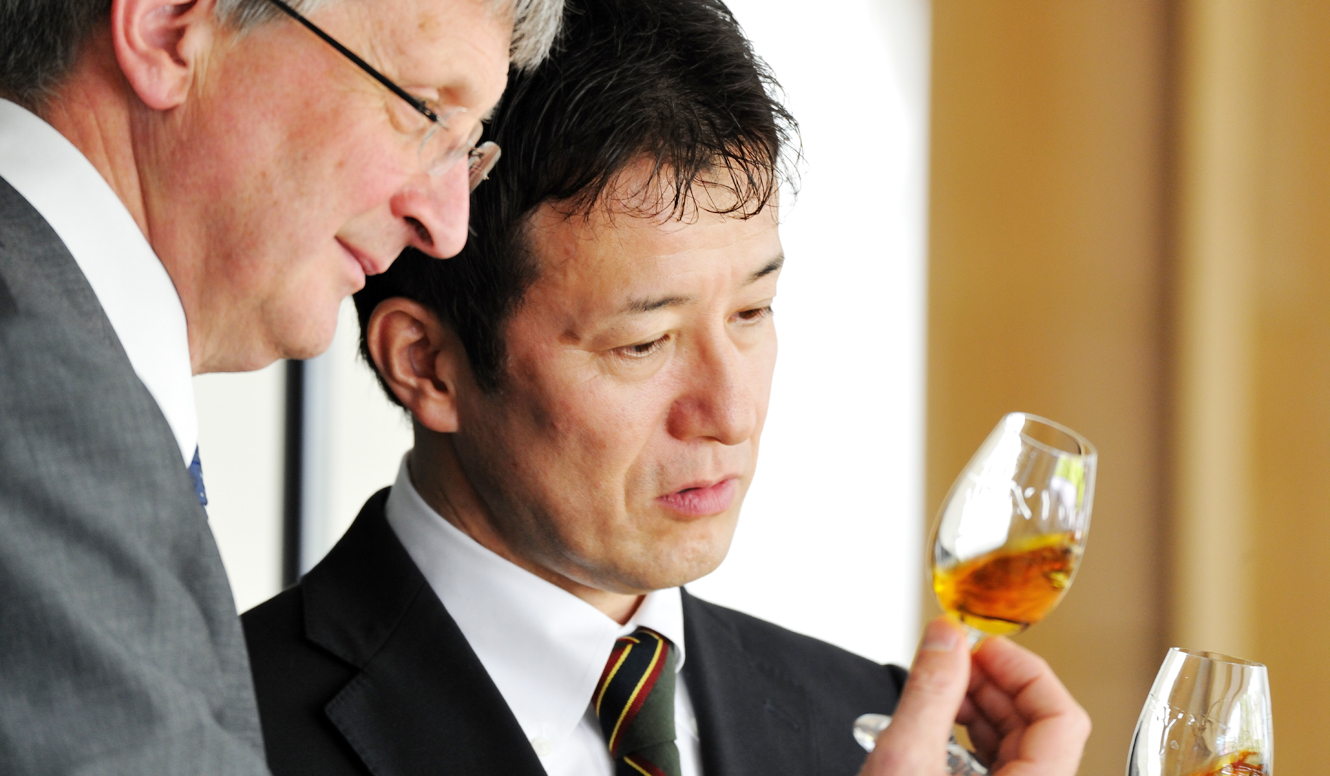
Jim Beverage and Fumio Maeda, Masters of Japanese and Western Blending, Unite for Johnnie Walker Blue Label
Johnnie Walker Blue Label
Jim Beveridge and Fumio Maeda: East Meets West in Blending Mastery
The Art of Blending: A World of Beauty (1)
Many will immediately recognize Blue Label. While the standard 750ml bottle comes with a price tag of ¥18,000 (excluding tax), its exquisite harmony of diverse malt whiskies is universally acclaimed by aficionados as the pinnacle of the spirit. To explore its rare charm, a sophisticated event was held. Featuring the 6th Master Blender, Jim Beveridge, and tea master Fumio Maeda, the event aimed to highlight the commonalities and differences between blending whisky and tea.
Text by Takashi Tsuchida
Whisky Re-emerges as a Food-Pairing Spirit in the UK
The event began with a question posed by moderator and columnist Noritaka Nakamura.
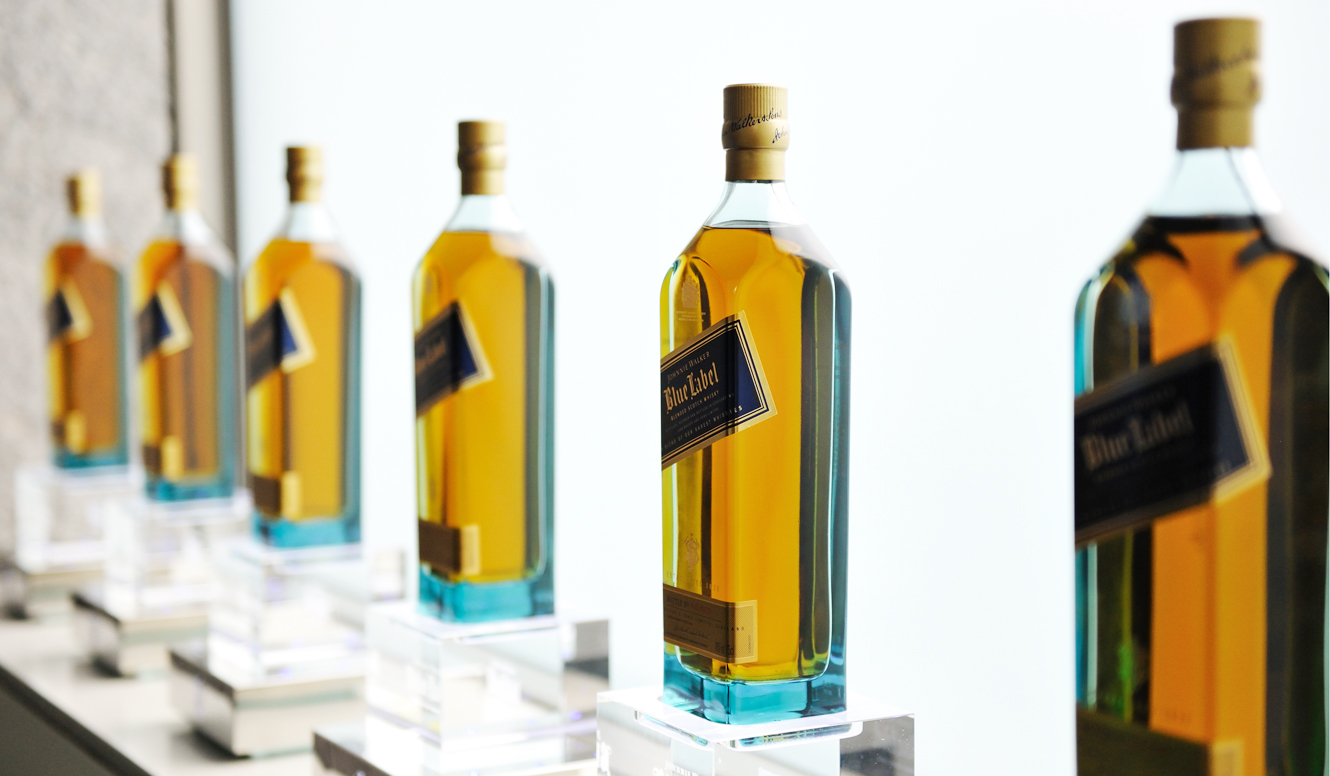
"In Japan, highball-style highballs are very popular right now, but how is it in the UK?" (Noritaka Nakamura)
"I personally love drinking Johnnie Walker with soda. Its robust and bold flavors pair well with rich, spicy, or oily dishes, and as long as these conditions are met, the cuisine's regionality doesn't matter," said Jim Beveridge.
Nakamura continued.
"Recently, with Japanese cuisine, people sometimes pair it with wine or champagne, not just sake. However, many chefs tell me that for shellfish like oysters, which have a strong iodized aroma, or crustaceans like sea urchin, whisky might actually be a better match..." (Noritaka Nakamura)
According to a short story by author Haruki Murakami, single malt is poured over Scottish oysters. It's a region known for its oysters, and Japanese tourists flock there, pairing fresh oysters with single malts.
"They pair exceptionally well. The smokiness of the whisky complements them beautifully, so we also enjoy them prepared in a similar way," said Jim Beveridge.
The event was held at "Chasai Kintanaka," a renowned Japanese restaurant. This Japanese cafe is also known for its interior and garden designed by contemporary artist Hiroshi Sugimoto. Here, the conversation on stage was complemented by a tasting of seasonal seafood, including shellfish and crustaceans, as if to recreate the experience in early summer Japan.
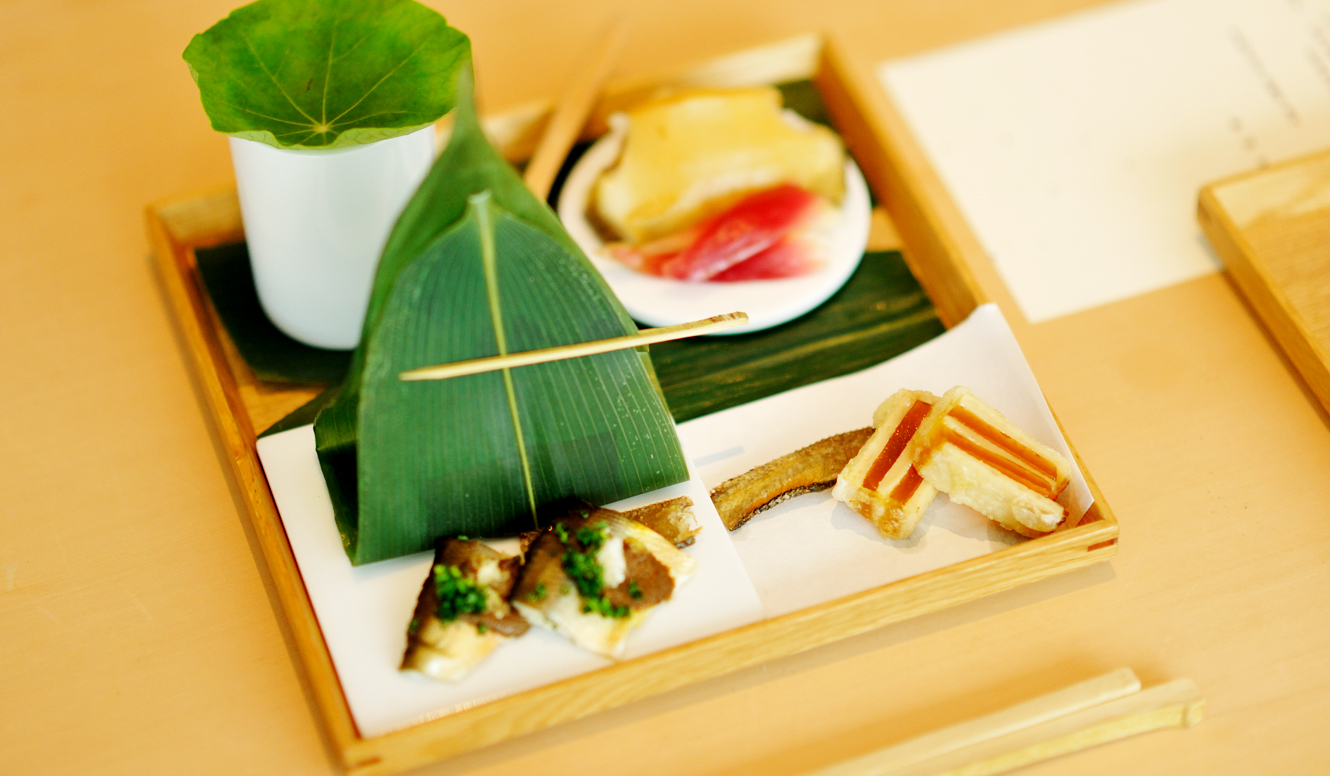
An example of the dishes served that day. Moving counter-clockwise from the front left: "Awabi Hasami Sushi" (Abalone Sandwich Sushi), "White Asparagus and Soft-Shelled Turtle Consommé Jelly," "Crab Meat Chawanmushi" (Steamed Egg Custard), and "Grilled Dried Ayu with Scallion Intestines."
As I reached for the chopsticks to pair with a highball of Johnnie Walker Blue Label, the exquisite meal proved to be an outstanding match. While the briny flavors of the sea can often clash with wine, the robustness of whisky subdued any gaminess and enveloped the ingredients' aromas. It was fascinating how the two elements harmonized without overpowering the natural taste of the food. I had previously assumed whisky was a post-dinner sipper, but that's certainly not the case. As Jim pointed out, the flavor profile transcends regional limitations.
Johnnie Walker is one of the first brands in the world to engage in whisky blending. It is said that the founder, John Walker, originally ran a grocery store and applied the tea blending techniques he practiced there to whisky. With this historical background in mind, Jim continued.
"Blending whisky is an extremely creative process. It begins with the conception of a desired whisky, and then we consider which whiskies to blend to realize that idea," said Jim Beveridge.
Scotland is home to over 100 distilleries. For Blue Label, 15 to 20 different casks are selected. However, this is considered a relatively small number for a blended whisky.
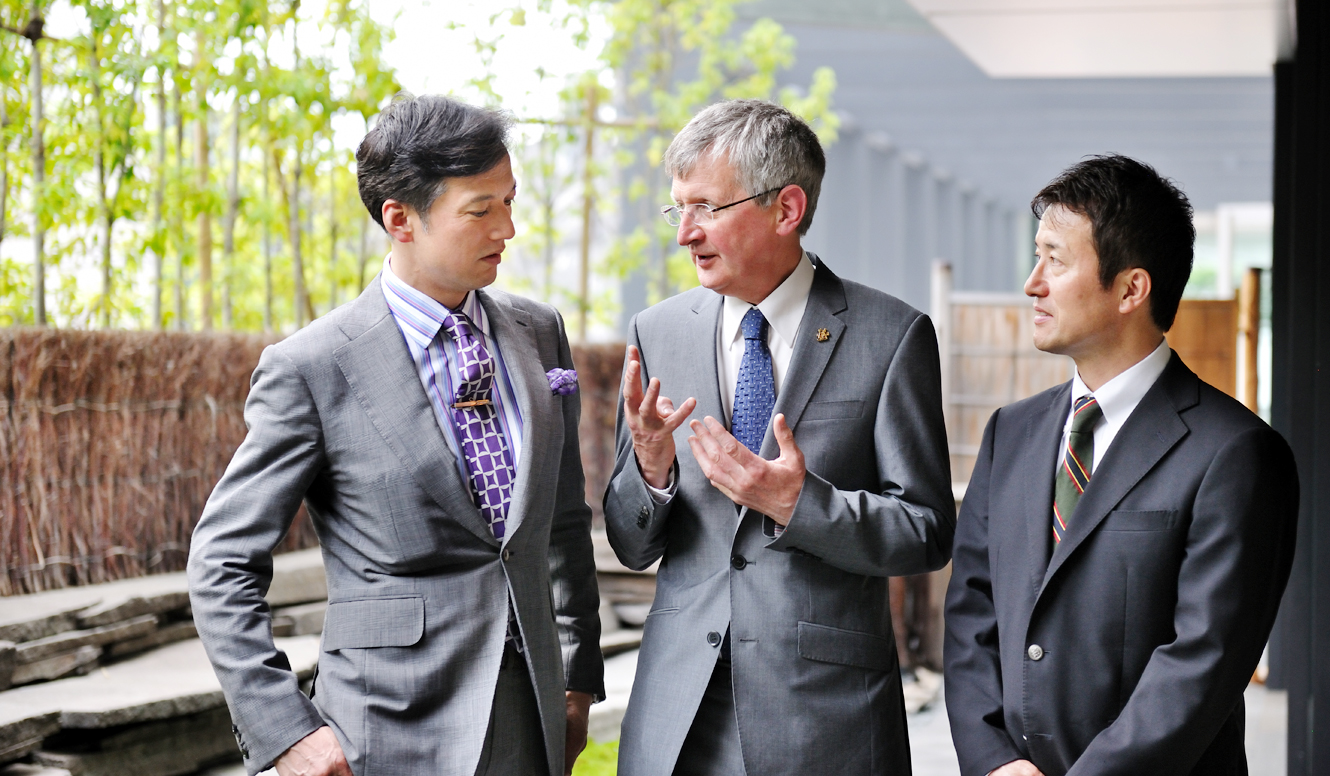
Nakamura then turned the conversation to tea master Maeda.
"Mr. Maeda, as you deal in tea wholesale, you are in a similar position to Jim in that you don't produce the raw materials yourself. Does this mean you are familiar with the types of tea produced in various regions of Japan?" (Noritaka Nakamura)
"I understand the aroma of the soil specific to each region, the shape of the leaves, and everything else. Jim mentioned earlier that when blending whisky, there's a target flavor profile from the start; it's the same with tea. My goal is to create a relaxing tea, so I focus on a smooth mouthfeel," said Fumio Maeda.
What is Tea Blending? The Venue Moves to an Experiential Session
Johnnie Walker Blue Label
Jim Beveridge and Fumio Maeda: East Meets West in Blending Mastery
The Art of Blending: A World of Beauty (2)
What is Tea Blending? The Venue Moves to an Experiential Session
Tea blending, or 'gogumi' in Japanese, refers to the process of blending tea leaves. While preferences for tea vary greatly, blending is crucial to satisfy a wide range of tastes. The robust flavor of Kagoshima tea and the refreshing taste of Uji tea are examples of single-origin preferences, but Maeda likens tea blending to a soccer team.
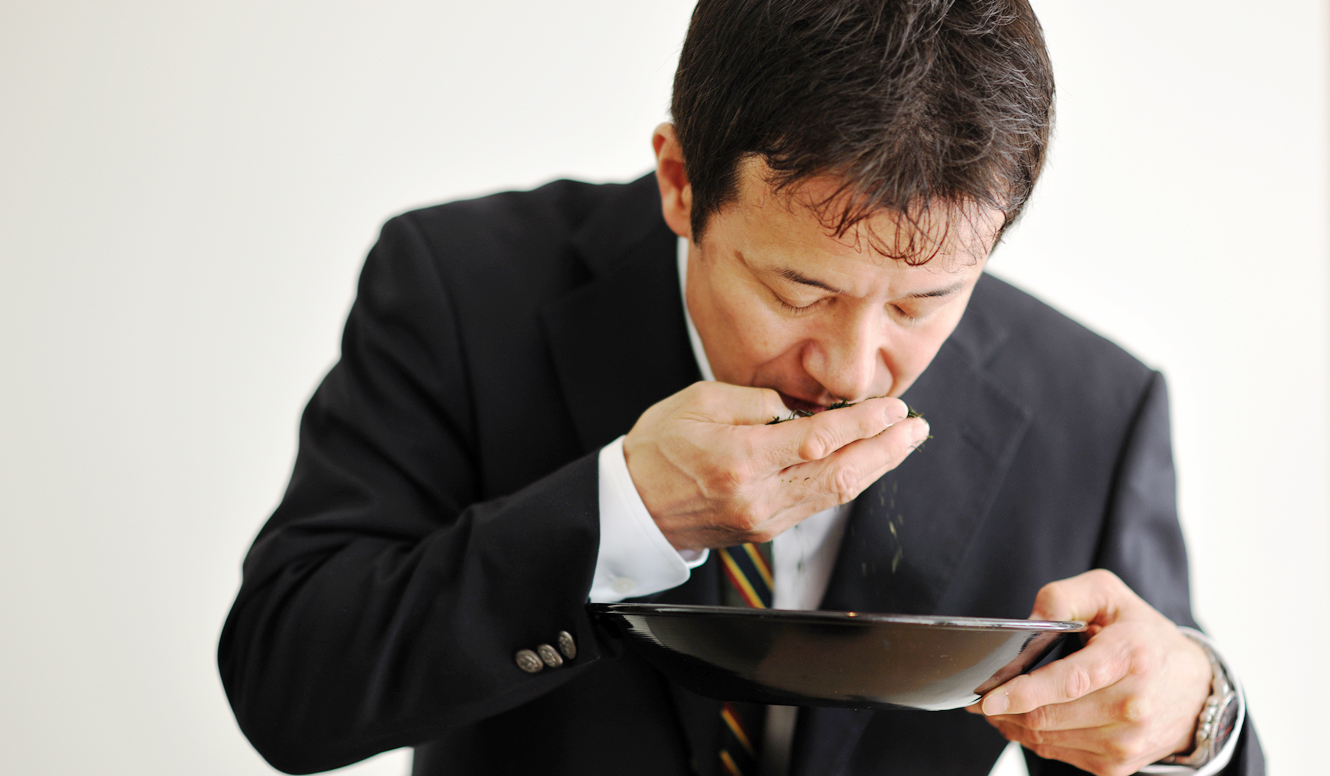
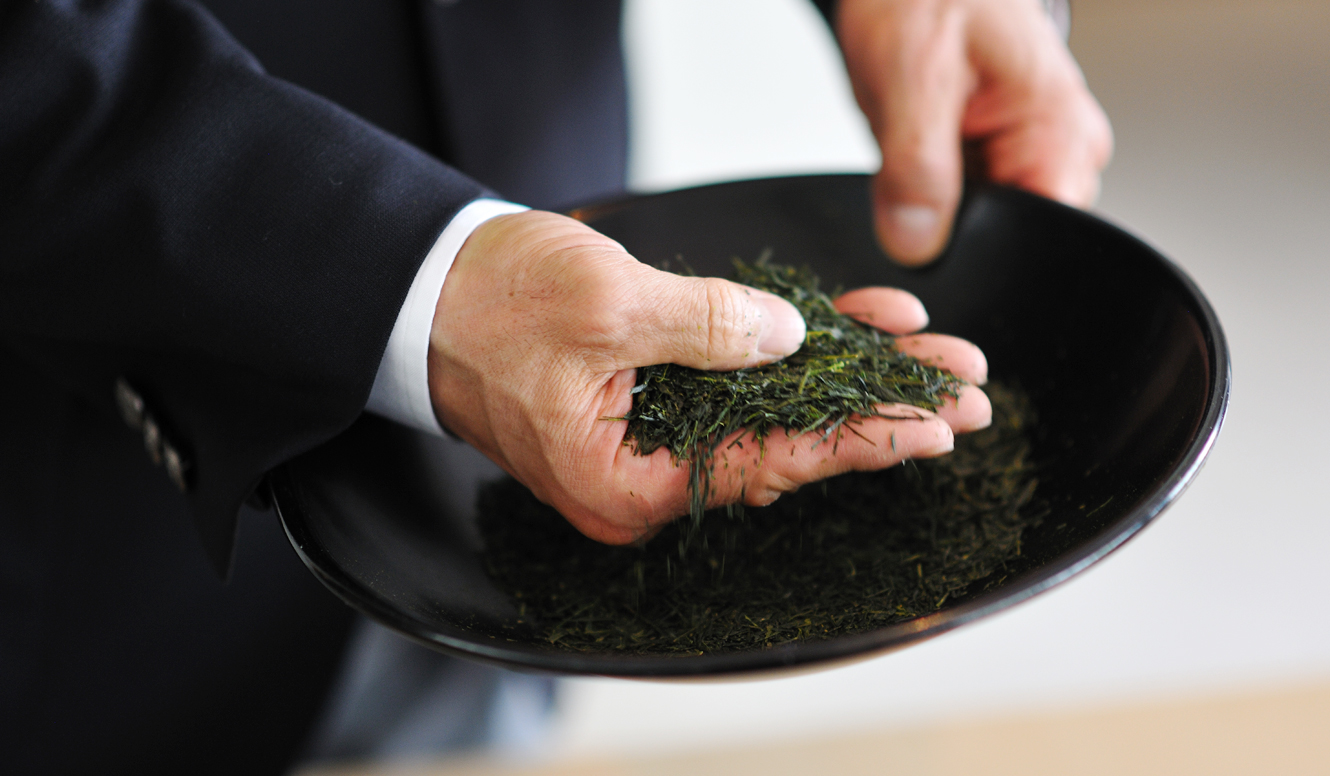
"If I were the coach, I'd want forwards with high scoring ability, fast wingers, a midfielder who can control the game, and strong defenders. I would assemble players with these individual strengths to form a team. In the case of tea, it's rare for a single type to be perfect. Blending allows us to complement each other and create a unique character. Tea blending is akin to building a great team," said Fumio Maeda.
Now, the event transitioned into an experiential session. Participants tasted a blended tea prepared by Maeda alongside single-origin teas.
"The teas prepared today are from Kochi, Shizuoka, and Miyazaki prefectures. The Kochi tea is strong in bitterness, astringency, and sweetness, with a powerful aroma. It's a very masculine tea. The Shizuoka tea has a rich flavor, similar to deeply steamed tea, and is characterized by its excellent liquor color. The Miyazaki tea has a clean taste, a smooth mouthfeel, and a feminine character," said Fumio Maeda.
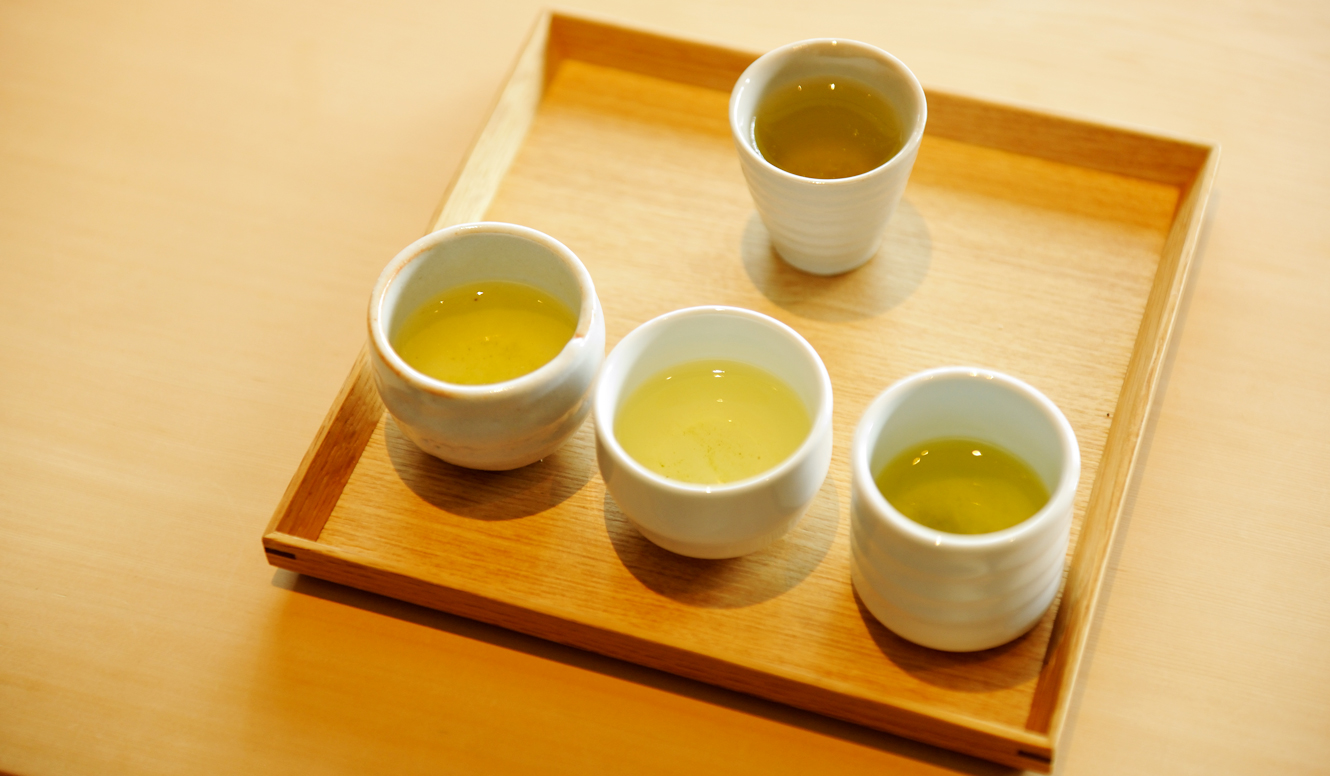
The tea blended from these three origins is shown in the photo on the left. Indeed, one can sense the "gentle flavor" that Maeda aims for. While some attendees expressed a preference for the Miyazaki tea alone, it might be too clean and lack lasting impression. Conversely, the Kochi tea is impactful but could be overwhelming if consumed exclusively.
"Tea is often enjoyed for its second and third infusions. Aiming for deliciousness in these subsequent infusions is one of the objectives of blending," said Fumio Maeda.
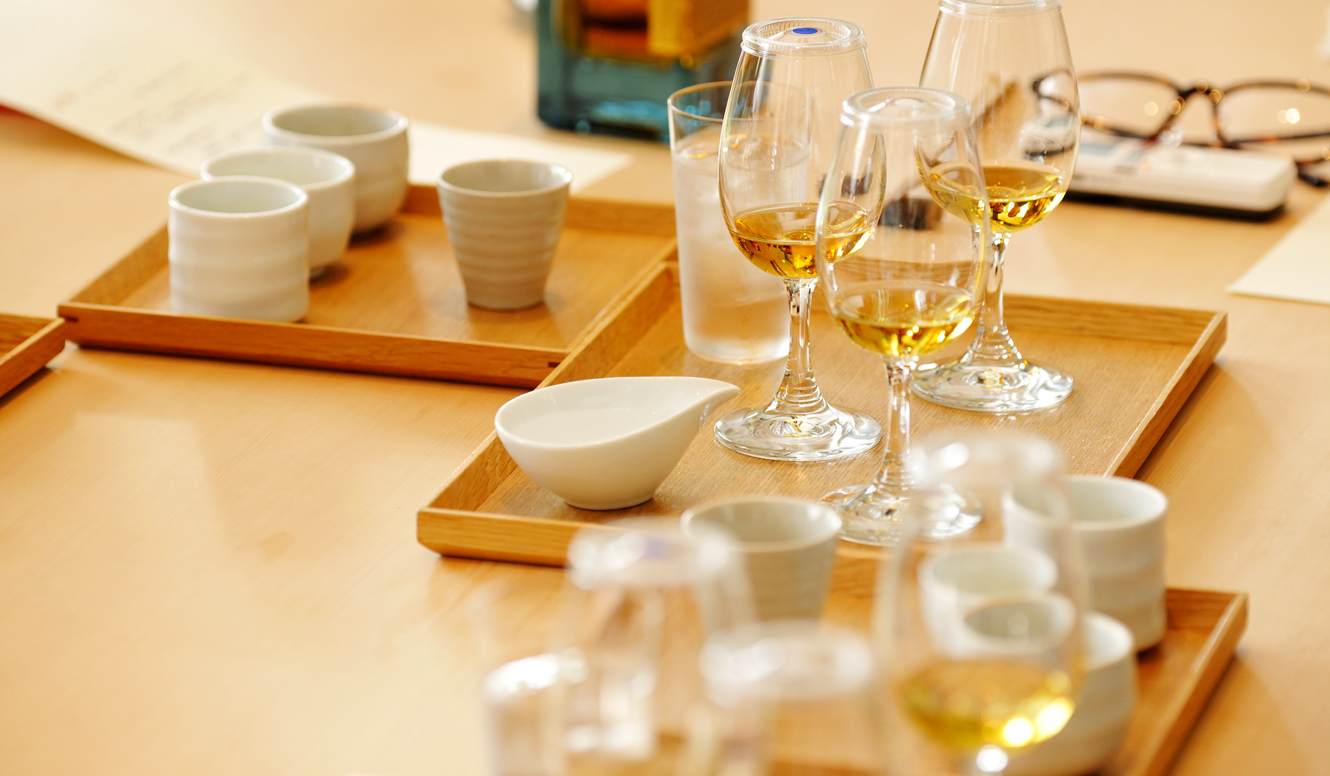
Next, it was time for the whisky tasting. For this occasion, Jim brought precious unblended cask samples from the UK. The plan was to first sample these, and then taste Blue Label.
"The one with the white label is a malt whisky from Glenury Royal Distillery in the Highlands (Note: now closed). The silver one is a malt whisky from Linkwood Distillery in the Speyside region.
Both are cask strength, meaning they are bottled at their natural alcohol content from the cask, exceeding 50% ABV. Please take a very small sip after chilling your mouth with ice water," advised Jim Beveridge.
Each of these two single malt whiskies possessed a distinct character. Linkwood offered a typical Speyside profile, with a notable smoothness from long maturation. It was fruity, with hints of sweetness and esters, yet light. A subtle smokiness could also be detected in its long finish.
Glenury, on the other hand, was even more powerful. It exuded a rich floral aroma, encompassing notes of sweet vanilla, nuts, and sandalwood. Compared to Linkwood, its smokiness seemed slightly more subdued.
After refreshing their palates with ice water, participants tasted Blue Label. The difference from the single malts was immediately apparent. This, I realized, was the magic of blending...
"Don't you find the sweetness more pronounced? The complexity also increases. The fresh fruitiness comes from the Speyside malt whisky. The Highland malt whisky contributes to its robustness. You can also detect sweetness, exotic tropical fruits, honey, and vanilla.
As such, Johnnie Walker Blue Label is a blend of malt whiskies from all the key Scotch whisky regions: Speyside, Highlands, Lowlands, and Islay," explained Jim Beveridge.
All participants likely grasped the distinction between single malt and blended whiskies. While single malts, like solo performers, showcase distinct personalities, blended whiskies are akin to the rich, layered harmonies of a full orchestra.
The event concluded successfully. Whisky is currently a growing industry with increasing global demand. "Every year, young distillers who will carry the future are hired in Scotland, and distilleries are riding the wave of growth," said Jim Beveridge. The whisky industry is poised to remain exciting for the foreseeable future.