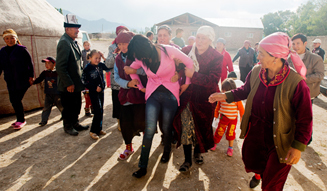
BOOK | The Stark Truths from the Ends of the Earth, Chronicled by a World-Renowned Photojournalist
BOOK | A Japanese Photographer Captures the Stark Realities of the World's Edge
Noriko Hayashi's Powerful Images and Words Unveil the Harsh Truths from the Fringes of Society
Bride Kidnapping in Kyrgyzstan
A Japanese photographer, now drawing global attention, received the prestigious Gold Award at Visa pour l'Image, one of the world's largest photojournalism festivals. Noriko Hayashi, born in 1983, spent an extended period in Kyrgyzstan, Central Asia, documenting the country's deeply entrenched customs.—the practice of abducting young women and forcing them into marriage.—Her book, 'Bride Kidnapping in Kyrgyzstan,' released on June 16th, compiles her experiences from approximately six months of intensive reporting. Hayashi shares her reflections and the profound message embedded within her work.
Text & Photographs by HAYASHI Noriko
Kidnapped Brides: A Spectrum of Cases
Bride kidnapping, the act of abducting a woman to marry her, is a practice that persists in Kyrgyzstan. According to local NGOs, approximately 40% of married women in the country of 5.4 million are said to have entered marriage through abduction. While outlawed by legislation enacted in 1994, these acts are rarely prosecuted as crimes.
I first learned about bride kidnapping in Kyrgyzstan during my university studies in international politics. Since then, I've made it a point to regularly review materials on the subject. To capture the nuances of this issue, which are difficult to convey through text alone, I traveled to Kyrgyzstan in July 2012.
Initially, I planned to stay for two months. However, the project evolved to include documenting the lives of couples a month after their forced marriage, attending court proceedings, and building trust with subjects who were initially reluctant to speak. This extended engagement resulted in a five-month initial reporting period, during which approximately 25 couples agreed to be photographed.
Many men resort to abduction for reasons such as a rejected proposal or pressure from their parents. I discovered that a taxi driver I befriended was himself married through abduction, and I even witnessed abduction attempts on the streets. Some cases involve the outright kidnapping of strangers, while others resemble elopements, where women facing parental disapproval of their relationships go to the man's home. Bride kidnapping, therefore, encompasses a variety of scenarios.
The photo collection 'Bride Kidnapping in Kyrgyzstan' presents the individual stories of 13 women who have experienced this practice.
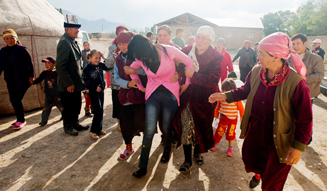
Among them are women who found happiness after their abduction, those suffering from domestic violence, a young girl driven to suicide, and women who were rescued by their relatives after being taken.
Unveiling Complex Underpinnings
As my research progressed, I learned that bride kidnapping is not an ancient Kyrgyz tradition but a practice that surged in the 20th century. Simultaneously, I began to understand the intricate web of factors—including nomadic cultural values and community dynamics—that contribute to its persistence. The more I sought to comprehend the mindset of the over 80% of abducted women who ultimately accept marriage, the more I grappled with how to portray the reality of bride kidnapping.
It was through my work with a woman named Dinara that I began to grasp the internal conflict experienced by abducted women.
“Let me go! I don’t love Akhmat!”
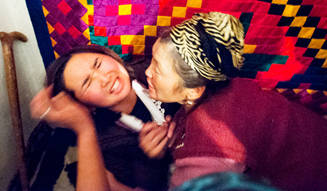
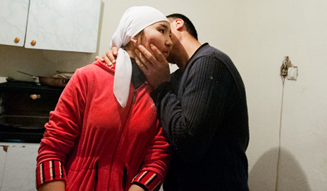
I first met Dinara, desperately resisting her abduction, three and a half months into my assignment. Five hours later, after consulting with her parents, she agreed to the marriage. For the following two weeks, I stayed with her family, documenting their newlywed life. Late at night, after the household had fallen asleep, we communicated using a dictionary. I learned that she had planned to work in Turkey a year later and that her dream was to live in the city.
In January of this year, I visited Dinara again, now nine months pregnant, for the first time in a year and a half.
The photo collection dedicates over 40 pages to Dinara's story, tracing her journey from university student to wife, homemaker, and mother.
While 'bride kidnapping' often tends to be sensationalized in the media, I hope that by presenting these individual stories as photo narratives, readers will not only understand the reality of this practice but also connect with the women's experiences and resilience. My aim is for readers to contemplate the nature of happiness and to recognize the strength and dignity of Kyrgyz women.

Noriko Hayashi
Born in 1983. Hayashi began her photography career at The Point, a local newspaper in Gambia, West Africa, during her university years. She has since documented 'stories of people not making the news' both domestically and internationally. Her work has appeared in publications such as the September 2012 issue of National Geographic Japan ('The Lost Roma Town') and the July 2013 issue ('The Reality of Bride Kidnapping in Kyrgyzstan'). Her photographs of bride kidnapping in Kyrgyzstan garnered significant global attention, earning her the top prize in the Features section at the French photojournalism festival and first place in the Contemporary Issues Stories category at the NPPA Photojournalism Awards. Her work has also been featured in numerous media outlets, including The Washington Post, Der Spiegel, Le Monde, and Newsweek. The 'Bride Kidnapping in Kyrgyzstan' series received the highest award, the 'Visa d'Or (Gold Award),' in the Features section at the Visa pour l'Image festival in 2013, and first place in the Contemporary Issues Stories category at the NPPA Photojournalism Awards in 2014.
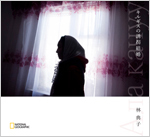
Bride Kidnapping in Kyrgyzstan
Author | Noriko Hayashi
Specifications | 228 x 250 mm, 140 pages, hardcover
Price | ¥2,600 (excluding tax)
Publisher | Nikkei National Geographic Inc.
Available Now